
The difference between small-batch prototyping and volume production of robot parts is not simply the quantity changing from a few pieces to dozens or hundreds. The focus of small-batch prototyping is verifying whether the structure, material, assembly, and critical dimensions work. The focus of volume production is stably replicating the first-article parameters, fixturing method, inspection standards, and material batches.
If it is just 1 to 5 R&D samples, the machining factory needs to provide rapid DFM feedback. If it moves into 20, 50, or more trial production pieces, the focus shifts to process reuse, cycle time control, batch consistency, and anomaly traceability. At this stage, you cannot manage it with a "make one, figure it out" approach.
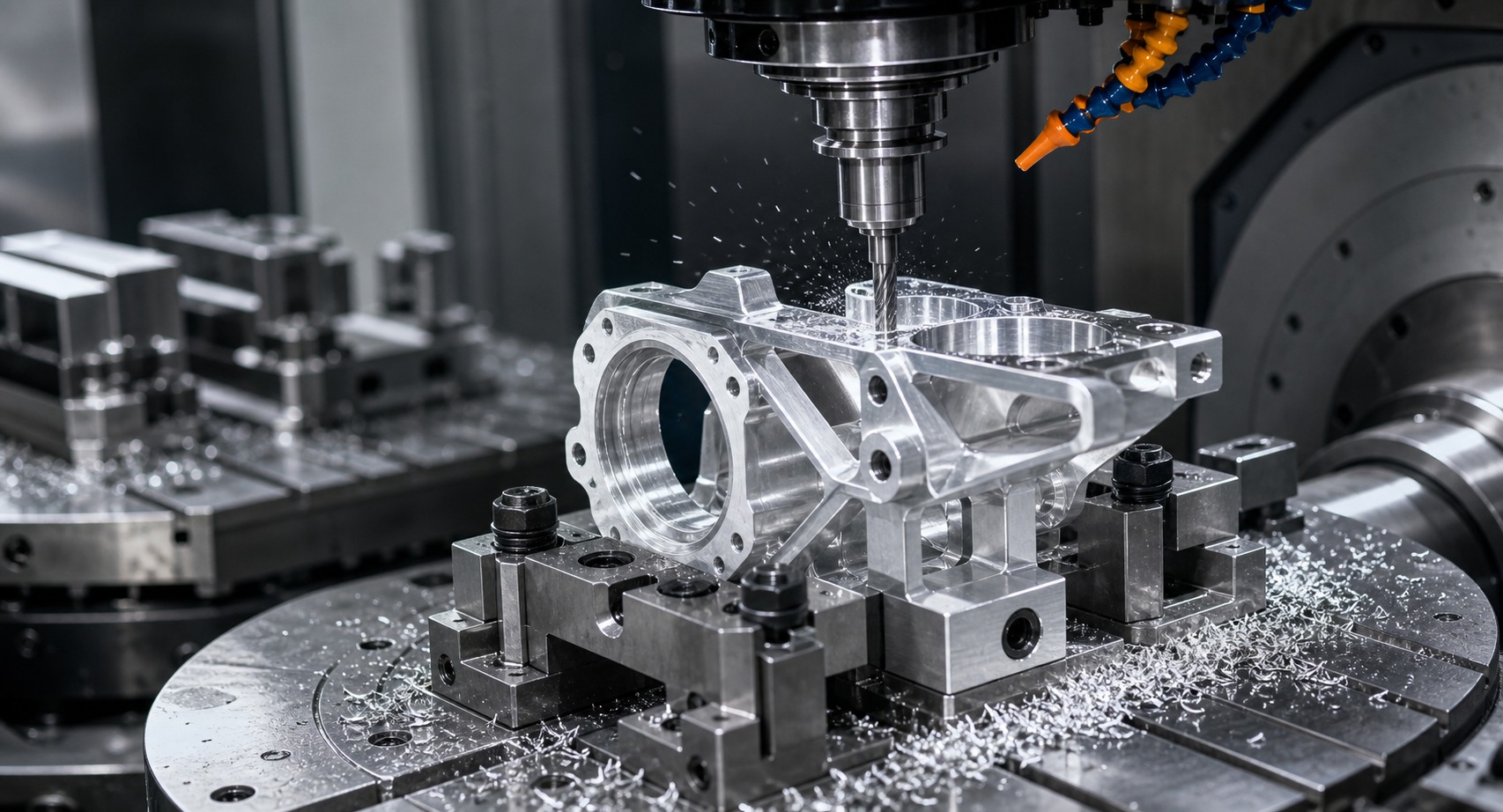
Core Differences Between Small-Batch Prototyping and Volume Production
Comparison Dimension |
Small-Batch Prototyping |
Volume Production |
|---|---|---|
Core Objective |
Verify structure, assembly, and key process |
Stably replicate first-article results |
Quantity Range |
Typically 1–10 pieces or little trial runs |
Typically 20, 50, 100+ pieces |
Drawing Status |
May still be under frequent revision |
Version and key parameters should be frozen |
Fixturing Strategy |
Flexible, prioritize rapid verification |
Emphasize fixture reuse and positioning consistency |
Inspection Method |
Focus on first article and critical dimensions |
First article + in-process sampling + batch records |
Cost Logic |
Programming, setup, and trial-and-error account for high proportion |
Material, cycle time, yield, and inspection costs more important |
Many projects get stuck when transitioning from prototyping to trial production. The problem is not that the part cannot be made, but that the process was not properly documented during the first-article stage. When quantities increase, fluctuations in fixturing, tooling, inspection, or surface treatment are amplified into batch issues.
Focus Point |
Recommended Practice |
Purpose |
|---|---|---|
DFM Review |
First examine thin walls, deep cavities, hole positions, and tool accessibility |
Reduce first-article rework |
Material Verification |
Confirm machining and assembly performance for Al7075, PEEK, etc. |
Avoid incorrect material selection |
Fixturing Plan |
Flexibly combine soft jaws, vacuum chucks, locating pins |
Control deformation and datum drift |
Critical Tolerances |
Mark ±0.005mm-level critical dimensions separately |
Spend cost on function-affecting features |
Inspection Feedback |
Provide CMM or critical dimension report for first article |
Give R&D basis for drawing revisions |
The biggest fear during prototyping is not a slightly higher unit price, but problems not being exposed. For example, hole positions may appear, but the sensor bracket angle is unstable after assembly. Or a thin-wall housing measures on the machine but exhibits slight springback after resting. These issues must be discovered early with the little samples.
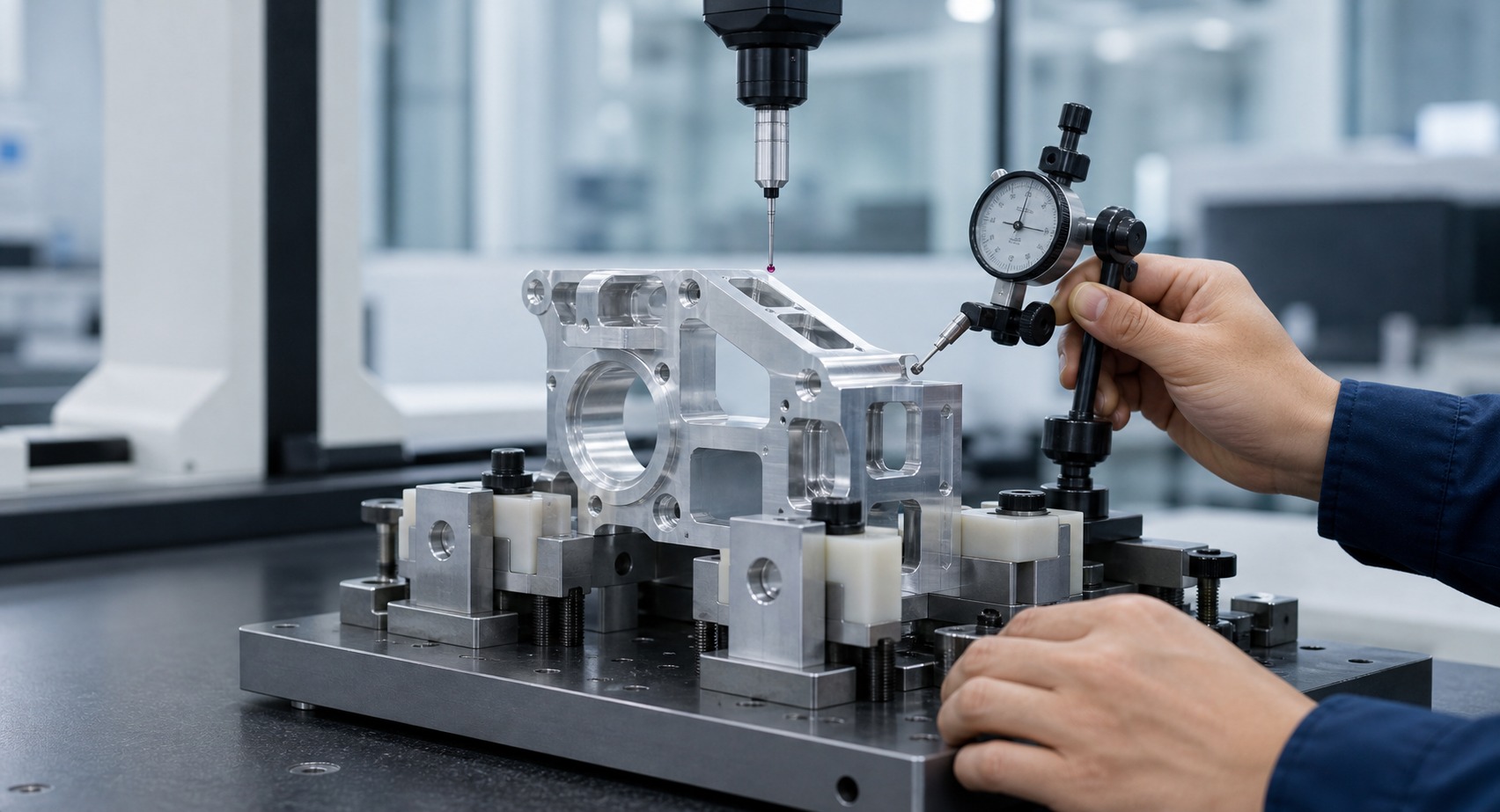
What Should Be Focused on During the Volume Production Stage?
Focus Point |
Recommended Practice |
Purpose |
|---|---|---|
Version Freeze |
Confirm drawing version, material, surface treatment, and inspection items |
Avoid mixing versions mid-production |
Fixture Reuse |
Fix soft jaws, tooling, and locating datums |
Improve batch consistency |
Tool Management |
Set tool life and replacement intervals |
Avoid dimensional drift in later stages |
In-Process Inspection |
First article + in-process sampling + last piece confirmation |
Detect batch fluctuations promptly |
Anomaly Traceability |
Record material batch, machine, program, and inspection data |
Facilitate problem source identification |
Volume production does not mean every dimension needs 100% inspection. A more reasonable approach is to prioritize assembly datums, bearing holes, locating holes, and sealing surfaces—features that truly affect function. Standard external shapes can be controlled based on functional requirements.
Risk Point |
Common Cause |
Potential Consequence |
|---|---|---|
Drawing Version Confusion |
R&D revises without syncing procurement and machining |
Mixed old and new parts, assembly issues hard to trace |
First-Article Parameters Not Documented |
Only confirmed sample works, no toolpath or fixturing recorded |
Repeated trial-and-error in subsequent batches |
Dimensional Change from Surface Treatment |
Anodizing or coating allowance not reserved |
Tight holes or assembly binding |
Material Batch Variation |
Different batches of Al7075/PEEK machine differently |
Fluctuations in dimensional stability and surface quality |
Inconsistent Inspection Standards |
Supplier and R&D use different datums |
Increased disputes, delayed delivery |
These problems are not most cost-effectively solved after volume production is complete. The sooner process cards, inspection reports, and version records are established, the easier it is to control cost and delivery later.
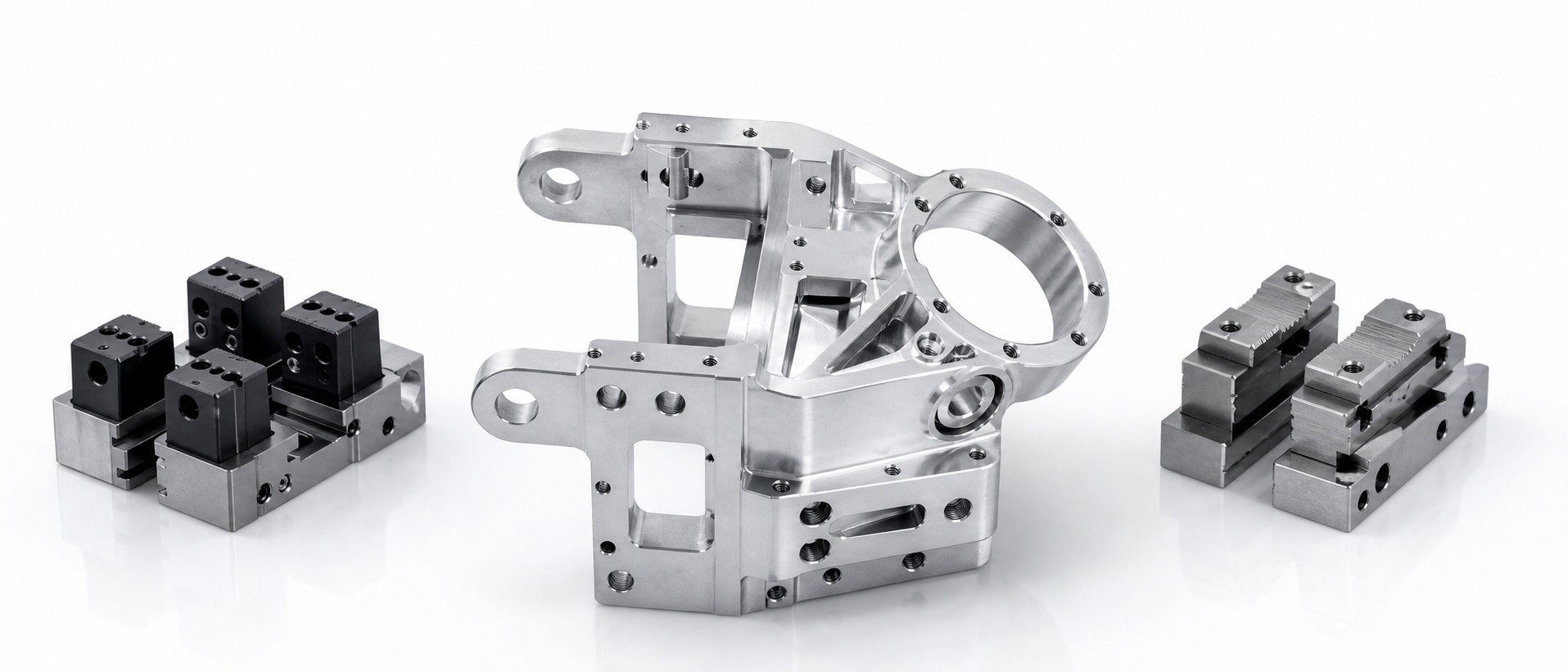
How Does OEMach Typically Bridge Prototyping and Volume Production?
In handling a certain humanoid robot joint mounting base, OEMach first completed the first-article prototype using 5-axis simultaneous machining, focusing on verifying bearing holes, side mounting holes, and assembly datum surfaces. After first-article confirmation, OEMach did not immediately enter volume production. Instead, it organized the soft jaw positioning, staged machining sequence, tool parameters, and CMM inspection items into a fixed process.
Entering small-batch production, critical dimensions were managed to the ±0.005mm level for process control, while standard weight-reduction pockets and clearance areas were relaxed based on functional requirements. This approach avoids over-machining all dimensions while ensuring stability on features that truly affect assembly.
This practice is practical for robot R&D teams: early samples can be modified quickly, and later trial production does not require starting from scratch with a new batch of parts. OEMach's advantage lies more in its process bridging capability from sample to small batch.
Question to Ask |
Purpose of Judgment |
|---|---|
After sample confirmation, will volume production reuse the same fixturing setup? |
Assess batch consistency |
Are first-article inspection reports and key parameters retained? |
Assess process traceability |
How are material batches managed? |
Avoid machining performance fluctuations across batches |
How are tool life and in-process sampling arranged? |
Assess volume production process control capability |
How are old and new versions distinguished after revision? |
Reduce mixed version and rework risk |
Can you bridge from 5-piece prototyping to 50-piece trial production? |
Assess supplier suitability for R&D rhythm |
If a supplier can only quote a unit price but cannot explain how fixturing, tooling, inspection, and versions are controlled during volume production, they may be suitable for one-off samples but not necessarily for承接 trial production of robot precision parts.
Small-batch prototyping focuses on verifying structure and process. Volume production focuses on stably replicating first-article results. Their fixturing, inspection, and cost logic differ.
Common reasons are that first-article parameters were not documented, or fixturing, tooling, material batch, or inspection standards changed, causing dimensional fluctuation in subsequent batches.
It is recommended to confirm the drawing version, material batch, surface treatment, critical dimensions, first-article report, fixturing plan, and in-process sampling rules.
Not necessarily. Critical assembly positions should be prioritized for inspection. Standard external shapes and non-functional dimensions can be controlled through sampling or functional requirements.
Yes. OEMach is more suitable for R&D prototyping, small-batch trial production, and non-standard precision parts machining, especially projects requiring DFM review and inspection closed loop.