
Titanium Materials for CNC Machining, Medical and Aerospace Parts
Titanium is selected when custom parts need high strength-to-weight ratio, corrosion resistance and reliable performance in demanding environments. OEMach reviews titanium brackets, housings, medical-style components and aerospace fixture parts through CNC milling, 5-axis machining and precision CNC machining routes.
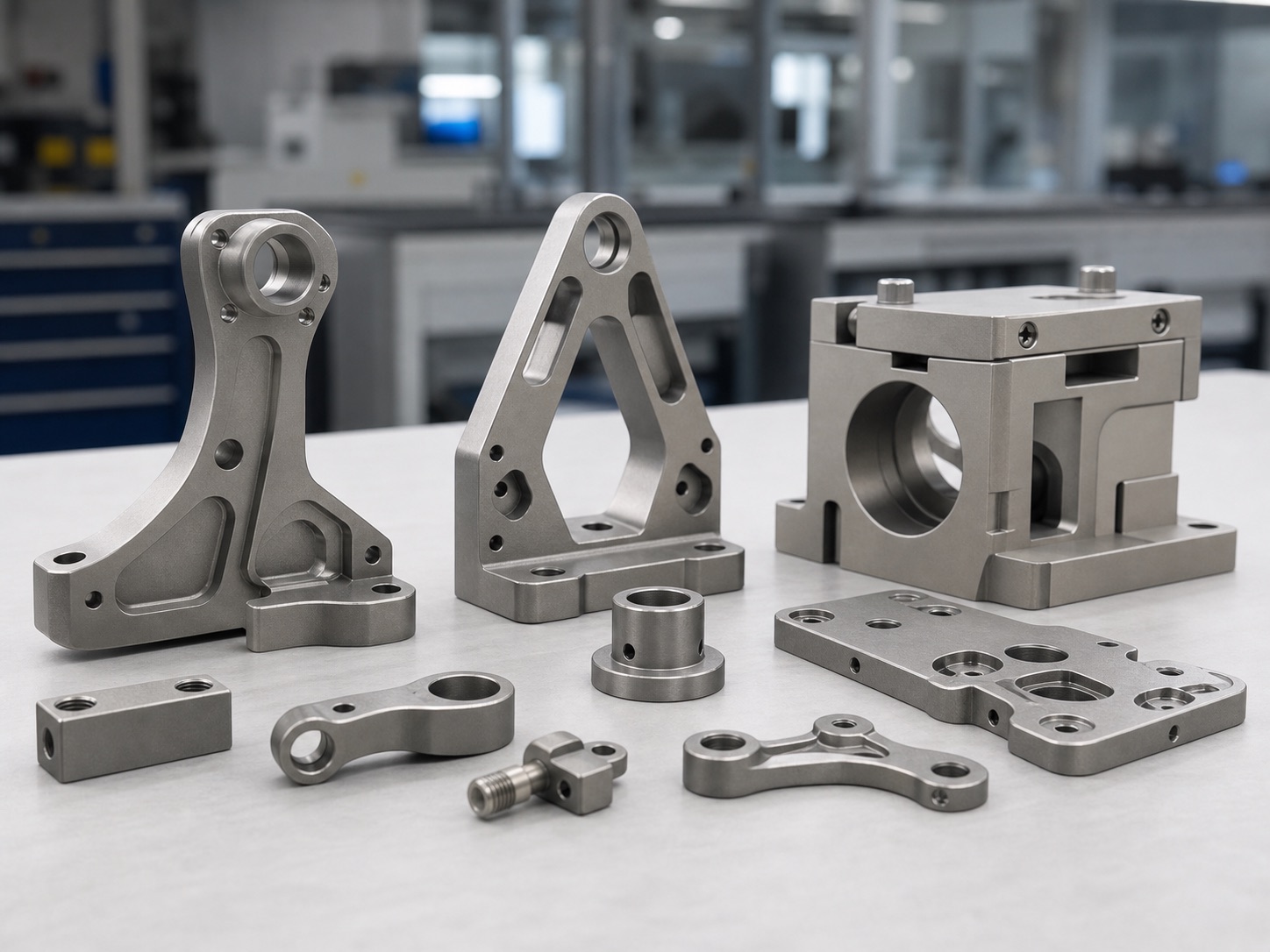
Why titanium
Combines low weight, high strength and corrosion resistance for demanding precision parts.
Buyer should send
STEP/STP files, 2D drawings, titanium grade, critical features, surface finish and inspection needs.
Engineering reviews
OEMach checks heat generation, tool access, thin walls, fixture strategy and inspection points.
Material Overview
Titanium provides a high strength-to-weight ratio and strong corrosion resistance. It is common in Medical Devices, Aerospace tooling and lightweight mechanical assemblies.
Titanium is more difficult to machine than Aluminum and usually requires careful feeds, tooling and heat control. Complex titanium parts may be reviewed through 5-Axis Machining, CNC Milling and CNC Machining Services.
Best Applications for Titanium Parts
Titanium fits parts where weight reduction, corrosion resistance and high mechanical performance justify the higher machining cost.
Lightweight brackets and links
Titanium brackets, links and supports where strength and weight matter.
Medical-style precision components
Small components, fixtures and device-related parts requiring cleanliness and corrosion resistance.
Aerospace fixture parts
High-strength fixture details, locating parts and lightweight tooling components.
Corrosion-resistant components
Parts exposed to saltwater, chemicals or demanding service environments.
Complex milled parts
Multi-side titanium parts that benefit from reduced setups and stable datum control.
Common Titanium Grades
OEMach typically reviews commercially pure Grade 2, Grade 5 / Ti-6Al-4V and project-specified titanium grades.
| Grade / Type | Best Used For | Main Advantages | Review Notes | Typical Processes |
|---|---|---|---|---|
| Grade 2 | Corrosion-resistant parts, medical-style components and moderate-strength parts | Excellent corrosion resistance and good ductility | Lower strength than Grade 5; review stiffness and load | CNC milling, turning, precision components |
| Grade 5 / Ti-6Al-4V | High-strength lightweight brackets, fixtures and aerospace-grade parts | High strength-to-weight ratio and good fatigue performance | More difficult machining; review heat and tool wear | 5-axis machining, CNC milling |
| Project-Specified Titanium | Customer standards, medical or aerospace drawings | Keeps grade aligned with approved design requirements | Confirm certificates, stock form and finish compatibility | Custom CNC machining routes |
Manufacturing Processes for Titanium
Useful for complex titanium parts with angled features, multiple faces and reduced re-clamping.
Used for brackets, plates, housings and lightweight structural titanium parts.
Route review for drawing-defined titanium parts with tolerance and finish needs.
Surface Finishes for Titanium
Titanium finishes are usually selected for appearance, cleanliness, corrosion performance or drawing requirements. See Surface Finishes and add requirements to the RFQ Checklist.
As machined
Deburred titanium parts with visible tool marks and controlled dimensions.
Bead blasting
Creates a uniform matte texture and can reduce visible machining marks.
Polishing
Used for selected visible or sliding surfaces where lower roughness is needed.
Passivation / cleaning
Project-specific cleaning or passivation may be required for medical-style parts.
Design Considerations for Titanium Parts
Titanium machining requires careful control of heat, tool engagement and chip evacuation. Designers should review internal radius, thin walls, deep pockets, thread depth, datum strategy, burr control and inspection access before quoting.
Titanium vs Other Materials
Titanium is chosen when performance justifies cost and machining difficulty.
Titanium vs Aluminum
Choose titanium for higher strength-to-weight ratio and corrosion resistance. Choose Aluminum for lower cost and easier machining.
Titanium vs Stainless Steel
Choose titanium for weight reduction and high corrosion resistance. Choose Stainless Steel for more cost-effective strength and availability.
Titanium vs Engineering Plastics
Choose titanium for strength, heat and threads. Choose Engineering Plastics for insulation, low friction or lighter non-metal parts.
Industries & Applications
Titanium supports high-value applications where strength, weight and corrosion resistance matter.
Medical Devices
Used for clean precision components, fixtures and device-related parts.
Medical Devices →Industrial Equipment
Used where corrosion resistance or weight reduction is important.
Industrial Equipment →Related Services
Quality & Documentation
OEMach can review titanium grade, certificates, tight tolerances, surface finish and inspection requirements before quoting. Prepare drawings through the RFQ Checklist or Contact / Get a Quote.
| Review Item | What to Specify | Why It Matters |
|---|---|---|
| Grade and certificate | Grade 2, Grade 5 or project-specified grade | Titanium grade affects strength, machinability, corrosion resistance and cost. |
| Critical geometry | Thin walls, deep pockets, angled holes, datums and threads | Helps evaluate 5-axis access, tool wear and tolerance risk. |
| Surface requirement | As machined, bead blasted, polished or cleaned surface | Clarifies appearance, burr control and post-processing. |
| Inspection | Dimensional report, material certificate or FAI if required | Important for medical, aerospace or high-value parts. |
Technical Updates
Material FAQ
What titanium grades can OEMach machine?
OEMach can review Grade 2, Grade 5 / Ti-6Al-4V and customer-specified titanium grades. Availability depends on stock form, quantity, certificates and finish requirements.
What parts are best suited for titanium?
Titanium is suitable for lightweight brackets, aerospace fixture parts, medical-style precision components and corrosion-resistant parts where higher cost is justified.
Which processes are suitable for titanium?
CNC milling, 5-axis machining and selected turning routes are common. Complex titanium parts often benefit from careful fixture and toolpath review.
What finishes are available for titanium?
Common options include as-machined, bead blasted, polished and specification-driven cleaning or passivation. Drawings should define visible faces and roughness.
What files should I send for a titanium quote?
Send STEP/STP files, 2D drawings, titanium grade, quantity, critical tolerances, surface finish and inspection or certificate requirements.
Send drawings for review
Send drawings, 3D files, titanium grade, quantity, tolerance and finish requirements. OEMach will review material suitability, heat-control risks, machining route and inspection needs before quoting.