
Copper and Brass Materials for CNC Machining and Precision Components
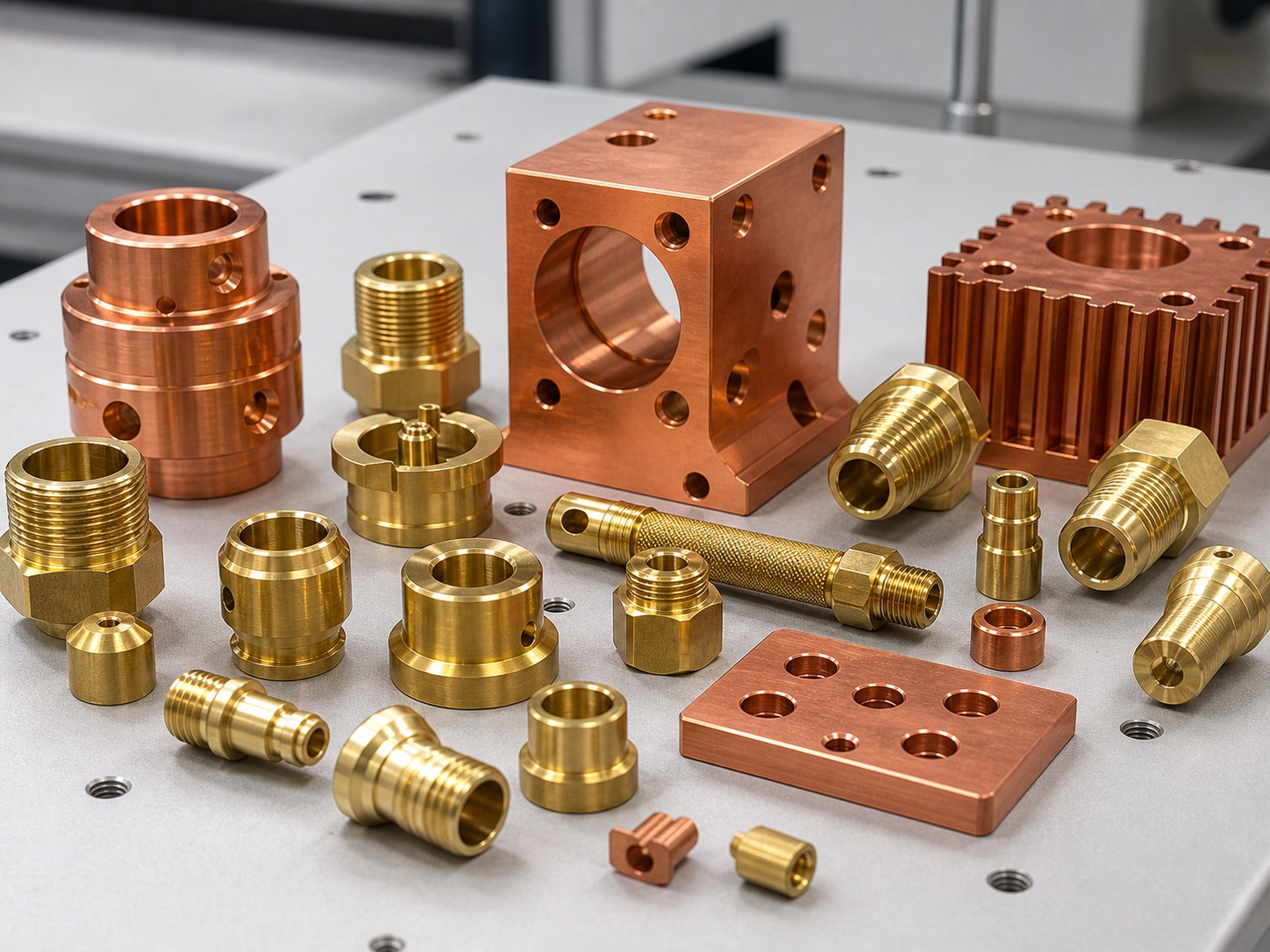
Copper and brass are selected for custom parts that need electrical conductivity, thermal performance, corrosion resistance or excellent machinability. OEMach machines brass connectors, bushings, fittings and turned parts as well as copper conductive blocks, thermal components and electrical hardware.
Why copper / brass
Brass machines efficiently for small turned parts, while copper supports electrical and thermal performance.
Buyer should send
STEP/STP files, 2D drawings, alloy, conductivity needs, tolerance, finish and quantity.
Engineering reviews
OEMach checks burr risk, tool marks, thread quality, plating need and inspection method.
Material Overview
Brass and copper are often reviewed together because both are used in conductive, thermal and precision hardware projects. Brass is popular for CNC Turning, Swiss Machining Services and small fittings because of excellent machinability.
Copper is selected for Electronics and thermal components when electrical or heat conductivity matters. Copper can be more challenging than brass, so burr control, tool sharpness and surface finish should be reviewed early through CNC Machining Services.
Best Applications for Copper and Brass Parts
Copper and brass fit projects where conductivity, machinability, corrosion resistance or small precision features matter.
Brass connectors and fittings
C360 brass threaded adapters, collars, inserts and fluid or electrical fittings.
Bushings and sleeves
Brass bushings, sleeves and wear hardware with controlled bore and OD.
Copper thermal components
Conductive blocks, heat-related components and machined copper plates.
Electrical contacts and hardware
Small conductive parts, terminals and connector bodies for electronics projects.
Small precision turned parts
Pins, spacers and miniature brass components for repeatable production.
Common Copper and Brass Types
OEMach reviews C360 brass, pure copper and project-specified copper or brass alloys according to drawings and performance needs.
| Grade / Type | Best Used For | Main Advantages | Review Notes | Typical Processes |
|---|---|---|---|---|
| C360 Brass | Connectors, fittings, bushings and turned hardware | Excellent machinability and good corrosion resistance | Confirm lead-free or RoHS needs if applicable | CNC turning, Swiss machining, micro parts |
| Pure Copper | Electrical, thermal and conductive blocks | High electrical and thermal conductivity | More difficult to machine; review burrs and surface marks | CNC milling, turning, conductive parts |
| Project-Specified Copper Alloys | Drawings requiring conductivity, wear or plating standards | Keeps material aligned with approved specs | Specify alloy, conductivity and certificate requirements | Custom CNC machining |
| Project-Specified Brass Alloys | Fittings, hardware and decorative parts | Can balance machinability, corrosion and appearance | Review availability, plating and compliance notes | Turning, milling, small parts |
Manufacturing Processes for Copper and Brass
Useful for small brass turned parts and repeatable connector hardware.
Used for copper thermal blocks, conductive plates and brass prismatic parts.
Supports small conductive or brass precision components with burr control.
Surface Finishes for Copper and Brass
Finishes are selected for conductivity, corrosion resistance, appearance or contact surfaces. Review Surface Finishes and note masking or plating needs in the RFQ Checklist.
As machined
Deburred parts with visible machining marks and preserved conductivity.
Polishing
Improves appearance on brass fittings or visible copper parts.
Nickel / tin plating
Can improve corrosion resistance, solderability or contact performance when specified.
Clear coating / anti-tarnish
May be used when appearance must be maintained on brass or copper.
Design Considerations for Copper and Brass Parts
Brass usually machines cleanly, but small threads, thin walls and tiny bores still need review. Copper is softer and more prone to burrs, built-up edge and visible tool marks, so sharp tooling, edge breaks, hole depth and inspection access are important.
Copper / Brass vs Other Materials
Selection depends on conductivity, machinability, corrosion resistance and cost.
Brass vs Copper
Choose brass for machinability, fittings and threaded hardware. Choose copper for electrical or thermal conductivity.
Copper / Brass vs Aluminum
Choose copper or brass for conductivity and fittings. Choose Aluminum when low weight and lower machining cost matter.
Copper / Brass vs Stainless Steel
Choose copper or brass for conductivity or easy turning. Choose Stainless Steel for strength, wear and corrosion resistance.
Industries & Applications
Copper and brass support electrical, thermal and precision mechanical projects.
Automotive / EV
Conductive parts, thermal blocks, adapters and prototype hardware.
Automotive / EV →Related Services
Quality & Documentation
OEMach can review alloy, conductivity needs, burr control, plating and inspection requirements before quoting. Use the RFQ Checklist or Contact / Get a Quote.
| Review Item | What to Specify | Why It Matters |
|---|---|---|
| Material type | C360 brass, pure copper or specified alloy | Affects conductivity, machinability, plating and cost. |
| Critical features | Threads, bores, small holes, contact faces and thermal surfaces | Helps evaluate burr control and inspection needs. |
| Finish / plating | Polishing, nickel, tin, clear coating or as-machined | Finish may affect conductivity, appearance and masking. |
| Documentation | Material certificate, inspection report or compliance note | Clarifies procurement and quality records. |
Technical Updates
Material FAQ
What copper and brass materials can OEMach machine?
OEMach can review C360 brass, pure copper and project-specified copper or brass alloys based on drawings, conductivity needs, finish and availability.
What parts are best suited for brass?
Brass is suitable for connectors, fittings, bushings, sleeves, inserts and small precision turned parts because it machines efficiently and holds clean features.
What parts are best suited for copper?
Copper is selected for electrical contacts, thermal blocks, conductive plates and heat-related parts where conductivity matters more than easy machining.
What finishes are available?
Options include as-machined, polishing, nickel or tin plating and specification-driven anti-tarnish coatings. Conductive areas may need masking notes.
What files should I send for a quote?
Send STEP/STP, 2D drawings, alloy, quantity, tolerance, conductivity or plating requirements and inspection needs.
Send drawings for review
Send drawings, 3D files, copper or brass alloy, quantity, tolerance, conductivity and finish requirements. OEMach will review burr risk, machining route, plating needs and inspection before quoting.