
Micro CNC Machining for Small Precision Components
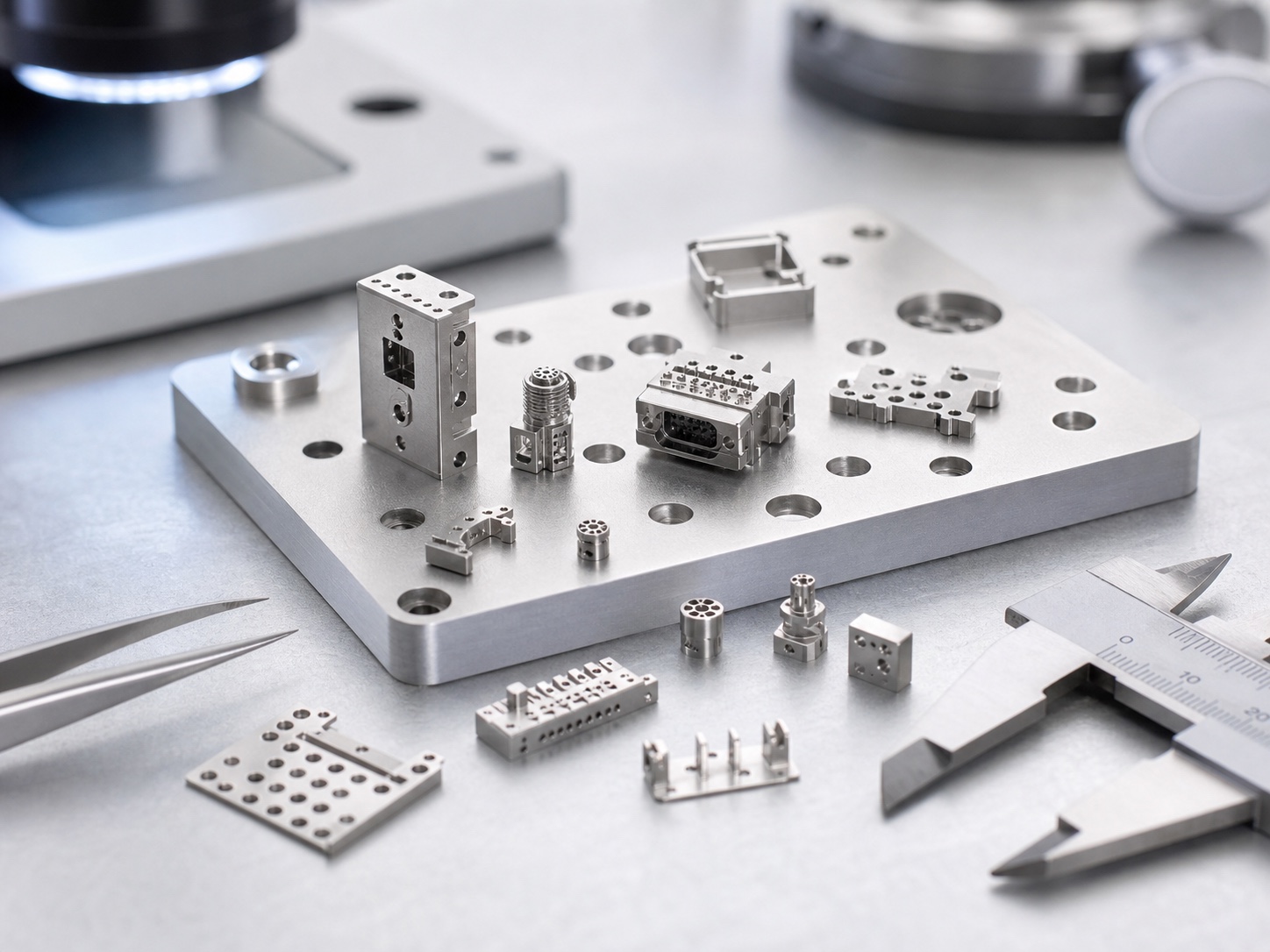
OEMach provides micro CNC machining for compact precision parts with small holes, fine slots, thin walls and tight handling requirements. Engineering reviews tool diameter, burr risk, inspection access, material behavior and batch quantity before quoting.
Suitable Applications
Micro CNC machining is used when parts are too small or detailed for routine machining review. Typical projects include micro brackets, small medical components, connector parts and miniature housings. Related routes such as CNC milling, CNC turning and Swiss machining services can be compared when geometry includes both small prismatic and round features.
Required Files
Send STEP/STP files and a 2D PDF drawing that marks the smallest holes, slots, walls, datum references, burr-sensitive edges and inspection requirements. The RFQ Checklist and Tolerance Guide help clarify what must be measured.
DFM Checkpoints
Engineering checks cutter size, feature depth, thin-wall deflection, burr removal, material stability, fixture access and whether inspection can reliably see the feature. Stainless steel and engineering plastics behave differently at small scale, so material review is important.
Typical Parts & Use Cases
Common structural and precision parts manufactured with this machining method.
Micro Brackets
Small structural brackets, clips and locating features for compact assemblies.
Small Medical Components
Miniature holders, interfaces and instrument parts requiring clean edges and traceable dimensions.
Electronic Connector Parts
Small connector bodies, conductive details and precision inserts with fine features.
Miniature Housings & Plates
Compact housings, cover plates and precision plates with tiny holes, slots and reference faces.
Supported Grades & Post-Processing
Micro CNC parts can be machined from stainless steel, aluminum, titanium, brass and engineering plastics. Finish choices should consider burrs, edge damage, cleaning and inspection visibility.
DFM & Sourcing Review Matrix
How our engineering team reviews your design requirements before launching fabrication.
| Review Area | Buyer Input | Engineering Check | Quote Output |
|---|---|---|---|
| Minimum Feature | Smallest hole, slot, wall and radius | Tool diameter, depth ratio and access | Feature feasibility notes |
| Thin Walls | Wall thickness and unsupported height | Deflection and clamping risk | Risk notes or geometry suggestions |
| Burr Control | Edges that must remain clean | Deburring method and handling risk | Edge-control recommendation |
| Inspection | Critical dimensions and datums | Microscope, gauge or CMM visibility | Inspection method and report scope |
Applicable Industries
RFQ Checklist
- STEP/STP model with tiny features visible
- 2D drawing for small tolerances and datums
- Notes for burr-sensitive edges
- Material grade and quantity
- Inspection method or report requirement
Related Internal Links
Technical Updates
No related articles published in this category yet.
Process FAQ
What parts fit micro CNC machining?
Small brackets, medical components, connector details, miniature housings and plates with tiny holes, slots or thin walls are good candidates.
What makes micro machining difficult?
Small tools, burrs, handling risk, thin-wall deflection and inspection visibility are often more limiting than the machine envelope.
Can plastics be micro machined?
Yes, but plastic movement, burrs and heat sensitivity must be reviewed, especially for POM, nylon, PTFE and PEEK.
How should I define tolerances?
Use a 2D drawing for the dimensions that truly matter, including datums and inspection method when features are very small.
When is Swiss machining better?
Small round parts with long slender geometry or repeatable bar-fed production may be better suited to Swiss machining.
Send drawings for review
Send STEP/STP files, 2D drawings, smallest feature notes, material, quantity and inspection needs. OEMach will review micro-feature feasibility, burr control and measurement method before quoting.