
Custom Machined Parts for EV and Energy Equipment
OEMach manufactures custom CNC machined and sheet metal components for EV systems, energy equipment and related industrial applications. We support conductive components, thermal parts, brackets, enclosures, busbar-related hardware, corrosion-resistant parts and prototype assemblies with material, finish, conductivity, thermal and inspection requirements reviewed before quoting.
Application Context and RFQ Focus
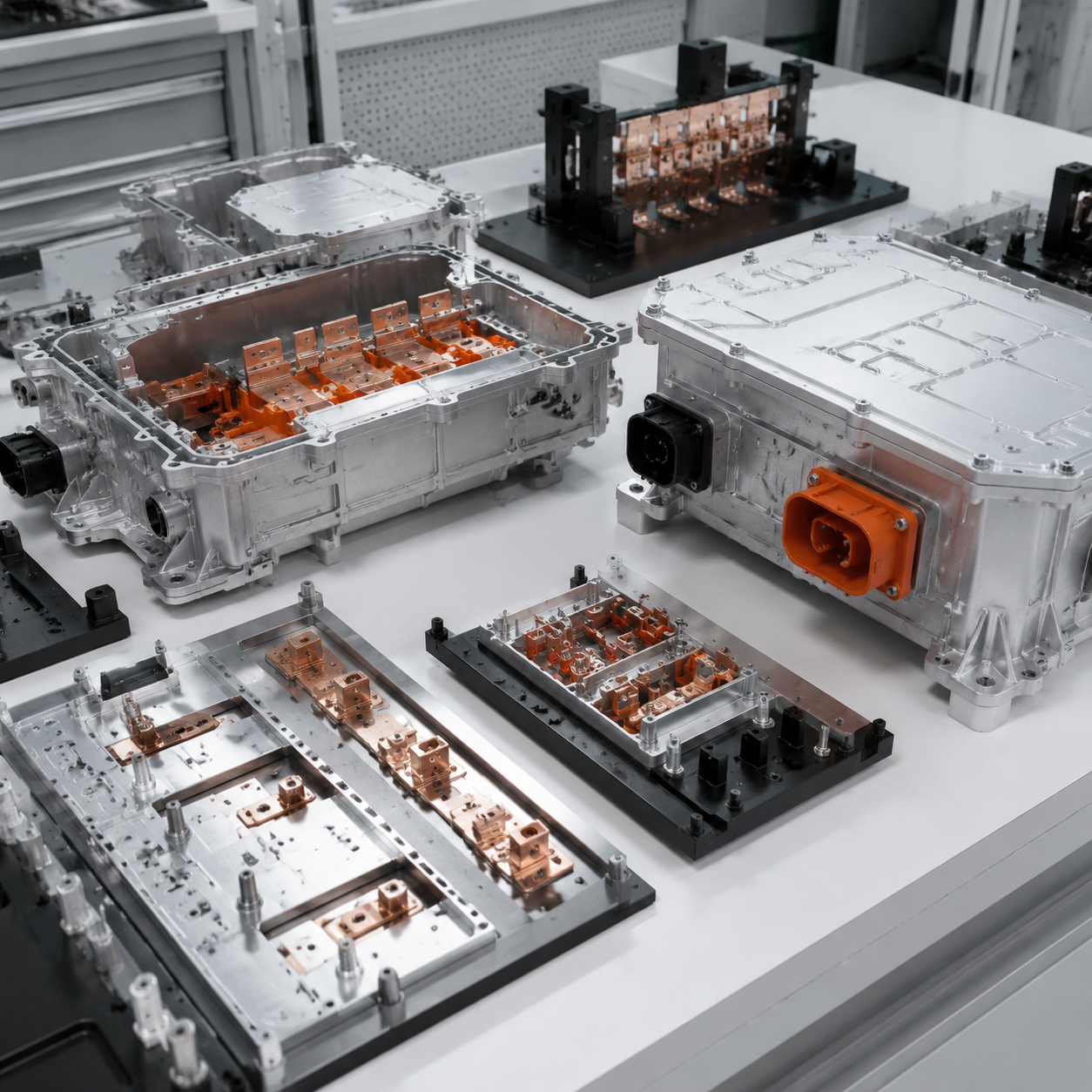
EV and energy equipment components often need conductivity, thermal performance, corrosion resistance, durable finishes and reliable assembly fit. For conductive copper parts, thermal blocks, brackets, enclosures and prototype components, OEMach reviews material grade, finish, coating, fit and inspection requirements before quoting.
Industry RFQ Planning Table
Use this table to prepare EV and energy equipment RFQs with material, conductivity, thermal and finish notes.
| Component Type | Typical Material / Route | RFQ Note to Include | Review Reason |
|---|---|---|---|
| Conductive copper components | Copper or brass; CNC machining services / CNC milling / CNC turning | Conductivity requirement, contact surfaces, plating, burr control and quantity | Affects electrical performance, contact quality and assembly reliability |
| Thermal blocks and plates | Aluminum or copper; CNC milling | Thermal interface, flatness, channels, surface finish and coating requirements | Supports heat transfer, sealing and thermal performance |
| EV equipment brackets | Aluminum or stainless steel; CNC milling / sheet metal fabrication | Load direction, hole pattern, finish, coating and operating environment | Affects installation strength, fit and corrosion resistance |
| Sheet metal enclosures | Aluminum sheet, steel sheet or stainless steel sheet; sheet metal fabrication | Thickness, bend radius, inserts, powder coating and sealing requirements | Supports equipment protection, installation and durable operation |
| Stainless steel hardware | Stainless steel; CNC turning / Swiss machining / CNC milling | Thread details, corrosion resistance, surface finish and inspection needs | Affects fastening, durability and harsh-environment performance |
| Aluminum housings | Aluminum 6061-T6 or 7075; CNC milling / 5-axis machining | Wall thickness, sealing surfaces, anodizing, threaded holes and inspection needs | Supports lightweight structure, heat behavior and assembly fit |
| Prototype energy components | Aluminum, copper, stainless steel or engineering plastics; rapid prototyping / CNC machining services | Prototype purpose, test quantity, material grade, finish and functional requirements | Supports design validation, fit-check and functional testing |
Materials and Surface Finishes for EV and Energy Equipment Parts
EV and energy parts often depend on conductivity, thermal behavior, corrosion resistance and coating performance. OEMach reviews Materials, finish and inspection notes before quoting.
| Material / Finish | Typical Use | Selection Note |
|---|---|---|
| Copper / Brass | Conductive parts, contacts, fittings and thermal/electrical components | Specify conductivity, contact surfaces, plating, burr control and cosmetic requirements where relevant. |
| Aluminum | Thermal plates, housings, brackets and lightweight structures | 6061-T6 is common; 7075 may be reviewed when higher strength is needed. |
| Stainless Steel | Corrosion-resistant hardware, brackets and durable equipment components | Useful when corrosion resistance, durability or fastening strength matters. |
| Engineering Plastics | Insulating parts, spacers, guides and prototype components | Review friction, insulation, temperature, dielectric and wear requirements. |
| Surface Finishes | Plating, anodizing, passivation, powder coating, polishing and project-specific coating notes | Specify coating thickness, masking, contact surfaces, corrosion requirements and cosmetic areas. |
Why OEMach for EV and Energy Equipment Parts
EV and energy equipment parts often combine electrical, thermal, mechanical and environmental requirements. OEMach reviews material choice, coating, conductivity, fit and inspection needs before quoting.
We review contact surfaces, copper or aluminum grade, thermal interfaces, flatness and burr-sensitive conductive areas.
Machined conductive parts, thermal blocks, brackets and enclosures are matched to CNC, turning or sheet metal routes.
Plating, anodizing, passivation, powder coating, masking and coating thickness can be reviewed at RFQ stage.
OEMach supports test samples, fit-check parts, prototype assemblies and low-volume energy equipment components.
Quality and Inspection Notes for EV and Energy Equipment Components
For EV and energy components, OEMach reviews conductivity-related surfaces, thermal interfaces, flatness, coating thickness, corrosion resistance, hole pattern, thread details, material grade and inspection report needs before quoting.
Recommended Machining Capabilities
Recommended Materials & RFQ Links
Questions Before Quoting EV and Energy Equipment Parts
These questions help engineering and sourcing teams prepare clearer RFQs for EV and energy equipment components.
What EV and energy equipment parts can OEMach manufacture?
OEMach can manufacture conductive copper components, thermal plates, brackets, sheet metal enclosures, stainless steel hardware, aluminum housings and prototype energy components.
Can OEMach machine copper or conductive components?
Yes. OEMach can review copper or brass parts for conductivity, burr control, contact surfaces, plating and machining route before quoting.
Which materials are suitable for EV and energy parts?
Copper, aluminum, stainless steel and engineering plastics are commonly reviewed depending on conductivity, thermal behavior, corrosion, insulation and weight requirements.
Can OEMach support sheet metal enclosures and brackets?
Yes. OEMach supports sheet metal enclosures, panels, brackets and chassis parts with thickness, bend radius, insert, coating and finish requirements reviewed before production.
What should I send for an EV or energy equipment RFQ?
Send STEP/STP files, 2D drawings, material grade, quantity, conductivity or thermal notes, finish requirements, tolerance notes and inspection needs.