
Stainless Steel Materials for CNC Turning, Milling and Precision Parts
Stainless steel is selected when custom machined parts need corrosion resistance, strength, durability and clean surface finishing. OEMach machines stainless steel shafts, bushings, sleeves, connectors, brackets and precision components using CNC turning, Swiss machining, CNC milling and micro CNC machining routes.
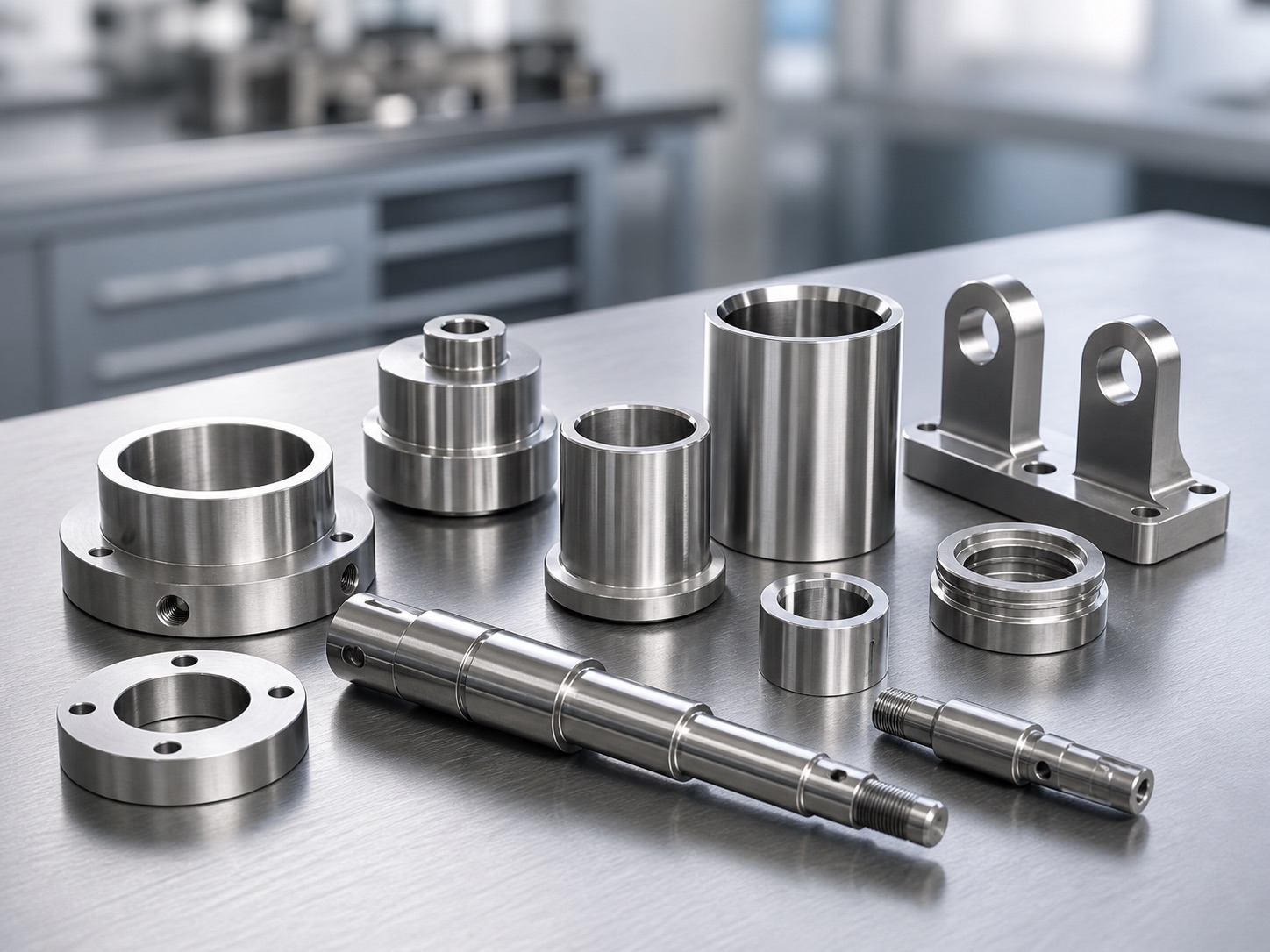
Why stainless steel
Good for parts that must resist corrosion, cleaning fluids, wear and repeated assembly while keeping stable dimensions.
Buyer should send
STEP/STP files, 2D drawings, stainless grade, tolerance callouts, thread details, finish and inspection requirements.
Engineering reviews
OEMach checks grade selection, work hardening risk, burr control, passivation, polishing and critical fit dimensions.
Material Overview
Stainless steel balances corrosion resistance, mechanical strength and surface finish quality. It is widely used for CNC Turning, Swiss Machining Services, CNC Milling and small precision components that need reliable fit and durability.
Compared with Aluminum, stainless steel is heavier and harder to machine, but offers better wear resistance and corrosion performance. It is often considered alongside Titanium when strength, cleanliness or medical use matters.
Best Applications for Stainless Steel Parts
Stainless steel fits projects where corrosion resistance, clean appearance and mechanical reliability are more important than the lowest material cost.
Shafts, bushings and sleeves
Turned stainless parts with controlled diameters, concentricity and surface roughness.
Connectors and fittings
Threaded adapters, collars, inserts and connector bodies for durable assemblies.
Medical and clean equipment parts
Precision parts for Medical Devices and equipment that may require passivation or polishing.
Industrial machinery components
Wear-resistant spacers, brackets and sleeves for Industrial Equipment.
Small precision components
Small stainless features can be reviewed through Micro CNC Machining when size or burr control is critical.
Common Stainless Steel Grades
OEMach commonly reviews 304, 316, 17-4PH and drawing-specified stainless steel grades based on corrosion exposure, strength and machining route.
| Grade / Type | Best Used For | Main Advantages | Review Notes | Typical Processes |
|---|---|---|---|---|
| 304 | General corrosion-resistant machined parts, brackets, shafts and sleeves | Widely available, balanced corrosion resistance and good finish options | Review work hardening, burrs and passivation needs | CNC turning, CNC milling, Swiss machining |
| 316 | Marine, chemical, medical and outdoor components | Better corrosion resistance than 304 in chloride or harsh environments | Costs more than 304 and may machine slower | CNC turning, milling, precision components |
| 17-4PH | High-strength shafts, pins and structural stainless parts | Can be heat treated for higher strength and hardness | Confirm heat treatment condition and final tolerance after processing | Turning, milling, selected post-treatment routes |
| Project-Specified Stainless | Parts governed by customer drawings or procurement standards | Keeps material selection aligned with approved engineering requirements | Specify standard, certificate needs and finish expectations | Custom CNC machining routes |
Manufacturing Processes for Stainless Steel
Best for shafts, sleeves, bushings, collars and threaded stainless parts with controlled diameters.
Recommended for small-diameter pins, connectors and repeatable precision turned parts.
Used for brackets, blocks, plates and prismatic stainless components with holes and pockets.
Useful when small stainless parts require fine holes, tight features or controlled burrs.
Surface Finishes for Stainless Steel
Stainless steel finishes are selected for corrosion resistance, cleanability, appearance and fit. See Surface Finishes and include finish notes in the RFQ Checklist.
Passivation
Improves corrosion resistance by removing free iron from stainless surfaces.
Polishing
Improves appearance and can reduce surface roughness on selected visible or sliding areas.
Bead blasting
Creates a uniform matte appearance before passivation or final cleaning.
Electropolishing
Can improve cleanability and surface smoothness when required by specification.
Design Considerations for Stainless Steel Parts
Stainless steel can work harden during machining, so tool access, internal radius, burr control, thread depth, thin-wall risk and surface roughness should be reviewed early. For turned parts, diameter tolerance, concentricity and runout are important; for milled parts, flatness and tool deflection should be checked.
Stainless Steel vs Other Materials
Material choice depends on corrosion exposure, weight, strength and cost.
Stainless Steel vs Aluminum
Choose stainless steel for corrosion resistance, durability and wear. Choose Aluminum when low weight and faster machining are priorities.
Stainless Steel vs Titanium
Choose stainless steel for cost-effective corrosion-resistant strength. Choose Titanium for higher strength-to-weight ratio or demanding medical/aerospace use.
Stainless Steel vs Engineering Plastics
Choose stainless steel for stiffness, threads and heat. Choose Engineering Plastics for insulation, low friction or lighter weight.
Industries & Applications
Stainless steel is used where durability, corrosion resistance and reliable fit are critical.
Medical Devices
Used for clean equipment parts, shafts, sleeves and precision components.
Medical Devices →Industrial Equipment
Used for bushings, spacers, brackets and parts exposed to wear or fluids.
Industrial Equipment →Electronics
Used for small hardware, connectors and corrosion-resistant enclosure hardware.
Electronics →Related Services
Quality & Documentation
OEMach can review stainless grade, tolerances, passivation, polishing, material certificates and inspection requirements before quoting. Use the RFQ Checklist or Contact / Get a Quote to prepare requirements.
| Review Item | What to Specify | Why It Matters |
|---|---|---|
| Material grade | 304, 316, 17-4PH or drawing-specified stainless steel | Grade affects corrosion resistance, strength, machinability and cost. |
| Critical dimensions | Diameters, concentricity, thread class, flatness and surface roughness | Helps choose turning, Swiss machining, milling or micro machining. |
| Finish requirement | Passivation, polishing, bead blasting or electropolishing notes | Finish can affect appearance, corrosion resistance and inspection criteria. |
| Documentation | Material certificates, dimensional reports or first article inspection | Clarifies sourcing and quality records before production. |
Technical Updates
Material FAQ
What stainless steel grades can OEMach machine?
OEMach can review 304, 316, 17-4PH and customer-specified stainless steel grades. Availability depends on stock form, quantity, tolerance, finish and certificate needs.
What parts are best suited for stainless steel?
Stainless steel is well suited for shafts, bushings, sleeves, fittings, connectors, brackets and precision components that need corrosion resistance, strength or clean surface finishing.
Which processes are suitable for stainless steel parts?
CNC turning, Swiss machining, CNC milling and micro CNC machining are common routes. The best route depends on part geometry, size, tolerance and quantity.
What finishes are available for stainless steel?
Common options include passivation, polishing, bead blasting and electropolishing when required. Drawings should define cosmetic faces, Ra values or passivation standards.
What files should I send for a stainless steel quote?
Send STEP/STP files, 2D PDF drawings, stainless grade, quantity, tolerances, thread details, finish and inspection requirements.
Send drawings for review
Send drawings, 3D files, stainless steel grade, quantity, tolerance, thread and finish requirements. OEMach will review corrosion resistance, machining route, burr control and inspection needs before quoting.