
Materials for Custom CNC Machining, Sheet Metal and Prototyping
OEMach works with a wide range of metals and engineering plastics for custom CNC machining, sheet metal fabrication, 3D printing and rapid prototyping. Use this materials guide to compare common grades, manufacturing compatibility, surface finish options and typical applications before requesting a quote.
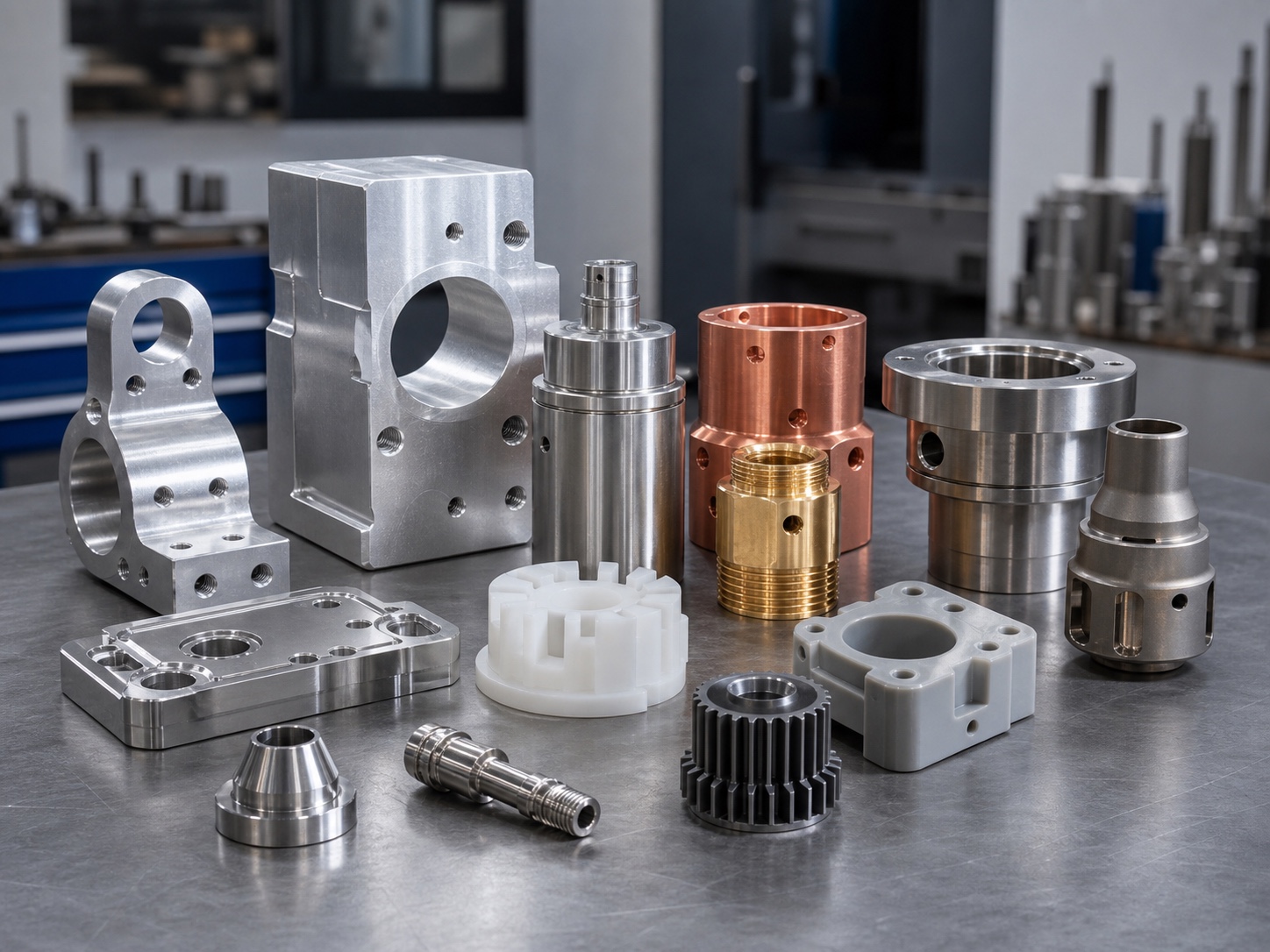
Compare materials by part type, advantage and process fit
Use these cards to narrow the material route before sending drawings. Exact grade availability, certificates and inspection scope are confirmed during RFQ review.
Metals
Engineering Plastics
Specialty / Project-Based Materials
How common materials fit custom manufacturing routes
The best choice depends on geometry, strength, weight, finish, environment and inspection requirements.
Aluminum
Aluminum is lightweight and easy to machine, commonly used for CNC milled housings, brackets, fixture plates, robotic parts and electronic enclosures. It also fits 5-axis machining, sheet metal fabrication and prototype work.
Stainless Steel
Stainless steel is selected for corrosion resistance, strength and durability in shafts, bushings, medical components and industrial equipment parts. It is common in CNC turning, Swiss machining services and milled components.
Brass / Copper
Brass and copper are used for connectors, electrical parts, thermal components, fittings and precision turned parts that require conductivity or machinability. They often pair with CNC turning and Swiss machining.
Titanium
Titanium is chosen for high strength-to-weight ratio, corrosion resistance and demanding aerospace, medical or high-performance parts. Complex titanium components often require careful 5-axis machining and inspection planning.
Engineering Plastics
Engineering plastics are used for lightweight, insulating, wear-resistant or low-friction components such as spacers, guides, housings and prototype parts. Some designs may use 3D printing services for fast fit-check samples before CNC machining.
Choose materials by engineering need
Start with the functional requirement, then confirm grade, finish and tolerance risk with the drawing package.
Consider aluminum or engineering plastics.
Consider stainless steel, titanium or anodized aluminum.
Consider copper or brass, with plating reviewed through surface finishes.
Consider 7075 aluminum, stainless steel or titanium.
Consider POM, nylon or PTFE, or PEEK for demanding plastic parts.
Consider aluminum with anodizing, stainless steel with polishing, or sheet metal with powder coating through surface finishes.
Material fit across CNC machining, sheet metal and prototyping
This table is a buyer-facing guide. Final process selection depends on part geometry, tolerance, quantity, finish and inspection requirements.
| Material | CNC Milling | CNC Turning | Swiss Machining | 5-Axis | Sheet Metal | 3D Printing | Typical Applications |
|---|---|---|---|---|---|---|---|
| Aluminum | Best fit for housings and plates | Good for round aluminum parts | Conditional by geometry | Strong fit for complex parts | Good for aluminum sheet | Prototype route when printed material is suitable | Housings, brackets, fixtures, prototypes |
| Stainless Steel | Good for durable machined parts | Strong fit for shafts and bushings | Strong fit for small turned parts | Useful for complex medical or equipment parts | Good for stainless sheet | Limited compared with machining | Shafts, bushings, covers, medical and industrial parts |
| Brass / Copper | Useful for thermal or electrical features | Strong fit for connectors and fittings | Strong fit for small precision parts | Conditional by geometry | Conditional by grade and sheet form | Limited | Electrical parts, thermal blocks, fittings, connectors |
| Titanium | Good with careful tool and heat control | Useful for selected round parts | Conditional by part size and batch needs | Strong fit for complex high-performance parts | Project-based | Limited | Aerospace, medical and high-strength lightweight parts |
| Engineering Plastics | Strong fit for flat, pocketed and insulating parts | Good for round spacers and bushings | Conditional for small repeat parts | Conditional by stiffness and clamping | Not applicable | Useful for prototypes and fit checks | Spacers, guides, housings, insulating and wear parts |
| Sheet Metal Grades | Secondary machining if required | Limited | Not typical | Limited | Strong fit for aluminum, stainless and steel sheet | Not typical | Panels, brackets, enclosures and formed parts |
Where material choice affects part performance
Material selection is part of process planning, inspection planning and cost control for each industry route.
Robotics
Aluminum brackets, housings, fixture plates and lightweight structural parts for motion systems and robot assemblies.
Robotics →Medical Devices
Stainless steel, titanium and engineering plastic components requiring clean finishes and reliable dimensions.
Medical Devices →Aerospace
Titanium, aluminum and stainless steel parts for lightweight, high-strength applications.
Aerospace →Automotive
Turned shafts, brackets, bushings, fixtures and prototype components for vehicle and energy-related systems.
Automotive →Electronics
Aluminum enclosures, copper thermal parts, brass connectors and insulating plastic components.
Electronics →Industrial Equipment
Durable stainless steel, steel, aluminum and plastic parts for machinery and automation systems.
Industrial Equipment →Match material with surface finish requirements
Surface treatment can affect appearance, corrosion resistance, wear behavior, conductivity, coating thickness and final inspection. Surface Finishes.
Anodizing
Common for aluminum parts when corrosion protection, color or cosmetic consistency is required.
Bead Blasting
Creates an even cosmetic texture before anodizing or for visible machined components.
Polishing
Used for stainless steel and visible parts where appearance or smoother surfaces matter.
Passivation
Often selected for stainless steel to support corrosion resistance after machining.
Plating
Used for brass, copper and steel parts when conductivity, wear or corrosion requirements apply.
Powder Coating
Common for sheet metal panels, brackets and enclosures needing color or protection.
Black Oxide
Project-based option for selected steel parts when a dark appearance or light protection is needed.
Clarify material documents before quoting
For material-sensitive projects, OEMach can review grade requirements, finish notes, inspection requirements and documentation needs before quoting. Please specify if your project requires material certificates, RoHS/REACH-related information, first article inspection or dimensional inspection reports.
Quality
Review inspection expectations, material certificates and dimensional reporting needs early in the RFQ process.
Quality →RFQ Checklist
Use the checklist to prepare 3D files, 2D drawings, material grade, quantity, finish and inspection notes.
RFQ Checklist →Contact / Get a Quote
Send drawing packages and material notes so engineering can confirm material suitability before quoting.
Contact / Get a Quote →Materials questions before RFQ
What materials can OEMach machine?
OEMach supports common metals and engineering plastics, including aluminum, stainless steel, brass, copper, titanium, POM, nylon, PTFE, PEEK and project-based grades. Final availability is confirmed during RFQ review based on grade, form, quantity and documentation needs.
Can I specify an exact material grade?
Yes. Please include the exact grade, standard, heat treatment or certificate requirement on the drawing or RFQ notes. OEMach will review procurement feasibility, machining risk and any documentation requirements before quoting.
Which material is best for lightweight CNC machined parts?
Aluminum is usually the first choice for lightweight machined housings, brackets and fixture plates. Engineering plastics may be suitable when insulation, low friction or lower weight is more important than metal strength.
Can you provide material certificates?
Material certificates can be reviewed for suitable projects when they are requested during quotation. Please state certificate, traceability or inspection requirements before production so sourcing and documentation can be planned.
How should I choose between aluminum, stainless steel and engineering plastics?
Choose aluminum for low weight and machinability, stainless steel for corrosion resistance and strength, and engineering plastics for insulation, low friction or reduced weight. Geometry, tolerance, temperature, finish and cost should be reviewed together.