
Custom CNC Machined Parts for Robotics
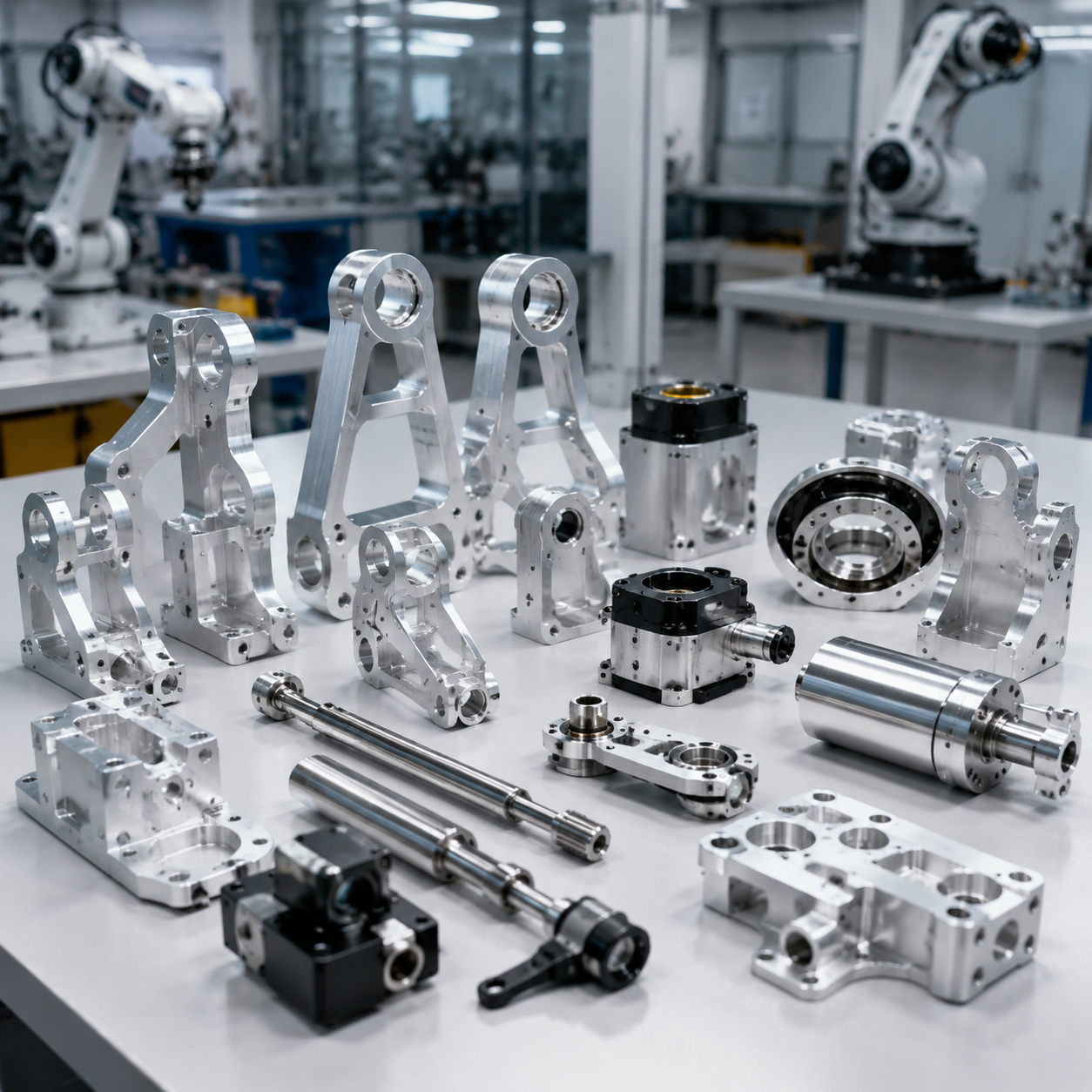
OEMach manufactures custom CNC machined parts for robotics systems, automation equipment and motion-control assemblies. We support lightweight brackets, joint housings, custom links, sensor mounts, end-effector components and fixture parts with material, tolerance, finish and inspection requirements reviewed before quoting.
Application Context and RFQ Focus
Robotics parts often need a balance of low weight, rigidity, accurate hole position and reliable assembly fit. For brackets, joint housings, custom links and end-effector parts, OEMach reviews part geometry, datum strategy, wall thickness, material selection, surface finish and inspection requirements before quoting. See related Industries routes when a robotic assembly also involves automation equipment or production fixtures.
Industry RFQ Planning Table
Use the table below to connect common robotics component types with material, process and quotation notes before sending drawings.
| Component Type | Typical Material / Route | RFQ Note to Include | Review Reason |
|---|---|---|---|
| Robot joint housings | Aluminum 6061-T6 / 7075 or stainless steel; CNC milling / 5-axis machining | Datum strategy, bearing fit, hole position, wall thickness, anodizing and inspection requirements | Controls motion alignment, rigidity, assembly fit and weight |
| Mounting brackets | Aluminum, stainless steel or engineering plastics; CNC milling / sheet metal fabrication | Load direction, hole pattern, flatness, threaded holes, finish and quantity | Affects installation repeatability, stiffness and assembly reliability |
| Custom robot links | Aluminum 7075, titanium or stainless steel; 5-axis machining / CNC milling | Critical hole spacing, weight target, strength requirement, datum references and surface finish | Affects motion accuracy, weight reduction and structural performance |
| End-effector components | Aluminum, stainless steel or engineering plastics; CNC milling / rapid prototyping | Assembly interface, gripping surface, wear surfaces, inserts, finish and test quantity | Controls part handling, fit, function and iteration speed |
| Sensor and actuator mounts | Aluminum, POM, stainless steel or sheet metal grades; CNC milling / sheet metal fabrication | Mounting hole pattern, alignment surfaces, cable clearance, finish and production quantity | Supports sensor alignment, equipment integration and repeatable assembly |
| Shafts, pins and spacers | Stainless steel, aluminum, brass or engineering plastics; CNC turning / Swiss machining | Diameter tolerance, runout, concentricity, surface roughness and plating requirements | Affects rotational fit, wear, alignment and assembly life |
| Fixture plates and tooling blocks | Aluminum, steel or stainless steel; CNC milling / CNC machining services | Flatness, datum holes, threaded inserts, surface finish and inspection report needs | Supports repeatable assembly, inspection and production setup |
Materials and Surface Finishes for Robotics Parts
Material and finish choices affect weight, stiffness, wear behavior, assembly fit and cosmetic appearance. For robotics components, OEMach reviews Materials, surface finish notes and post-processing requirements before quoting.
| Material / Finish | Typical Robotics Use | Selection Note |
|---|---|---|
| Aluminum | Lightweight brackets, joint housings, covers, fixture plates and robot links | 6061-T6 is common for general machined parts; 7075 may be selected when higher strength is required. |
| Stainless Steel | Shafts, pins, sleeves, wear-related parts and corrosion-resistant components | Useful when strength, durability, wear behavior or corrosion resistance matters more than weight reduction. |
| Titanium | High-strength lightweight links, compact motion components and demanding structural parts | Consider for performance-focused parts where strength-to-weight ratio is important. |
| Engineering Plastics | Guides, spacers, insulating parts, low-friction components and fit-check prototypes | POM, nylon, PTFE, PEEK and other plastics may be reviewed based on friction, insulation, wear and temperature needs. |
| Surface Finishes | Anodizing, bead blasting, polishing, passivation, plating and cosmetic finish control | Specify color, cosmetic faces, masking, coating thickness or corrosion requirements in the drawing or RFQ notes. |
Why OEMach for Robotics Parts
Robotics projects need more than machining capacity. OEMach reviews how each part fits into a moving assembly, which surfaces control alignment, which materials support weight and stiffness goals, and which inspection notes should be confirmed before production.
We review datum surfaces, hole position, wall thickness, bearing seats and assembly interfaces before quoting robotics components.
Parts can be routed to CNC milling, 5-axis machining, CNC turning, Swiss machining, sheet metal fabrication or rapid prototyping based on geometry, material and quantity.
OEMach supports early engineering samples, fit-check parts, functional prototypes and low-volume robotics components.
We review anodizing, bead blasting, cosmetic surfaces, critical dimensions, CMM reports, first article inspection and material certificate requirements when needed.
Quality and Inspection Notes for Robotics Components
For robotics components, OEMach reviews critical dimensions, datum references, flatness, hole position, bearing fits, runout, cosmetic surfaces and finish requirements before quoting. Customers can specify dimensional inspection reports, CMM reports, first article inspection, material certificates or special packaging for cosmetic anodized parts when needed.
Recommended Machining Capabilities
Recommended Materials & RFQ Links
Questions Before Quoting Robotics Parts
These questions help engineering and sourcing teams prepare clearer RFQs for custom robotics components.
What robotics parts can OEMach machine?
OEMach can machine robotic brackets, joint housings, custom links, end-effector components, sensor mounts, fixture plates, shafts, pins and spacers based on customer drawings.
What materials are common for robotics components?
Aluminum is commonly used for lightweight housings and brackets, stainless steel for shafts and wear-related parts, titanium for high-strength lightweight parts, and engineering plastics for guides, spacers and insulating parts.
Which machining processes are suitable for robotics parts?
Robotics components may use CNC milling, 5-axis machining, CNC turning, Swiss machining, sheet metal fabrication or rapid prototyping depending on geometry, tolerance and quantity.
Can OEMach support prototype and low-volume robotics parts?
Yes. OEMach can support engineering samples, fit-check parts, functional prototypes and low-volume robotics components.
What should I send for a robotics CNC machining quote?
Please send STEP/STP files, 2D drawings, material grade, quantity, surface finish, tolerance notes and inspection requirements.