
Custom Parts for Automation Equipment
OEMach manufactures custom CNC machined, sheet metal and prototype parts for automation equipment, machine vision systems, assembly lines and production fixtures. We support sensor mounts, actuator brackets, guide plates, fixture blocks, equipment panels and low-volume custom components with material, tolerance, finish and inspection requirements reviewed before quoting.
Application Context and RFQ Focus
Automation parts often need repeatable hole patterns, stable mounting surfaces, clean assembly fit and reliable performance in production environments. For fixtures, sensor mounts, actuator brackets, guide plates and machine vision components, OEMach reviews part geometry, datum strategy, flatness, material stability, surface finish and inspection requirements before quoting.
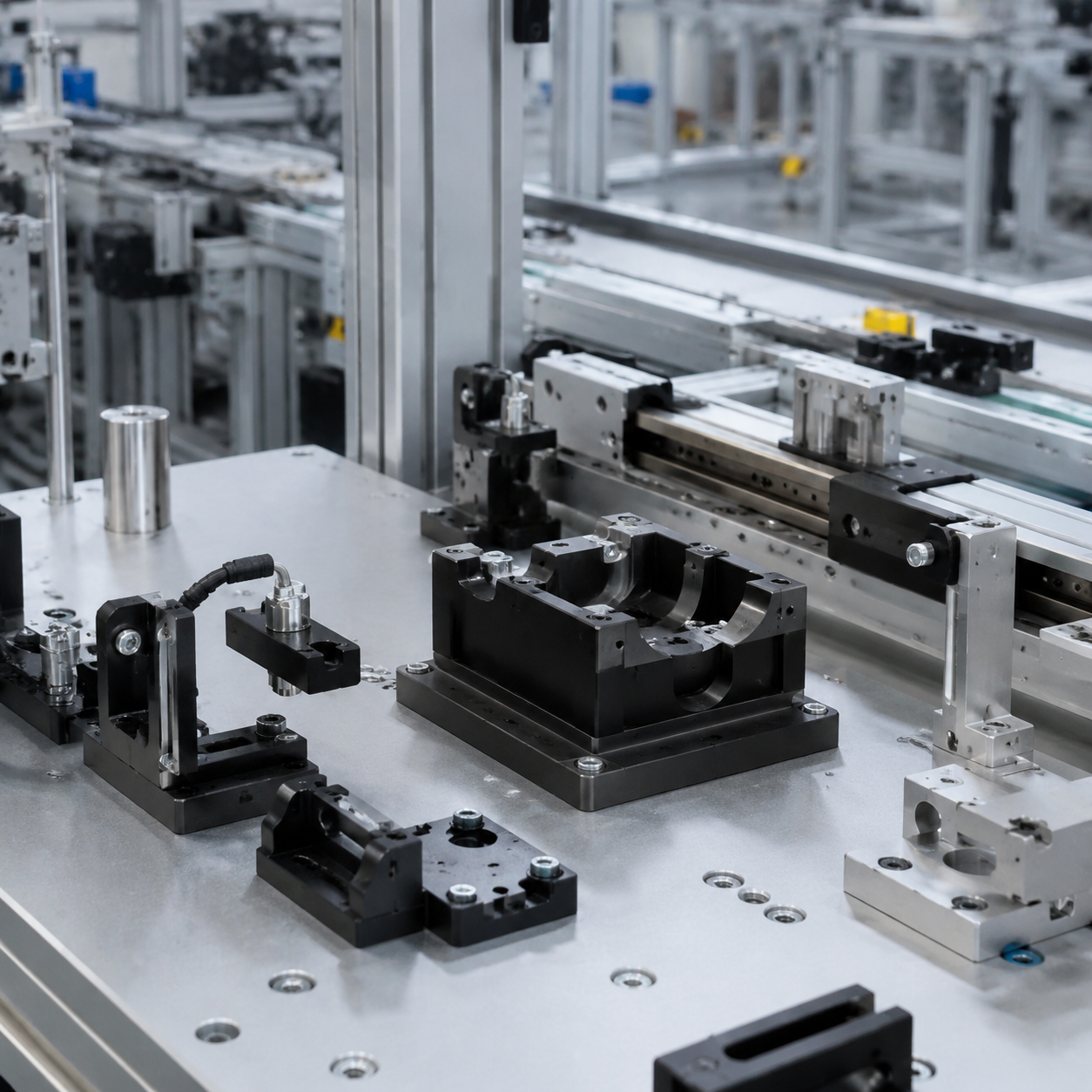
Industry RFQ Planning Table
Use this table to connect automation component types with the process route, drawing notes and review reason before sending an RFQ.
| Component Type | Typical Material / Route | RFQ Note to Include | Review Reason |
|---|---|---|---|
| Sensor mounts | Aluminum, stainless steel or engineering plastics; CNC milling / sheet metal fabrication | Mounting hole pattern, sensor alignment faces, cable clearance, finish and quantity | Supports accurate sensor positioning and repeatable machine setup |
| Actuator brackets | Aluminum or stainless steel; CNC milling / CNC machining services | Load direction, threaded holes, flatness, mating surfaces and tolerance notes | Affects actuator alignment, stiffness and assembly reliability |
| Guide plates | Aluminum, stainless steel, POM or nylon; CNC milling | Sliding surfaces, wear areas, hole pattern, thickness and surface finish | Controls motion guidance, wear behavior and repeatable positioning |
| Fixture blocks | Aluminum, steel or stainless steel; CNC milling / CNC machining services | Datum faces, locating pins, threaded holes, flatness and inspection requirements | Supports repeatable assembly, inspection and production setup |
| Machine vision mounts | Aluminum or engineering plastics; CNC milling / rapid prototyping | Camera or sensor interface, adjustment slots, vibration concerns and finish | Affects optical alignment, stability and installation flexibility |
| Equipment panels | Aluminum sheet, stainless steel sheet or steel sheet; sheet metal fabrication | Thickness, bend radius, hole-to-edge distance, powder coating and insert requirements | Supports enclosure fit, installation and durable equipment protection |
| Alignment spacers | Aluminum, stainless steel, brass or engineering plastics; CNC turning / Swiss machining | Diameter tolerance, length, concentricity, surface finish and quantity | Affects spacing accuracy, assembly fit and equipment repeatability |
Materials and Surface Finishes for Automation Parts
Automation equipment parts often combine machined metal, sheet metal and engineering plastic components. OEMach reviews Materials, finish notes and inspection needs before quoting.
| Material / Finish | Typical Use | Selection Note |
|---|---|---|
| Aluminum | Lightweight fixtures, brackets, mounts, panels and machine vision components | 6061-T6 is common for machined automation parts; anodizing may be selected for appearance and corrosion protection. |
| Stainless Steel | Durable brackets, guide parts, shafts, spacers and corrosion-resistant equipment components | Useful when strength, wear behavior or corrosion resistance matters. |
| Engineering Plastics | Guides, spacers, insulating components, low-friction parts and prototype fixtures | POM, nylon, PTFE and PEEK may be reviewed based on wear, friction, insulation and temperature requirements. |
| Steel | Heavy-duty tooling blocks, mounting plates, guards and industrial fixture components | A dedicated steel page is not available yet, so steel-related RFQs can be reviewed through the Materials hub. |
| Surface Finishes | Anodizing, bead blasting, polishing, passivation, plating, powder coating and black oxide | Specify cosmetic faces, coating thickness, masking, corrosion resistance or wear requirements in the RFQ. |
Why OEMach for Automation Parts
Automation parts must fit real equipment, not just match a model. OEMach reviews assembly interfaces, repeatability risks, material choice, finish and inspection notes before quoting.
We check datum faces, locating holes, flatness, slot geometry and mating surfaces that control repeatable setup.
Parts can be routed to CNC milling, CNC machining services, sheet metal fabrication, CNC turning, rapid prototyping or 3D printing based on geometry and quantity.
OEMach supports fit-check parts, pilot fixtures, equipment spares and low-volume automation components.
We review anodizing, coating, visible surfaces, dimensional reports, CMM needs and material certificates when required.
Quality and Inspection Notes for Automation Components
For automation equipment, OEMach reviews flatness, hole pattern, datum faces, locating features, threaded holes, sensor alignment and finish requirements before quoting. Customers can request dimensional reports, first article inspection, material certificates or CMM inspection when needed.
Recommended Machining Capabilities
Recommended Materials & RFQ Links
Questions Before Quoting Automation Parts
These questions help engineering and sourcing teams prepare clearer RFQs for automation equipment components.
What automation parts can OEMach manufacture?
OEMach can manufacture fixtures, sensor mounts, actuator brackets, guide plates, machine vision mounts, equipment panels and alignment spacers based on customer drawings.
Which materials are common for automation equipment parts?
Aluminum, stainless steel, engineering plastics and steel are commonly used depending on weight, strength, wear, corrosion and insulation needs.
Can OEMach support fixtures and machine vision mounts?
Yes. OEMach can review hole patterns, datum surfaces, alignment features, material stability and finish requirements for fixture and machine vision components.
Which process should I choose for automation parts?
CNC milling is common for fixture blocks and mounts, sheet metal fabrication for panels and covers, CNC turning for spacers and shafts, and rapid prototyping or 3D printing for early-stage testing.
What should I send for an automation equipment RFQ?
Please send STEP/STP files, 2D drawings, material grade, quantity, finish notes, tolerance requirements and inspection needs.