
PEEK Materials for CNC Machining and High-Performance Plastic Parts
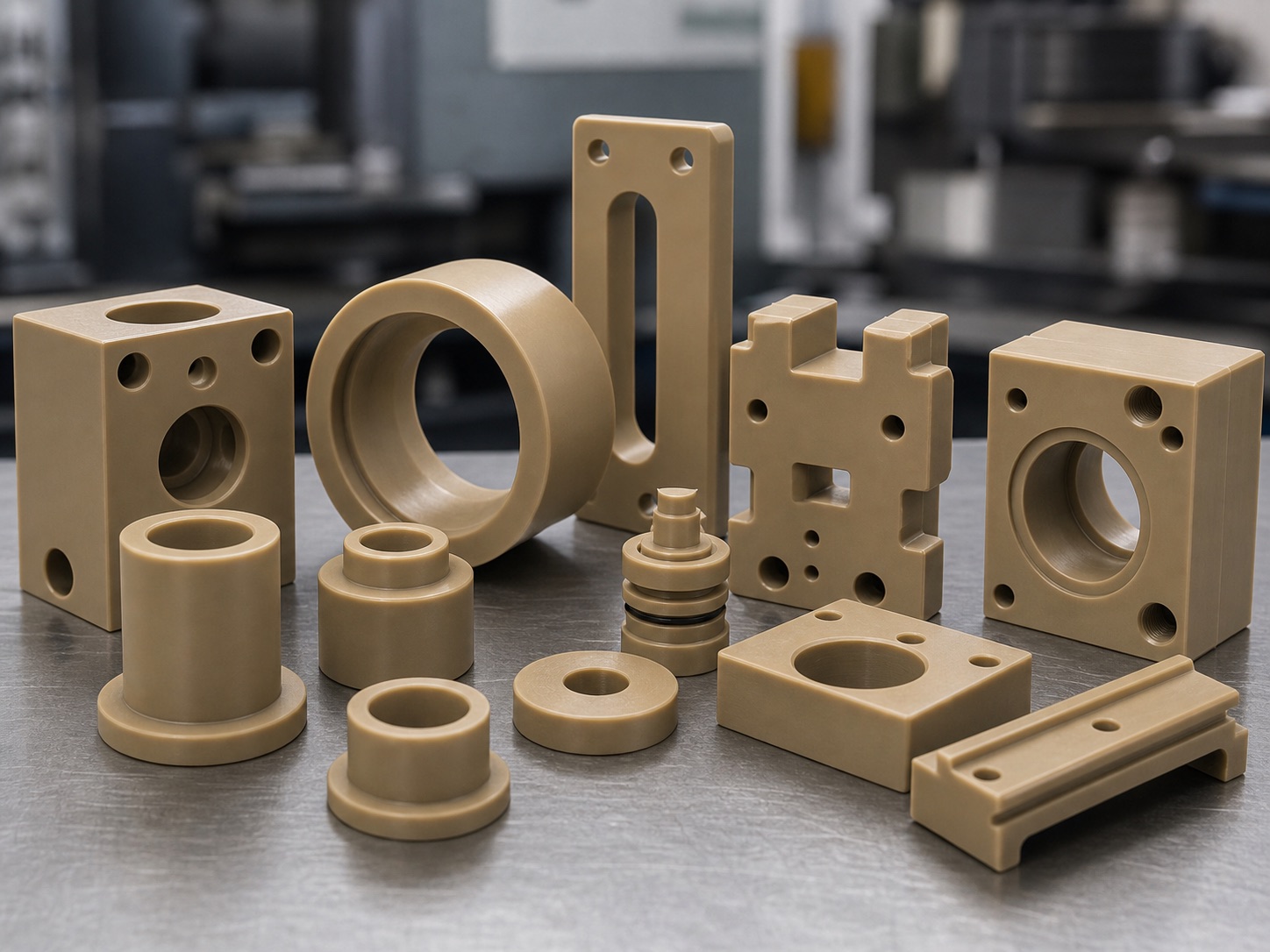
PEEK is a high-performance engineering plastic used when parts need heat resistance, chemical resistance, strength, wear performance and electrical insulation. OEMach machines PEEK bushings, insulators, spacers, guides, small housings and precision components for prototypes and production parts.
Why this material
Selected for weight reduction, insulation, low friction or high-performance polymer behavior.
Buyer should send
STEP/STP files, 2D drawings, plastic grade, tolerance, temperature and finish notes.
Engineering reviews
OEMach checks expansion, moisture, creep, burrs, wall thickness and machining route.
Material Overview
PEEK is a high-performance engineering plastic used when parts need heat resistance, chemical resistance, strength, wear performance and electrical insulation. OEMach machines PEEK bushings, insulators, spacers, guides, small housings and precision components for prototypes and production parts. Related routes include CNC Milling, CNC Turning, Micro CNC Machining, Rapid Prototyping Services and 3D Printing Services.
Best Applications
Common applications focus on weight, friction, insulation, wear and prototype validation.
High-temperature bushings and sleeves
Used when geometry, fit, insulation, wear or material behavior must be validated.
Electrical insulators and spacers
Used when geometry, fit, insulation, wear or material behavior must be validated.
Chemical-resistant guides and wear parts
Used when geometry, fit, insulation, wear or material behavior must be validated.
Medical-style precision polymer components
Used when geometry, fit, insulation, wear or material behavior must be validated.
Prototype and production parts needing polymer stability
Used when geometry, fit, insulation, wear or material behavior must be validated.
Common Grades
OEMach reviews material selection based on drawings, operating environment and dimensional stability needs.
| Grade / Type | Best Used For | Main Advantages | Review Notes | Typical Processes |
|---|---|---|---|---|
| Natural PEEK | Insulators, bushings, spacers and precision polymer parts | Excellent stability, chemical resistance and temperature capability | Higher cost than common plastics | CNC milling, turning |
| Glass-filled PEEK | Stiffer components, fixtures and structural polymer parts | Improved stiffness and dimensional stability | Can be more abrasive to tools | CNC milling |
| Carbon-filled PEEK | Wear parts, ESD-sensitive or high-stiffness components | Higher stiffness and wear performance | Review fiber direction and surface expectations | CNC milling, turning |
| Project-Specified PEEK | Medical, electrical or high-performance drawings | Aligns material with approved requirements | Confirm certificates and grade source | Custom CNC machining |
Manufacturing Compatibility
Useful for functional validation before production quantities.
Surface Finishes for PEEK
Plastic finishes are selected for edge quality, sliding surfaces and appearance. See Surface Finishes and include notes in the RFQ Checklist.
As machined
Deburred plastic parts with controlled dimensions and visible tool marks.
Deburring / edge break
Reduces sharp edges and improves handling or assembly fit.
Polishing
Can improve selected visible or sliding surfaces when geometry allows.
Bead blasting / texture
May create a more uniform matte appearance on suitable rigid plastics.
Design Considerations for PEEK Parts
Plastic parts require review of thermal expansion, moisture absorption, creep, wall thickness, internal radius, thread strength, burr control and tolerance stability. For PEEK and other high-performance plastics, material certificate and application temperature should be stated clearly.
PEEK vs Other Materials
Material choice depends on strength, friction, temperature, insulation and cost.
Plastics vs Aluminum
Choose plastics for insulation, low friction and lower weight. Choose Aluminum for stiffness, heat dissipation and metal threads.
POM / Nylon / PTFE vs PEEK
Use common plastics for cost-effective wear or insulation. Use PEEK when temperature, chemicals and dimensional stability are more demanding.
Plastics vs Stainless Steel
Choose plastics for insulation and weight. Choose Stainless Steel for strength, wear and corrosion-resistant metal parts.
Industries & Applications
Engineering plastics support lightweight, insulating and low-friction applications.
Industrial Equipment
Wear pads, guides, rollers, bushings and low-friction parts.
Industrial Equipment →Related Services
Quality & Documentation
OEMach can review material grade, environment, tolerances, edge quality and inspection before quoting. Use the RFQ Checklist or Contact / Get a Quote.
| Review Item | What to Specify | Why It Matters |
|---|---|---|
| Material grade | Natural PEEK, glass-filled PEEK, carbon-filled PEEK and project-specified PEEK grades | Plastic grade affects strength, temperature, friction, moisture and cost. |
| Critical features | Threads, small holes, wall thickness, fit surfaces and sliding faces | Helps review creep, burrs, tool access and tolerance stability. |
| Operating environment | Temperature, load, chemicals, moisture and electrical needs | Confirms whether common plastics or PEEK are more suitable. |
| Documentation | Certificate, inspection report, first article or special packaging | Clarifies quality records before production. |
Technical Updates
Material FAQ
What PEEK grades can OEMach machine?
OEMach can review Natural PEEK, glass-filled PEEK, carbon-filled PEEK and project-specified PEEK grades based on drawings, stock form, quantity, tolerance and certificate requirements.
What parts are best suited for this material?
Typical parts include spacers, bushings, guides, insulators, housings, wear components and functional prototypes where plastic performance is required.
Which manufacturing processes are suitable?
CNC milling, CNC turning, micro CNC machining and rapid prototyping are common routes. 3D printing may support early fit checks.
What surface finishes are available?
Most plastic parts are supplied as-machined and deburred. Polishing, light texture or bead blasting may be reviewed for suitable geometries and materials.
What files should I send for a quote?
Send STEP/STP files, 2D drawings, plastic grade, quantity, tolerance, operating temperature, load, chemical exposure and finish notes.
Send drawings for review
Send drawings, 3D files, plastic grade, quantity, tolerance, operating environment and finish requirements. OEMach will review material suitability, machining route, creep risk and inspection needs before quoting.