
Swiss Machining Services for Small Precision Turned Parts
OEMach reviews Swiss machining for small-diameter, slender and repeatable turned components. It is used when guide-bushing support, tight diameters, threads, grooves and batch consistency are more important than a simple turning setup.
Suitable Applications
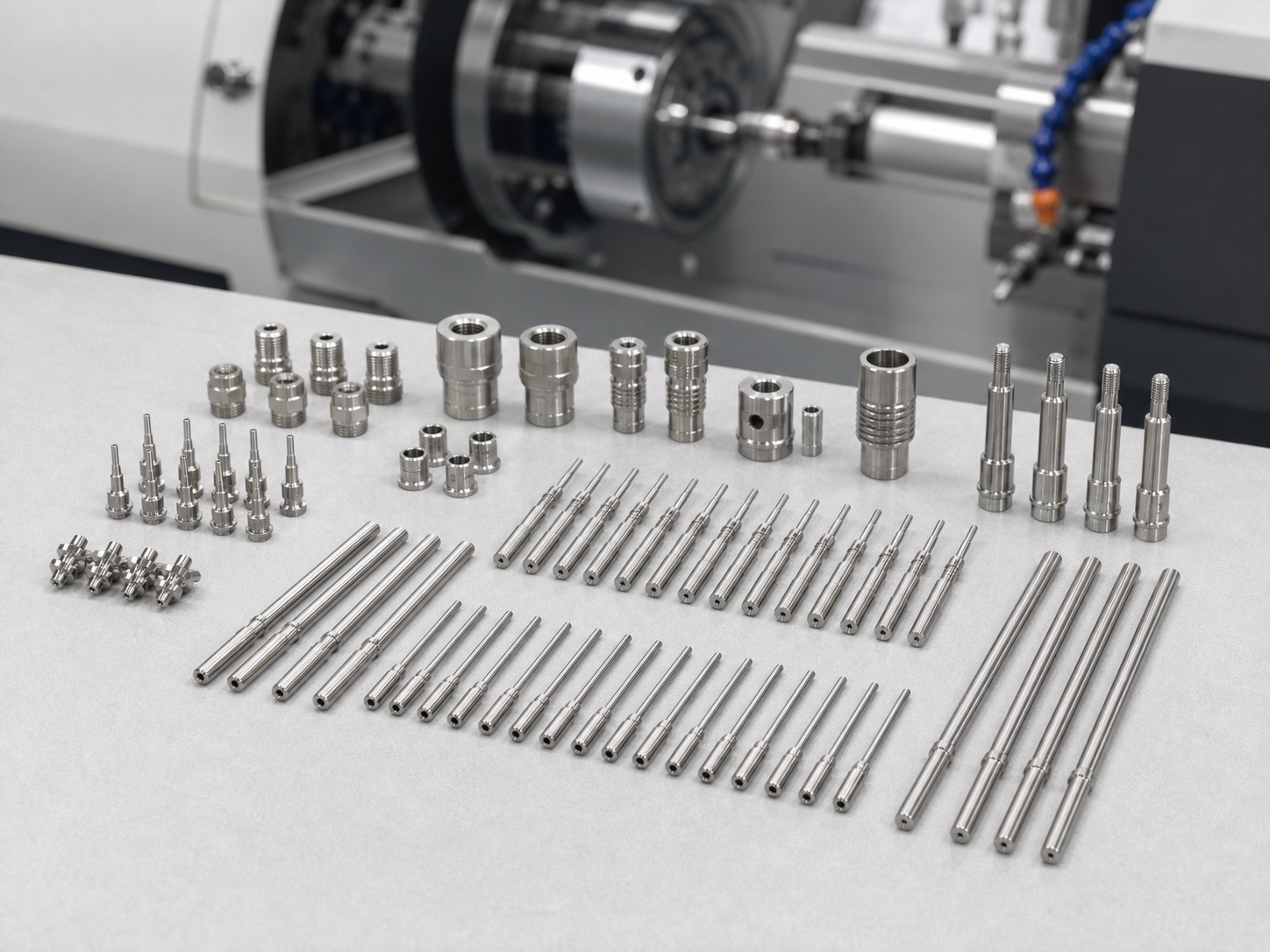
Swiss machining is used for small pins, shafts, connectors, bushings and sleeves where length-to-diameter ratio, tight diameters and repeatability matter. It should be compared with CNC turning and micro CNC machining for small round parts used in medical devices, electronics and industrial equipment.
Required Files
Send a 2D drawing with OD, ID, length, thread standard, grooves, flats, cross holes, tolerances and inspection needs. STEP/STP files help if the part includes non-round features. The RFQ Checklist helps define quantity and batch expectations.
DFM Checkpoints
Engineering checks bar stock, guide-bushing support, length-to-diameter stability, thread relief, burr risk, concentricity and inspection method. Material behavior in stainless steel and brass / copper is reviewed before quoting.
Typical Parts & Use Cases
Common structural and precision parts manufactured with this machining method.
Precision Pins
Small locating pins, dowel pins and stepped pins with controlled diameters and clean edges.
Small Shafts
Slender shafts and miniature axles requiring support, concentricity and repeatable length control.
Connectors
Connector bodies, inserts and fittings with threads, grooves, flats or cross holes.
Bushings & Sleeves
Small bushings, sleeves and spacers with ID/OD control and consistent batch quality.
Supported Grades & Post-Processing
Swiss machined parts are commonly produced from stainless steel, brass / copper, aluminum, titanium and engineering plastics. Finishes may include passivation, plating, polishing, anodizing and cleaning.
DFM & Sourcing Review Matrix
How our engineering team reviews your design requirements before launching fabrication.
| Review Area | Buyer Input | Engineering Check | Quote Output |
|---|---|---|---|
| L/D Ratio | Overall length and smallest OD | Guide support, deflection and stock strategy | Swiss fit and risk notes |
| Threads | Thread standard, relief and gauge needs | Tool access, burr risk and inspection | Threading plan |
| Cross Features | Flats, slots or cross holes | Secondary operation and datum control | Operation sequence |
| Batch Quantity | Prototype, pilot or repeat batch | Setup economics and repeat inspection | Lead-time basis |
Applicable Industries
RFQ Checklist
- 2D drawing with OD, ID, length and thread details
- STEP/STP for non-round features
- Material bar-stock grade
- Quantity and repeat forecast
- Runout, concentricity or thread inspection needs
Related Internal Links
Technical Updates
No related articles published in this category yet.
Process FAQ
When should I choose Swiss machining?
Use Swiss machining for small, slender turned parts, especially when length-to-diameter ratio, diameter control and repeatability matter.
Is Swiss machining only for large batches?
It is strongest for repeatable batches, but prototypes and pilot runs can be reviewed when geometry needs guide-bushing support.
Can Swiss parts include milled features?
Yes. Flats, cross holes, slots and grooves can be reviewed as secondary features within the process route.
What materials are common?
Stainless steel, brass, copper alloys, aluminum, titanium and selected plastics are common, depending on diameter, thread and finish needs.
What files should I send?
A 2D drawing is very important for OD, ID, threads, lengths, runout and inspection notes. STEP/STP helps for cross features.
Send drawings for review
Send drawings with OD/ID, length, thread, material, quantity and inspection notes. OEMach will review Swiss machining fit, repeatability and burr-control risks before quoting.