
CNC Milling Services for Custom Precision Parts
OEMach provides custom CNC milling services for drawing-defined metal and plastic parts, from prototypes to small-batch production. We machine housings, brackets, fixture plates, covers, manifolds and structural components with tolerance, material and finish requirements reviewed before production.
Suitable Applications
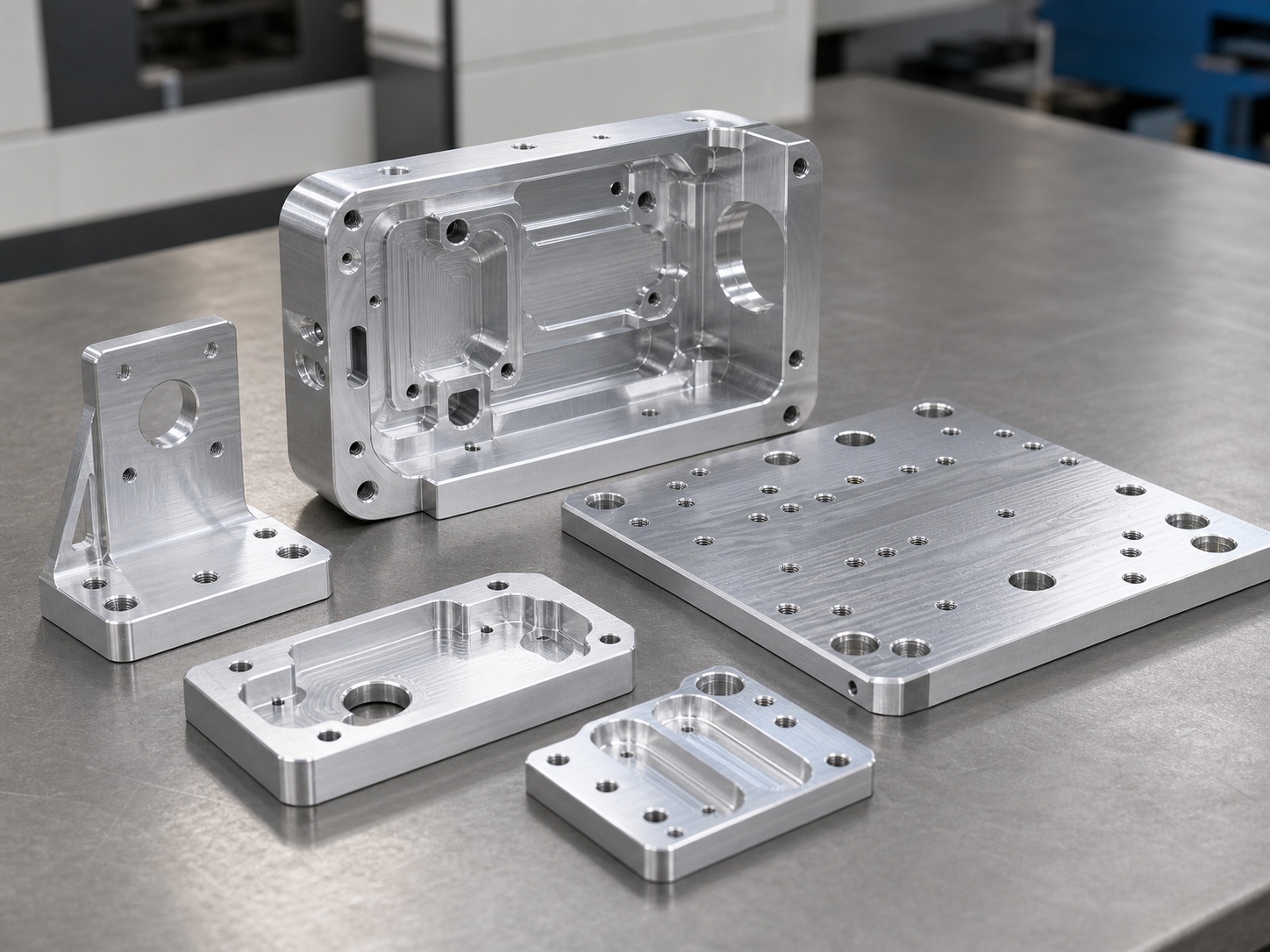
CNC milling is best suited for parts with flat faces, pockets, slots, threaded holes, mounting surfaces and complex prismatic features. It is commonly used for aluminum housings, robotic brackets, electronics enclosures, fixture plates, manifolds, covers and structural components that require reliable alignment and repeatable dimensions. As part of our CNC machining services, multi-side features can also be reviewed for 5-axis machining.
Required Files
For faster review, please send STEP or STP files together with a 2D PDF drawing if the part has tight tolerances, threaded holes, surface roughness requirements, cosmetic surfaces or post-processing requirements. Material grade, quantity, finish and delivery target should be included whenever available. The RFQ Checklist and Contact / Get a Quote page can help prepare a complete package.
DFM Checkpoints
Our engineering review focuses on tool access, internal corner radius, pocket depth, thin-wall risk, hole position, flatness, tolerance stack-up, surface finish and material stability. When a part requires machining from multiple sides or tighter alignment between features, we may recommend 5-axis machining. The Tolerance Guide and Material Guide are useful references before quoting.
Typical Parts & Use Cases
Common structural and precision parts manufactured with this machining method.
Housings & Enclosures
Precision milled housings for sensors, electronics, gearboxes and compact mechanical assemblies.
Brackets & Mounting Plates
Structural brackets, mounting blocks and support plates for robotics, automation and industrial equipment.
Fixture Plates & Tooling Blocks
Custom fixture plates, positioning blocks, inspection fixtures and tooling components with accurate hole patterns and flat reference surfaces.
Manifolds, Covers & Custom Plates
Milled manifolds, covers, adapter plates and components with pockets, channels, tapped holes and sealing surfaces.
Supported Grades & Post-Processing
CNC milled parts can be produced in lightweight aluminum, corrosion-resistant stainless steel, titanium, copper alloys and rigid engineering plastics. Surface finish options can be selected based on cosmetic appearance, wear resistance, corrosion protection and assembly requirements.
DFM & Sourcing Review Matrix
How our engineering team reviews your design requirements before launching fabrication.
| Review Area | Buyer Input | CNC Milling Check | Quote Output |
|---|---|---|---|
| CAD Geometry | STEP/STP model, 2D drawing and datum references | Flat faces, pockets, slots, internal radii, hole access and machining sides | Milling route, setup assumptions and open DFM questions |
| Material Grade | Requested grade or acceptable equivalent | Machinability, stock availability, stability and finish compatibility | Confirmed material route or suggested alternative |
| Critical Features | Threaded holes, bores, sealing faces, pockets and mounting patterns | Tool reach, cutter size, burr risk and inspection access | Feature notes for machining and QC planning |
| Tolerance & Flatness | Critical dimensions, flatness, position and fit requirements | Process capability, tolerance stack-up and reference surface control | Tolerance risk notes and inspection plan |
| Surface Finish | Ra value, cosmetic class, anodizing, blasting, plating or coating | Finish impact on dimensions, masking, handling and visible surfaces | Recommended surface finish route |
| Quantity & Lead Time | Prototype, pilot or small-batch quantity and delivery target | Setup count, fixture need, tooling load and batch strategy | Lead-time basis and quantity assumptions |
| Inspection Requirement | CMM report, first article, thread gauges or material certificates if needed | Measurement method, datum scheme and report scope | Inspection level included in the quotation |
Applicable Industries
RFQ Checklist
- STEP or STP 3D model
- 2D PDF drawing with critical tolerances, threads and flatness notes
- Material grade or approved equivalent
- Surface finish, cosmetic surfaces and post-processing requirements
- Quantity, target delivery and inspection report needs
Related Internal Links
Technical Updates
Process FAQ
What types of parts are best suited for CNC milling?
CNC milling is best for prismatic parts with flat faces, pockets, slots, threaded holes, mounting surfaces, sealing faces and accurate hole patterns. Typical parts include housings, enclosures, brackets, fixture plates, manifolds, covers and custom plates.
What materials can be CNC milled?
OEMach can review CNC milled parts in aluminum 6061-T6 and 7075, stainless steel 304 and 316, titanium Grade 2 and Grade 5, brass, copper and engineering plastics such as POM, nylon, PTFE and PEEK. Material grade, quantity and finish should be confirmed before quoting.
Can you hold tight tolerances on milled parts?
Tight tolerances can be reviewed when the drawing defines datum references, critical dimensions, flatness, hole position and inspection requirements. Final feasibility depends on part size, material stability, wall thickness, feature access and the requested surface finish.
When should I choose 5-axis machining instead of standard CNC milling?
Choose or request review for 5-axis machining when the part has features on multiple sides, angled holes, complex surfaces, tight alignment between faces or when reducing setups can improve accuracy. Standard milling is often suitable for simpler plates, brackets and housings.
What files should I send for a CNC milling quote?
Please send STEP or STP files plus a 2D PDF drawing for tolerances, threads, surface roughness, cosmetic surfaces and inspection notes. Include material grade, quantity, finish and delivery target so engineering can review the milling route and quote assumptions.
Send drawings for review
Send your STEP/STP files, 2D drawings, material, quantity and finish requirements. OEMach will review manufacturability, tolerance risks and suitable machining routes before quoting.