
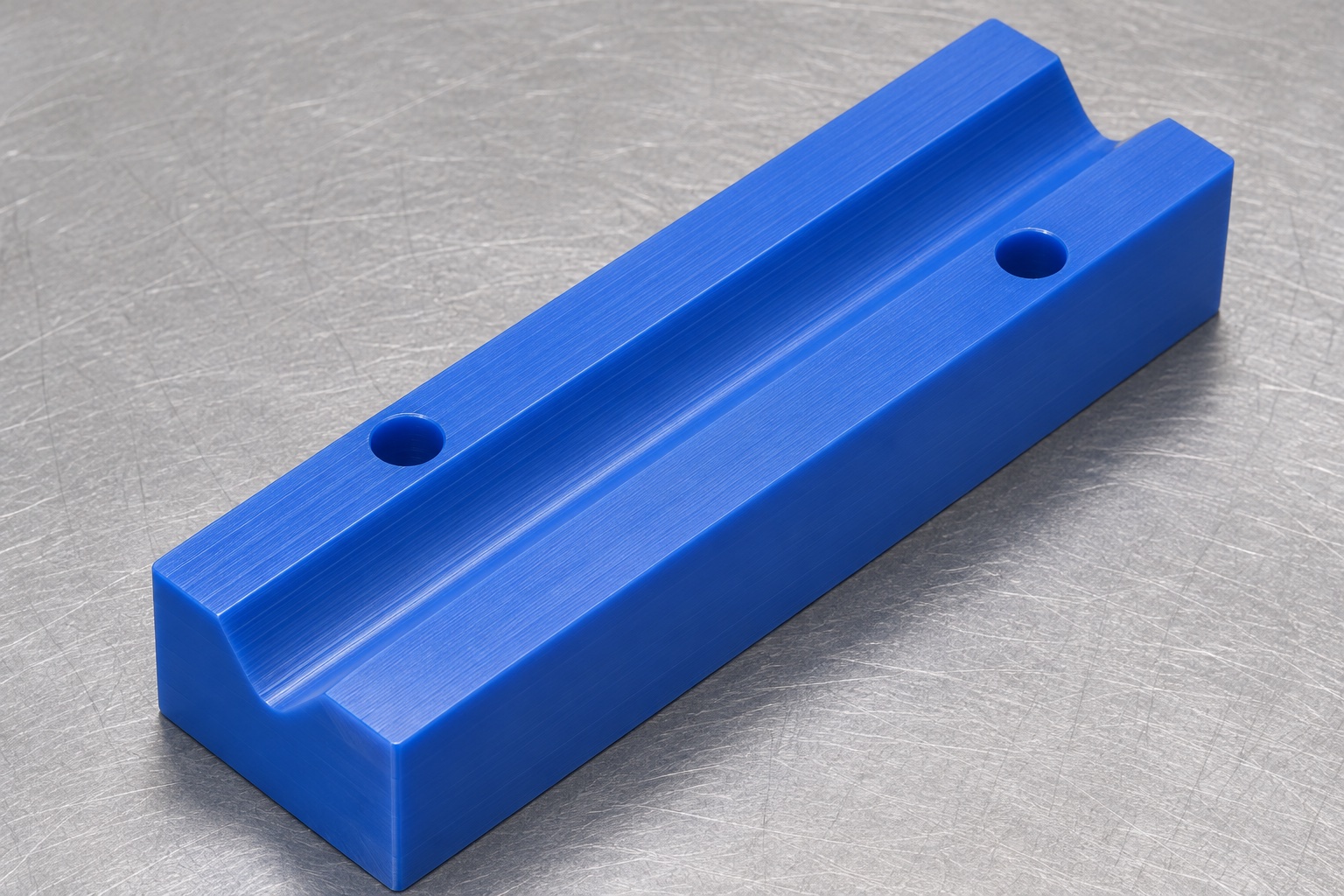
Define the rest as an inert mechanical component
A rest insert can locate an inert dental handpiece reference during service-fixture development. The representative PPSU part is an elongated rectangular block with a longitudinal open cradle channel, a radiused channel profile and two plain mounting through-holes in opposite side margins. The holes are staggered along the length. There are no internal fluid passages, clamps or hidden retention devices. Precision plastic machining should follow the actual contact and mounting definition, not simply produce a channel that looks plausible. This guide does not establish a clinical handpiece accessory, sterilization process or compatibility with a powered instrument. Real use requires separate application requirements and approval.

Identify where the dummy handpiece should contact
Request the inert reference envelope, placement direction and intended support areas. A cylindrical-looking dummy does not determine a universal groove radius or prove that contact should occur at the channel floor. The design owner must define the approved profile and clearance. The radiused channel in this example is not an ideal sharp V and should not be inspected as one. Do not alter the profile by hand until a reference happens to sit steadily. If a different handpiece envelope changes the contact, review the drawing and inspection plan before reusing the program. Meaningful geometry starts with a defined interface rather than the general application name.
Specify the PPSU grade rather than color alone
State the required polyphenylsulfone grade, color, stock form and documentation in the purchase specification. Blue appearance does not establish material identity, a medical formulation or any certification. Confirm substitutions before cutting, including another sulfone polymer or a different PPSU grade. Keep the stock associated with the traveler and drawing revision through machining and final handling. Published properties of a polymer family do not independently approve a finished insert for patient contact, cleaning chemistry or repeated sterilization. Define those requirements separately if the actual application needs them. The supplier should manufacture a traceable specified material, not infer qualification from a familiar engineering-plastic name.
Relate the cradle channel to the mounting seat
Identify the bottom seating face and suitable orientation references for the channel and two mounting holes. Specify the channel profile, position, useful length and relationship to the base. The staggered holes remain separate mounting features rather than a definition of the contact geometry. If fasteners only clamp the insert, distinguish that role from a locating fit. A dummy that seats in an oversized channel may conceal a position error, so assembly appearance cannot replace the datum scheme. The inspection plan should reproduce the approved references without squeezing the polymer into apparent conformity or assuming that the outside rectangular outline automatically controls every functional relationship.
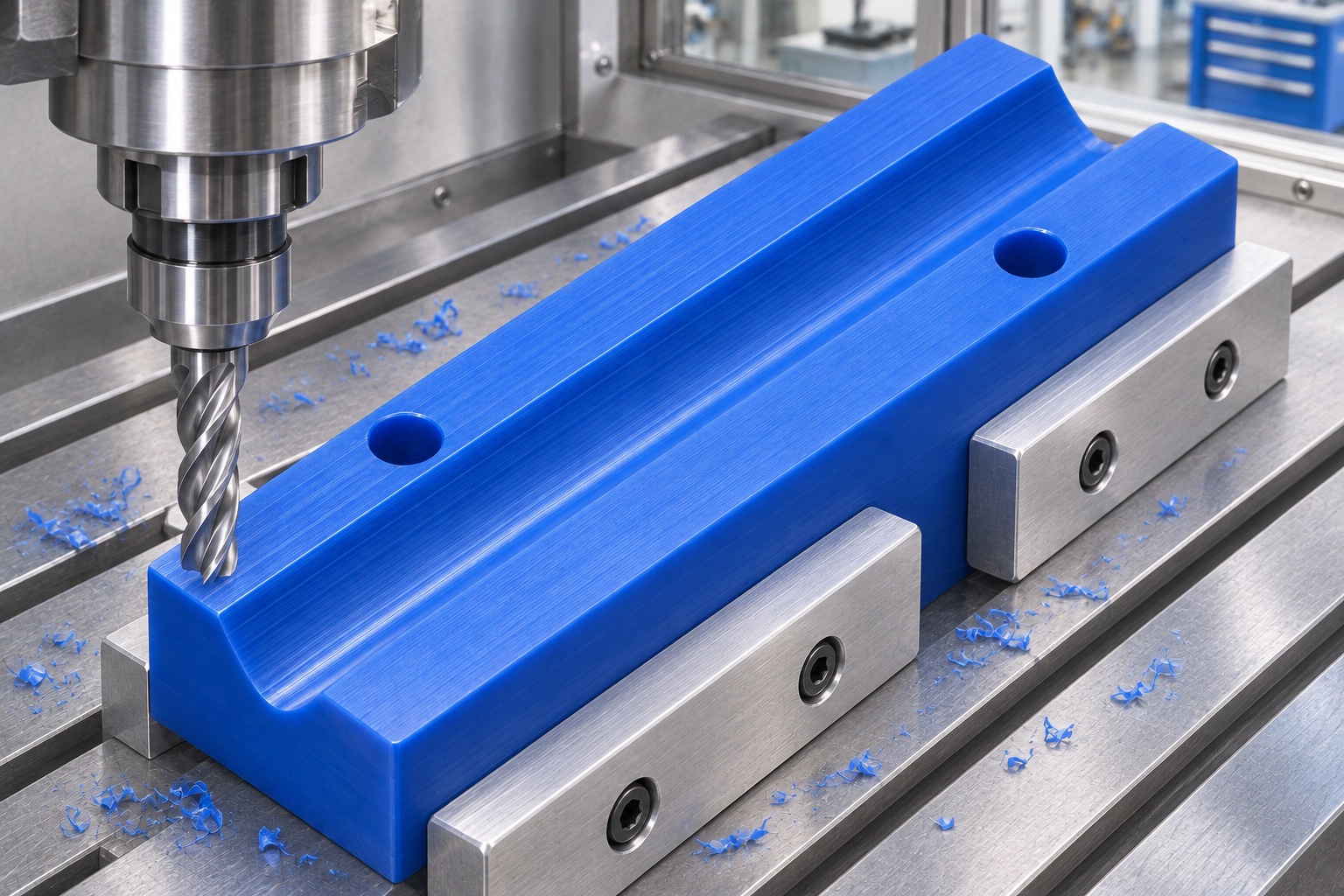
Review material removal and polymer support
Plan the sequence for opening the longitudinal channel while supporting the remaining side margins and bottom section. Select clamp contact areas that avoid local distortion and leave cutter access clear. Appropriate finishing stock may remain according to the actual process plan. Tooling and cutting conditions must suit the approved grade, geometry and machine; no universal speed or feed follows from the name PPSU. Document how the blank is located and recovered for subsequent operations. When dimensional stability or stock condition needs additional attention, review the actual material rather than applying an arbitrary treatment without approval. Final acceptance must evaluate the specified finished component condition.
Finish the radiused profile without inventing a sharp root
Review tool geometry and access against the released cradle contour. The channel must retain its approved transition and exit shape at both short ends. Do not replace it with a sharp V, widen it for a convenient cutter or add a hidden relief without design review. The finishing strategy should address the functional contact surfaces rather than rely on cosmetic polishing. A smooth-looking blue channel does not prove its radius, depth or location. If a surface requirement matters to the inert contact, define a measurable condition and suitable inspection method. The supplier cannot establish real handpiece scratch resistance or retention behavior from ordinary appearance alone.
Machine the two staggered mounting holes explicitly
The representative insert uses two plain vertical through-holes, one on each side margin at a different longitudinal position. Define their sizes and locations within the same reference system as the channel. Threads, counterbores and metal inserts are not assumed. Ensure tool exits remain accessible and inspect the underside edges after debris removal. Avoid clamping so heavily near a hole that the polymer is distorted during machining or measurement. If the actual fastener arrangement changes, revise the drawing and route before cutting. A screw that can pass through a generous opening is supplementary evidence at most; it does not establish the required pattern or channel relationship.
Separate contact edges from handling edges
Specify edge treatment around the channel entrances, outside corners and hole exits. Manual rounding may change where an inert reference first touches or how it is introduced into the rest. Distinguish functional contact areas from edges that only need handling clearance. Remove loose polymer debris with an approved method and inspect the channel transitions without damaging them through unnecessary touching. If magnification is needed, agree the evaluation procedure and acceptance condition. The component's color can make certain surface details harder to judge visually, so appearance should not substitute for a defined inspection method or be used to claim medical cleanliness or a validated device-handling process.
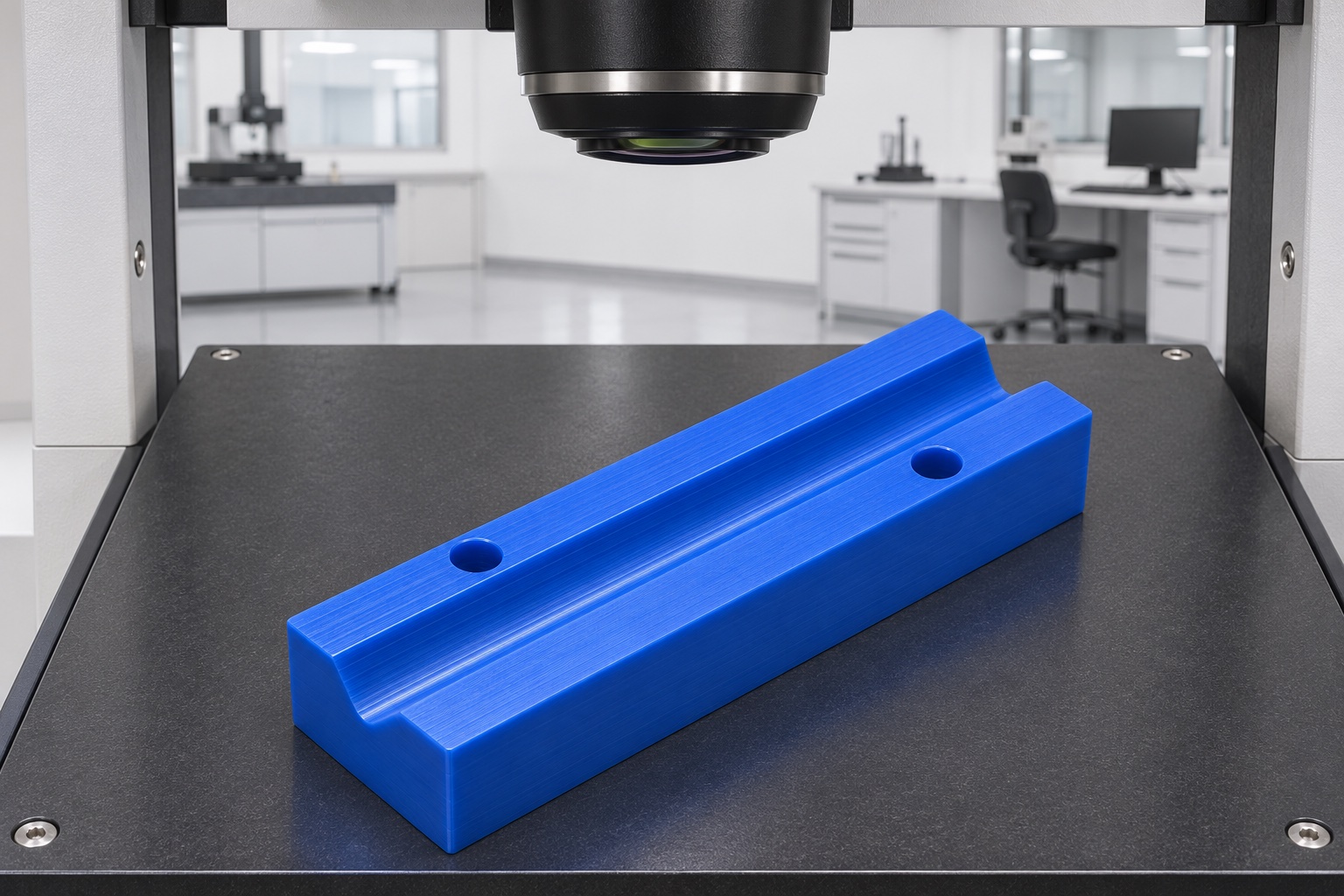
Use inspection methods suited to the released polymer
Map channel profile, depth, location, base condition and hole pattern to suitable methods. Review support and contact force so measurement does not bend the insert or mark its functional surface. A single width reading cannot establish a radiused profile, and a successful dummy placement cannot establish every geometric relationship. Record the reference alignment, actual readings and any evaluation limitations. Environmental or conditioning requirements should be stated when the actual drawing or order calls for them. Do not copy nominal CAD values into a measured-results column or infer process capability from one example. First-article evidence must come from real manufacture and documented inspection.
Bound the dummy placement check without powered use
An identified inert handpiece reference can supplement inspection by showing placement access and visible interference along the cradle. State its revision and the observation procedure. Do not operate a handpiece, connect air or fluid lines, or involve a patient in this mechanical check. A stable-looking dummy does not prove real retention, scratch safety or compatibility with every handpiece envelope. If rocking or unexpected contact appears, compare the reference definition and measured channel before changing the polymer. The useful result is a bounded observation of one defined interface, separate from the dimensional report and any future qualification of an actual medical service workflow.
Define cleaning and packaging for the approved grade
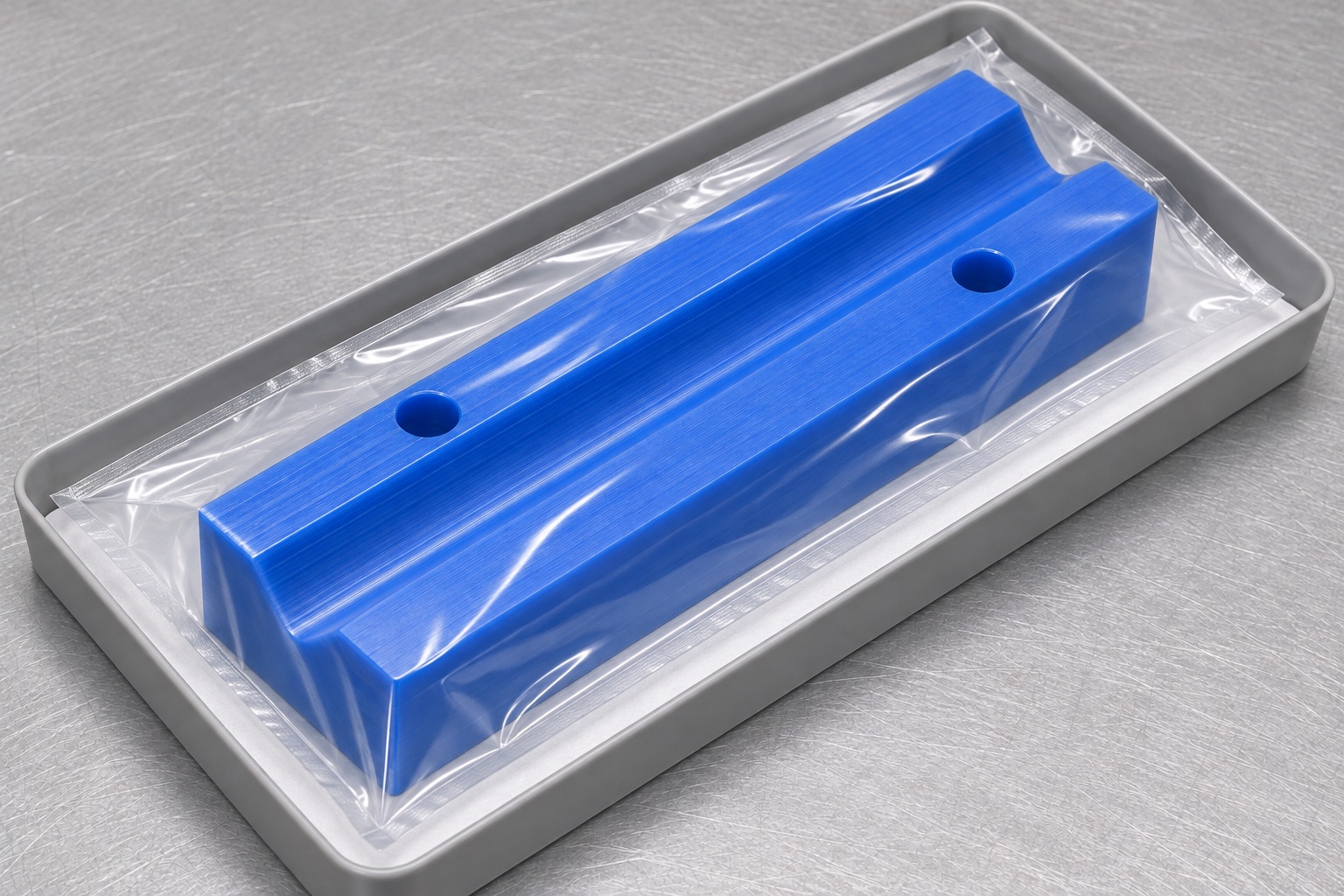
Agree the cleaning agents, drying and handling required for the actual PPSU stock and fixture scope. Do not assume that every process associated with a sulfone polymer is approved for the finished insert. Ordinary debris removal is not sterility or a quantified residue result. Protect the channel from loose fibers, abrasive particles and contact with other parts. Individual packaging should preserve revision identity without loading or deforming the side margins. Labels must not add unsupported medical or sterilization claims. Receiving inspection should follow the actual purchase specification and package condition rather than treat a clean-looking blue component as evidence that every application requirement has been met.
Prepare a complete PPSU fixture-part quotation
Provide the released drawing and model, PPSU grade and color, quantity and inert fixture purpose. Identify the radiused channel, mounting references, staggered holes, edge conditions and required inspection records. Include the dummy definition if a supplementary placement observation is requested. Ask for disclosure of stock substitutions, inaccessible measurements or process assumptions before manufacturing. Separate component milling and protective handling from any real-handpiece compatibility or cleaning validation work. This gives custom medical polymer parts a clear purchasing scope and makes the release decision reviewable without inventing customer deliveries, certification or clinical performance from a representative machining example.
FAQ
Is this insert an approved sterilizable dental accessory?
No. It is an inert fixture example. Finished-part cleaning, sterilization and clinical use require separately defined material, process and application evidence.
Does blue color identify a medical PPSU grade?
No. Specify the exact grade, color and stock documentation. Appearance alone cannot prove material identity, certification or suitability for a medical workflow.
Is the cradle a sharp V-groove?
No. This representative geometry uses an open longitudinal radiused channel. The actual profile and its contact role must be defined on the released drawing.
How are the mounting holes arranged?
Two plain vertical through-holes lie on opposite side margins and are staggered along the length. Threads, recesses and metal inserts are not included automatically.
Can stable dummy placement replace profile inspection?
No. It is supplementary evidence for one inert reference only. Channel shape, location and mounting relationships still require the specified dimensional evaluation.
What information supports a real quotation?
Provide drawing and model revisions, PPSU grade and color, quantity, channel and mounting definitions, dummy reference, inspection, cleaning and protective packaging requirements.

tanghangyun@oemach.com