
Define a passive routing job
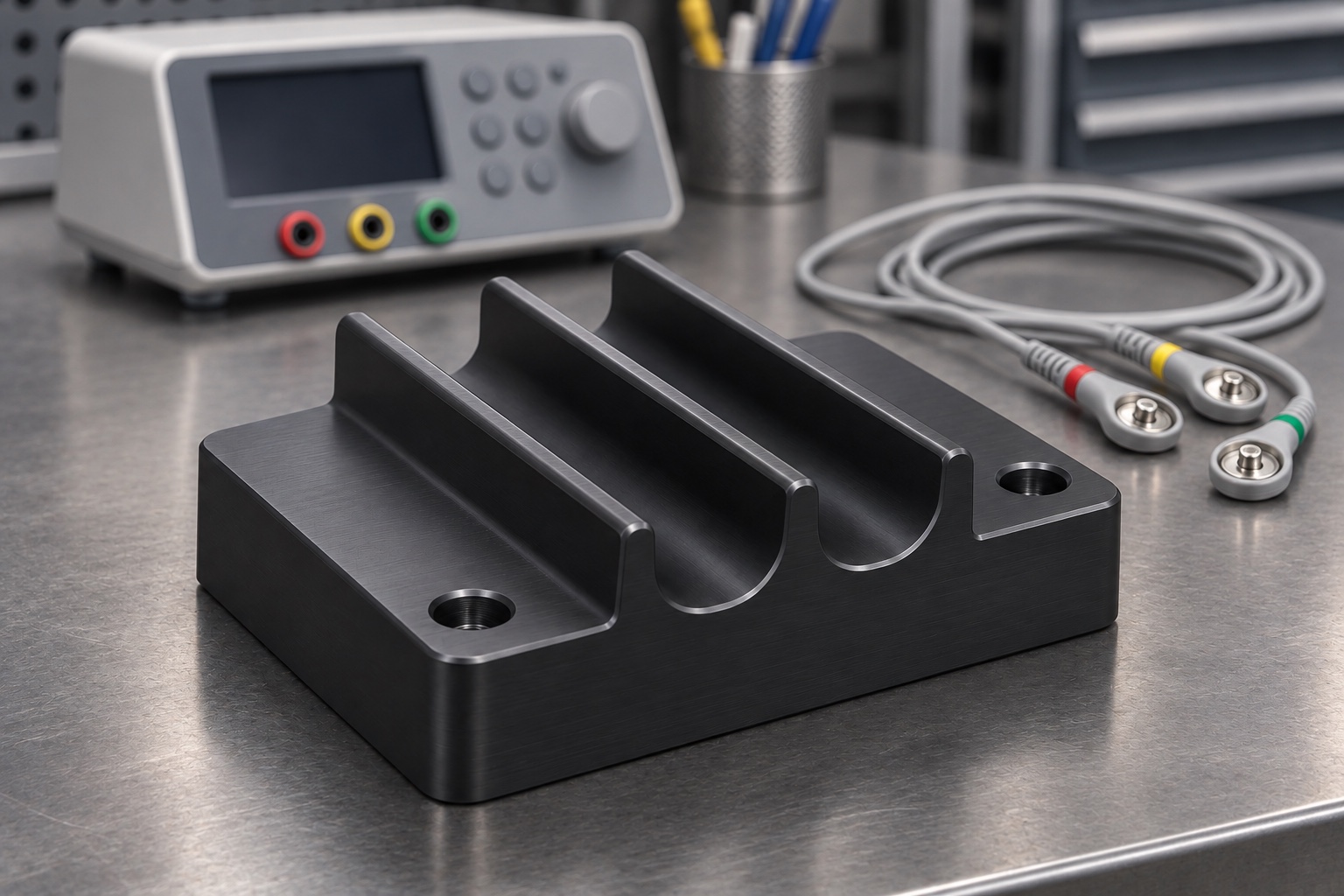
An ECG simulator test arrangement can include cables between the simulator and a monitor. A passive routing fixture may help engineers reproduce a bench layout by holding a reference cable path away from obstructions. It is not part of the electrical circuit and does not validate a waveform or the monitor. The generic concept here is a bench aid, not a device accessory for clinical use. Obtain the approved cable envelope and handling constraints before designing a channel, and identify whether the purpose is routing, temporary separation or comparison of layouts.

Account for both jacket and connector
A flexible cable can fit a groove while its boot or connector is too large to pass through it. Draw the insertion and removal sequence, not only the final cable position. An open channel lets a cable be laid in from above, but nearby walls can still interfere with access. Treat boot clearance as a separate feature. Do not bend or clamp a cable based on a visual impression of flexibility. When the equipment owner specifies a minimum routing radius or a prohibited contact area, carry those limits to the controlled layout rather than deriving them from an illustration.
Use the base to relate the routes
Define how the fixture sits on the bench and where the channels are located relative to a stable base and side reference. The position may be controlled by a separate locating feature or by the documented fixture setup, not by the nominal screw centers alone. Identify whether the two channels have different widths or intended paths. If their roles differ, make orientation easy to verify in the setup record. Do not assign precision tolerances to cosmetic outlines if the actual cable path depends on a feature that the drawing has not dimensioned.
Control transitions as well as cross sections
The effective path at a channel exit depends on the surrounding surfaces. An abrupt edge can touch the jacket even if the central section has the correct width. Show the entry and exit transitions and the usable radii on the drawing. Make clearance from the fastener heads explicit. A tight or polished groove does not establish suitability for repeated motion. If the cable is intended to move during a trial, the owner must define the motion, support and acceptance criteria. The fixture must not accidentally become an unapproved strain relief.

Choose the material and finish for the bench
An aluminum fixture can provide durable locating surfaces, but the actual alloy, temper and finish should be stated. A coating can affect channel dimensions and edge condition. Specify which features are inspected after finishing and whether contact areas are protected from coating or marking. Do not infer electrical insulation, grounding, electromagnetic shielding or compatibility with patient-connected equipment from the material. The illustrated part is mechanical only. The responsible test engineer must decide what may be placed near the actual instrument and which requirements apply to the complete arrangement.
Machine grooves without losing their reference
A candidate sequence establishes the base and sides, then roughs the channels while there is enough stock to support the walls. Finish the usable channel profile and transitions from the selected origin. If separate setups are needed for the mounting holes, document how the references transfer. Cutter radius, access and chip evacuation should be reviewed against the actual design rather than the picture. Avoid clamping a narrow wall against an irregular stop and then measuring it only under load. Recheck the released part if that condition is relevant to acceptance.
Inspect the actual contact areas
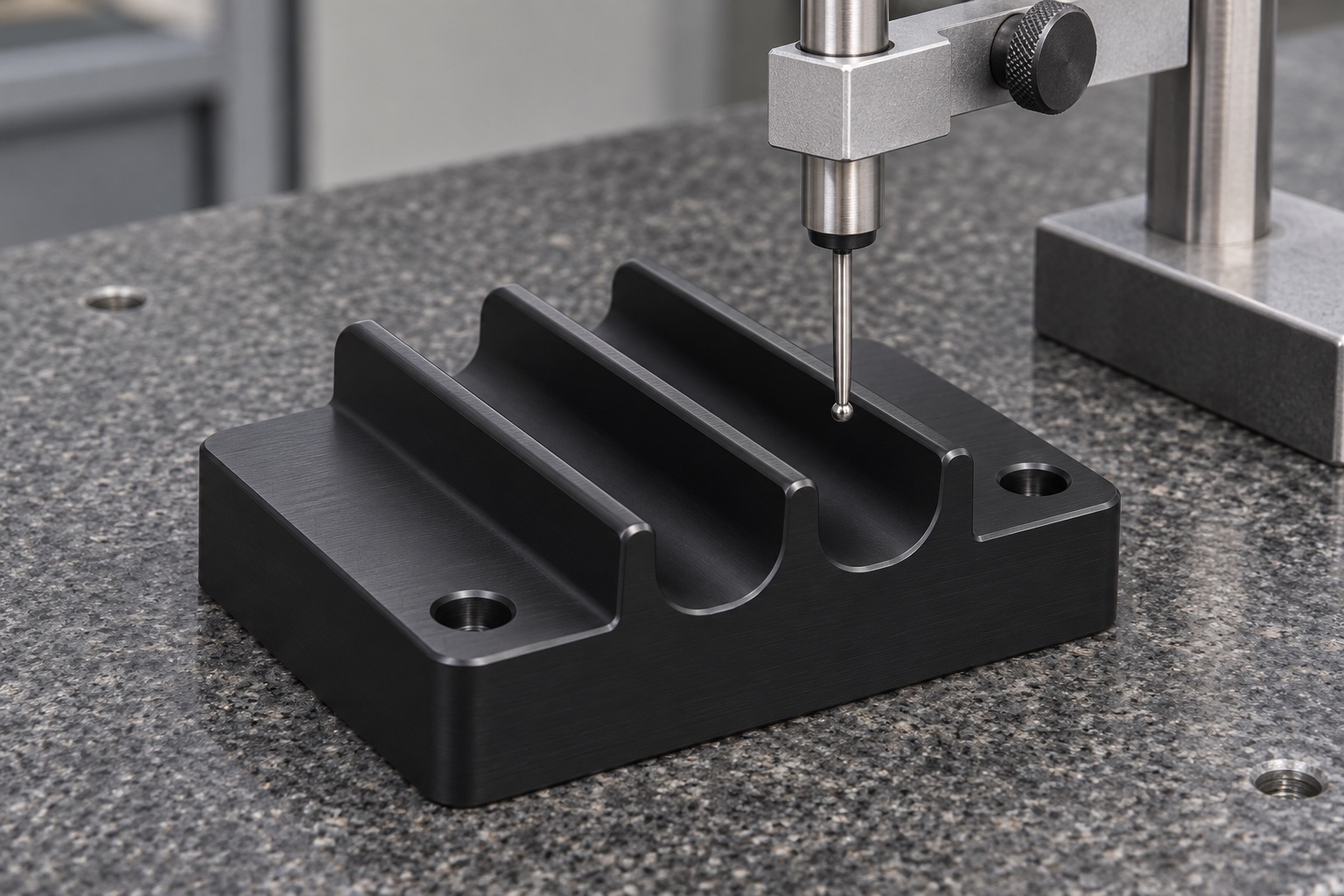
Use a geometry method appropriate to the width, depth and curved region. A single reading at the entrance may not represent a groove with an interrupted floor or tapered walls. Define stations and measure far enough from edge breaks to capture the intended cross section. Check the height of fastener heads in the specified state if hardware is part of the layout. A gauge that bridges the curved floor can overstate its height. Keep the mounting reference, channel profile and transition checks separate so an issue can be located without rerunning every observation.
Trial the layout with unpowered surrogates
Use identified inert cable samples or a rigid envelope where that answers the question. Check that the sample can be laid in and lifted out without pinching or bending it around an unintended contact. Record orientation, support and whether adjacent equipment is represented. If a test includes a boot, note where the boot sits relative to the channel exit. A simple trial shows geometry only; it does not establish retention force, cable fatigue, electrical continuity, signal quality or patient-monitor safety. Those checks belong to a separate approved equipment test.
Diagnose interference without masking it
If the cable shifts, examine the fixture support, its route relative to nearby items, the surrogate condition and the exit shape. For a two-channel fixture, compare the channels before concluding that the cable is the cause. Do not add padding, widen a groove or tighten a cover unless the change is authorized and documented. Rework can hide an incorrect reference and may alter how another cable fits. Keep a record of the first condition and use the same surrogate and support for a meaningful before-and-after comparison.
Remove chips without altering a defined radius
Check each open channel, hole and exit for loose debris after machining. Edge smoothing should follow the drawing and should not reduce the controlled depth or change the position of the cable path. A raised edge can affect handling while a shallow witness mark in an unused area may have a different acceptance criterion. Define which surfaces must remain free of labels or adhesive. Cleanliness for receiving a bench fixture does not demonstrate disinfection, clinical use or suitability for any patient-connected configuration. No such claims follow from a clean photograph.
Protect the profile during shipment
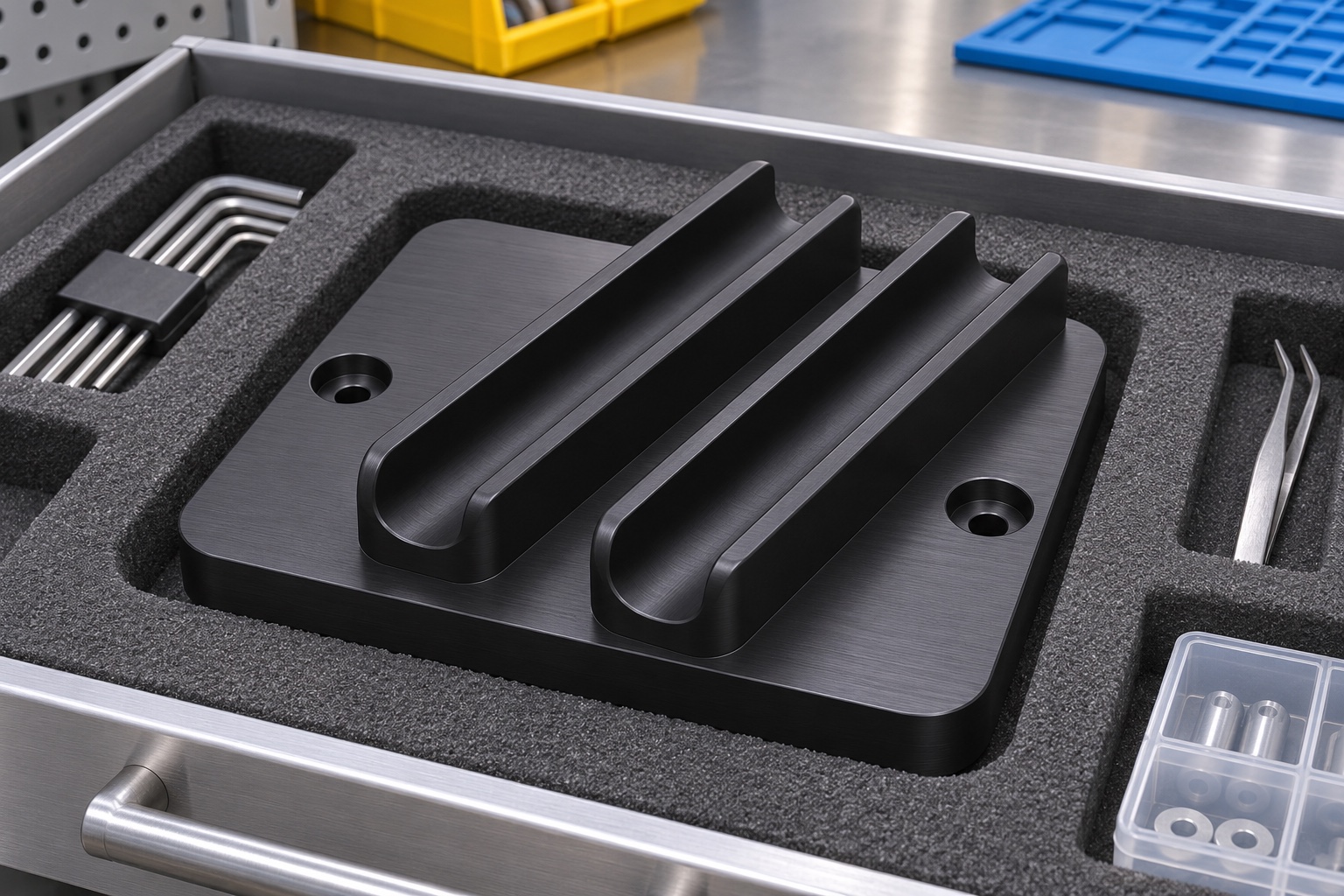
A fitted insert can support robust exterior surfaces while keeping the grooves free of contact with screws and abrasives. Preserve traceability and store cable surrogates separately if they are included with the inspection fixture. At receipt, examine the channel edges and fixture base before relying on prior geometry results. A thin raised mark can change how the part seats. Ordinary protective packaging is not a sterile or controlled-cleanliness claim. Agree any additional storage or transport requirements separately and identify the condition under which the fixture must be rechecked.
Make the setup record transferable
Supply the controlled fixture drawing, the surrogate envelope, path orientation, mounting condition, material and inspection stations. Request separate evidence for material identity, geometry and the unpowered layout trial. Indicate which device-level checks remain open and who owns them. A reproducible bench record helps a second team observe the same routing issue, but cannot take the place of an electrical test procedure or clinical validation. The most useful deliverable is not a broad pass statement; it is a record of which feature was checked, with what reference and in which state.
Manufacturer background reference: www.flukebiomedical.com.
FAQ
Is this fixture part of the ECG circuit?
No. It is a passive bench routing aid. It is not a connector, electrical adapter, grounding path or approved patient accessory.
Why do the channel exits matter?
The jacket or connector boot can contact an exit even when the center of the groove is correct. Inspect the intended transition and clearance separately.
Does a dry routing trial establish cable reliability?
No. It documents geometry in one layout. Reliability, electrical continuity, and monitor performance require separate approved checks.
Can mounting screws set the location?
Only if the drawing explicitly specifies the features needed to do so. Ordinary clearance holes generally provide retention, not precise repeatability.
Should a coating be measured afterward?
Check the drawing. If coating affects the usable channel or contact transition, the final condition and the affected dimensions should be defined and inspected.
Can the fixture be used with a connected patient?
No such use is implied. The example is for unpowered engineering trials and does not define clinical handling or monitor setup.

tanghangyun@oemach.com