
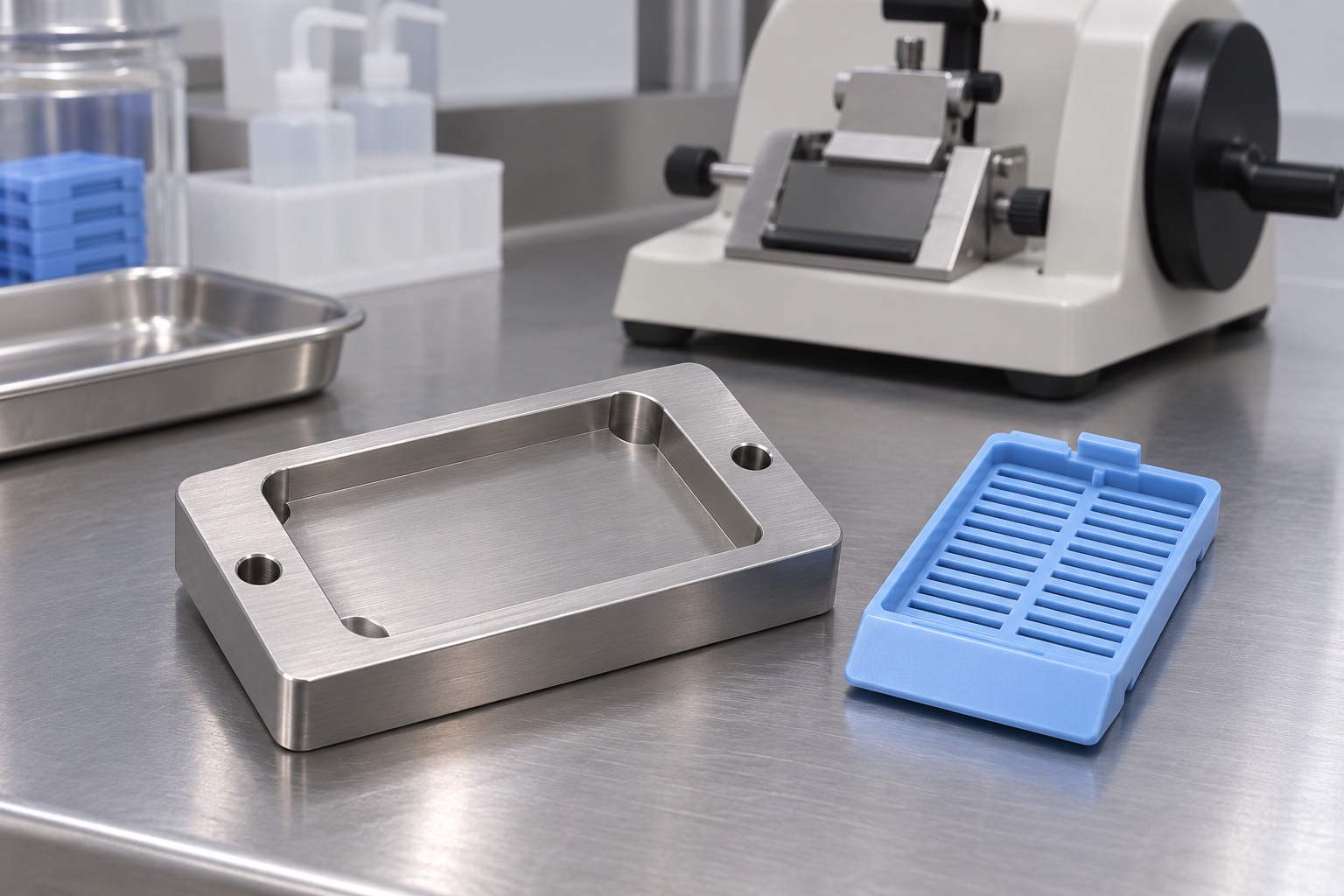
Define what the nest actually inspects
A histology microtome can use a specimen clamp to hold a cassette during sectioning. An off-machine inspection nest has a narrower purpose: it lets a technician examine selected geometry on an empty cassette against documented contacts. The nest is not the microtome clamp and should not be represented as a compatible substitute. Before detailing the pocket, decide whether the task is to measure the seating plane, check the external envelope or find obvious interference. Those tasks may require different clearances and results. Keep the inspection purpose distinct from anything inferred about sectioning or diagnosis.

Separate the contact features from the outline
A plastic cassette can have a perimeter wall, hinges, labeling surfaces and molded features that differ across variants. A cavity that follows the entire exterior may inadvertently locate on a protrusion instead of the intended seating edges. Start by mapping the actual surfaces that must contact the nest. Give unused corners adequate clearance and check the insertion path as well as the final seated position. For a drawing review, mark the contacts and clearance zones in different colors on a cross section so the machinist and the receiving team can identify them without guessing.
Give the cassette a reproducible reference
A practical bench concept can use three support areas under stable portions of the cassette, two lateral locating areas and a stop at one end. This is a starting arrangement, not a universal constraint scheme: contact geometry and the test objective determine the final choice. Wide or redundant support may make a warped specimen appear flat when pressed into position. Document whether the cassette settles under its own weight or under a defined holding condition. If the fixture measures lift or rocking, a clamp that suppresses movement would defeat the purpose.
Size reliefs for the least favorable variant
Consider the edge radius, draft angle, corner shape and permitted envelope variation on a set of controlled cassette drawings. A relief that clears the nominal cassette may still touch a permitted corner at a tolerance limit. Preserve enough surrounding material to support the nest and maintain inspection access. Include a view of the part where the cutter radius approaches a locating surface. If the drawing only shows a sharp square corner in plan, it should also explain how a machinable radius or relief can clear the cassette without reducing a functional seat.
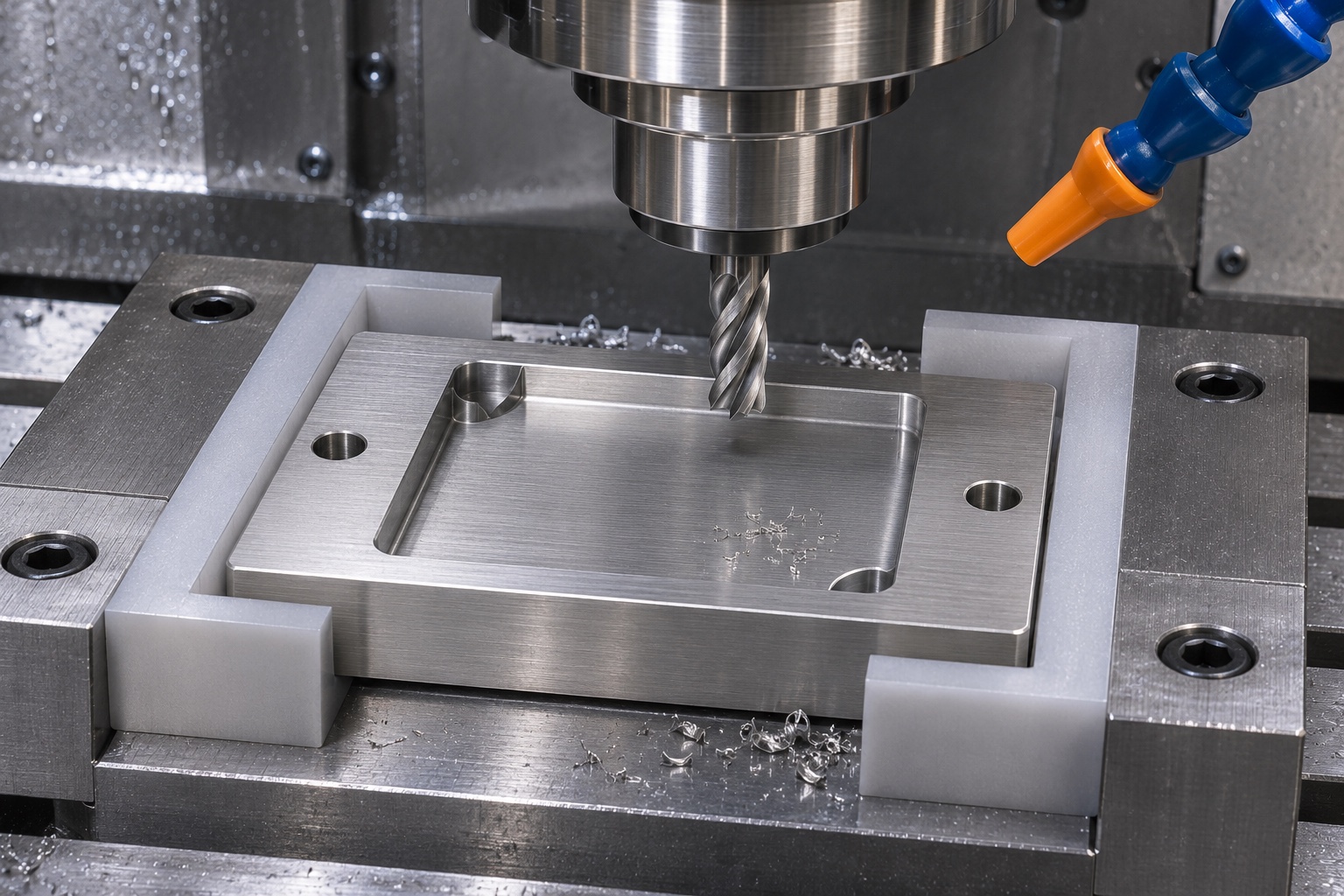
Select the material and surface separately
Stainless steel can be a candidate when the inspection tool needs durable contact surfaces, but the exact alloy, surface condition, storage and cleaning method belong in the order. Do not infer compatibility from the word stainless or from a reflective image. If the inspection nest is made from 316L, distinguish that material requirement from any separate cleaning or surface treatment. Review whether direct contact can mark a plastic sample and whether an insert would change the location. Establish how replacing a worn insert would be checked before returning the tool to service.
Use machining references that can be transferred
The nest underside can provide a stable setup plane; a long side and a short end can define the two in-plane origins if they match the inspection drawing. Rough the cavity before the final seat passes and keep enough stock to correct movement after unclamping. Drill mounting holes with attention to exit burrs that could change the base seating. Where possible, finish the pocket seats and lateral stops in the same setup. If a second setup is unavoidable, record the transfer references and confirm how the pocket position will be checked after it.
Measure the metal before judging the cassette
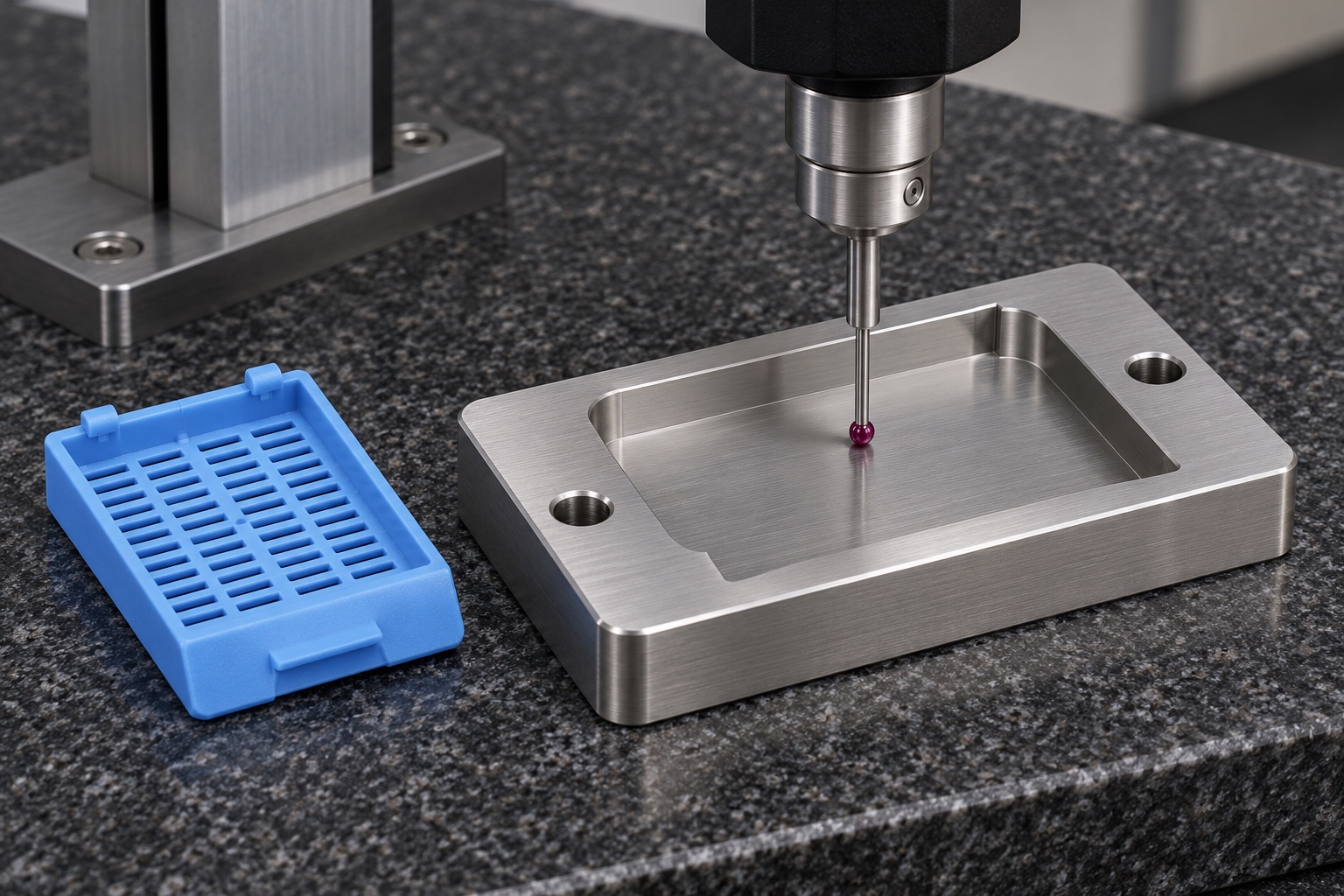
Verify the nest against its own drawing with the specified support condition. Map the measuring points across the support areas rather than taking only a depth reading at the center of the cavity. The inspection plan should explain how the lateral stop and end stop are related to the base. Probe access may determine whether a coordinate machine, a height comparator or another appropriate method is practical. The nest dimensions and cassette behavior are separate records. If the cassette rocks, a conforming nest geometry helps narrow the investigation but does not by itself identify the cassette fault.
Make a seating trial useful
Use identified, empty reference pieces with a controlled revision and known condition. A trial can compare insertion, seating and removal without touching a blade or actual tissue. Record changes from an independent reseat instead of tapping a single specimen until it appears flat. For example, note which support area loses contact and whether the observation follows the specimen when a second reference piece is used. Avoid assuming a single convenient sample spans the allowed geometry. Select the sample set with the equipment owner and record which permitted variants are still untested.
Distinguish fit, interference and measurement
A reference that enters freely can still shift sideways if the fixture has intentional clearance. An interference check can detect an obstruction without quantifying seating-plane variation. An indicator reading can measure a particular offset without showing that every edge clears during removal. Name each result by the question it answers and avoid replacing them with one undifferentiated pass mark. If the process uses a limit sample, define how it is identified, checked for wear and stored. This keeps operators from accepting a visibly similar part with unknown dimensions as an equivalent reference.
Protect the points that control seating
During finishing, protect the machined support pads, locating edges and mounting plane from uncontrolled polishing. A burr that holds the plastic sample above a pad and a cutter witness outside the contact zone have different consequences. Use an approved edge condition and verify critical surfaces after any corrective work. Clean away machining debris under a defined receiving procedure, and check reliefs where fragments can remain hidden. The appearance of an empty inspection fixture does not prove the equipment is disinfected, sterile or appropriate for use around biological samples.
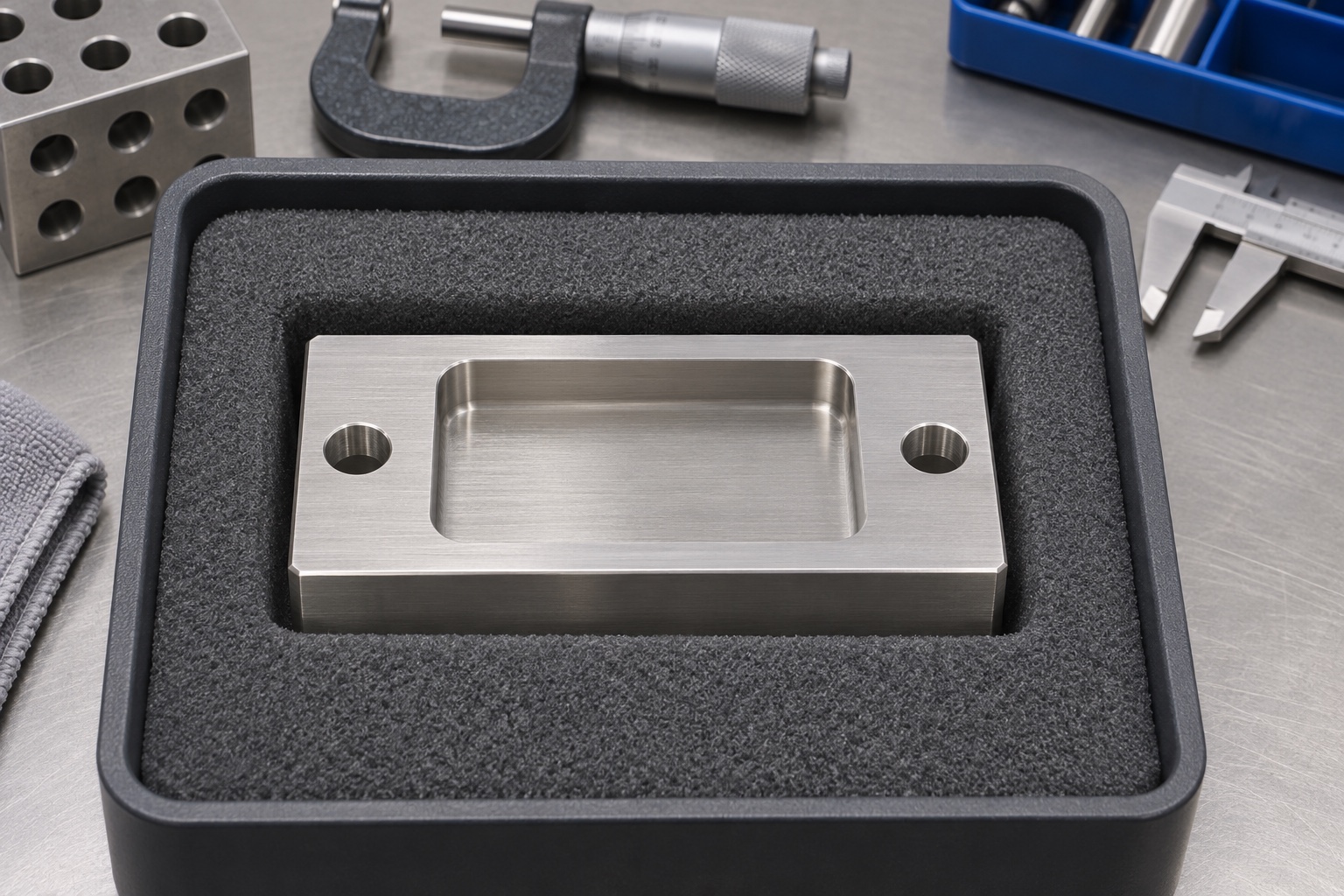
Set the packaging and storage condition
Support the nest on noncritical exterior surfaces, keep other metal parts away from the cavity, and retain lot and revision identification. A rigid insert can protect the pads from being struck by the box or loose hardware. At receipt, inspect the base and seating features before trusting the report from shipment. If the nest will be stored as a measuring reference, specify how it is protected between uses and when it needs reevaluation. Ordinary protective packaging does not confer any cleanroom or sterile classification and does not establish a storage life.
Write an order a second shop can verify
Supply the approved nest drawing, identified cassette variants, clearances, support method, material and surface requirements. Ask for an inspection plan that can be reproduced at receipt, with the support pads, lateral references and reliefs clearly differentiated. Request separate records for material identity, dimensional checks and any empty cassette trial. Put any unapproved variants or clinical questions in an open-items list. This makes the tool useful for engineering review without treating a bench nest as evidence about how a microtome will cut a real specimen.
Manufacturer background reference: www.leicabiosystems.com.
FAQ
Can this nest replace a microtome clamp?
No. It is a bench inspection fixture for defined empty cassettes. It does not establish compatibility with a microtome, safe retention during sectioning or a diagnostic result.
Why not machine a pocket to the entire outline?
Unnecessary contact can cause seating on a corner or protrusion rather than on the intended surfaces. Define the locating points and leave clearance at nonfunctional features.
Does the nest have to be made of 316L?
No. Choose the grade and condition for the specified wear, cleaning and contact requirements. Stainless appearance and alloy name alone do not establish the performance of the inspection fixture.
How should seating repeatability be checked?
Use identified reference pieces and remove and reseat them under the stated conditions. Record each observation and keep the dimensional report on the nest separate from results on the reference pieces.
What should be inspected after deburring?
Check the seating pads, stops, mounting plane and any edge that can lift or mark the cassette. Do not round a defined contact or change its height without authorization and remeasurement.
Does a protective insert establish clean delivery?
No. It is a handling measure. Controlled cleanliness or sterility needs separate requirements, handling controls and evidence.

tanghangyun@oemach.com