
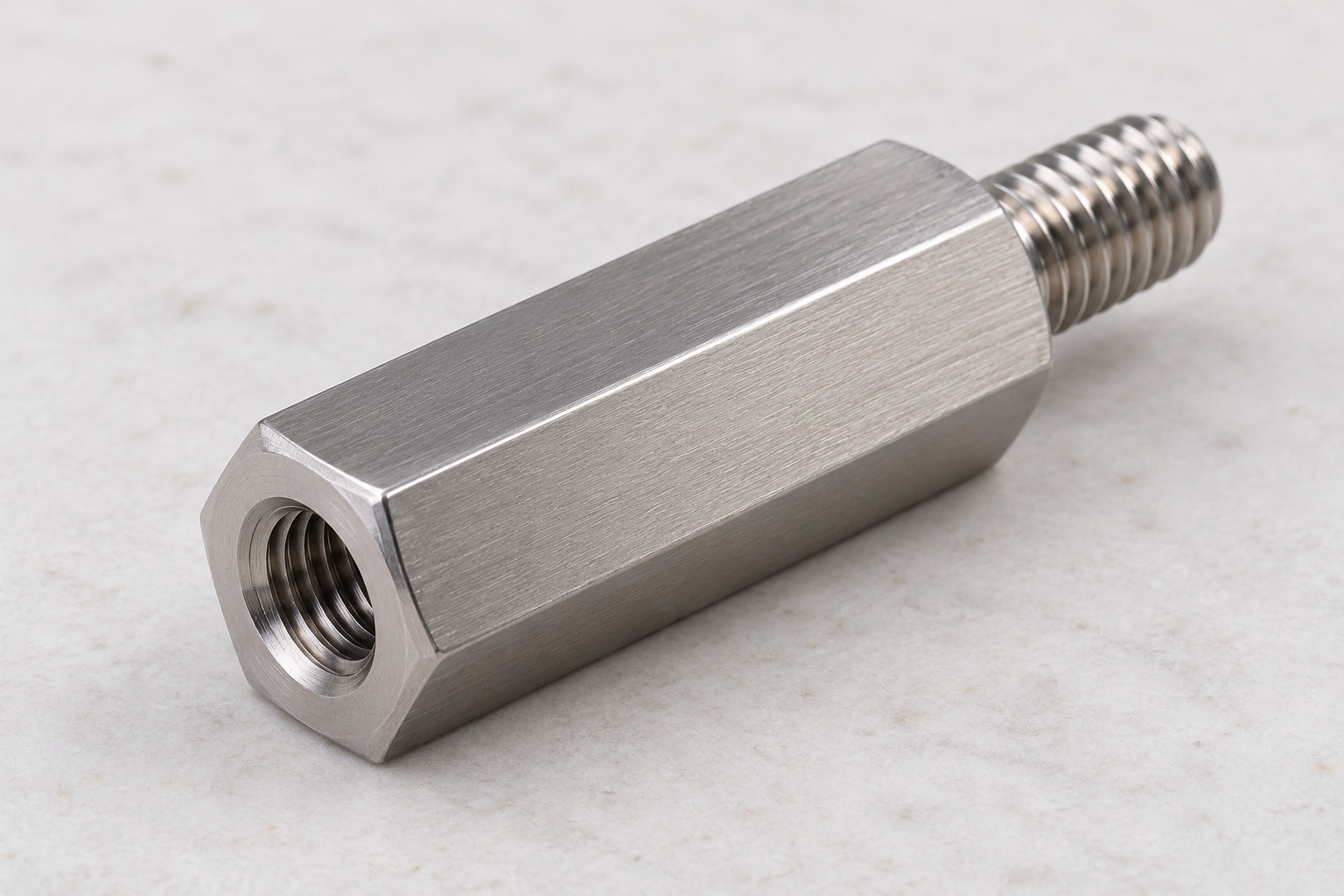
A threaded separator in an equipment assembly
A threaded standoff can separate two equipment components while providing attachment at opposite ends. In a medical instrument, the mechanical scope might involve a cover, internal bracket or other approved non-patient-contact structure. A custom male-female hexagonal standoff has a seating body, an external threaded stud and an internal threaded opening at the other end. Its dimensions and thread identities must be controlled together. This article addresses CNC manufacture and inspection, not electrical isolation, protective bonding, sterile processing or medical equipment certification. Images are illustrative component concepts rather than measured production records.

Define the seated stack before overall length
Separate body seating length from external stud projection and overall component length. The installed distance between mating surfaces depends on the approved contacts, not simply the longest dimension on a loose part. Identify which shoulders seat and whether any intermediate components belong in the controlled stack. Resolve ambiguity before manufacturing. A supplier should not shorten a body or add a washer until two panels appear parallel without approval. Such adjustments change the assembly baseline and may hide an incorrect reference, bottomed screw or unapproved mating-component revision.
Identify both threads independently
Specify external and internal thread identities, tolerance requirements and useful engagement according to the actual approved design. Similar-looking threads should not be treated as interchangeable. The female opening may be blind, so nominal depth, usable full thread and clearance for the mating screw need a clear definition. Do not infer sealing or pressure retention from the presence of a thread. The CNC supplier needs controlled requirements for each end, including relevant edge and runout allowances, rather than a loose screw that happens to turn into the illustrated component.
Avoid hidden bottoming in a blind hole
Review the actual mating screw projection and the internal geometry so the assembly does not appear tightened because a screw reaches the blind bottom. The relevant dimensions must come from approved component and assembly documents. No universal engagement length or clearance is supplied here. Clarify whether inspection concerns a thread gauge, useful depth, assembly seating or several independent characteristics. An easy hand fit does not establish that the contact stack is correct, and additional torque should not substitute for investigating an unexpected gap or incomplete shoulder seating.
Treat tool access as part of installation
A hexagonal body can provide wrench access, but the actual enclosure and neighboring components determine whether an approved tool can be used. Review body flats, stud clearance and access around the installed arrangement. The supplier should not choose installation torque, locking compound or an improvised gripping method based only on the standoff drawing. Those belong to the equipment assembly definition. Record unexpected contact and obtain approval before changing the body profile, thread projection or installation method to make a particular prototype easier to assemble or maintain.
Specify the actual stainless grade
A custom 316L standoff requires its own approved material condition, stock form and evidence. The cited WDS page illustrates a male-female hexagonal product in 303 stainless steel; it explains the component category, not material equivalence or approval of this proposed 316L design. Do not transfer another product's capacity or compatibility claims. Material identity and appearance do not establish joint strength, electrical behavior, corrosion resistance in a particular cleaner or medical certification. The responsible designer should evaluate the actual material, threads and installed environment before authorizing substitutions or repeat production.
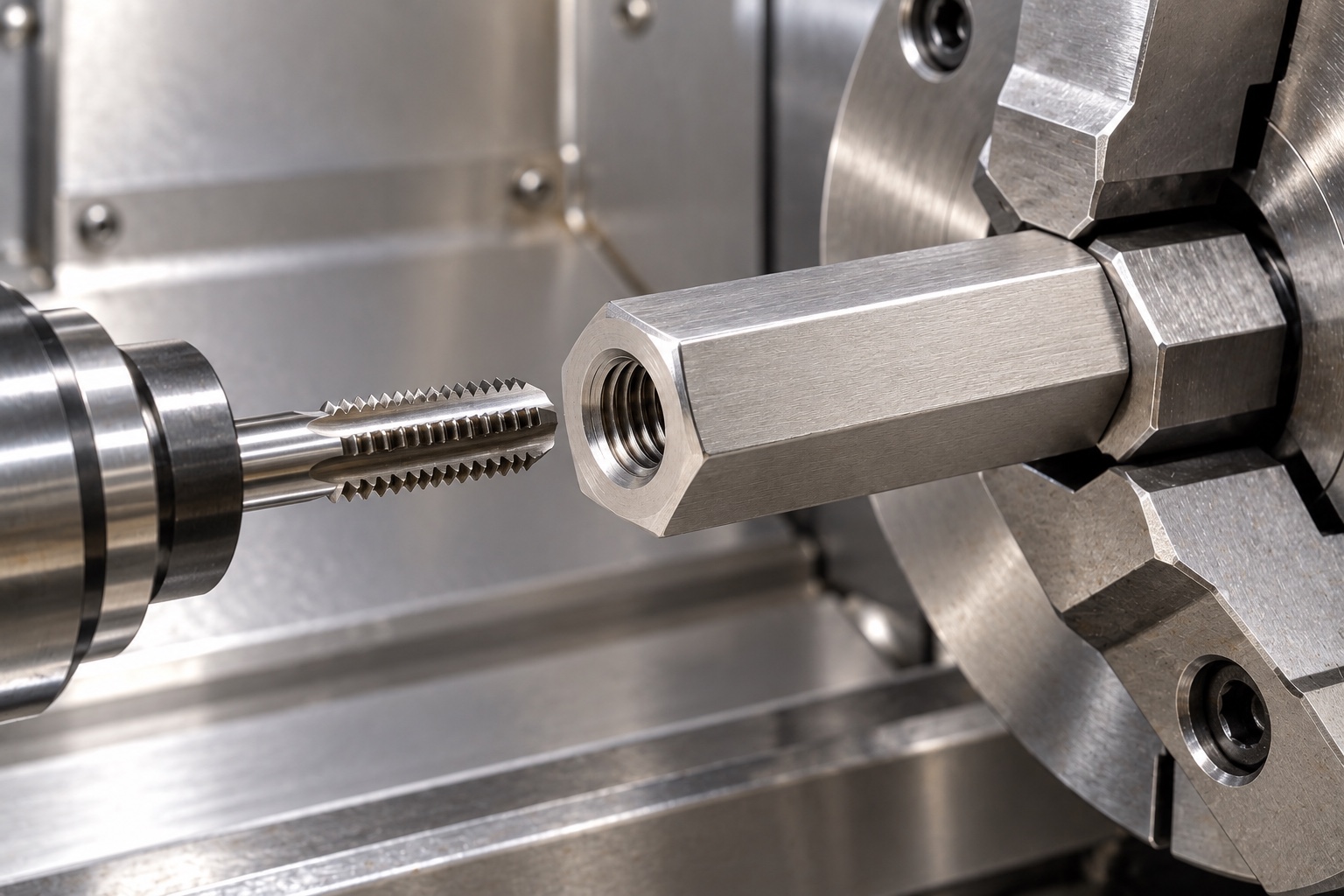
Plan turned features and hexagon references
Choose a route that preserves the relationship between the threaded ends, seating faces and body. Starting from approved hexagonal stock or machining flats are possible planning choices, not interchangeable instructions without review. Holding and fixture transfers should protect accepted contacts and threads. Avoid gripping a finished external thread as an improvised reference. Intermediate checks can support process control, but final inspection should address the released component after relevant operations and treatment rather than assuming that individually acceptable thread ends guarantee the correct complete axial stack and seating relationships.
Keep thread exits and seats controlled
Inspect thread starts, runouts, seating shoulders and blind-hole entry for attached material or unwanted sharp features. Use the approved edge requirements without consuming useful engagement or rounding the seating face. Cleaning should remove machining residue within the agreed scope without concealing damaged threads. Any passivation, coating or other final process needs controlled requirements and relevant final-state checks. A bright finish does not establish measured corrosion performance, sterile supply or a qualified locking function. Protect the internal opening from debris until the component reaches receiving and assembly inspection.
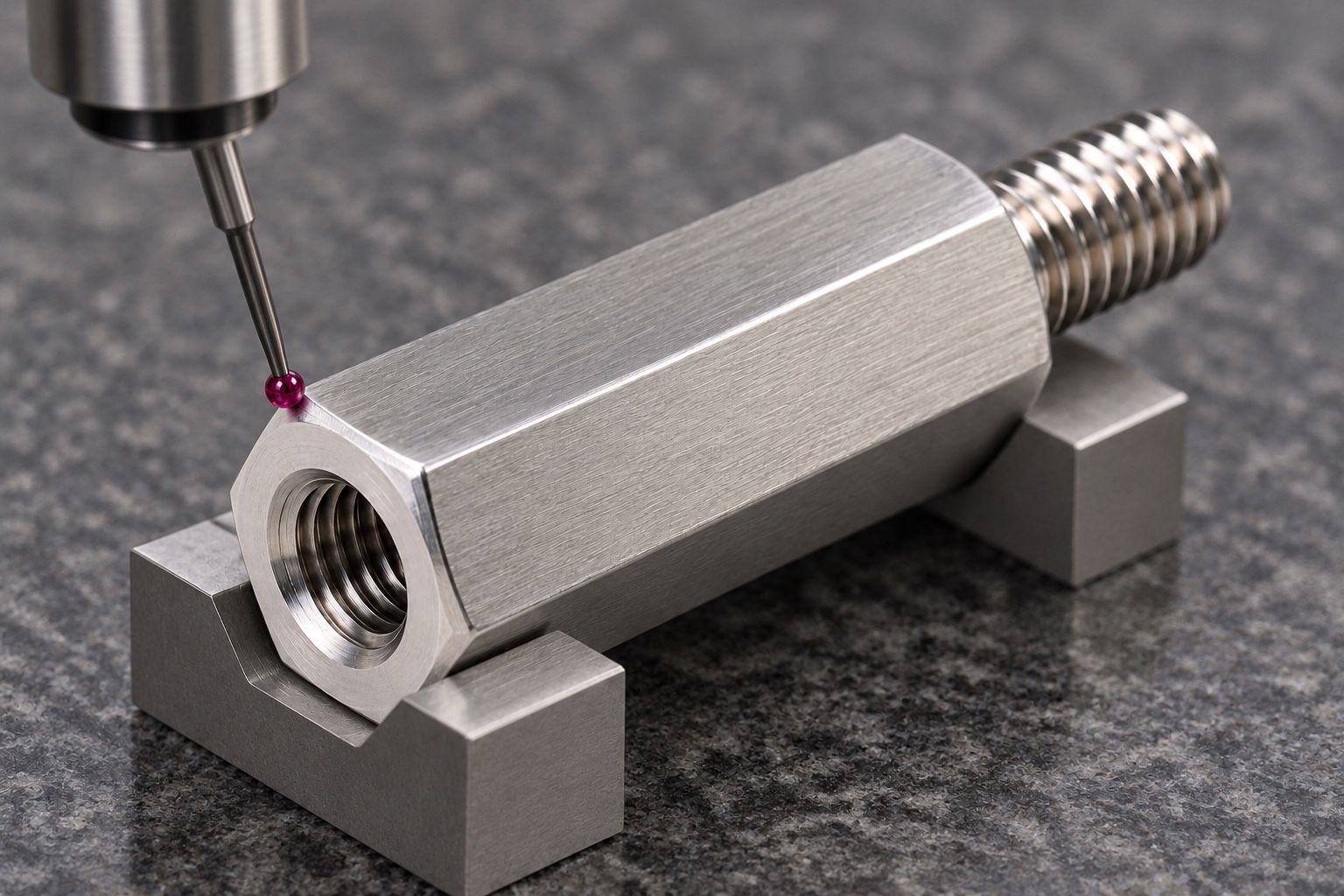
Inspect depth separately from thread acceptance
The inspection plan should distinguish thread conformity, useful depth, stud projection, seating length and any specified relationships. A thread gauge result alone may not answer every depth or contact requirement. Agree accessible methods and relevant final condition before production. An unidentified mating screw should not become the universal gauge. Record which characteristic each inspection actually verifies so a report does not imply that a favorable assembly observation confirms all controlled geometry. Any ambiguity about incomplete internal threads or runout should be resolved with the responsible design team before machining begins.
Separate seating trials from joint qualification
An agreed trial may document thread engagement, shoulder seating and tool access with identified mating parts. Record hardware, surface condition and installation procedure. Successful hand assembly does not establish tightening torque, clamp load, loosening resistance, fatigue, electrical isolation or protective bonding. Those require separately defined evaluations of the actual joint and equipment. Do not introduce thread-locking compound or substitute screws merely to obtain a favorable trial. Keep prototype observations traceable so an adjusted standoff does not become an undocumented master for another panel stack or medical equipment configuration.
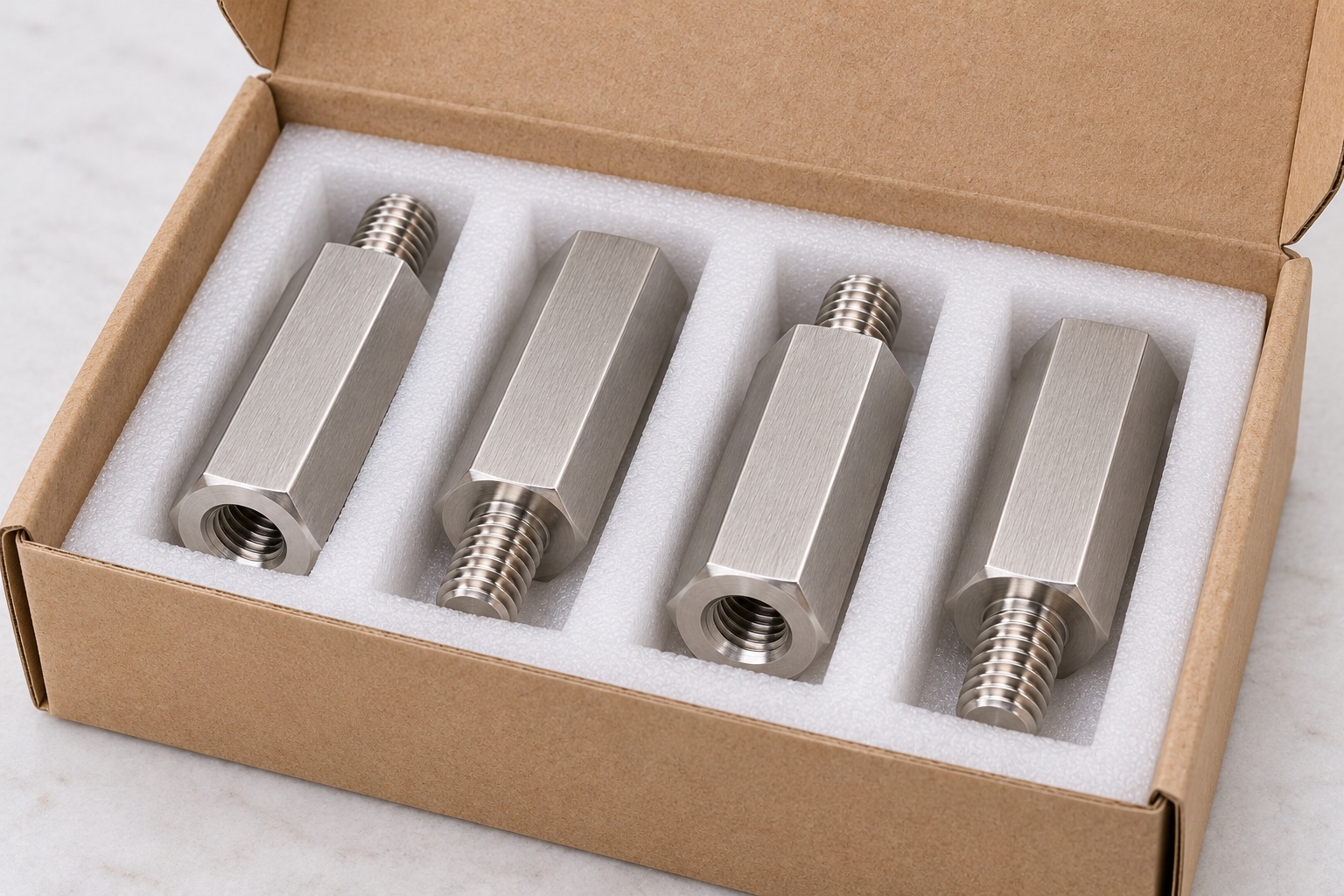
Protect opposite ends during transport
Package standoffs so projecting studs cannot strike neighboring seats and loose hardware cannot enter the female threads. Preserve accepted faces without relying on uncontrolled protective compounds. Packaging and cleaning status should follow the purchased scope; ordinary bags do not imply sterile delivery. Keep material lot, thread variant, revision and inspection status identifiable. Receiving personnel should be able to distinguish visually similar spacers with different body lengths, internal depths or thread identities before assembly, preventing an apparently convenient substitution from changing the installed stack or invalidating separately controlled joint evaluations.
Maintain a complete fastening inquiry
The inquiry should contain controlled geometry, both thread identities, body seating length, stud projection, useful internal depth, mating parts, material, final process and inspection deliverables. Identify optional fit work separately from joint, electrical or equipment qualification. Review changed screw lengths, panel stack, locking method or treatment before relying on prior observations. Incorporate authorized prototype changes into revised documents. This gives a CNC supplier a defined mechanical scope without treating a threaded separator as proof of safe installation, a rated electrical function or certified medical equipment performance in an unspecified assembly.
Manufacturer background reference: www.wdscomponents.com.
FAQ
Is body length the same as overall length?
Not necessarily. Body seating length, external stud projection and overall length are distinct dimensions. The controlled assembly must identify the contacts that establish the installed spacing rather than using the longest loose-part dimension as a substitute for the seated stack.
Does a thread gauge verify every blind-hole requirement?
No. Thread conformity, usable depth, incomplete-thread allowance and mating-screw clearance may require separate checks. Agree which method verifies each controlled characteristic rather than assuming that a gauge or screw entering the hole confirms the full installed interface.
Can more torque resolve an unexpected gap?
Not as an informal correction. Investigate shoulder contacts, screw projection, blind-hole bottoming and actual component revisions. Installation procedure and any design changes need approval; tightening harder should not replace correct geometry or independent evaluation of the joint.
Are catalog 303 and custom 316L standoffs equivalent?
No equivalence is claimed. The cited catalog page provides component-category background only. The custom part requires its own approved material, geometry, threads and evaluation; another product's dimensions, capacity or compatibility should not be transferred automatically.
Does a stainless standoff provide an electrical safety function?
Not by implication. Electrical isolation, protective bonding and related equipment requirements need their own controlled design and evidence. Mechanical component acceptance and successful screw assembly do not independently qualify any electrical or medical safety function.
What should a repeat-order review include?
Review both thread identities, body seating length, stud projection, useful blind depth, mating screws, stack, material, surface process and installation method. Preserve approved revisions rather than copying a trial-adjusted spacer or transferring another joint's performance results.

tanghangyun@oemach.com