
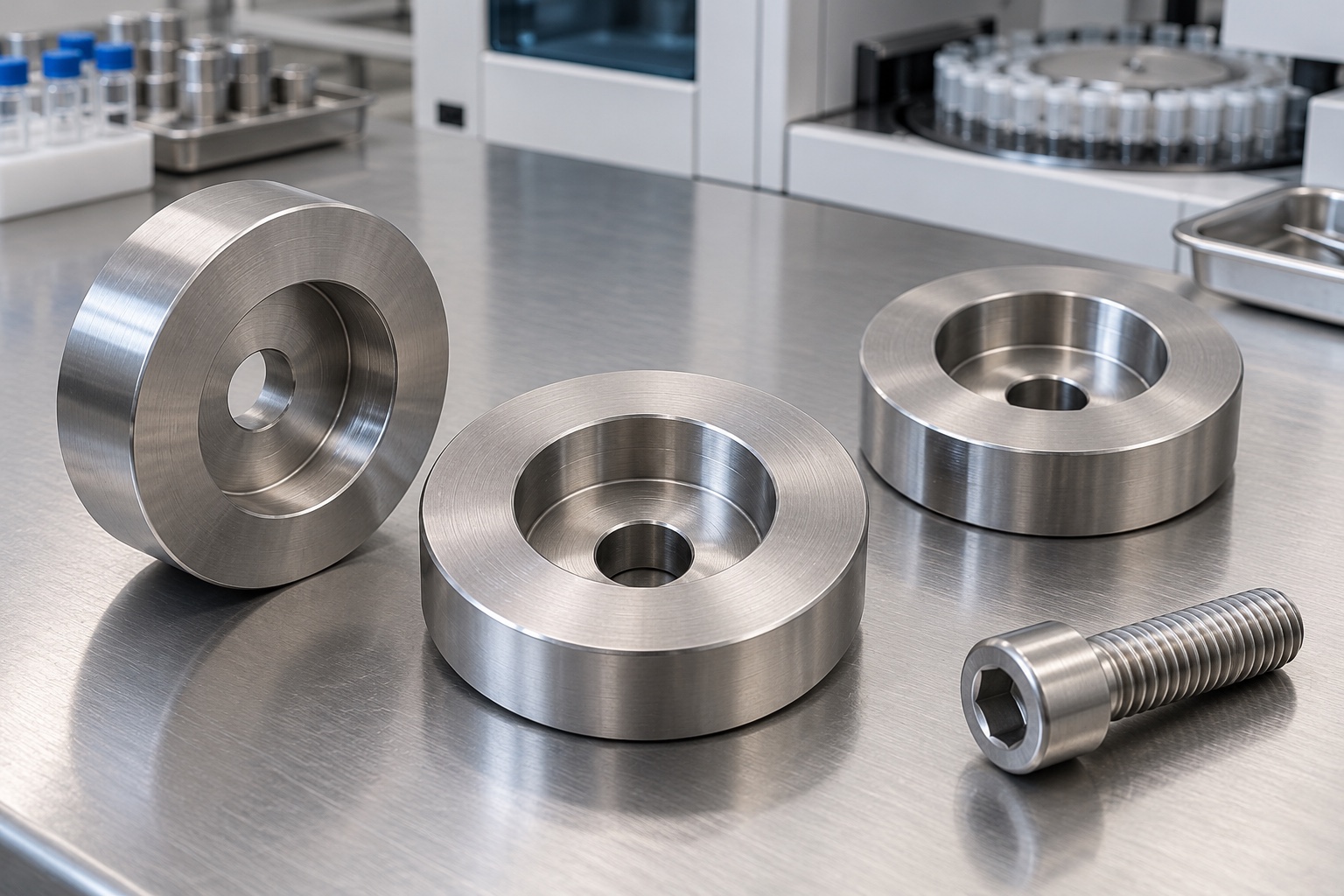
Representative proposed recessed mounting washer
This example considers a proposed one-piece 316L stainless washer for an equipment-side medical analyzer fastening interface. It is a thick circular disc with a cylindrical flat-bottom counterbore, a smaller concentric through hole and a defined internal annular shoulder. It has no thread, conical seat or seal groove. This is a representative turning workflow, not a customer delivery or load-qualified joint. No achieved tolerance, clamp load, loosening resistance, fatigue result, sterile status, medical certification or validated safety outcome is claimed. Images show concepts rather than measured production records.

Review the actual head and mating stack
The proposed order would begin with controlled model and drawing, exact fastener identity, under-head geometry, mating stack, contact intent and inspection deliverables. The review would distinguish recess clearance from the internal shoulder and lower contact areas. Missing requirements would be clarified before costing and manufacture. A generic screw sample would not define all acceptance conditions. Turning and dimensional inspection would remain separate from optional seating demonstrations and independent clamp-load, strength or fastening-system evaluations assigned to the responsible medical equipment design program and its actual assembly configuration.
Maintain the approved stainless condition
The material order would identify the specified 316L condition, stock form and evidence. Lot identity would remain associated with cut blanks through turning, finishing, final processing and shipment. A similar-looking rod or hardened catalog washer would not automatically be equivalent. The supplier would review machining allowance and holding contacts before selecting the route. Any substitution would need authorization before use. Material documents would support the purchased component scope, not establish another washer's strength class, friction behavior, clamping capacity or suitability for every medical equipment fastening arrangement and service environment.
Establish contact and bore references
Initial turning would create the approved cylindrical and face references needed to relate the recess, smaller through hole and lower seating contact. Workholding would preserve those relationships without distorting the disc or damaging accepted faces during reversal. Chips at chuck contacts would be controlled before setup transfers. The supplier would consider the remaining section beneath the counterbore and protect it during later operations. Intermediate checks could support the route, but final acceptance would address the manufactured washer in its agreed condition rather than only while excessive holding force was applied.
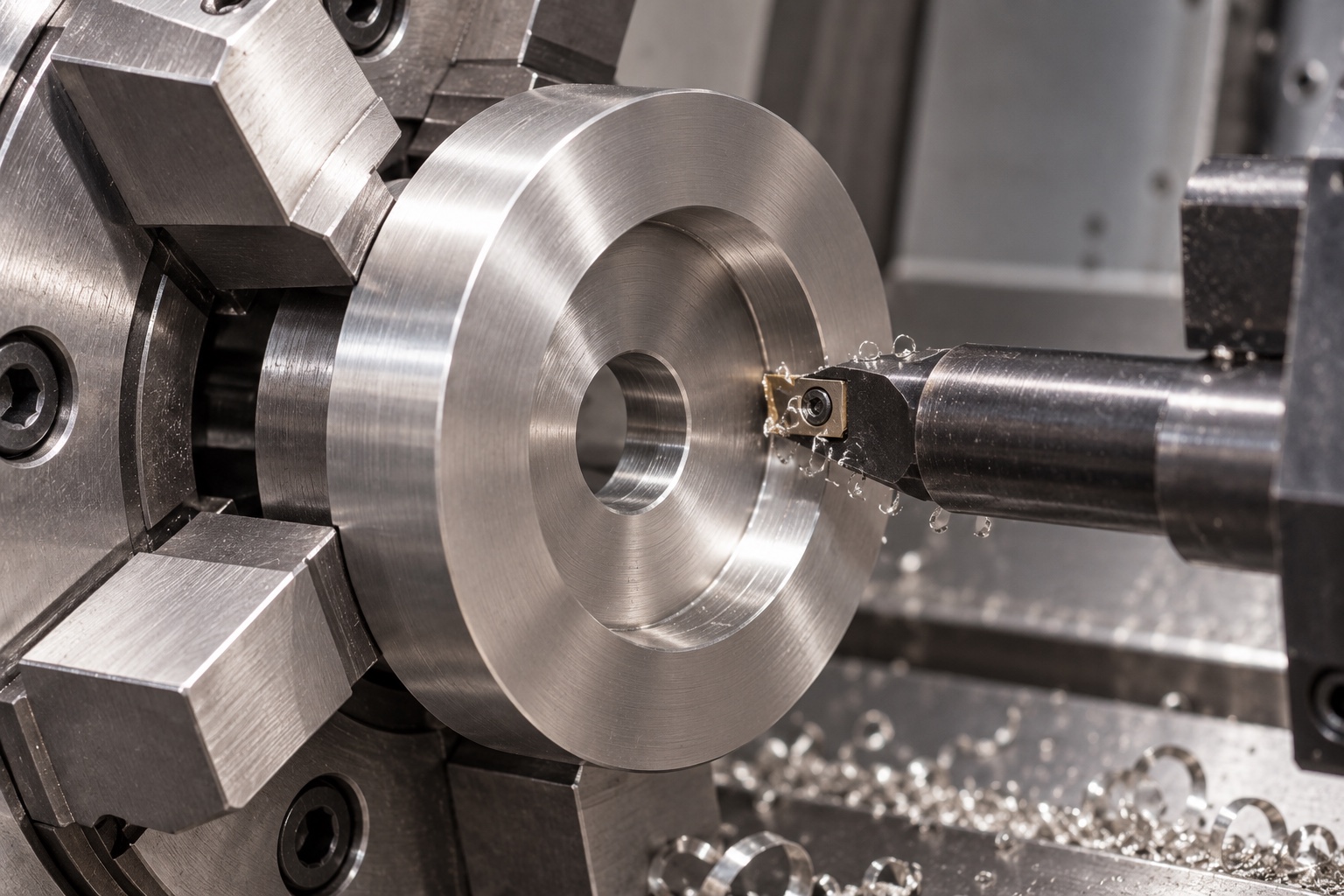
Machine the cylindrical counterbore and flat shoulder
Recess diameter, depth, shoulder geometry and remaining material would follow the approved drawing and fastener information. Tool access and permitted transitions would be reviewed before production. A proposed relief or radius would require approval when it changed controlled contact. The supplier would not deepen the counterbore until an unidentified screw appeared flush. Authorized changes would enter controlled manufacturing and inspection documents. The accepted recess would remain a defined mechanical feature, not a conical countersink, sealing chamber, spring element or evidence of a tested clamp-load result in the installed joint.
Maintain the smaller through clearance
The through hole would follow the released size, position and edge requirements in relation to the recess and functional references. Its clearance or locating purpose would remain explicit. The supplier would review the actual fastener and mating stack without introducing a slot, extra chamfer or larger opening to improve a loose demonstration. Model and drawing discrepancies would be clarified before production decisions. Any accepted modification would be recorded so later batches did not depend on a particular operator's adjustment, substitute screw or undocumented change to the remaining material around the contact shoulder.
Preserve contact geometry during finishing
The finishing sequence would examine counterbore entrance, internal shoulder, through-hole exits and outside boundaries for attached material or unwanted sharp features. Removal would preserve the flat seat and useful contact areas rather than broadly round the recess floor. Aggressive polishing would not hide damaged geometry. Cleaning would follow the purchased scope. Any approved passivation, coating or other final process would require documentation and relevant final-state checks. A bright surface would not establish measured friction, corrosion performance, quantified cleanliness, sterile supply or the capacity of the complete medical equipment fastening arrangement.
Plan accessible depth and face inspection
The dimensional plan would identify functional references and suitable methods for overall thickness, recess diameter and depth, through clearance and specified contact relationships. A measuring contact would need access to the shoulder without bridging an edge or reporting an unrelated surface. Support and final treatment would be recorded. Outside size and a screw-fit observation would be insufficient when other controlled characteristics defined the interface. Ambiguous or inaccessible requirements would be resolved before production, rather than silently replaced by a favorable assembly demonstration or an unidentified screw used as a universal gauge.
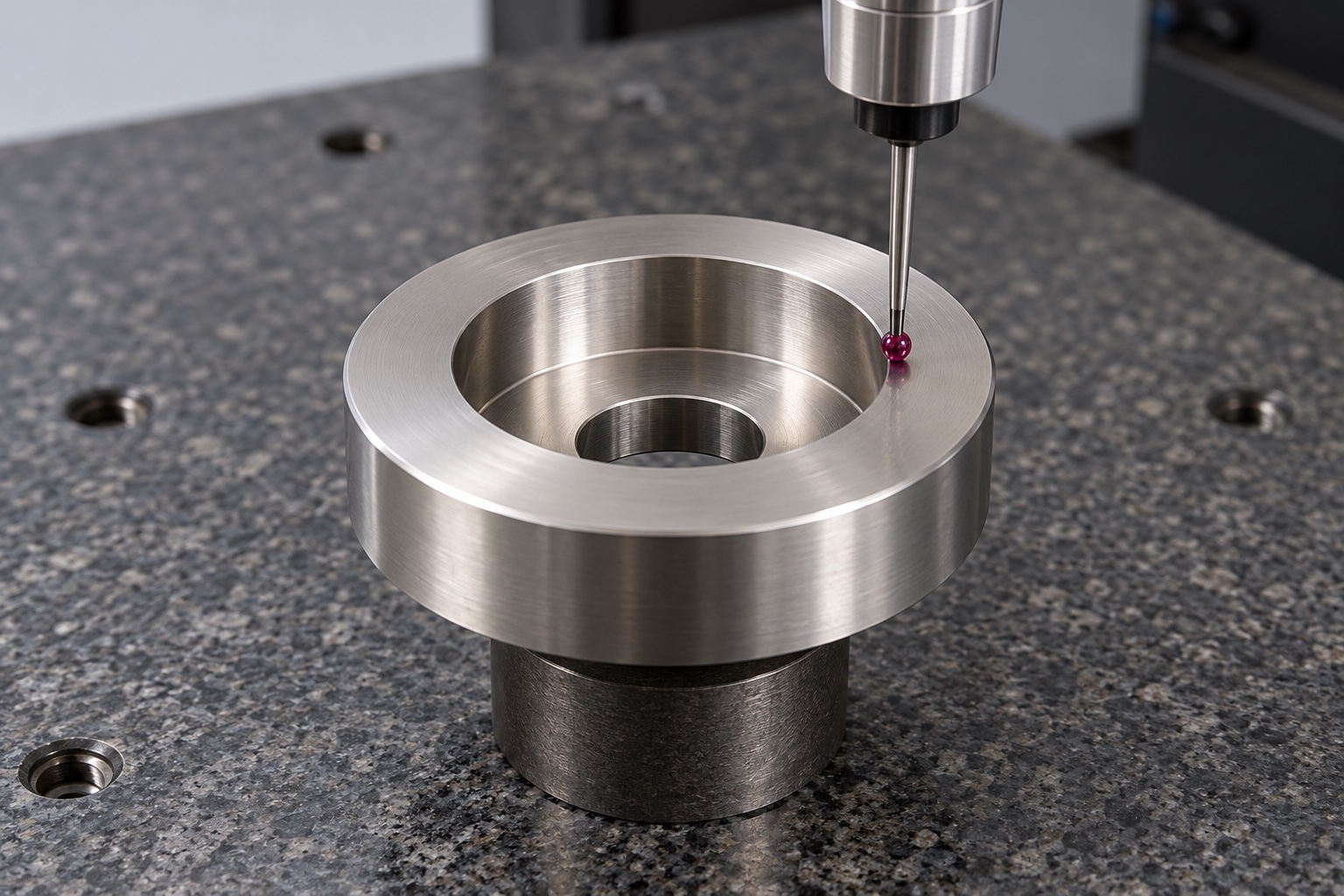
Prepare first-part evidence without invented values
The proposed report would identify drawing revision, material lot and numbered characteristics with appropriate agreed inspection methods. No numerical results are supplied because this representative example has no manufactured sample or measurement record. Material and dimensional evidence would support component acceptance within the purchased scope only. They would not demonstrate clamp load, loosening resistance, fatigue life or equipment safety. A washer that could be assembled would not authorize omission of a depth or contact requirement, and any nonconformance or authorized change would remain traceable in the accepted manufacturing record.
Define an optional seating demonstration
An agreed trial could examine head seating, through clearance and the installed stack using identified fastener, washer and mating revisions. Installation procedure and authorized lubrication or treatment would be recorded. Unexpected seating would be documented before modifying the washer or assembly. A successful hand-operated demonstration would not qualify torque, clamp load, loosening resistance, fatigue or medical equipment safety. Trial washers would remain distinct from accepted production. Observations would not become a working-load rating or an undocumented baseline for another screw head, contact stack or surface condition introduced in a later order.
Package recesses and lower contacts separately
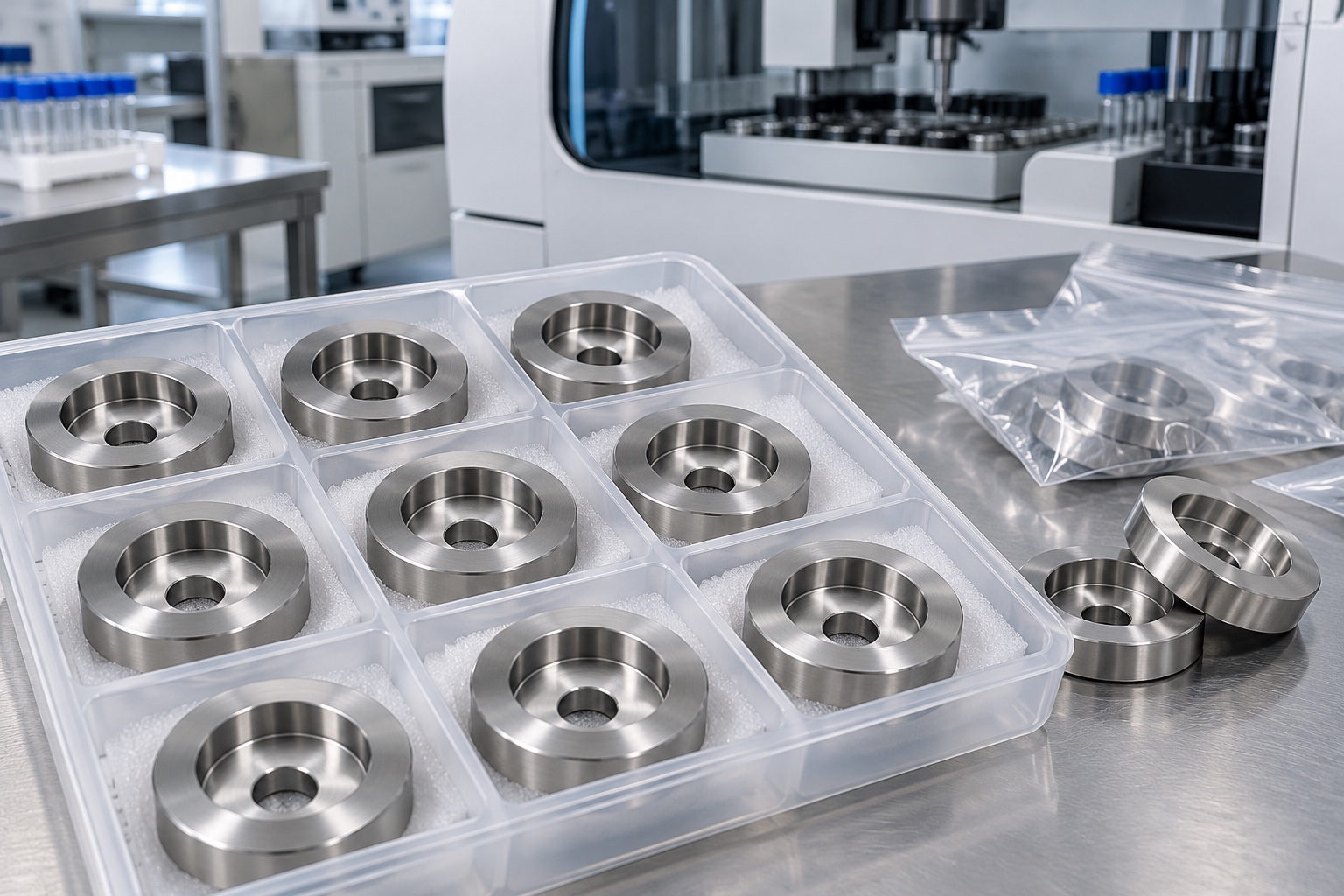
Finished washers would be individually separated so neighboring edges and fasteners could not strike the internal shoulder or accepted lower faces. Through-hole edges would be protected and loose demonstration hardware would remain separately identified. Protective materials would match the agreed cleaning scope without suggesting sterile supply. Material, condition, lot, final-process and revision identity would stay with the shipment. Receiving staff could distinguish released custom washers from prototypes and visually similar catalog parts with different recess depths, through holes, remaining thicknesses or documented mechanical properties before those variants entered assembly or maintenance stock.
Maintain a fastening-specific repeat-order record
The proposed baseline would preserve geometry, approved fastener information, material evidence, turning route, contact and edge requirements, final processing, inspection scope and authorized changes. Repeat orders would review changed head geometry, stack, remaining thickness, clearance, treatment and lubrication before relying on previous observations. Component acceptance would remain separate from joint qualification. This representative case explains how a CNC supplier could document a recessed mounting interface without inventing a customer delivery, measured capability, catalog strength equivalence, clamp-load result, fatigue test or medical certification for an illustrative stainless washer and an unspecified fastening arrangement.
Manufacturer background reference: my.misumi-ec.com.
FAQ
Is this a delivered or load-qualified washer?
No. It is a representative proposed turning example without an actual delivery or measured sample. No achieved tolerance, clamp load, loosening resistance, fatigue life, sterile status or medical certification is presented as an actual result.
What defines the flat-bottom recess?
The approved drawing, exact fastener head and mating stack define diameter, depth, remaining thickness and contact requirements. The illustrated geometry does not specify a conical countersink, seal, spring or tested locking function.
Can a similar screw replace the approved fastener?
Not automatically. Head and under-head geometry, through clearance and surface condition may differ. The responsible designer must approve substitutions; an apparently successful loose fit should not establish compatibility or an undocumented machining change.
What would first-part inspection show?
It would document the agreed component characteristics using traceable revision, material, methods and final condition. It would not establish tightening torque, clamp load, loosening behavior, fatigue life or the safety of the complete equipment joint.
Can a seating trial be included?
Yes, when fastener, mating parts, revisions, procedure and exact checks are agreed. Keep seating observations separate from joint qualification and resolve unexpected contact before authorizing changes to the washer or installation.
What needs review before another batch?
Review head geometry, counterbore, remaining thickness, through hole, contact stack, material, final processing and lubrication. Preserve controlled revisions rather than recreating a hand-adjusted washer or transferring another fastening arrangement's performance claims.

tanghangyun@oemach.com