
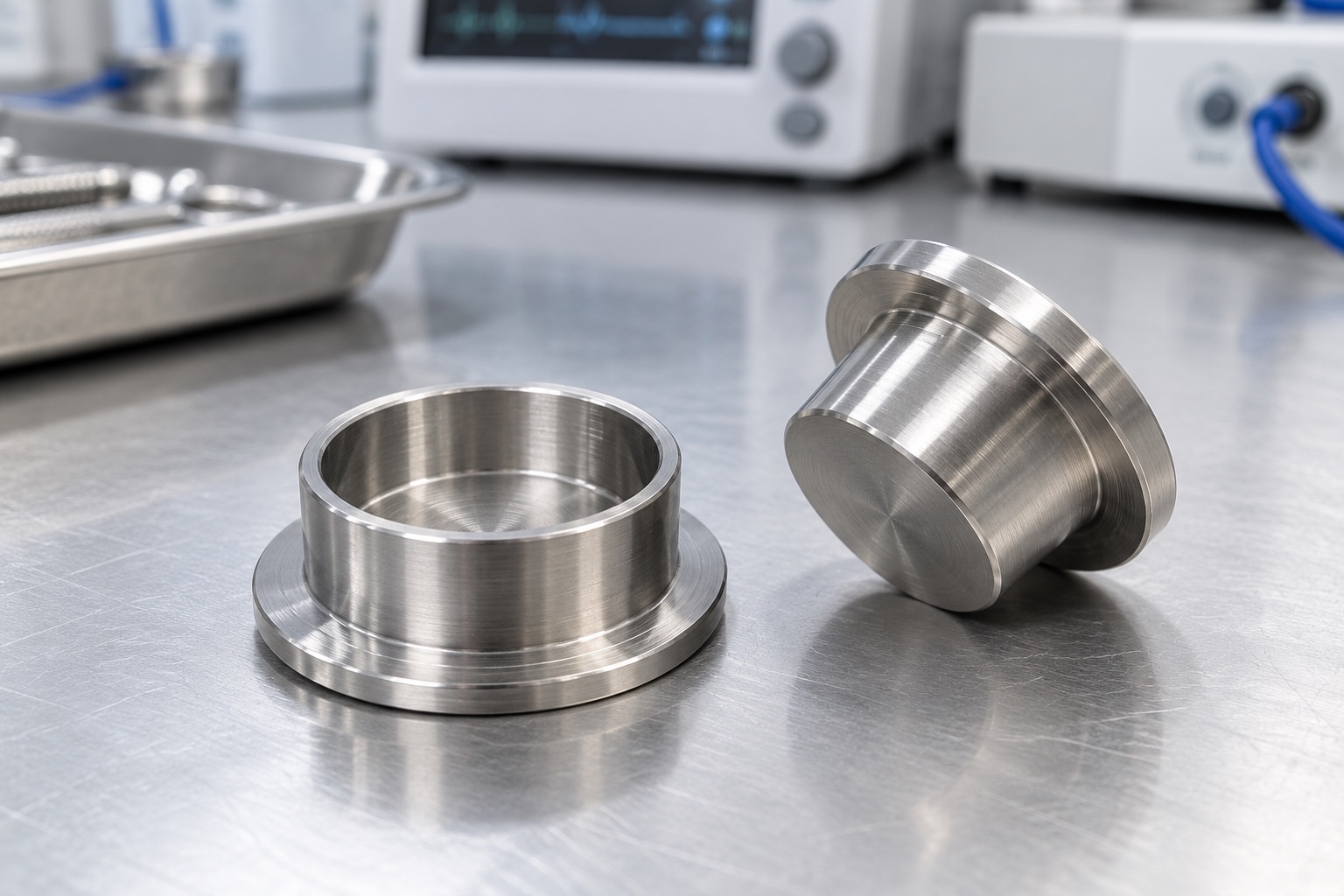
A representative proposed locating cup
This example considers a proposed one-piece 316L stainless spring locating cup with a shallow blind pocket, contact floor, outside flange and locating pilot for a medical instrument mechanism. It illustrates a possible CNC turning workflow, not an actual customer delivery or a qualified spring assembly. The pictures show concepts rather than measured results or load tests. Final spring identity, contact geometry, material condition and acceptance requirements would need approved project documents. No installed force, service life, allowable load, achieved tolerance, certification or complete medical-device validation is claimed for this proposed component.

Review spring and mating-interface documents
The proposed order would begin with controlled component drawings and model, approved spring information, mounting references and the actual contact arrangement. The review would separate floor contact and locating features from deliberately clear regions. Missing information about spring ends, internal radii, pocket access or inspection condition would be returned for written clarification before costing and routing were finalized. A loose spring sample would not define the entire mechanism. The purchased scope would distinguish dimensional manufacture, optional seating trials and separate load, life or device-level evaluations assigned to the responsible equipment design program.
Preserve stainless grade and stock evidence
The material order would specify the approved 316L condition, stock form and documentation. Lot identity would remain with cut blanks and finished cups through machining, final treatment and shipment. A visually similar stainless bar would not be accepted automatically as equivalent. The supplier would review machining allowance and support for the flange and blind pocket. Any proposed substitution would need authorization before use. Material identity would remain a design input rather than a broad claim of corrosion resistance, cleaning compatibility, contact life or medical certification for the complete spring and equipment assembly.
Establish turning references without distortion
Initial turning would establish the mounting and cylindrical references needed to relate the pocket, flange and pilot. Workholding would preserve those relationships without damaging finished contacts or forcing a thin feature into an artificial position. Chips at contacts would be controlled before reference transfers. The supplier would consider the changing support as the blind pocket was produced. Intermediate checks could confirm the route but would not replace final acceptance. The intended output would be repeatable finished geometry under the specified condition rather than a correct-looking cup maintained by excessive clamping during inspection.
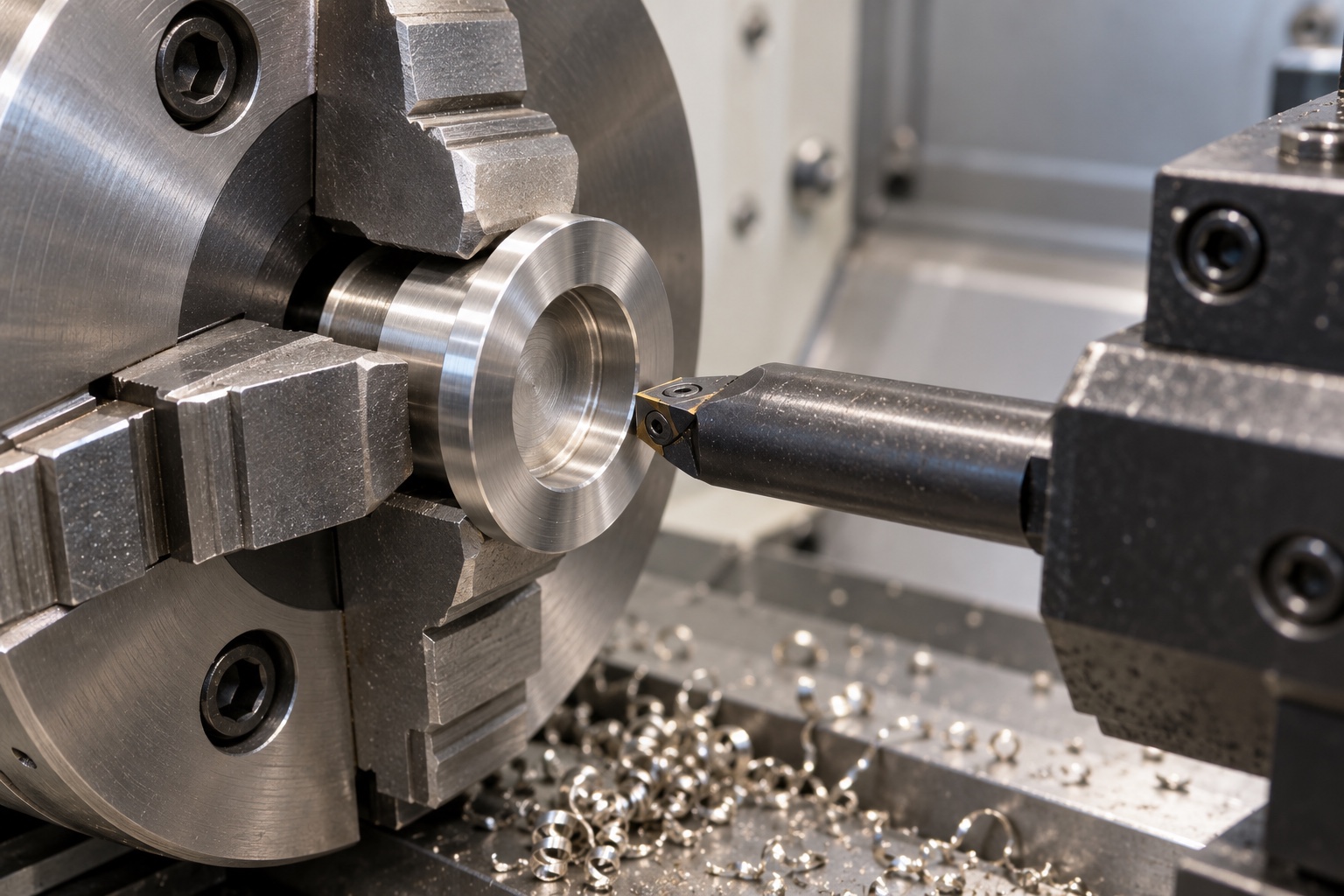
Produce the controlled blind pocket
The pocket diameter, depth and contact floor would follow the approved drawing and its functional references. Tool access and the floor-to-wall transition would be reviewed before manufacture so an unavoidable radius did not become an unexpected spring interference. A proposed relief would require design approval. The supplier would not deepen or widen the pocket informally to match an unidentified sample. An authorized change would enter the controlled drawing, model and inspection plan, keeping manufacturability advice separate from an approved alteration to the mechanism's contact position and assembly requirements.
Complete flange and pilot relationships
The outside mounting flange and any locating pilot would be produced in relation to the approved pocket references. The route would distinguish functional contacts from cosmetic outside surfaces. A supplier would not select a convenient outside datum if it failed to represent the installed position. Additional setups, if necessary, would preserve the specified relationships and protect finished contacts. Model and drawing discrepancies would be resolved before production decisions. A cup that rested on one bench fixture would not automatically prove correct location in the actual medical instrument's complete spring mechanism and support arrangement.
Control edge finishing and contact integrity
The finishing process would examine the pocket entrance, floor transition, flange and pilot shoulder for unwanted burrs or attached material. Removal would preserve the approved contact geometry rather than round every edge indiscriminately. Uncontrolled polishing would not hide a floor defect or make an unapproved spring appear to seat. Markings would remain in approved regions. Cleaning would follow the purchased scope, and a damaged contact would be treated as a component issue rather than concealed by packaging. A bright surface would not demonstrate quantified cleanliness, measured texture or acceptable wear performance in service.
Apply only the specified final process
If passivation or another treatment were required, documentation and final-condition checks would be agreed in advance. The supplier would review how the process affected the accepted material and contact configuration rather than treating every finish change as cosmetic. The example does not specify a universal treatment or assert compatibility with every cleaning chemical. The actual spring, cup and environment would remain design inputs for the responsible equipment program. Any changed process would be authorized and preserved in the production record, material evidence and repeat-order definition before being used on accepted components.
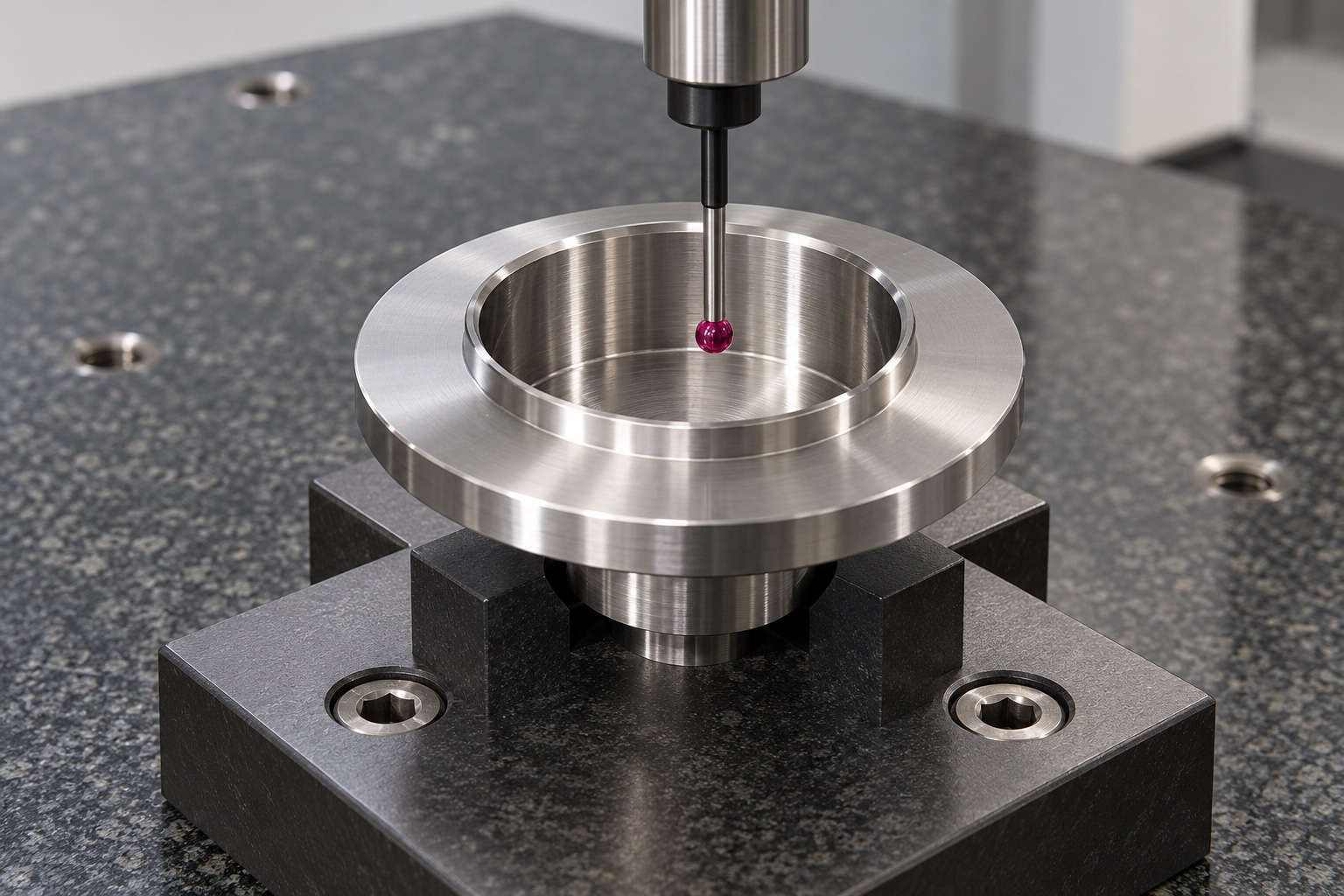
Prepare a traceable first-part report
The report would identify drawing revision, material lot and numbered requirements, including specified pocket geometry, floor contact and mounting relationships. It would document inspection methods, reference arrangement and final treatment condition. No numerical results are supplied because this representative example has no manufactured sample or inspection record. Material and dimensional evidence would support acceptance within the purchased component scope only. It would not establish installed spring force, mechanism travel, fatigue life, permissible load or complete medical equipment safety without the responsible program's separate evaluation of the actual spring, seat and installation configuration.
Define an optional seating demonstration
An agreed trial could check insertion, seating and clearances using identified approved components. The responsible program would define handling and any loaded procedure; this example does not provide a method for compressing or retaining an unspecified spring. The record would identify cup, spring, mounting arrangement and the exact checks. It would not be presented as life or load qualification without independently defined evaluation. Unexpected contact would be documented before changing the cup or mating part. A hand-fitted sample would not establish a repeat-production baseline without approved documents and corresponding inspection requirements.
Protect the pocket and mounting contacts
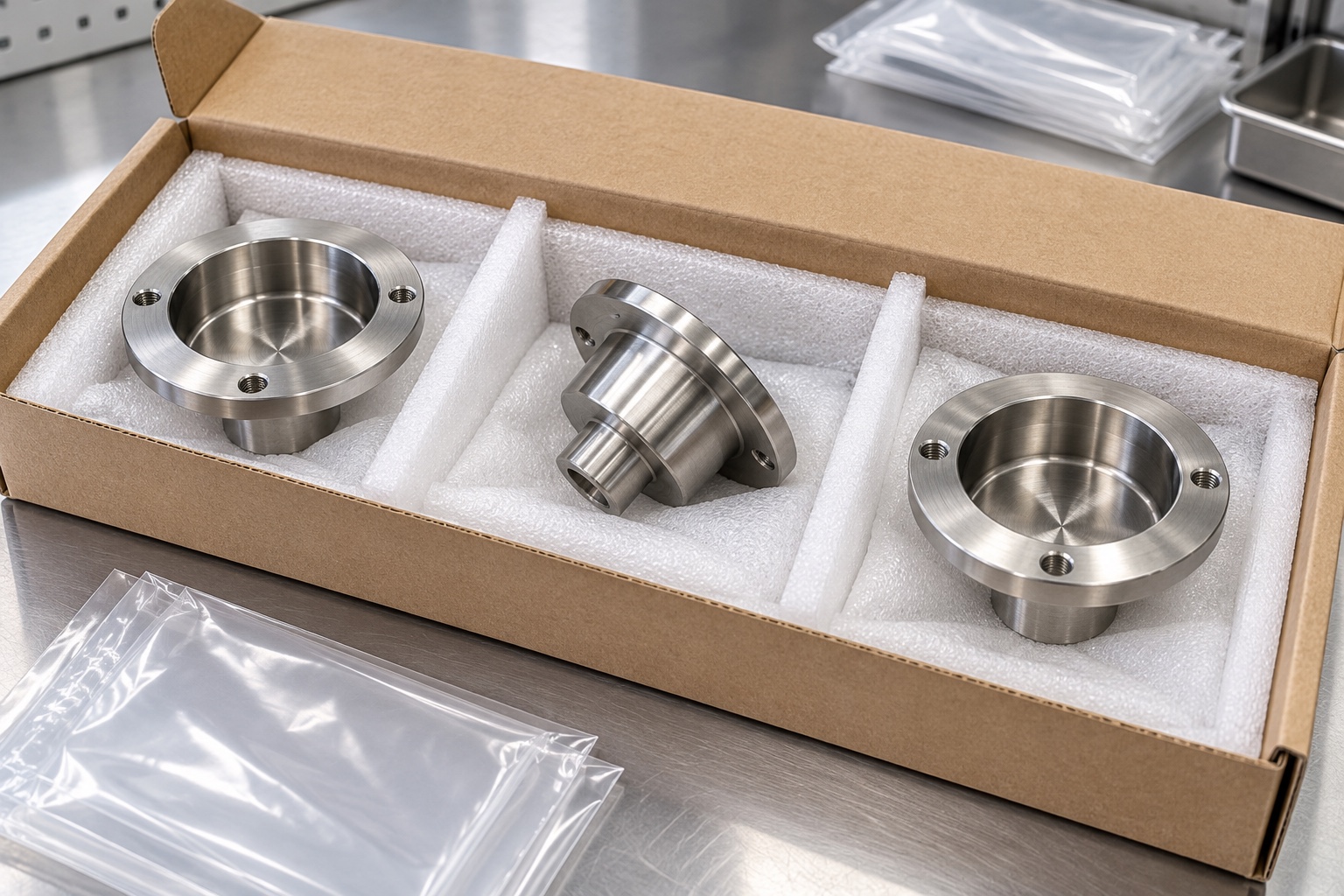
Transport packaging would separate cups and keep the blind pocket, floor and mounting references from impact or rubbing. Protective materials would suit the agreed cleaning scope and avoid loose residue inside the pocket. Any supplied spring samples would retain clear identity and trial status rather than imply qualification. Ordinary bags would not establish sterile delivery or quantified cleanliness. Grade, lot and revision information would accompany the shipment so receiving personnel could preserve the accepted configuration and distinguish it from a prototype or a similar-looking cup made for a different spring before controlled equipment assembly.
Keep the repeat-order definition complete
The repeat-order record would retain drawing revision, material condition, approved spring information, contact arrangement, mounting references, final process, inspection method and packaging scope. Authorized prototype modifications would be incorporated explicitly. The equipment owner would review changed spring ends, materials, operating travel or installation before reusing earlier conclusions. This representative example offers a structured framework for buying a turned spring seat: define the contact, preserve reference relationships and provide traceable evidence. It keeps force, durability and complete medical-device qualification separate from claims that cannot be established by a machined cup and dimensional report alone.
Manufacturer background reference: www.leespring.com.
FAQ
Is this a delivered cup with a proven load rating?
No. It is a representative CNC turning example for a proposed component. No actual customer shipment, installed spring force, service life, allowable load, achieved tolerance, certification or complete medical-device validation is asserted, and the illustrations are not inspection or qualification records.
What defines the blind pocket and contact floor?
Approved component and spring-interface documents define geometry and references. Spring-end configuration, installation and internal transitions must be reviewed together. An unidentified spring that fits loosely is not a complete production specification or evidence of interchangeable operation.
What would the first-part report demonstrate?
It would document agreed drawing features, material evidence, inspection methods and reference conditions. By itself it would not establish installed force, fatigue life, mechanism stroke, permissible load or safety of the complete medical instrument assembly.
Can the pocket be adjusted informally for a prototype?
Only within approved process and drawing limits. A geometry change requires authorization, controlled documents and suitable inspection before it becomes a repeat-production configuration, rather than an unrecorded hand-fitting operation used to match one sample spring.
Can a spring seating check be included?
Yes, with identified approved components and explicitly defined checks and handling. Any loaded procedure belongs to the responsible program's approved scope. Basic insertion and seating observations do not replace independent load, life or medical-device qualification.
Which changes need review before repeating manufacture?
Review spring identity and end geometry, pocket, flange and pilot relationships, material, final process and installation. Preserve controlled revisions and evidence rather than automatically applying earlier seating or performance conclusions to a changed spring mechanism.

tanghangyun@oemach.com