
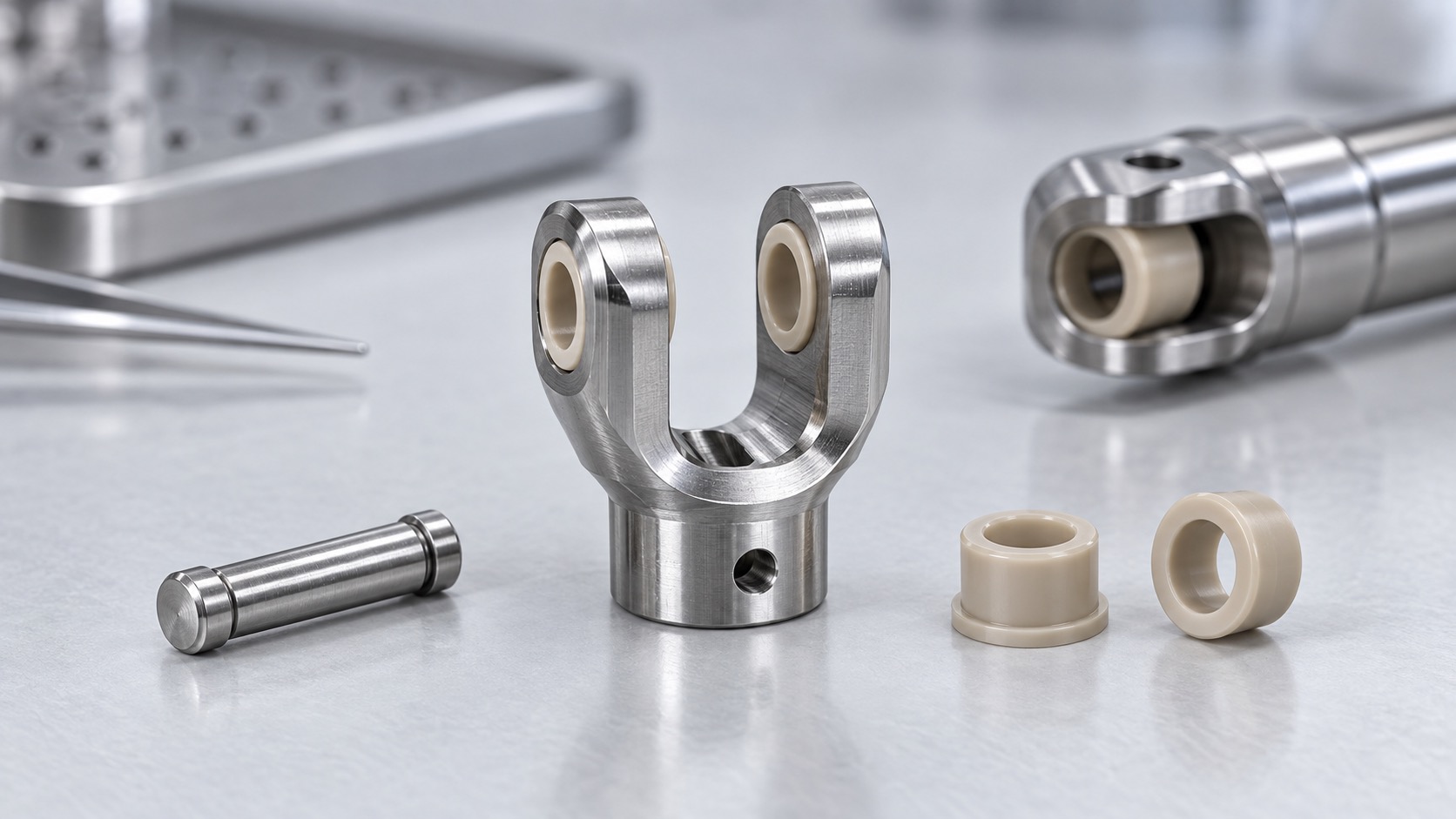
316L Stainless Steel Endoscope Articulation Yoke with PEEK Bushings
This product case covers a CNC machined 316L stainless steel articulation yoke used in a compact endoscope motion module. The part supports a miniature hinge pin and two PEEK bushings while maintaining smooth rotation inside a tight assembly envelope. The OEM needed prototype and pilot quantities with reliable bore alignment, clean edges and documentation suitable for medical device validation.

The part was designed around two functional requirements: the hinge axis had to remain straight through both fork ears, and the bushing seats had to hold a consistent press fit without scoring the polymer. 316L stainless steel provided corrosion resistance and strength, while PEEK bushings reduced friction and separated the hinge pin from the yoke body. The drawing called for passivation, controlled edge breaks and individual packaging.
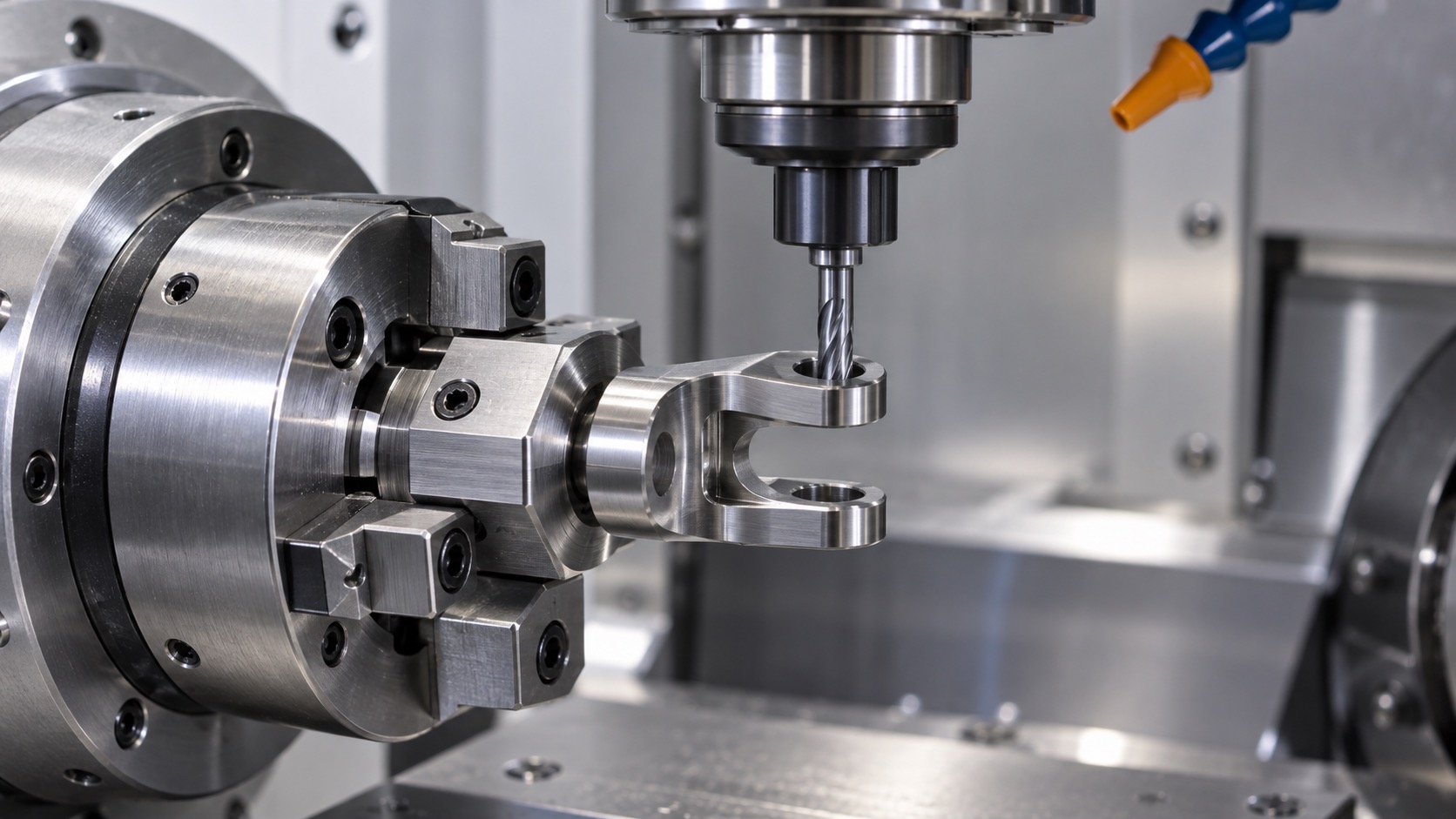
DFM focused on machining sequence and workholding. The cylindrical mounting stem was turned first, then the fork geometry and hinge bores were finished in a supported milling fixture. The fixture held the part near the stem without squeezing the fork ears. Final bore finishing used a controlled tool path and gauge verification so the pin could slide smoothly without excess clearance.
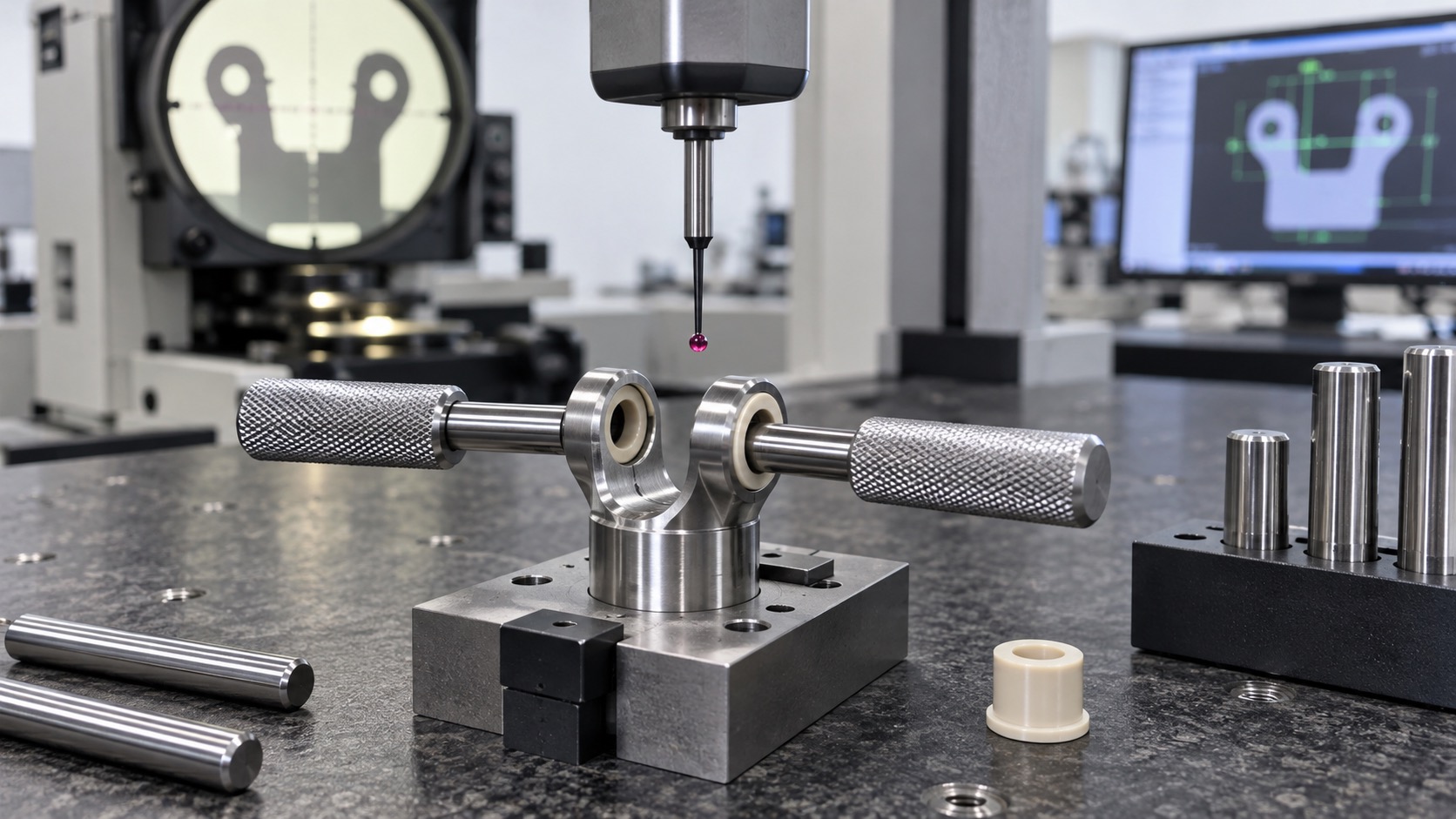
Inspection included CMM measurement of bore position, pin gauge checks, optical review of edge breaks and visual inspection after passivation. Because the part interacts with a polymer bushing, burr acceptance was stricter than a normal metal bracket. Any bright edge inside the hinge bore or slot was reviewed under magnification before release.
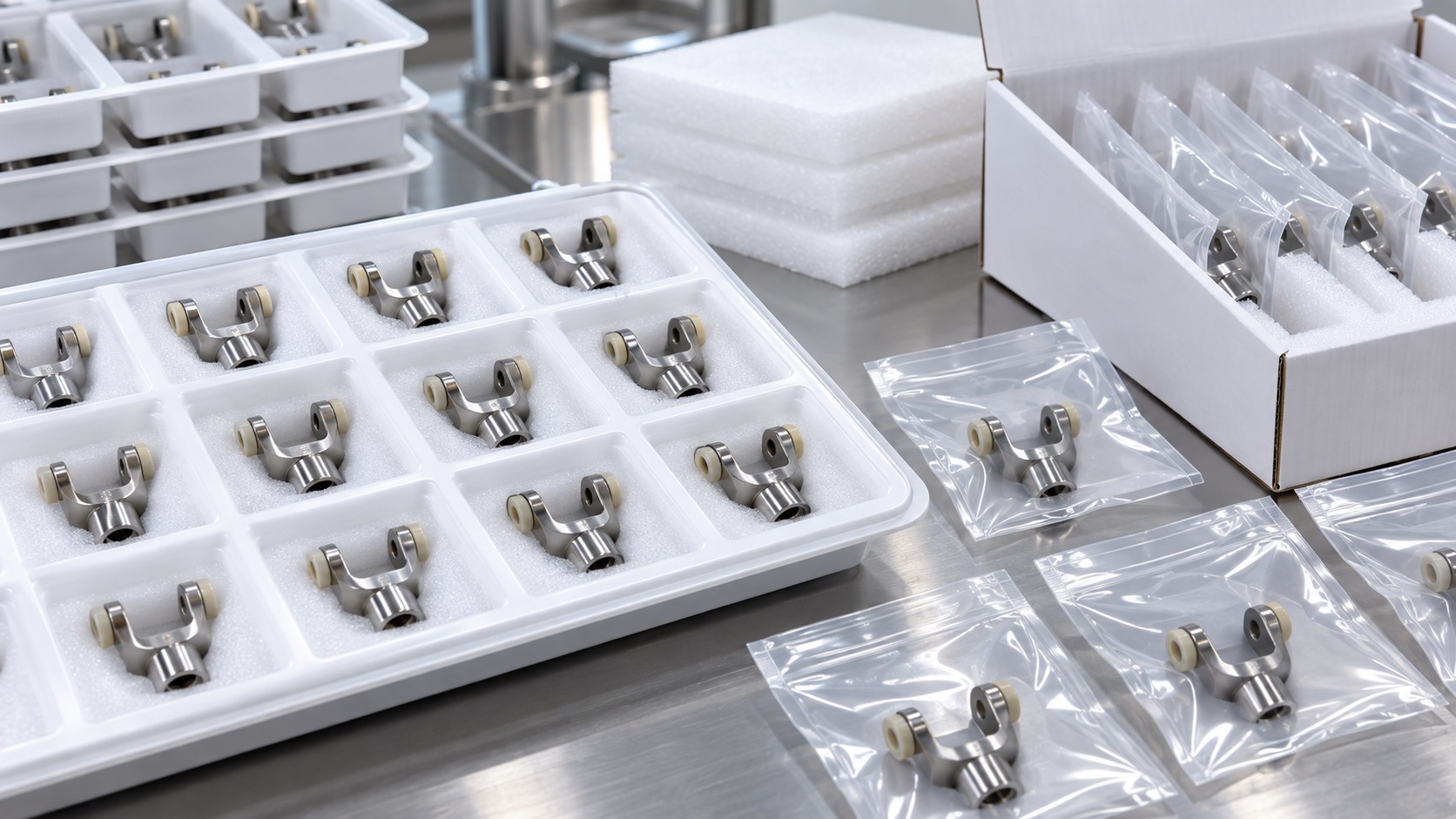
For delivery, each yoke assembly was separated in a clean tray or pouch to protect polished edges and bushings. The shipment was linked to material certification, passivation records and inspection data. This helped the customer move from bench testing to pilot assembly without reworking small parts on the receiving side.
The project shows how a small component can carry large system risk. By controlling datum transfer, bore finish, bushing fit and packaging, the yoke became a repeatable part rather than a fragile prototype.
FAQ
What is the function of this endoscope yoke?
It supports the hinge pin and bushings that allow a compact articulation module to rotate smoothly and repeatably.
Why use 316L stainless steel?
316L provides corrosion resistance, strength and passivation compatibility for small medical device hardware.
Why were PEEK bushings added?
PEEK bushings reduce friction, protect the hinge interface and help control motion feel without adding much weight.
Which features were most critical?
Hinge bore alignment, fork ear parallelism, bushing seat diameter, stem coaxiality and burr-free edges were critical.
How was quality verified?
The parts were checked by CMM, pin gauges, optical inspection, passivation review and final visual inspection.
What documentation can be supplied?
Material certificates, first article inspection, passivation records and final inspection reports can be supplied as required.
Contact: tanghangyun@oemach.com