
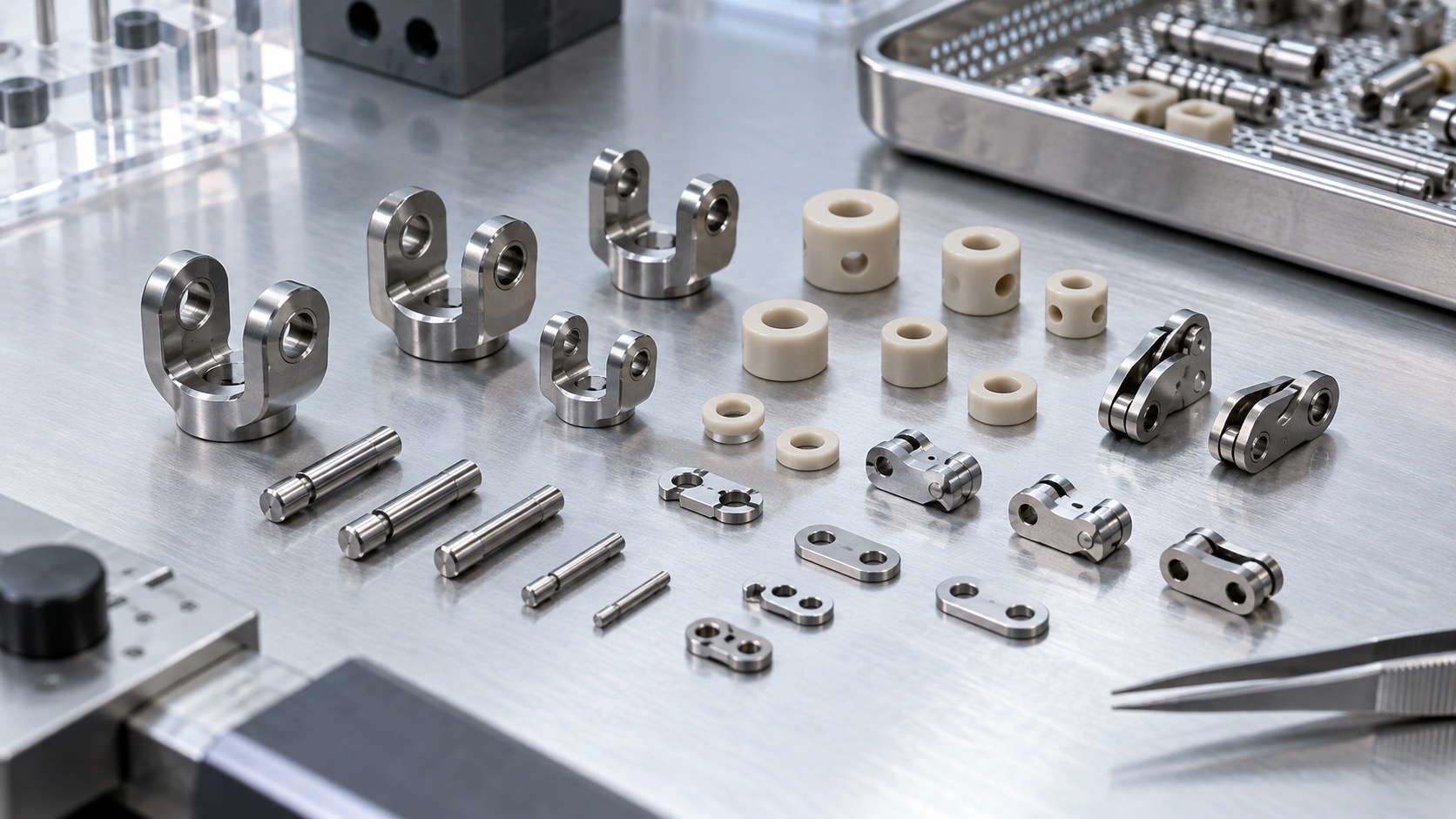
CNC Machining Endoscope Articulation Components: 316L Yokes, Hinge Pins and PEEK Bushings
Flexible and minimally invasive endoscope systems rely on small articulation components to transmit controlled motion through a narrow instrument envelope. The parts may look simple in isolation: a fork-shaped yoke, a hinge pin, a tiny link plate, a PEEK bushing or a spacer. In assembly, however, each feature affects smooth movement, backlash, durability and the ability to clean or protect the device hardware during manufacturing. For a medical device OEM, the machining plan for these parts must connect geometry, material behavior, edge condition and traceability from the first prototype.

Material selection is usually the first decision. 316L stainless steel is widely used for small medical hardware because it combines corrosion resistance, strength and good passivation response. It is not the easiest material to machine at micro scale: work hardening, burr formation and heat buildup can appear quickly when tools are small. PEEK or similar engineering polymers are often added as bushings or insulating spacers. They reduce metal-to-metal contact, control friction and help isolate motion interfaces without adding excessive mass.
The most important geometry is often the hinge relationship. Bore diameter, bore-to-bore position, fork slot width, parallelism between ears and pin straightness all influence assembly feel. If the fork ears spring open after machining, the pin may pass inspection individually but bind during assembly. A practical DFM review therefore looks at stock allowance, roughing balance, fixture support and final deburring access before the first part is cut.
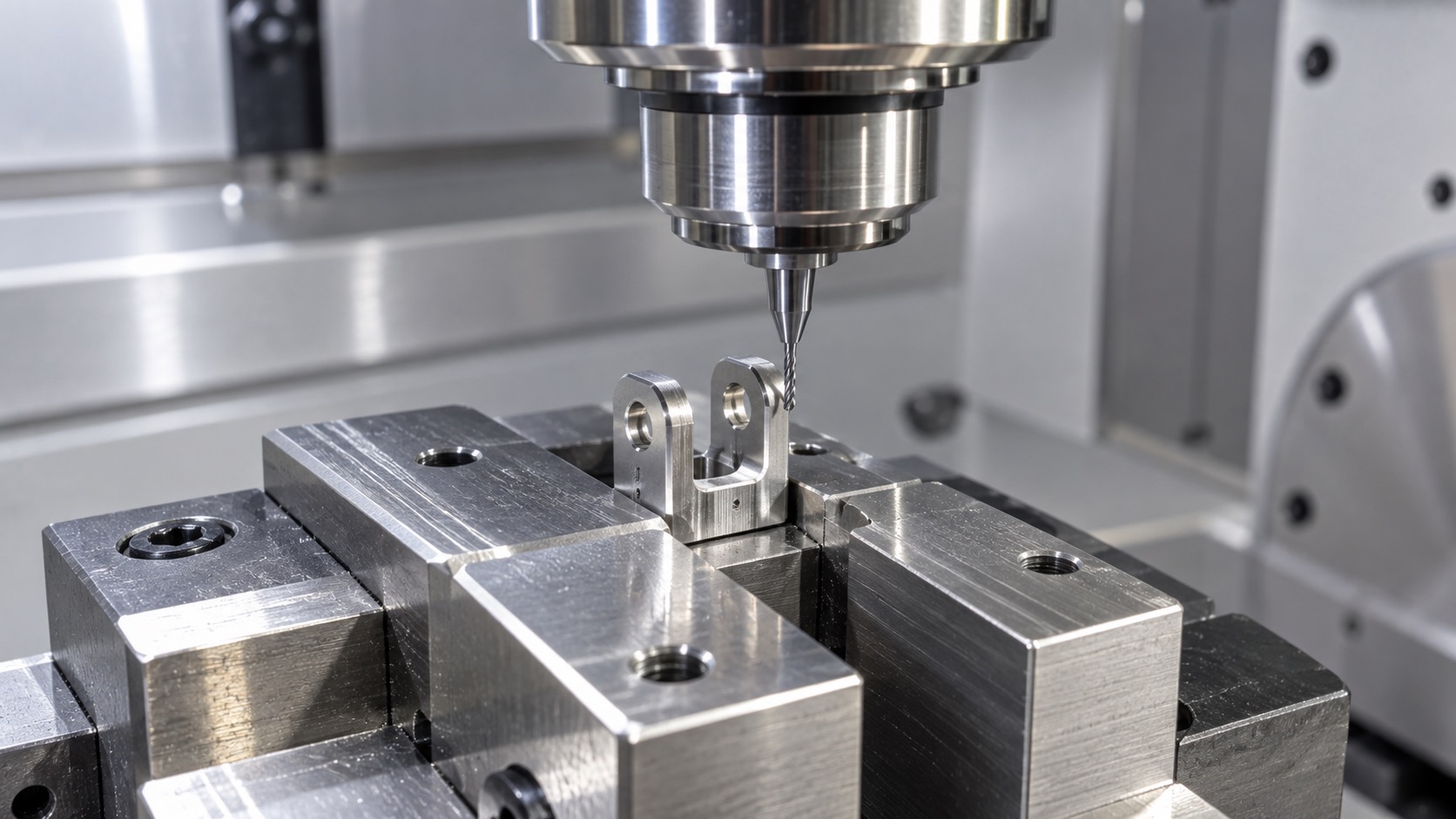
Toolpath planning must protect delicate features. Roughing should remove material symmetrically where possible, and finishing should leave enough material for a clean final pass on bores and datum faces. For very small hinge bores, drill walk, tool runout and reamer condition are more important than nominal feed tables. When a part has both turned and milled features, datum transfer between lathe and mill operations must be planned so the cylindrical mounting feature and fork geometry remain coaxial.
- 316L yokes: control ear parallelism, hinge bore location, passivation and edge break.
- Hinge pins: hold diameter, straightness, surface finish and end chamfer consistency.
- PEEK bushings: manage press fit, concentricity, creep risk and machining heat.
- Link plates: protect thin webs from clamp distortion and residual burrs.
Edge finishing is a functional requirement, not a cosmetic afterthought. Sharp burrs can scrape bushings, create particle risk or change the feel of the joint. Over-rounding can be just as harmful because it changes bearing area or assembly clearance. For miniature endoscope components, drawings should specify critical no-burr zones, acceptable edge break ranges and surfaces where polishing or tumbling is not allowed. Manual microscope deburring may be required for early runs.
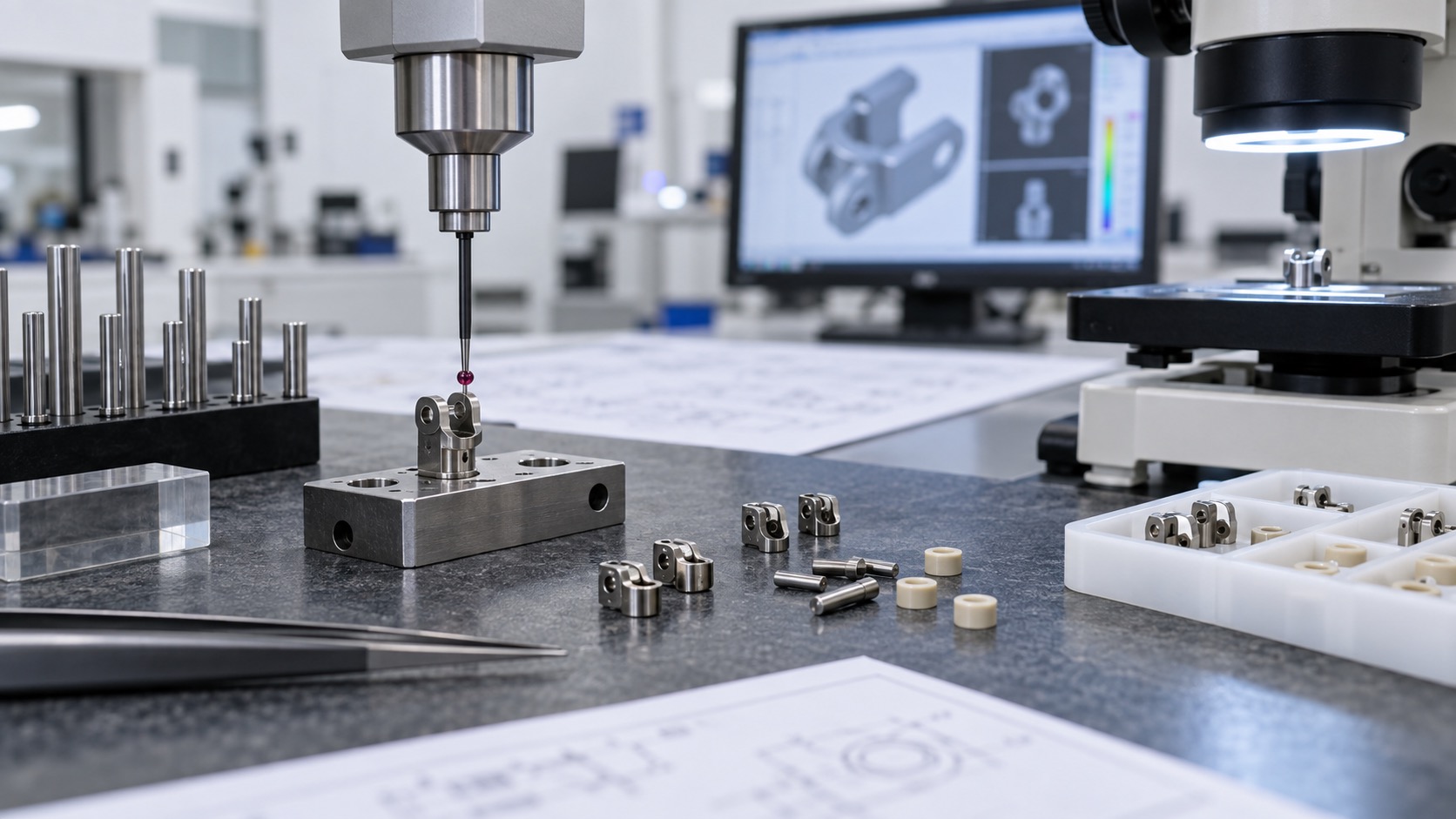
Inspection should mimic the way the assembly uses the part. CMM reports can verify datum location, perpendicularity and bore position, while pin gauges and functional pins reveal fit quickly. Optical inspection is valuable for burrs and edge quality because small flaws may not appear in dimensional data. For PEEK bushings, bore size and outside diameter should be checked with methods that avoid compressing the polymer. First article inspection should include post-finish dimensions, especially after passivation or cleaning.
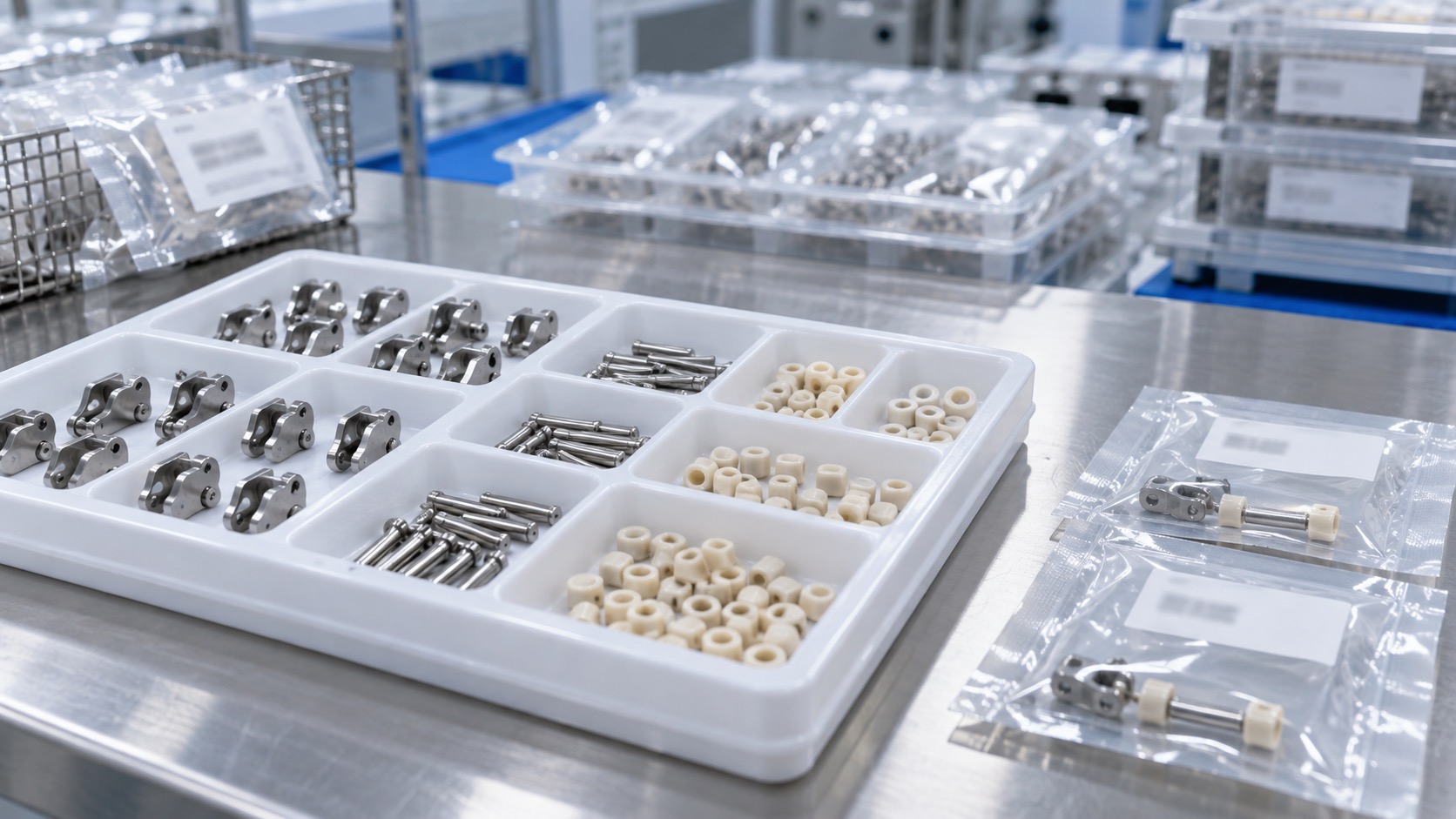
Cleaning and packaging complete the manufacturing chain. Stainless steel parts should be protected from mixed-metal contamination, excess oil and abrasive media residue. PEEK parts should be separated to prevent scratches or deformation. For medical device assembly, individually bagged or tray-separated parts reduce handling damage and make lot traceability clearer. Good packaging also helps the receiving team inspect quickly without re-sorting small components on the assembly bench.
The strongest projects start when design and manufacturing teams discuss motion requirements instead of only exchanging drawings. If the supplier understands where friction, backlash, alignment and cleanliness matter, the machining route can be built around those risks. That is how small articulation components move from attractive prototypes to stable pilot production.
FAQ
Why is 316L stainless steel used for endoscope articulation parts?
316L offers corrosion resistance, strength and a proven passivation response, which makes it suitable for many small medical device hardware components.
What tolerances matter most on a yoke component?
Hinge bore diameter, bore position, ear parallelism, fork slot width and datum coaxiality usually matter more than broad profile tolerances.
How are burrs controlled on miniature medical parts?
Burr control combines sharp tools, stable fixturing, controlled edge-break notes, microscope inspection and targeted manual deburring where automated finishing could damage features.
Why use PEEK bushings with stainless steel yokes?
PEEK can reduce friction, isolate motion interfaces and avoid metal-to-metal contact while keeping the assembly lightweight and dimensionally stable.
What should be included in an RFQ for articulation hardware?
Send 2D drawings, 3D CAD, material and finish notes, critical motion interfaces, annual volume, prototype quantity, cleaning needs and inspection expectations.
Can these components be produced in small batches?
Yes. Small batches are common for prototypes and validation builds, but fixtures and inspection plans should still be designed with later pilot production in mind.
Contact: tanghangyun@oemach.com