
CNC Machined 316L Stainless Steel Sterile Adapter Plate for Surgical Navigation Equipment
This product case focuses on a 316L stainless steel sterile adapter plate used between a surgical navigation tracker and an orthopedic positioning fixture. The plate provides a stable datum, protects the sterile interface and allows the assembly team to locate the tracker repeatedly during setup and validation.
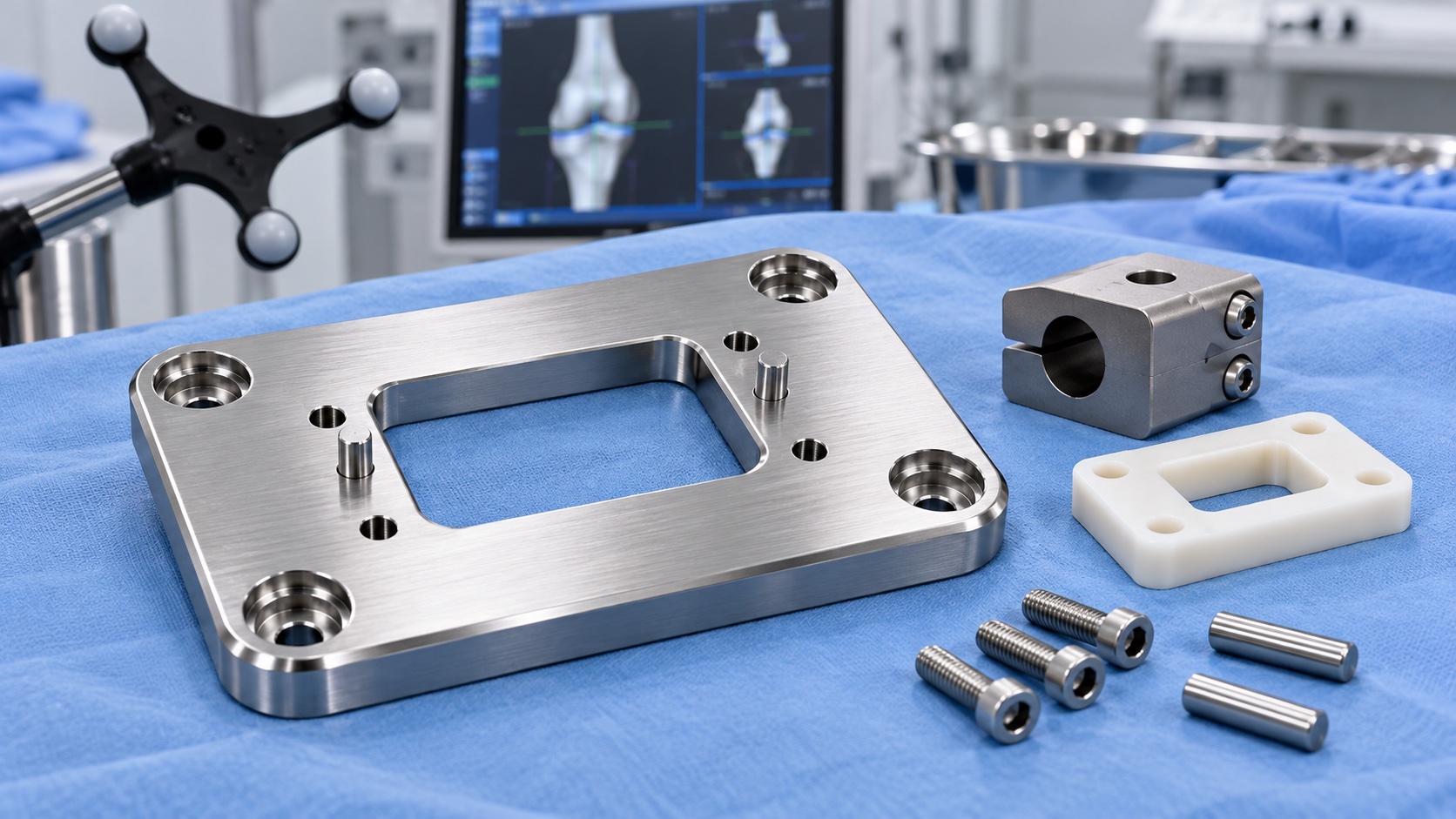
The component combined a central rectangular window, four counterbored mounting points, dowel pin bores, small threaded holes and radiused edges. The customer needed a brushed and passivated finish, burr-free contact surfaces and documented inspection for pilot medical device assembly.
316L stainless steel was selected because it resists corrosion during cleaning and offers a robust surface for repeated handling. The process started with stress-conscious roughing, followed by semi-finishing of the central window and mounting holes. A final operation controlled flatness and the dowel pattern from the same functional datum.
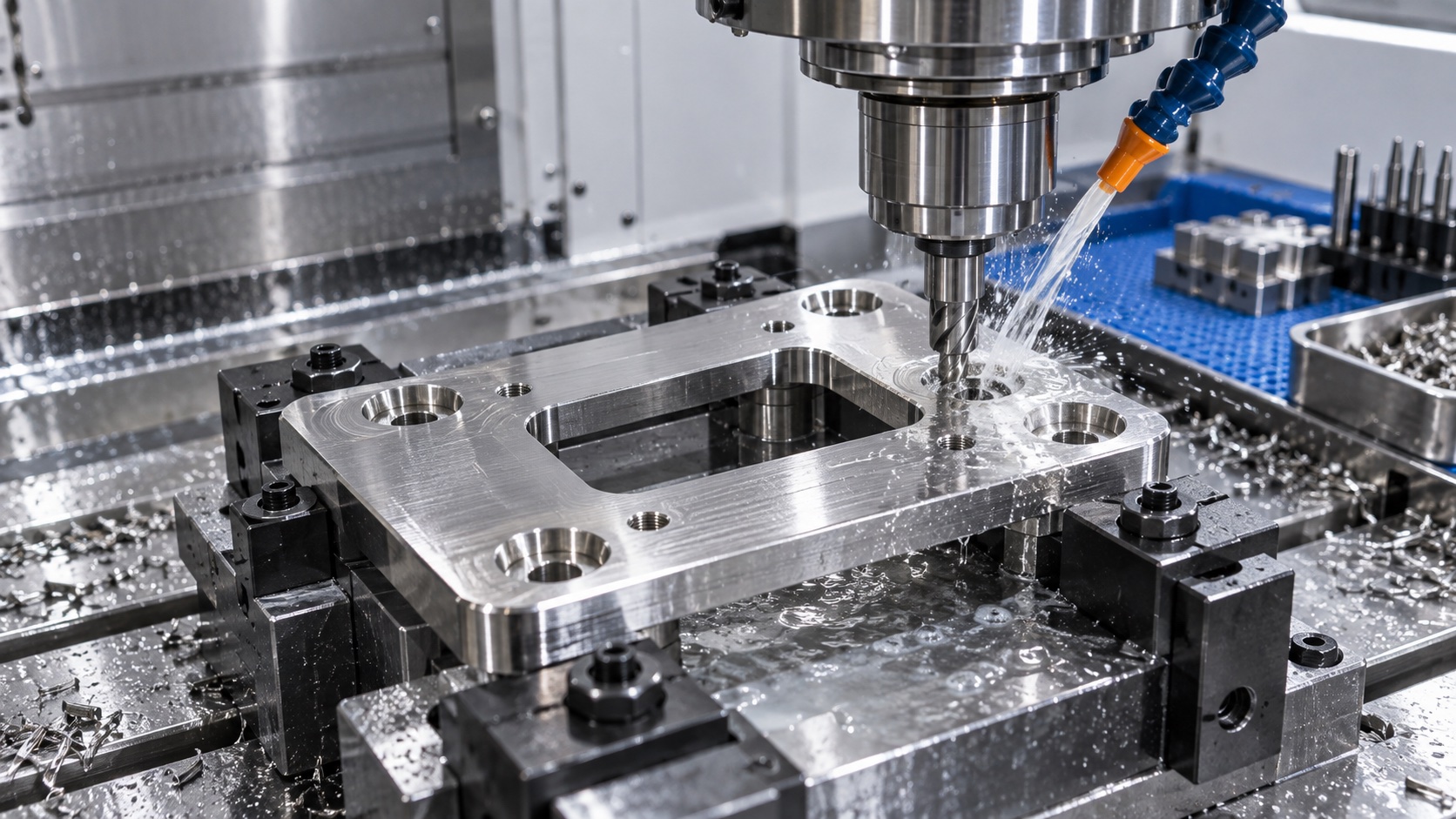
Fixturing was designed to support the plate without over-clamping it. Because the center window removes stiffness, heavy clamping could bow the part before measurement. Soft support points and balanced toolpaths kept the plate stable while the counterbores and pin bores were finished.
Deburring was treated as a critical operation. Window edges, counterbores, threaded holes and small reliefs were inspected under magnification so no raised material remained. The brushed surface was controlled to keep a clean medical appearance while protecting the mating face geometry.
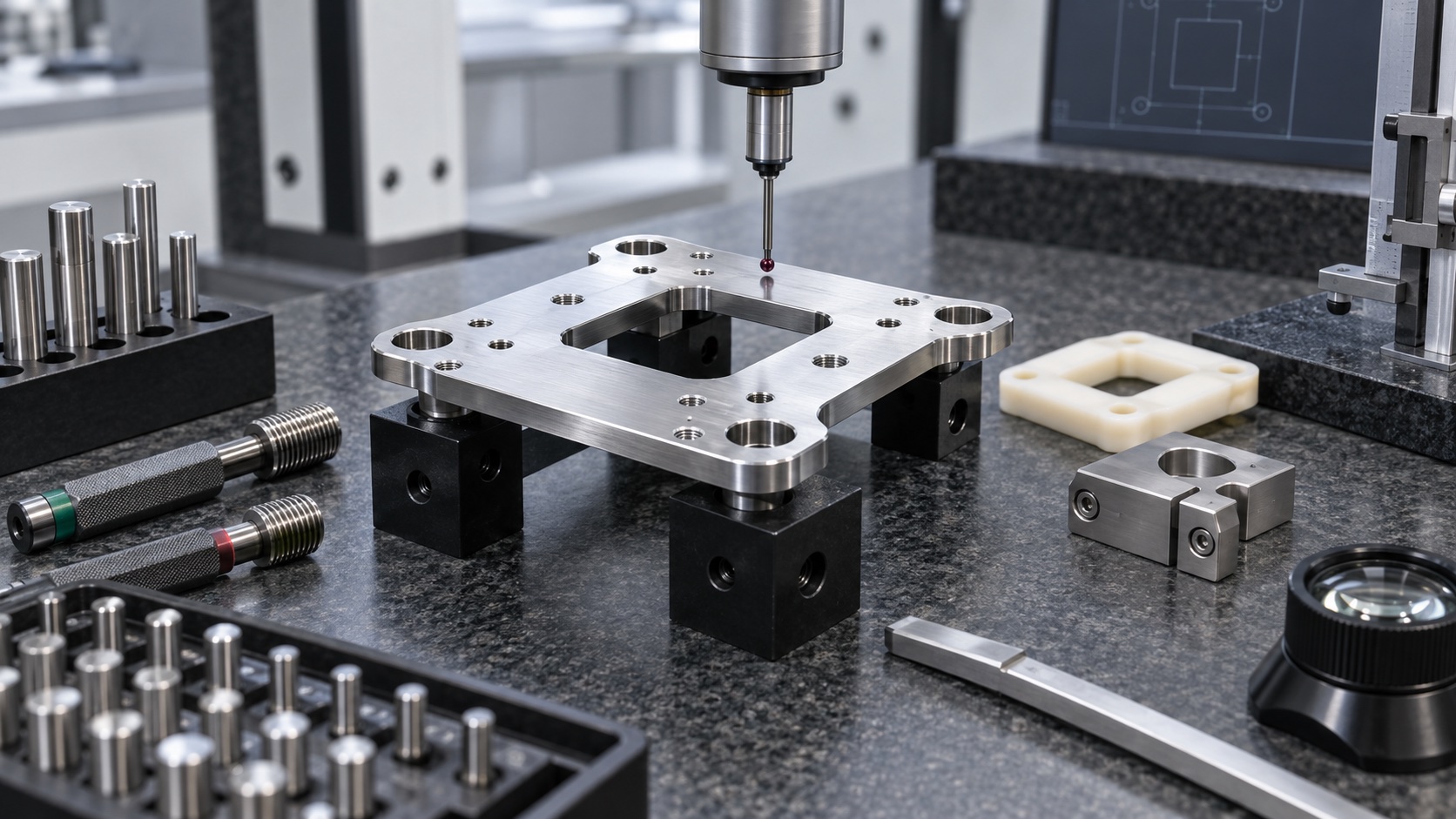
Inspection included mating-face flatness, central window squareness, dowel pin bore position, counterbore depth, thread condition and edge radius. Gauge pins and CMM data were used together because the customer needed both numerical evidence and practical assembly confirmation.
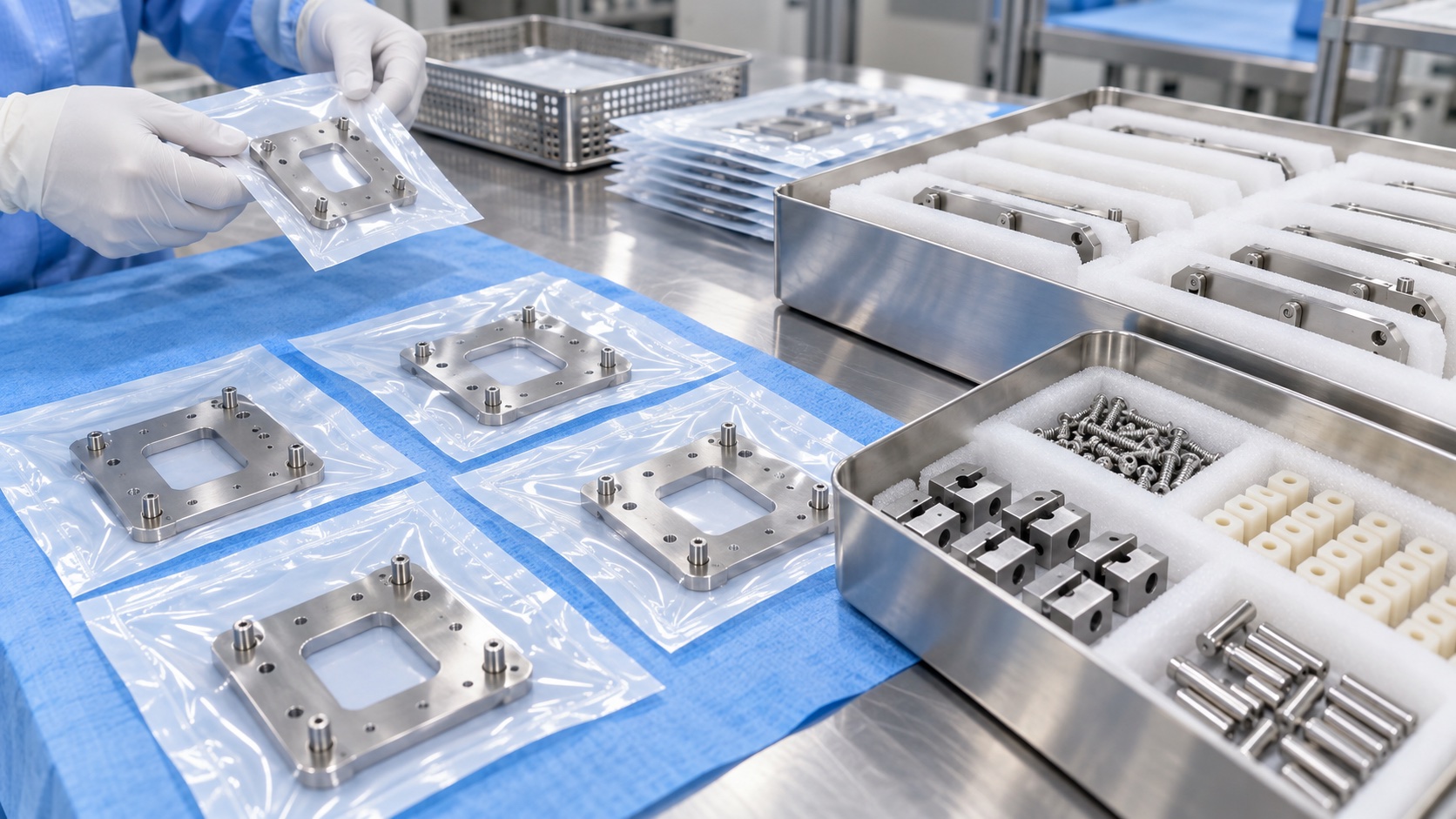
After passivation review, each adapter plate was separated in clean protective packaging. Pins, screws, PEEK spacers and titanium clamp blocks were grouped separately to prevent scratches and mixed-material contact during shipping.
FAQ
What is the part used for?
It is used as a sterile adapter between a surgical navigation tracker and an orthopedic positioning fixture.
Why was 316L selected?
316L offers corrosion resistance, passivation compatibility and durability for repeated cleaning and handling.
Which features required the tightest control?
The dowel pin bores, mating face, central window, counterbores and threaded holes were the key controlled features.
How was distortion avoided?
The plate was supported with low-stress fixturing and machined with balanced stock removal around the center window.
How was quality verified?
CMM data, gauge pins, thread checks, flatness measurement and visual burr inspection were combined.
How was the product delivered?
Each plate was protected separately, with pins, screws, PEEK spacers and titanium clamp blocks grouped to prevent scratches.
Contact: tanghangyun@oemach.com