
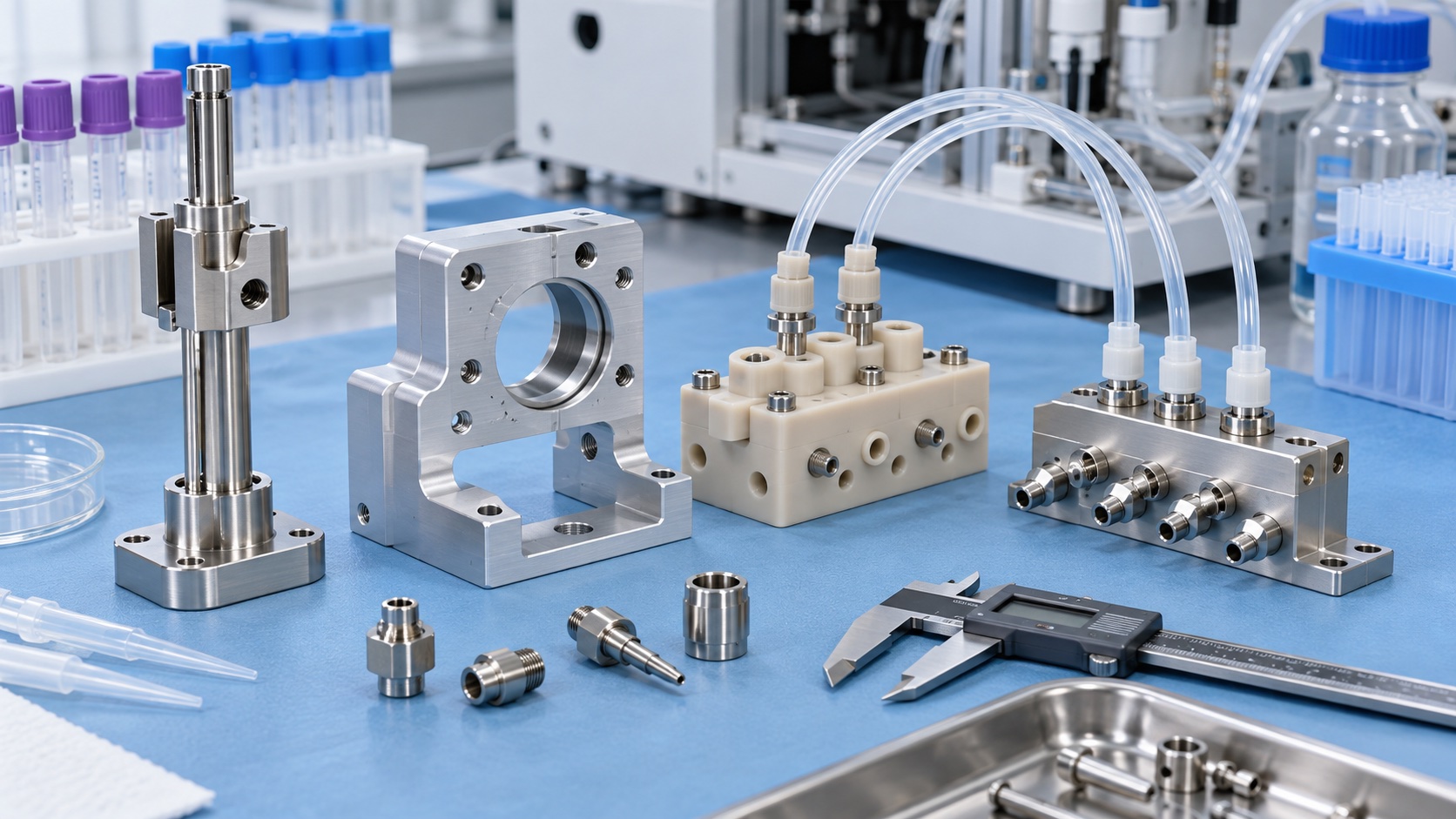
IVD hematology analyzers rely on small machined components to move samples and reagents through precise, repeatable paths. A sample probe holder must keep the needle straight. A reagent valve block must seal without dead volume. A wash station manifold must connect multiple ports without burrs or contamination traps. CNC machining gives equipment builders a way to control these interfaces across prototype, pilot and production batches.

Component Families
Typical machined parts include 316L stainless sample probe holders, PEEK reagent valve blocks, aluminum optical sensor brackets, wash station manifolds, tube fitting adapters and calibration fixtures. Each part has a different material requirement, but all of them depend on consistent datum control. The probe holder protects vertical alignment, the valve block protects sealing and flow, and the optical bracket protects sensor position.
The most important risk is often found at small features. A microscopic burr near a fluid port can disturb washing. A tilted probe bore can shift the sample pickup point. A slightly warped sealing face can create leakage or inconsistent reagent delivery. Good machining plans treat these details as functional surfaces, not cosmetic features.
Material And Process Planning
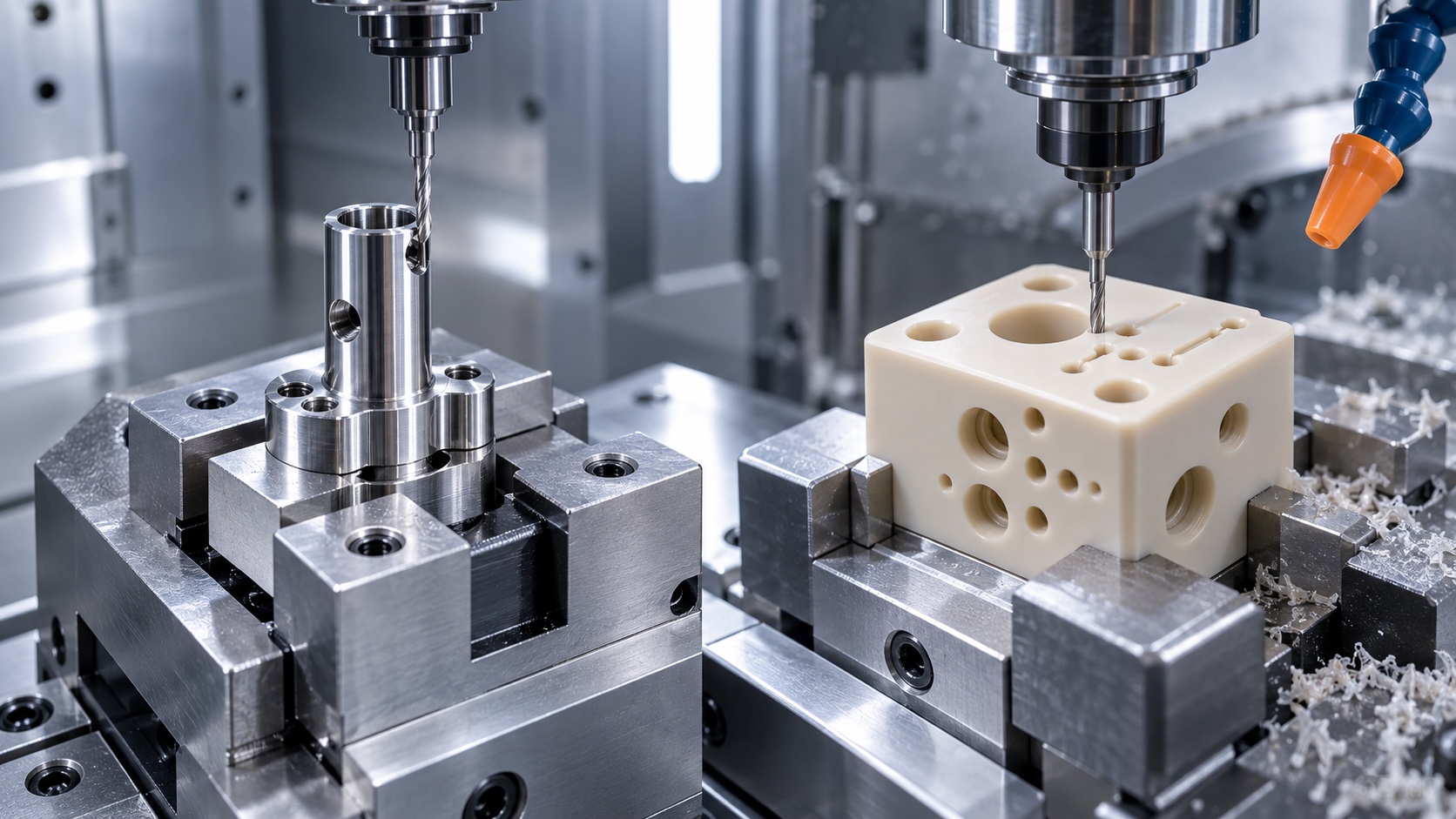
316L stainless steel is selected for probe holders and fittings where corrosion resistance, cleaning compatibility and wear resistance matter. PEEK is often used for reagent valve blocks because it resists many fluids and machines to stable micro features. Aluminum is useful for optical brackets and non-wetted housings when low weight and anodizing are desired.
The machining process should protect bores, sealing faces and port relationships. For stainless holders, turning and milling may be combined to create a concentric body, precise flange and clean cross holes. For PEEK valve blocks, sharp tools, controlled chip evacuation and light finishing cuts help avoid smeared edges and internal burrs.
Inspection And Clean Handling
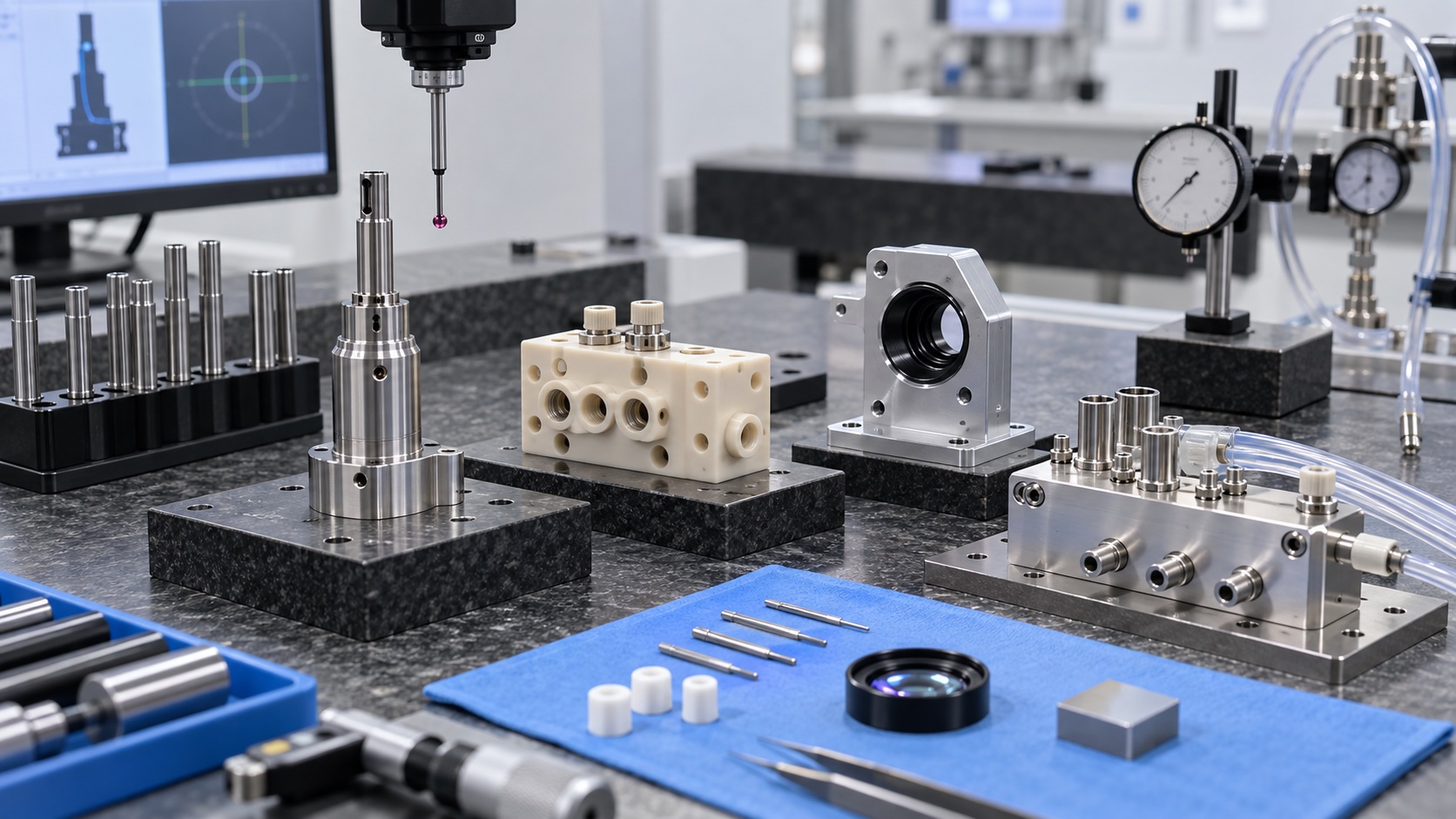
Inspection combines CMM checks, gauge pins, optical magnification, leak test fixtures and surface review. Probe bore straightness, port position, sealing flatness and fitting thread quality should be checked before cleaning. Documentation should connect material certificates, machining revision, inspection data and packaging status.
Conclusion
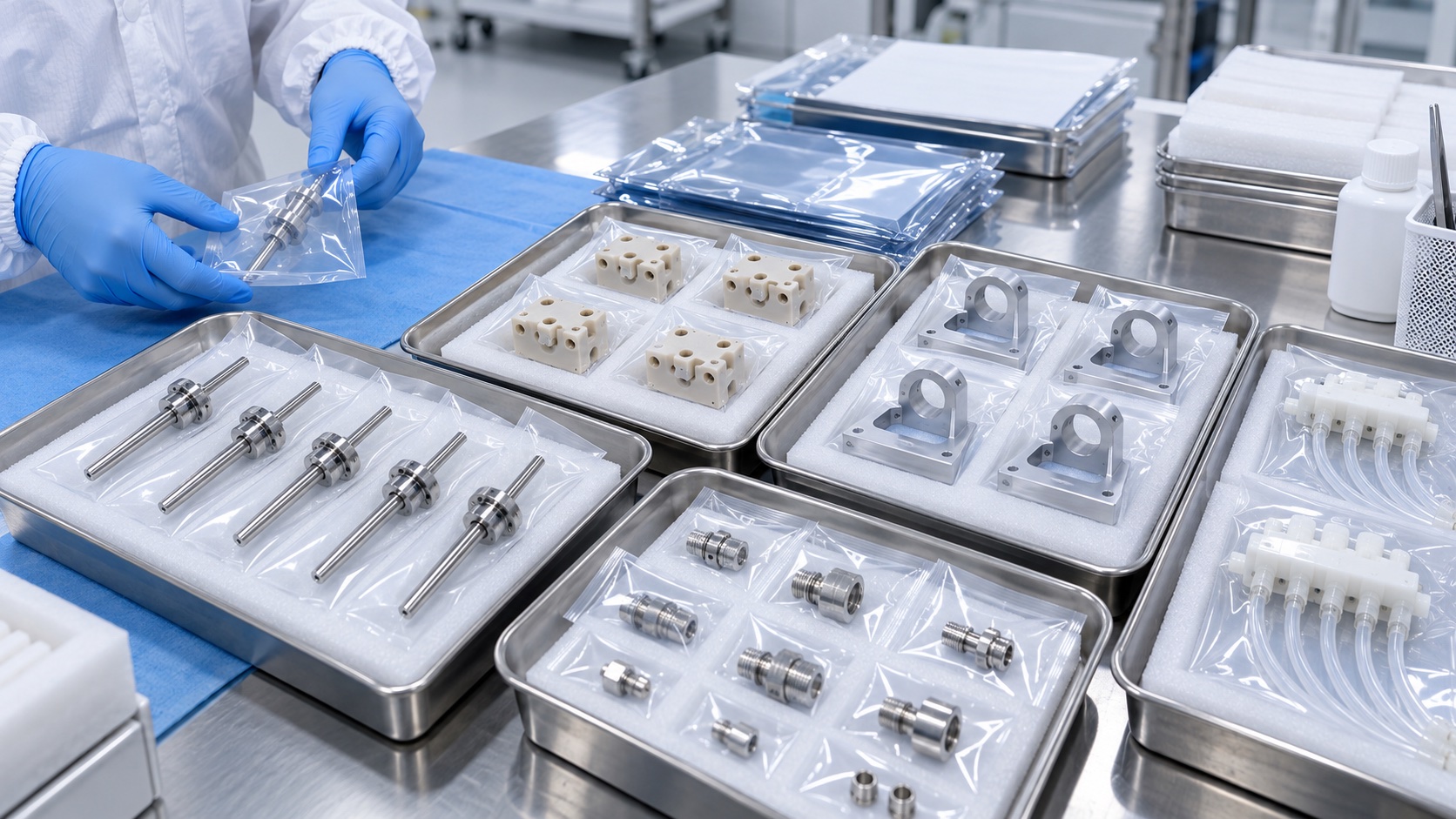
CNC machining for hematology analyzer parts is about protecting fluidic accuracy and mechanical alignment at the same time. With the right material selection, controlled micro-feature machining, inspection and clean packaging, suppliers can support IVD equipment makers from prototype validation through stable production.
FAQ
Which hematology analyzer parts are commonly CNC machined?
Sample probe holders, reagent valve blocks, wash station manifolds, optical brackets, fitting adapters and calibration fixtures are common CNC machined IVD parts.
Why use 316L stainless steel for sample probe holders?
316L offers corrosion resistance, stable precision machining and good compatibility with repeated cleaning around sample and reagent paths.
When is PEEK used in reagent valve blocks?
PEEK is useful when chemical resistance, dimensional stability and insulation are required for compact reagent or wash-fluid interfaces.
What tolerances are critical?
Probe bore straightness, cross-hole alignment, sealing face flatness, port position, dowel hole accuracy and burr-free micro edges are key.
How are fluidic features inspected?
CMM, gauge pins, optical inspection and leak test fixtures can be combined to verify geometry, flow paths and sealing surfaces.
How are IVD machined parts packaged?
Parts are cleaned, dried, separated with foam, sealed in clear pouches when required and identified by batch, revision and inspection status.
Contact: tanghangyun@oemach.com