
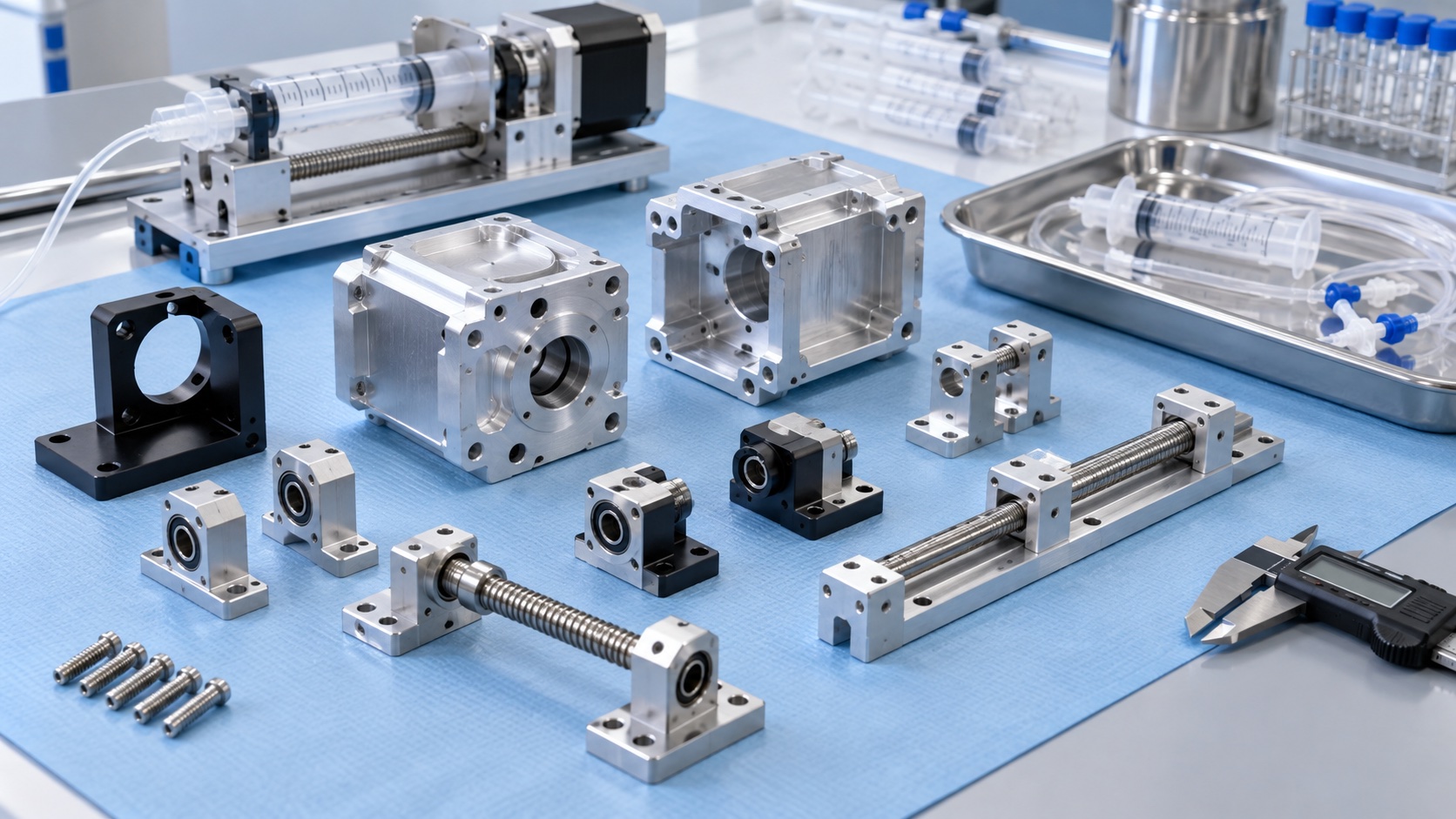
Medical syringe pumps deliver controlled motion through a compact drive train. The housing, lead screw support, bearing block and motor mount must keep the plunger movement smooth, quiet and repeatable. CNC machining is a practical method for these parts because it can hold bore alignment, flatness and datum relationships while maintaining clean surfaces for medical device assembly.

Drive Component Requirements
A syringe pump drive module usually contains a motor, reduction gearbox, lead screw, carriage guide, sensor references and end-stop features. The machined components do not contact medication directly, but they affect dose accuracy because any misalignment can create friction, backlash or inconsistent plunger force. For this reason, gearbox housings and support blocks are planned around functional datums rather than only outside dimensions.
The most important relationships are the coaxiality between bearing bores, the parallelism between the lead screw and guide rail, and the squareness of the motor mounting face. Counterbores and dowel holes must repeat reliably across batches so that final assembly does not require adjustment.
Material And Machining Strategy
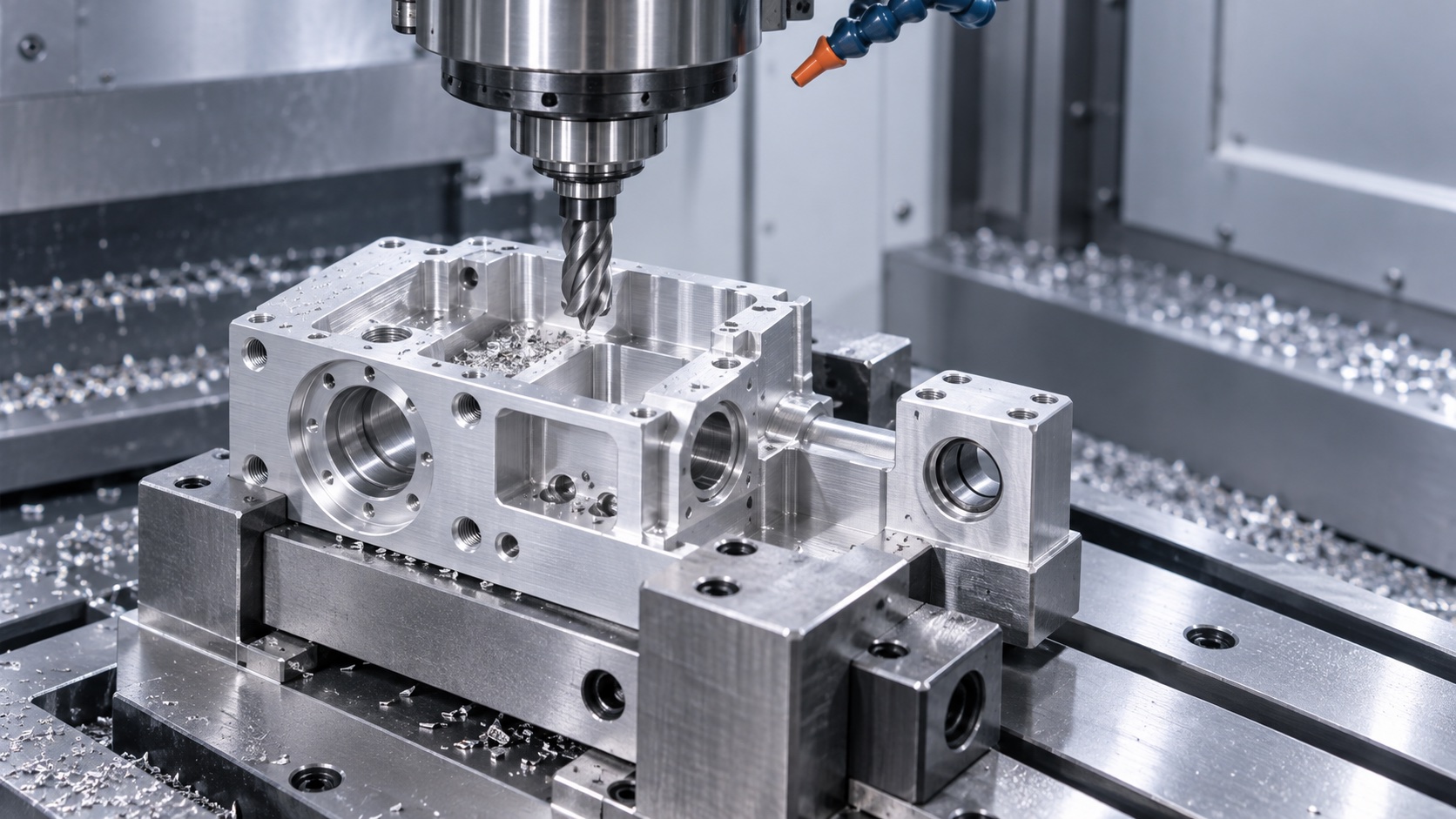
6061-T6 aluminum is widely used for small medical drive housings because it machines cleanly, offers stable weight and supports anodizing. Stainless steel is used for lead screws, guide pins and wear surfaces. During machining, roughing removes material evenly, semi-finishing stabilizes thin walls, and final boring completes the bearing datums after the housing has settled.
Fixtures should support the box structure without crushing thin walls. Tool paths should avoid chatter in deep pockets and protect sealing or cover faces. Burr control is especially important around bearing bores, threaded holes and sensor windows.
Inspection And Clean Delivery
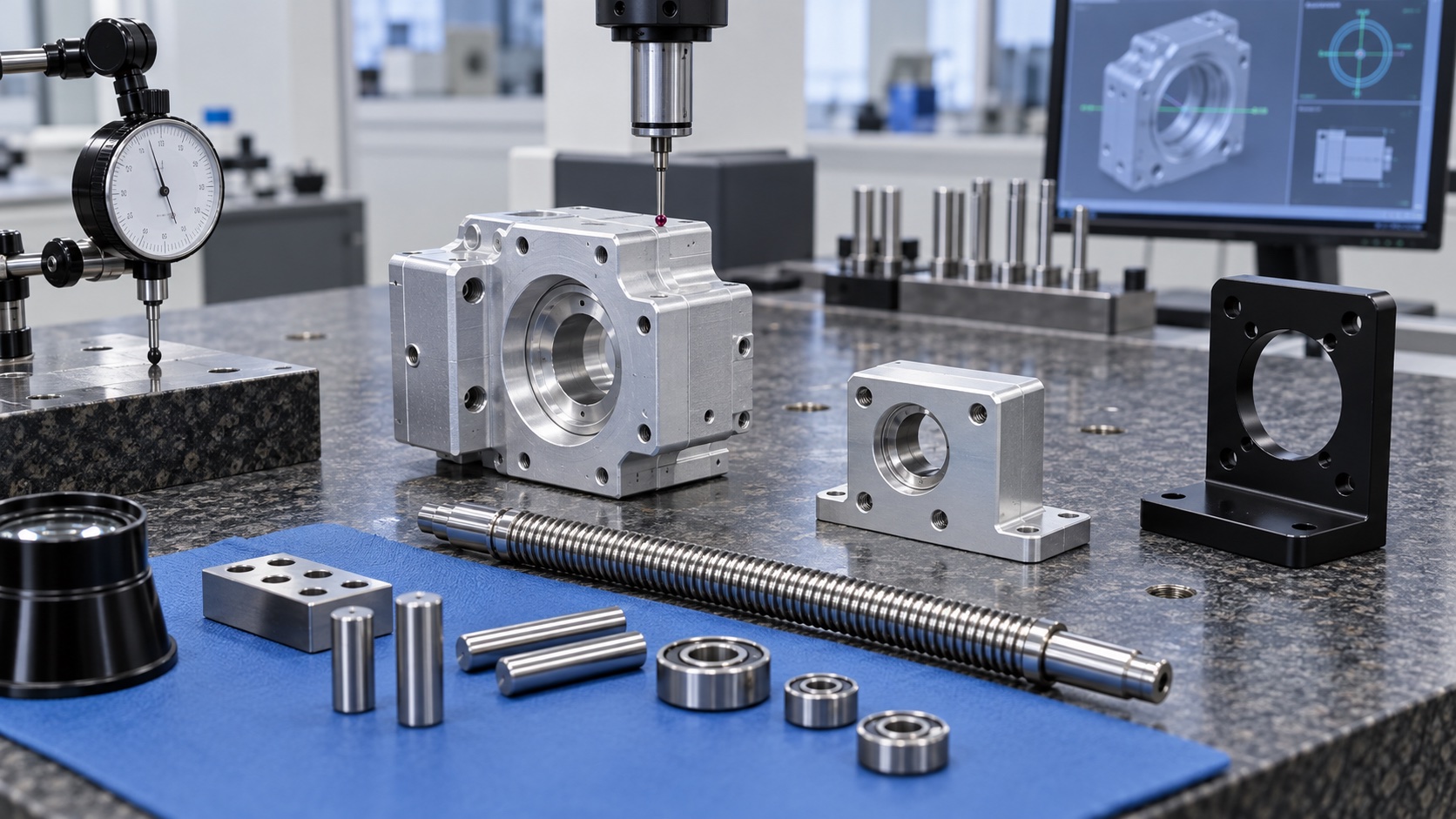
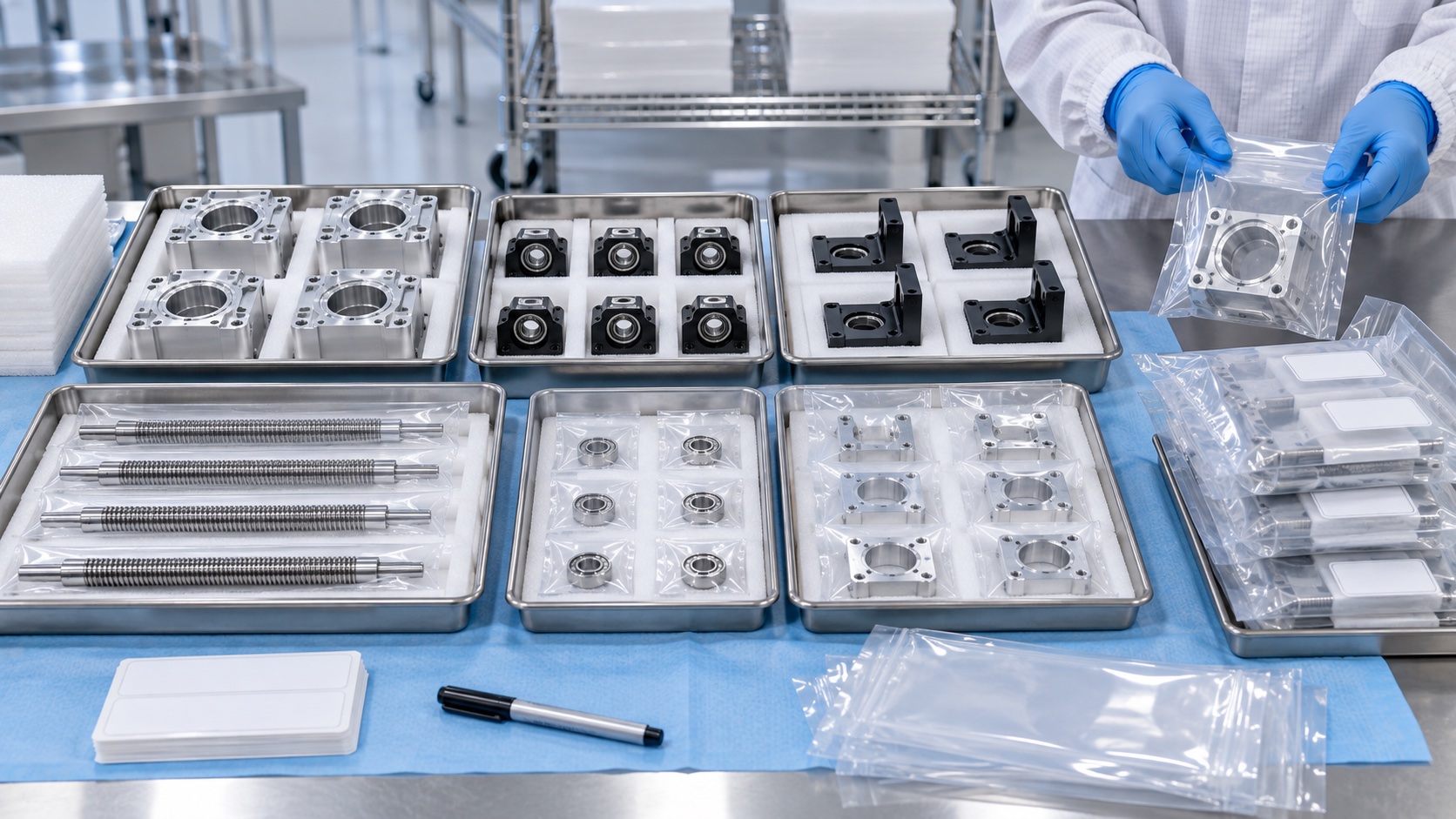
Inspection combines CMM measurement, gauge pins, dial indicators, bearing fit checks and visual inspection under magnification. The supplier should document material lot, machining revision, inspection results, cleaning status and packaging condition. After inspection, parts are cleaned, dried and isolated with foam or pouches so functional surfaces remain protected.
Conclusion
Reliable syringe pump machining depends on more than a good-looking housing. It requires controlled datums, stable bearing bores, aligned lead screw supports, burr-free details, traceable inspection and clean packaging.
FAQ
Which syringe pump parts are commonly CNC machined?
Gearbox housings, lead screw supports, motor mounts, bearing blocks, guide rail brackets and calibration fixtures are common CNC machined syringe pump parts.
Why is 6061-T6 aluminum used for pump housings?
6061-T6 machines cleanly, keeps weight low, supports anodizing and provides enough stiffness for compact medical device drive structures.
What dimensions are most critical?
Bearing bore coaxiality, motor face flatness, lead screw parallelism, dowel hole position, pocket depth and burr-free edges are key dimensions.
How is lead screw alignment protected?
The process references bearing bores and support faces together, then finishes critical holes after roughing so accumulated error is reduced.
Can the parts receive surface treatment?
Yes. Aluminum housings can be clear or hard anodized, while stainless lead screws and pins can be passivated when required.
How are finished parts packaged?
Cleaned parts are separated with foam, protected in clear pouches and identified by batch, revision and inspection status.
Contact: tanghangyun@oemach.com