
CNC Machined 6061-T6 Ventilator Gas Manifold Valve Block
Product Overview
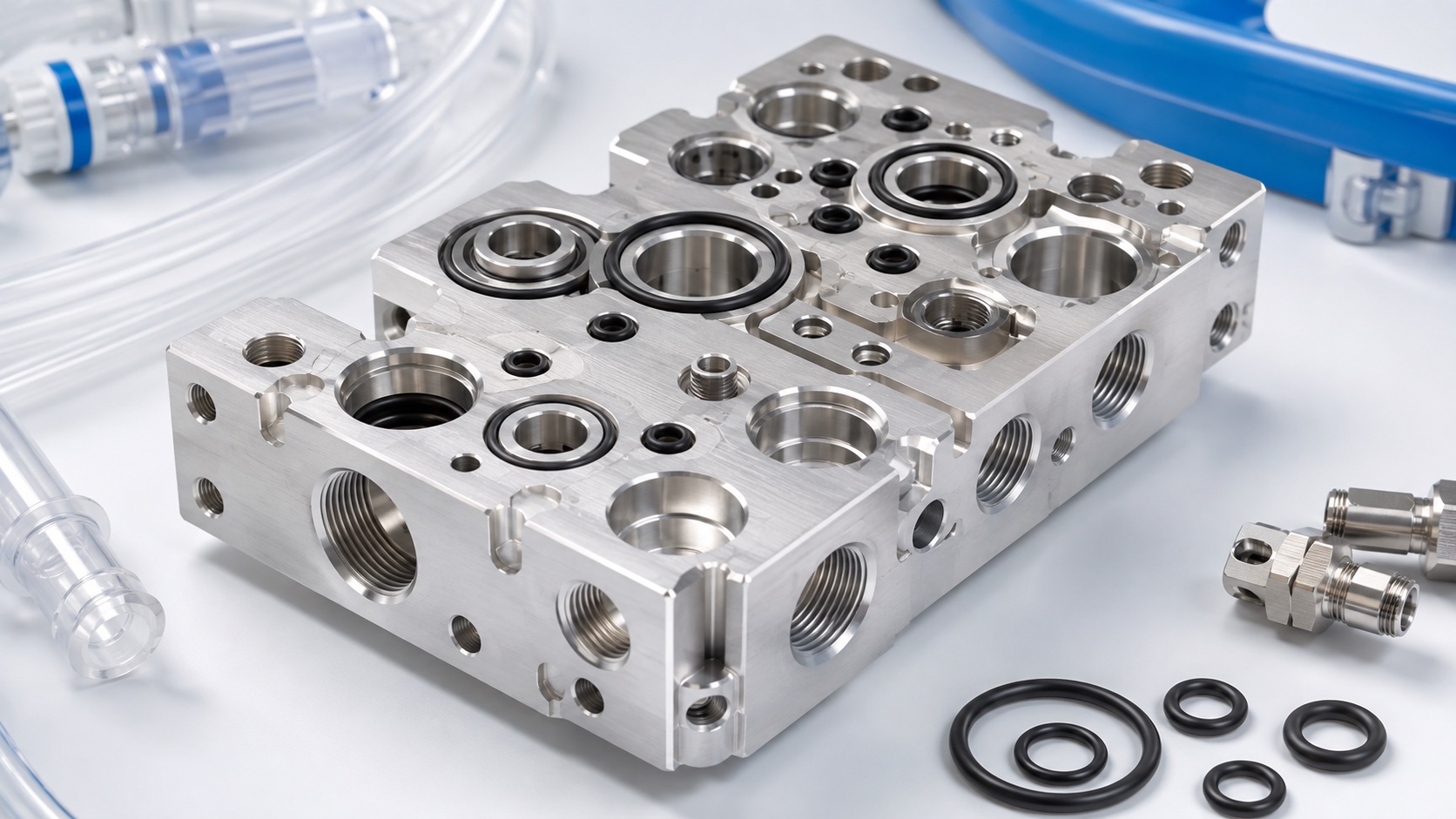
This product case focuses on a CNC machined 6061-T6 aluminum gas manifold valve block used in a ventilator or anesthesia machine gas path module. The part integrates multiple threaded ports, O-ring grooves, valve seat pockets, sensor bores, mounting holes and clean sealing faces. Its purpose is to route gas through a compact assembly while supporting stable valve response and repeatable leak-test performance.
Customer Requirement
The customer needed a prototype batch for gas path assembly and functional validation. The manifold required accurate port relationships, controlled sealing grooves, burr-free cross passages and protected cosmetic surfaces. Because the component connects to fittings, valves, sensors and tubing, the drawing review focused on datum control, thread engagement, leak-test surfaces and packaging requirements.
Manufacturing Approach
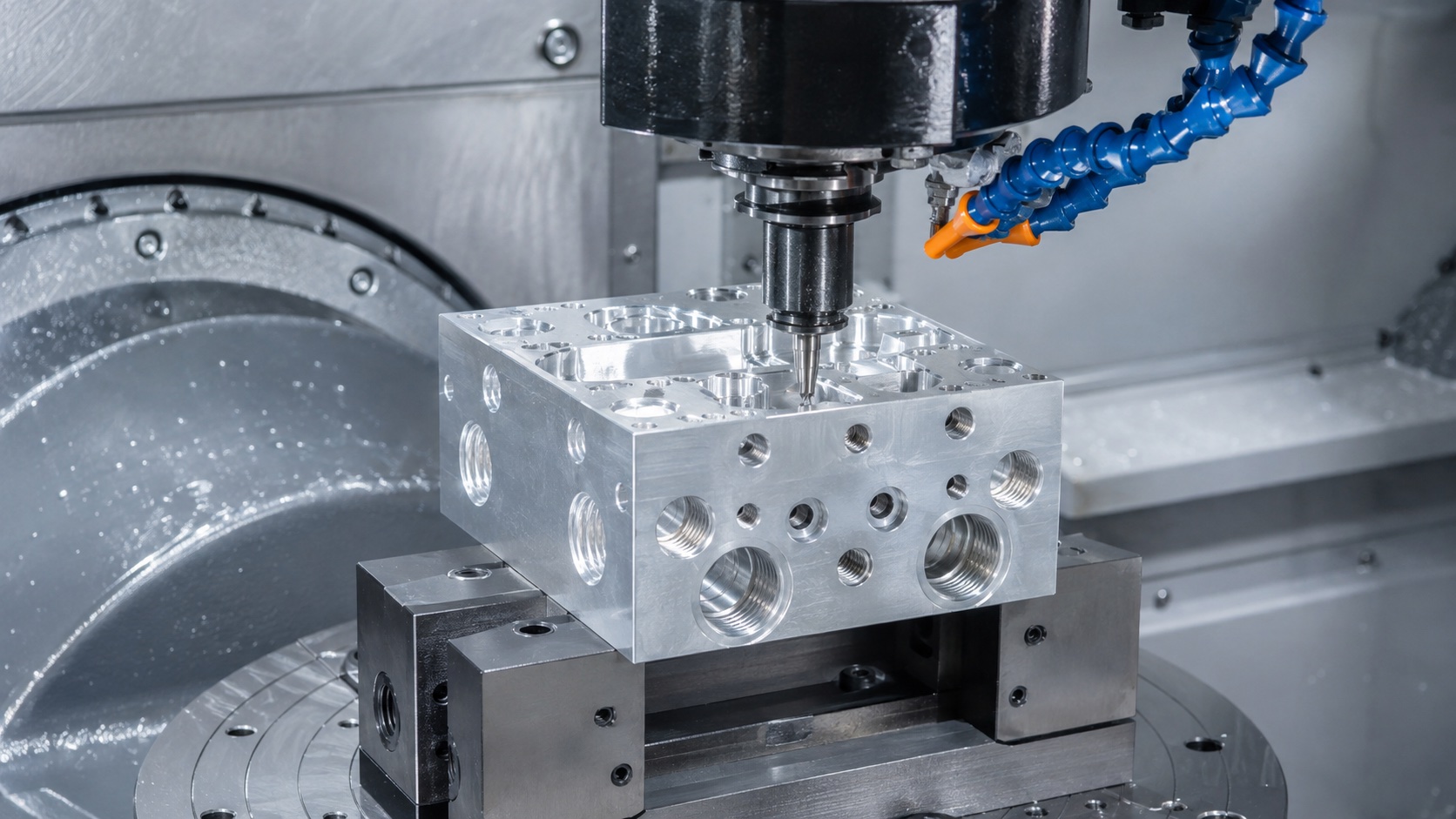
The aluminum blank was rough machined to establish the outer profile and remove material from large pockets. Finishing operations then controlled valve pockets, threaded ports, O-ring grooves and sensor bores. Custom soft jaws supported the block while protecting critical sealing faces. Intersecting holes were sequenced to improve deburring access, and edges near seals were broken carefully to avoid damaging O-rings.
Inspection and Quality Control
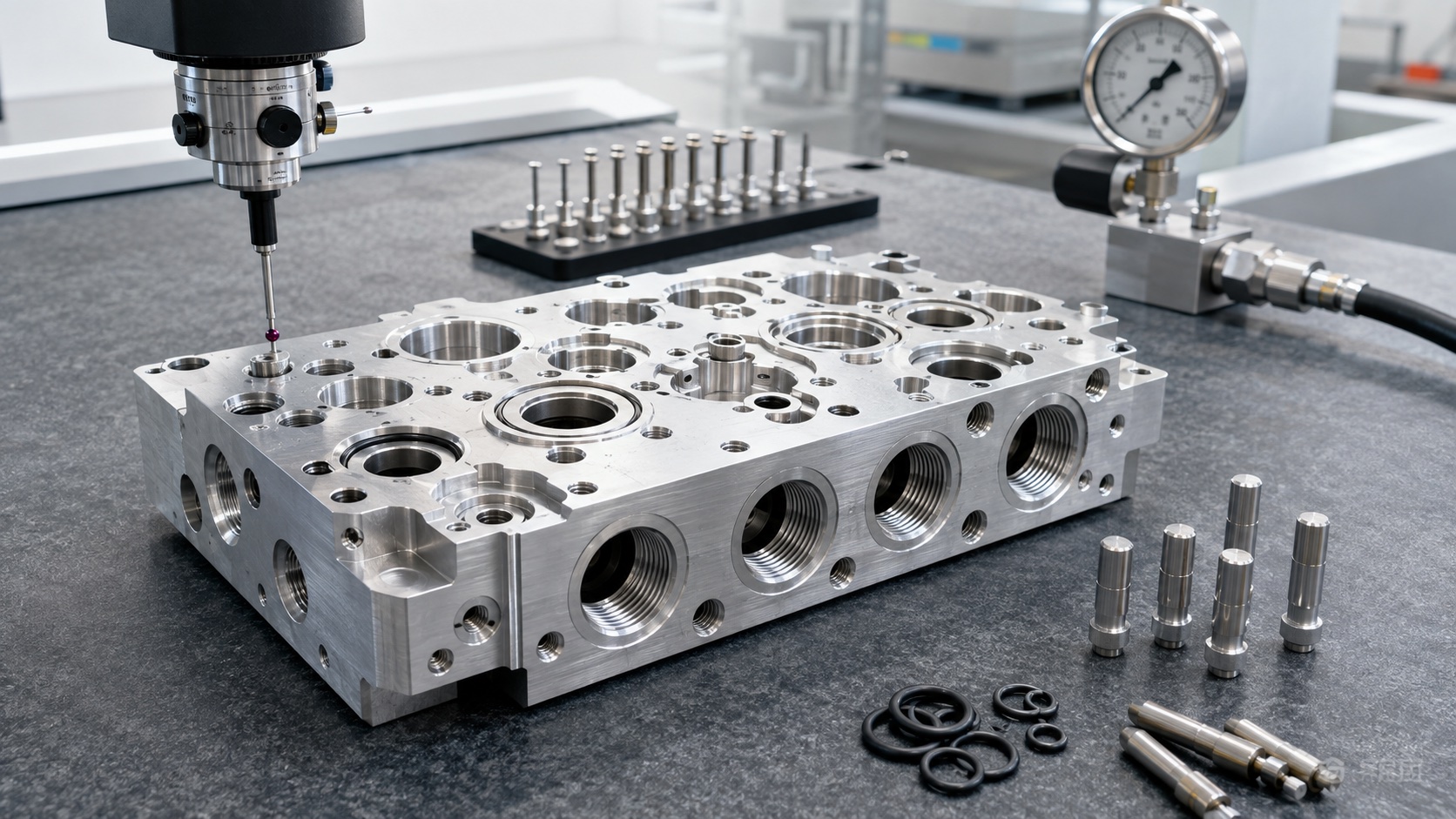
Inspection covered port spacing, thread depth, groove dimensions, valve pocket flatness, sensor bore diameter, surface finish and visible burrs. Thread gauges, gauge pins, optical inspection and CMM checks were combined with pressure-related review when requested. Parts were cleaned before final packaging so chips or residue would not remain in gas passages.
Result
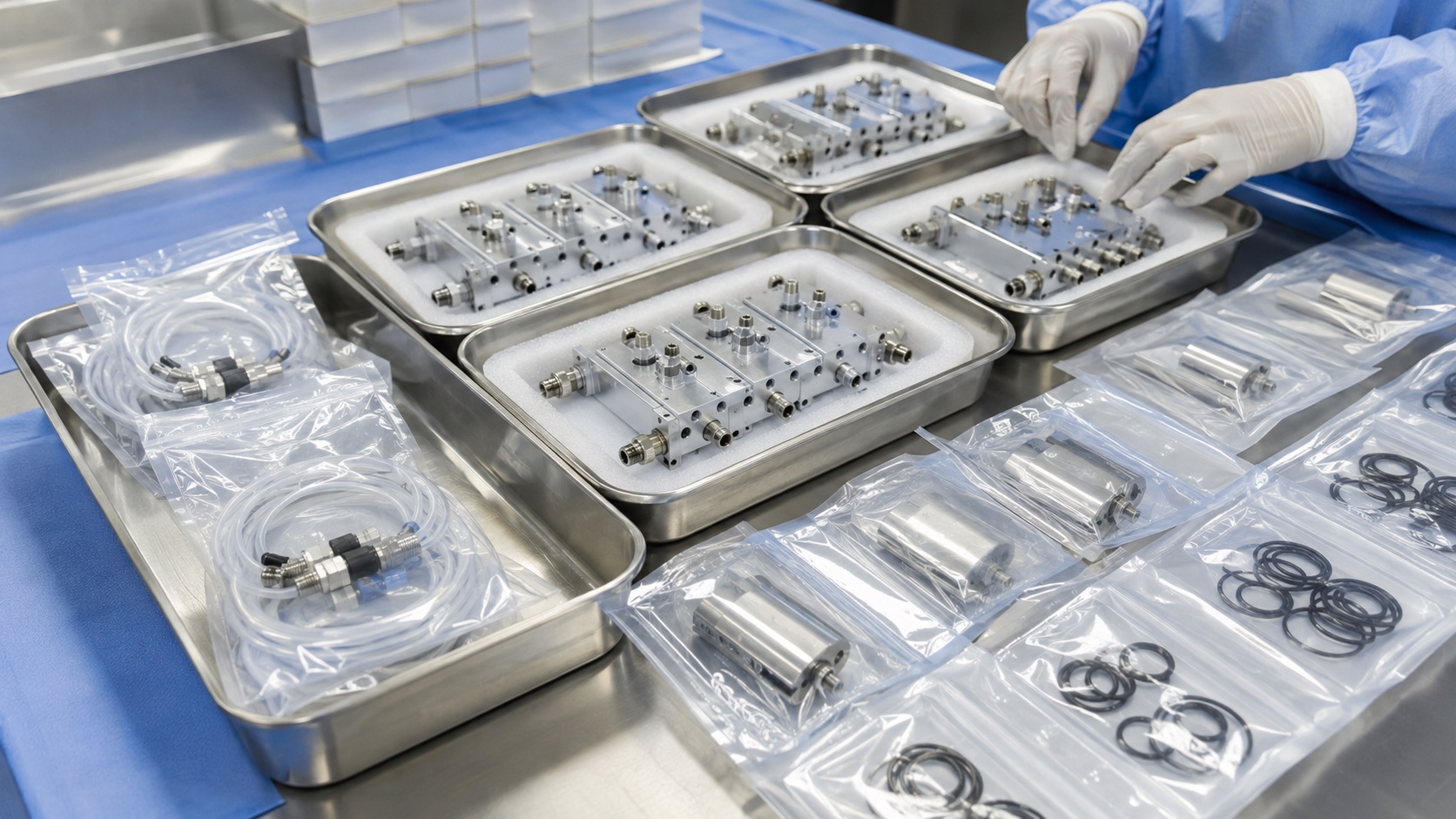
The finished manifold blocks were delivered with fittings and O-rings separated in clean trays and pouches. The batch was ready for prototype assembly, leak checking and respiratory equipment validation. This case shows how CNC machining supports medical gas path components when sealing geometry, burr control and cleanliness are planned together.
FAQ
What material was used for the valve block?
The valve block was machined from 6061-T6 aluminum for low weight, machinability and stable anodizing options.
What dimensions are most important?
Port spacing, thread quality, O-ring grooves, valve pocket flatness and sensor bore alignment are key dimensions.
Can leak-test features be added?
Yes. Test ports, sealing faces and inspection notes can be included according to the customer specification.
How is burr risk reduced in cross holes?
The process uses planned hole sequence, chamfers, controlled deburring, flushing and visual inspection.
Can the parts be supplied as a kit?
Yes. Fittings, O-rings, inserts and manifolds can be packed as a clean assembly kit.
Is this process suitable for small batches?
Yes. CNC machining is practical for prototypes, validation batches and low-volume respiratory equipment parts.
Contact: tanghangyun@oemach.com