
CNC Machining Medical Respiratory Equipment Parts
Ventilators, anesthesia machines and respiratory therapy devices depend on compact gas path components to route air, oxygen and mixed gases through valves, sensors, filters and tubing connectors. Aluminum gas manifolds, proportional valve seats, flow sensor housings, adapter blocks, O-ring grooves and stainless pneumatic fittings must combine dimensional accuracy, sealing stability and clean handling. CNC machining is often selected for these components because it can control threaded ports, coaxial bores, flat sealing faces, valve pockets and small cross-drilled passages within prototype and low-volume medical equipment programs.
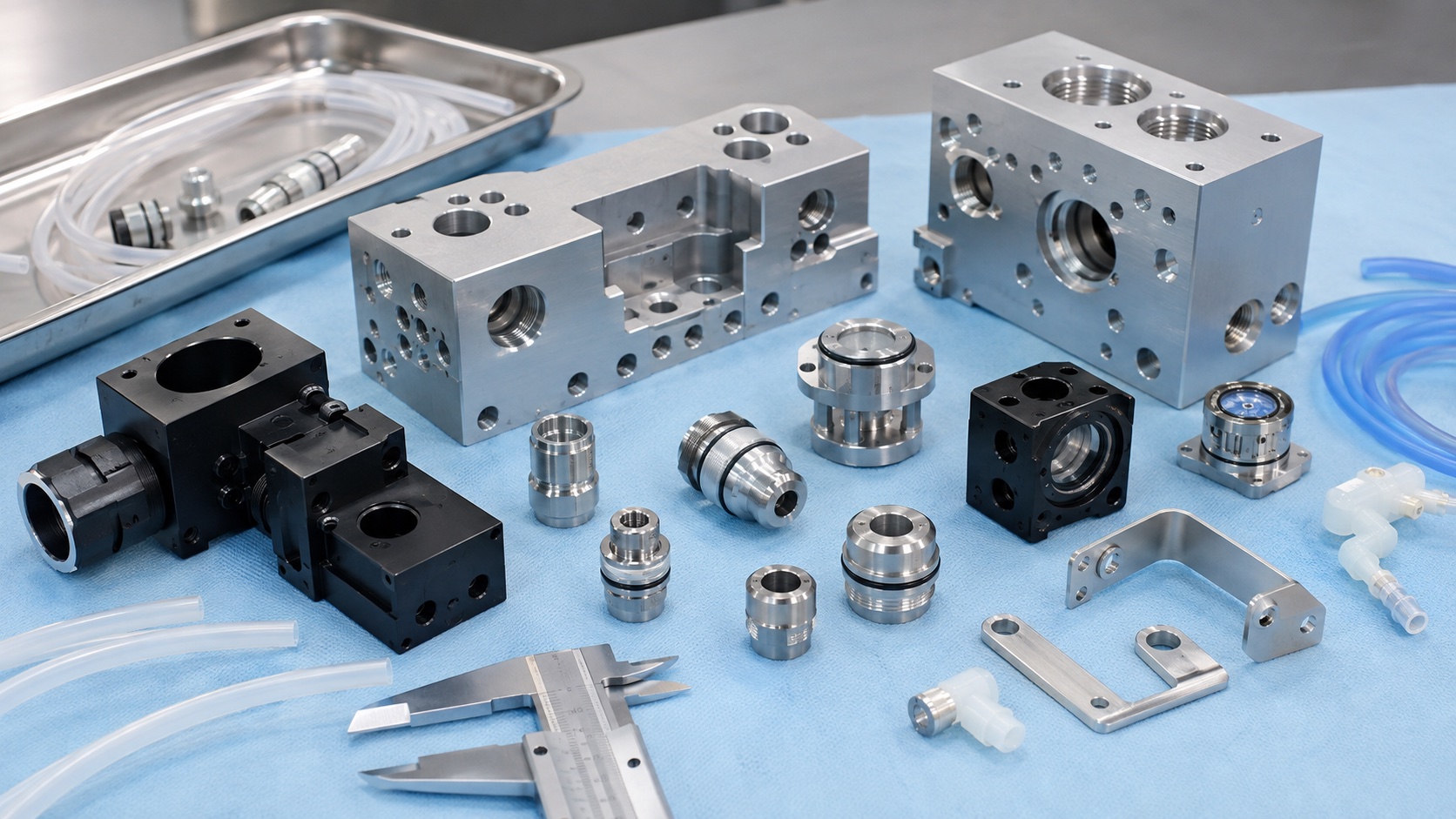
Functional Requirements in Gas Path Components
Gas path parts are judged by more than outside dimensions. Port location affects tubing layout, valve-seat depth affects response consistency, and O-ring groove geometry affects sealing under pressure cycling. Flow sensor housings may require smooth bores and stable mounting datums so calibration remains repeatable. A drawing should define gas flow direction, pressure range, leak-test requirement, seal type, threaded port standard, cleaning expectation and surfaces that must be protected from scratches or dents.
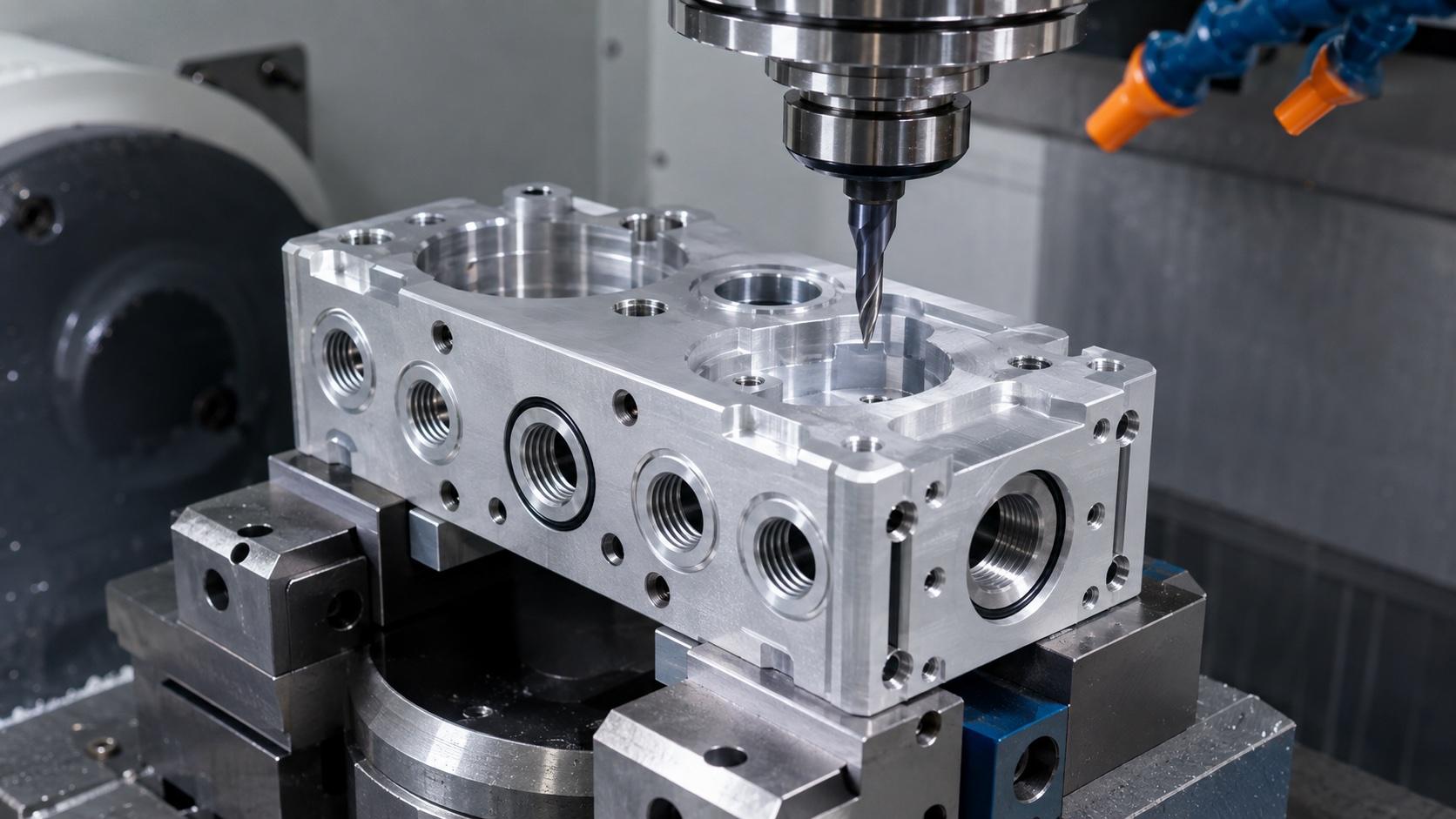
Material and Surface Treatment Choices
6061-T6 aluminum is common for respiratory equipment manifolds because it is lightweight, machinable and suitable for anodizing. Black anodizing can be used on optical or sensor housings, while clear anodizing or passivation may be chosen according to assembly needs. 316L stainless steel is useful for fittings, inserts and wear-resistant valve seats. Material selection should consider pressure, cleaning fluids, assembly torque, coating thickness and whether the part directly contacts the gas path.
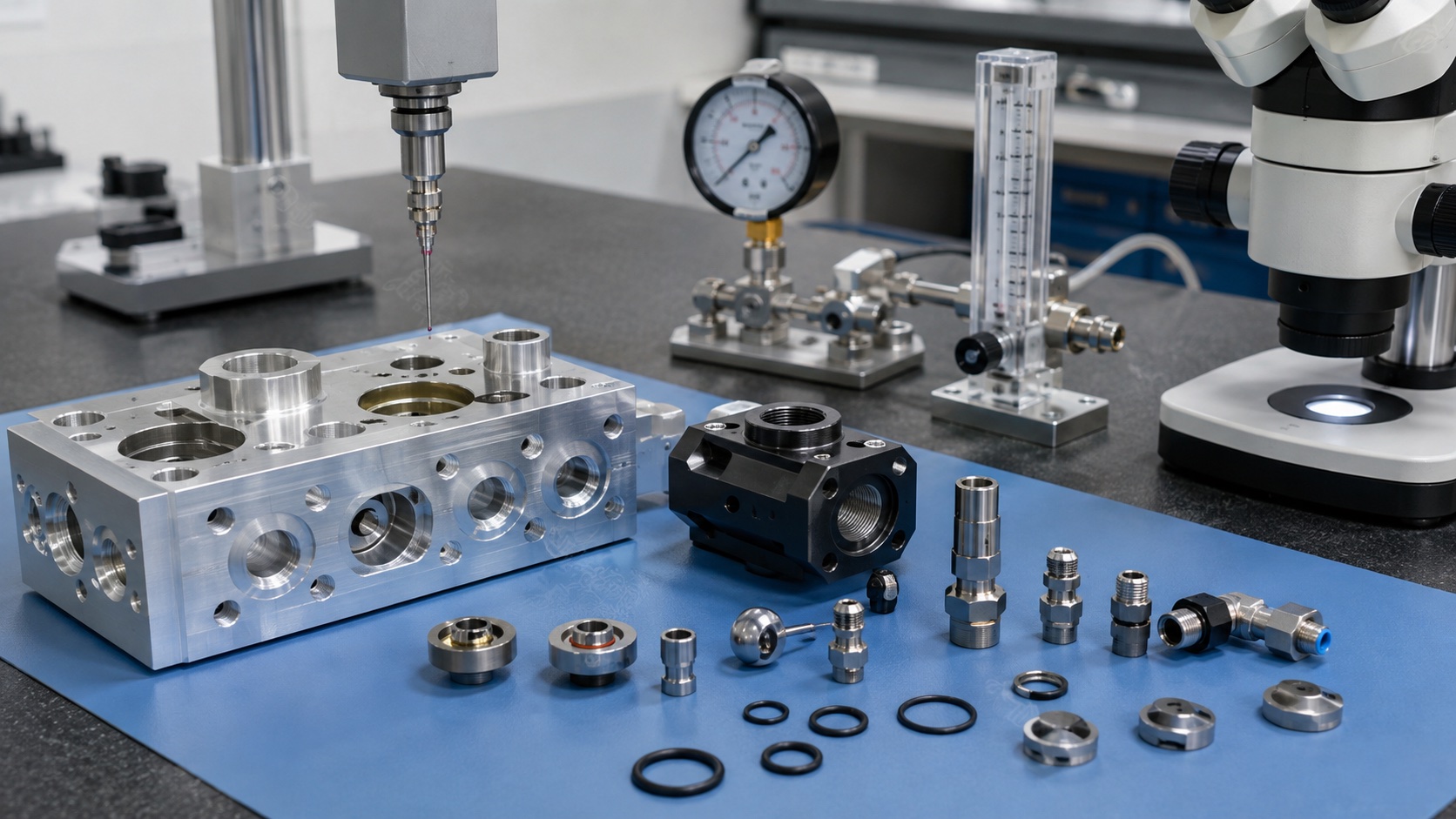
Machining Process Planning
A reliable process starts by finishing primary datum faces and mounting holes, then machining valve pockets, port bores, threaded holes, O-ring grooves and cross passages. Soft jaws or custom nests help locate the block without marking finished sealing faces. For deep ports and intersecting holes, tool reach and burr direction must be reviewed before cutting. Separate finishing passes should be used on sealing faces and sensor bores so surface quality is not compromised by roughing loads.
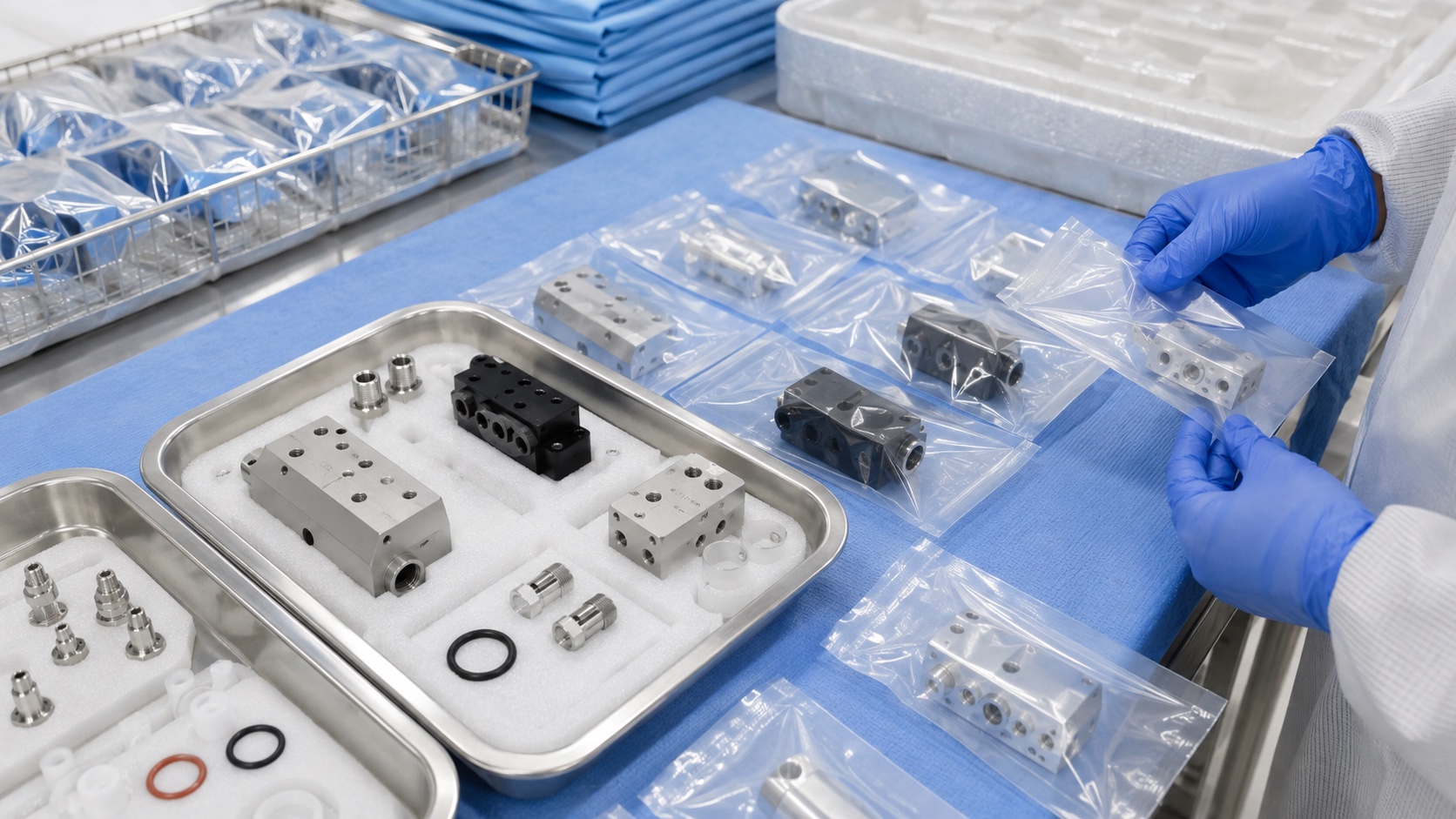
Burr Control, Leak Risk and Cleanliness
Small burrs inside cross-drilled passages can restrict flow or break loose during service. Burrs at O-ring grooves can cut seals, and scratches on a valve face can increase leakage risk. Process control should include chamfering, sharp tools, careful deburring, flushing, visual inspection and, when required, pressure or flow checks. Cleaning removes chips, coolant, aluminum fines and abrasive residue before the parts are packed.
Inspection and Delivery
Inspection should verify port position, thread quality, bore diameter, groove width and depth, valve pocket flatness, sensor housing alignment and overall datum relationships. CMM checks, thread gauges, gauge pins, optical inspection and pressure fixtures are often combined. Clean packaging keeps manifolds, fittings, O-rings and matched components separated, reducing handling damage before incoming inspection or prototype assembly.
FAQ
What information is needed to quote a ventilator gas manifold?
A 3D model, 2D drawing, material, port map, thread standard, pressure or leak-test requirement, surface finish and quantity are recommended.
Which features are most critical for sealing?
O-ring groove depth, groove width, sealing-face flatness, threaded port quality and valve-seat geometry are usually critical.
Can aluminum manifolds be anodized?
Yes. Clear or black anodizing can be used, but coating thickness and masked sealing surfaces should be reviewed.
How are internal burrs controlled?
They are reduced through planned drilling direction, chamfers, tool selection, flushing and inspection where access allows.
Can fittings and O-rings be supplied with the parts?
Yes. Pneumatic fittings, O-rings and inserts can be packed with the manifold as a clean assembly kit.
Is CNC machining suitable for prototype respiratory equipment parts?
Yes. CNC machining is well suited for prototype and low-volume medical respiratory equipment components.
Contact: tanghangyun@oemach.com