
CNC Machining MRI-Compatible Patient Positioning Fixture Parts
Medical imaging fixtures often depend on machined positioning parts that hold a patient support, coil accessory or calibration element in a repeatable location. In MRI-related environments, the part design may also require nonmagnetic material choices, low particle risk, smooth contact surfaces and stable assembly datums. PEEK positioning blocks, anodized aluminum rails, stainless inserts and clamp plates all look straightforward, but their machining quality affects fit, cleaning, comfort surfaces and long-term fixture stability. CNC machining for these components must therefore balance polymer behavior, metal inserts, dimensional control and careful packaging.
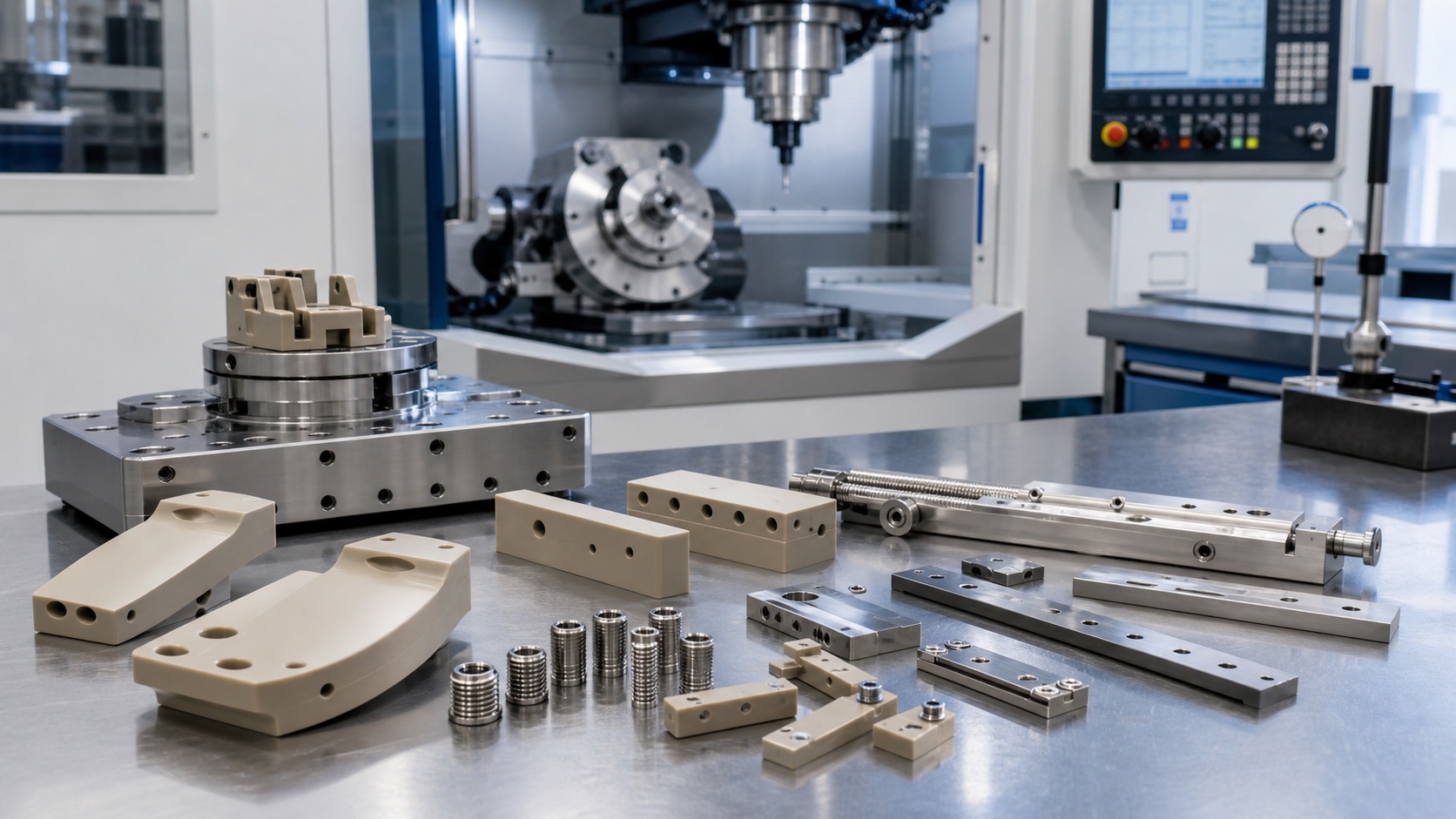
Application Requirements for Positioning Fixtures
Patient positioning fixture parts usually support curved surfaces, rails, removable accessories or calibration tools. A block may need a smooth contact radius, counterbored holes, threaded inserts, side slots and datum pads that align with a larger frame. The RFQ package should identify whether the component is for MRI-adjacent use, whether materials must be nonmagnetic, which surfaces are patient-contact or operator-contact areas, and what cleaning agents or sterilization processes may be used. These details help separate functional datums from cosmetic or comfort surfaces.
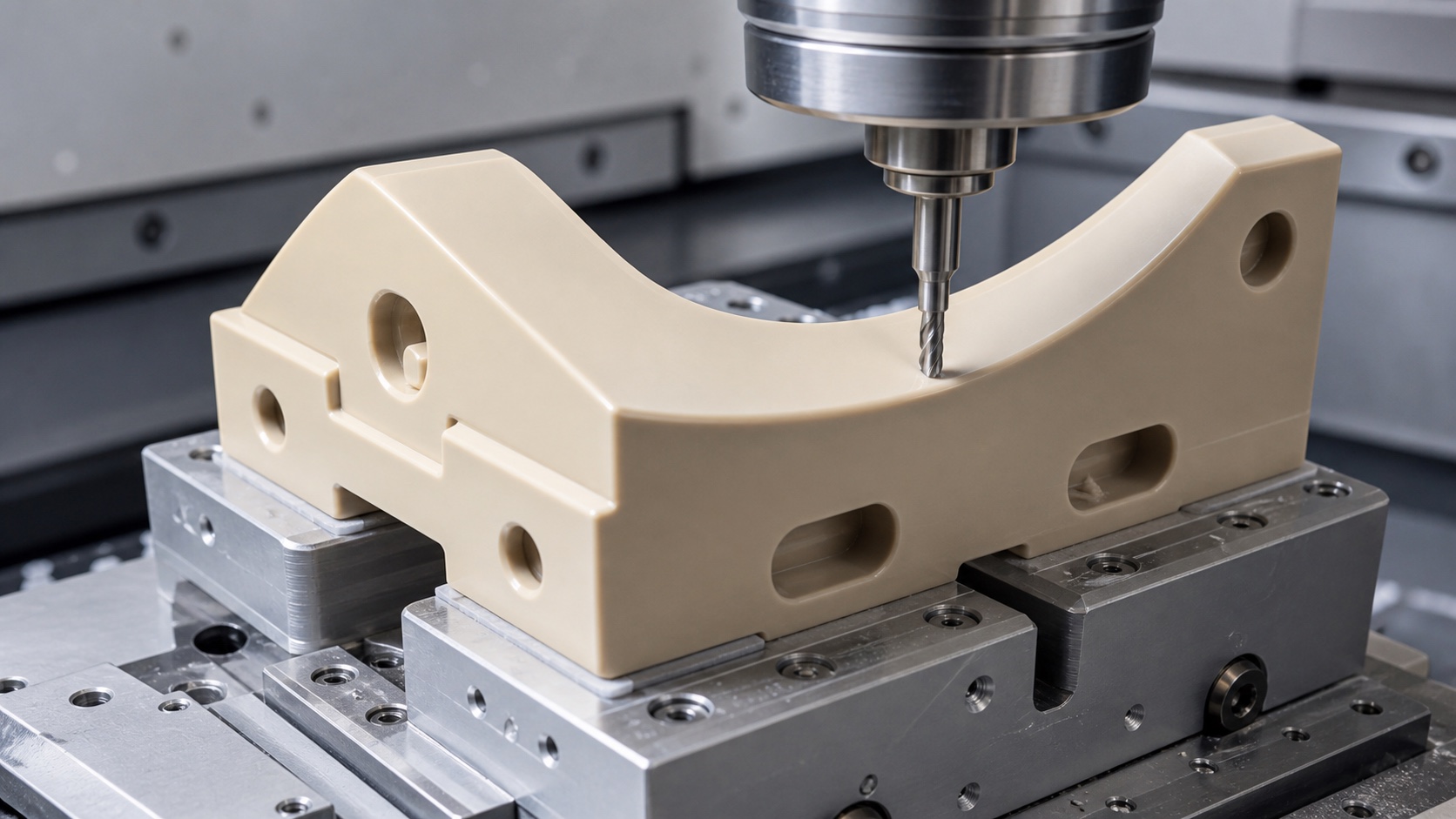
Material Selection: PEEK, Aluminum and Stainless Inserts
PEEK is widely used for medical and imaging fixtures because it offers high strength, chemical resistance and dimensional stability compared with many plastics. It machines cleanly when tools are sharp, feeds are controlled and heat is managed. Aluminum rails or plates may be used when the part is outside sensitive magnetic areas or when the assembly needs stiffness and light weight. Stainless inserts or bushings can protect threaded areas from wear, but their grade and magnetic behavior should be confirmed for the actual application.
Machining PEEK Without Stress and Burr Problems
PEEK behaves differently from aluminum or steel. Excessive heat can soften edges, create poor surface finish or change local dimensions. Aggressive clamping can also imprint the surface or deform thin sections. A stable fixture, sharp cutters, appropriate chip evacuation and light finishing passes help maintain profile accuracy. Curved support channels should be finished with a toolpath that avoids faceted marks, because the surface may contact pads, sleeves or accessories. Burrs around slots and counterbores should be removed without scraping visible contact areas.
Datum Control and Insert Assembly
A positioning block often has a curved surface on one side and a flat or rail-mounted datum on the other. If these relationships drift, the fixture can still assemble but lose repeatability. Critical holes, counterbores and insert seats should be machined from datums that match the final assembly. Pressed or bonded inserts need controlled hole size, depth and shoulder condition. When metal inserts are installed after machining, inspection should confirm that insertion does not lift the surrounding plastic or distort the mounting plane.
Inspection, Cleaning and Packaging
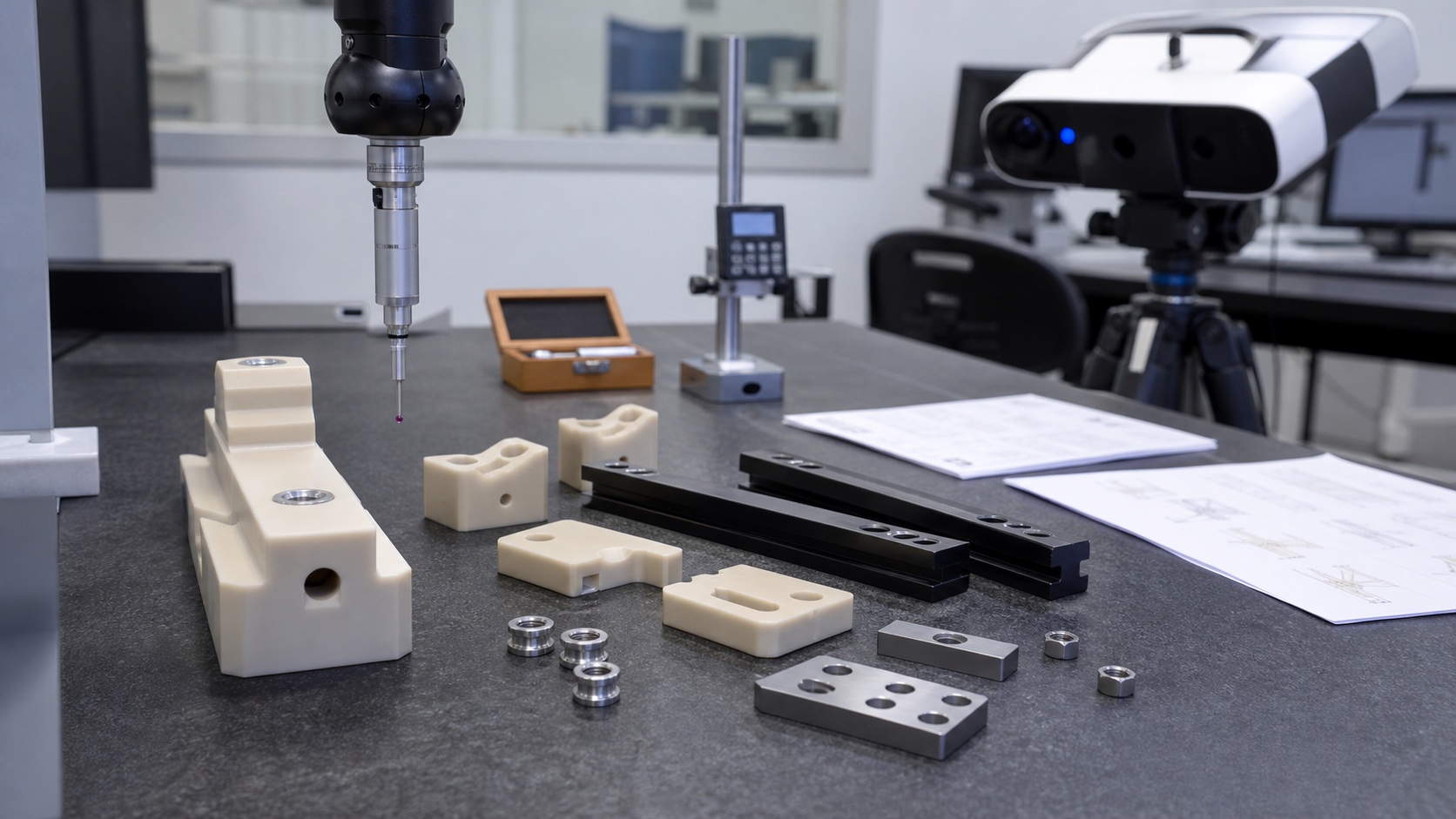
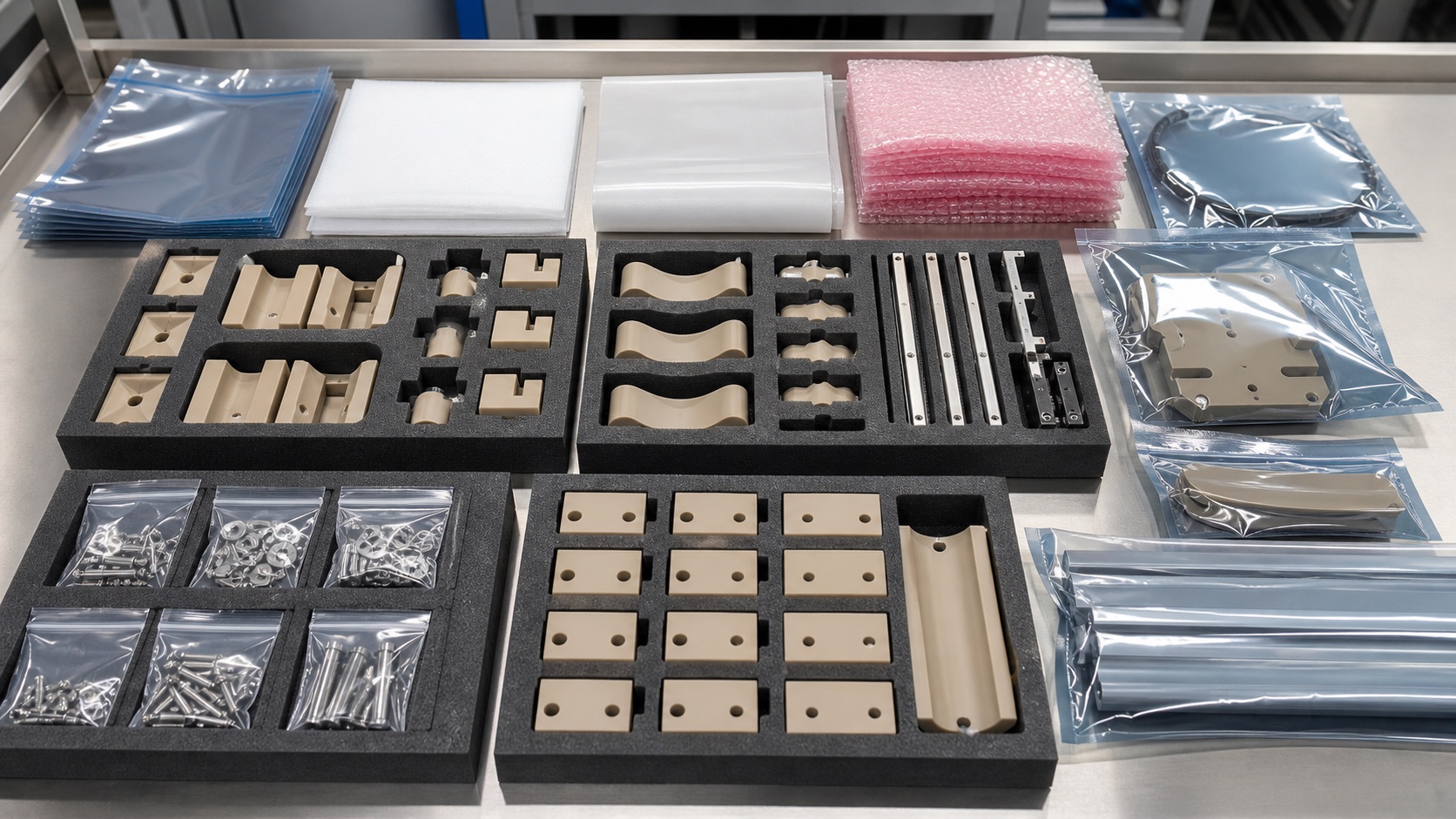
Inspection can include profile of the curved channel, flatness of datum pads, hole position, counterbore depth, insert fit, edge radius and surface finish. Optical scanning, CMM, height gauges and bore gauges may be combined depending on tolerance and feature size. Clean handling is important because polymer chips and dust can remain around pockets or insert bores. Individual packaging with foam support, sealed bags and separated hardware prevents scratches, mixed accessories and deformation during shipment.
FAQ
Why is PEEK used for patient positioning blocks?
PEEK offers strength, chemical resistance and dimensional stability, making it useful for medical imaging fixture components and support blocks.
What information should be provided for an MRI-compatible fixture quote?
Provide drawings, 3D models, material restrictions, nonmagnetic requirements, contact surfaces, cleaning process, tolerances, quantity and inspection needs.
How is heat controlled when machining PEEK?
Sharp tools, suitable feed rates, chip evacuation, light finishing cuts and controlled clamping help reduce heat and dimensional drift.
Can stainless inserts be installed in PEEK blocks?
Yes. Inserts can improve thread durability, but hole size, insertion method, material grade and magnetic behavior should be specified.
Which features need close inspection?
Curved support profile, datum pad flatness, hole position, counterbore depth, insert fit and edge condition are common inspection points.
How should PEEK positioning parts be packed?
Foam support, individual bags, separated hardware and lot labels help prevent scratches, dust contamination and part deformation.
Contact email: tanghangyun@oemach.com