
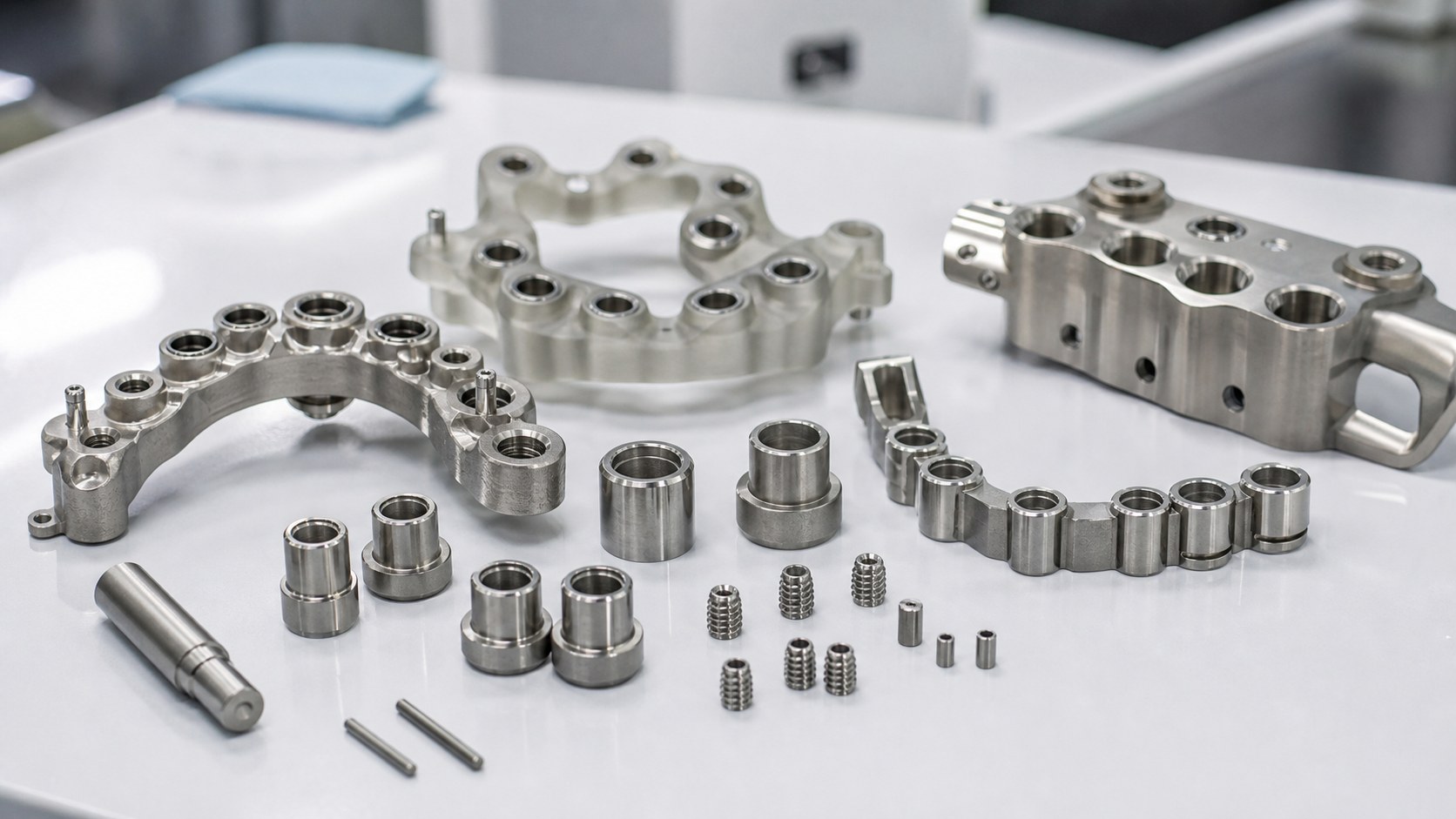
Dental implant surgical guides and drill sleeves turn a digital treatment plan into physical drilling direction, depth control and repeatable fit. For prototype trials, validation fixtures and small-batch medical components, CNC machining can deliver tight bores, stable sleeve seats and clean edges when the drawing defines the functional geometry clearly.
Dental guide parts need accurate drill positioning
A surgical guide is not just a shaped plate. Its value is in the relationship between the drill axis, sleeve bore, pin holes, supporting surfaces and patient-specific arch curve. Small angular errors at the sleeve can become much larger at drilling depth, so the drawing should call out the centerline, datum references and allowed positional tolerance.
For quoting, send STEP files together with 2D drawings. Mark the sleeve inside diameter, outside diameter, insertion direction, press-fit or slip-fit requirement, guide pin locations and the surfaces that are allowed to remain cosmetic. This reduces assumptions and keeps the CNC process focused on the clinical function of the part.
Material choice affects wear, cleaning and stability
Stainless steel is widely used for drill sleeves because it resists wear during repeated drill contact and can hold a smooth internal bore. Titanium is useful for light guide plates, trial fixtures and implant-related components where corrosion resistance and biocompatibility are important. Medical plastics can support transparent prototype guides, but their clamping and heat behavior must be considered.
Material notes should include grade, certificate needs, surface finish, passivation or polishing requirements and whether the part will be used for testing, demonstration or a regulated clinical workflow. The more clearly the material role is defined, the easier it is to choose machining parameters and inspection methods.
Drill sleeve bores require concentricity and surface finish
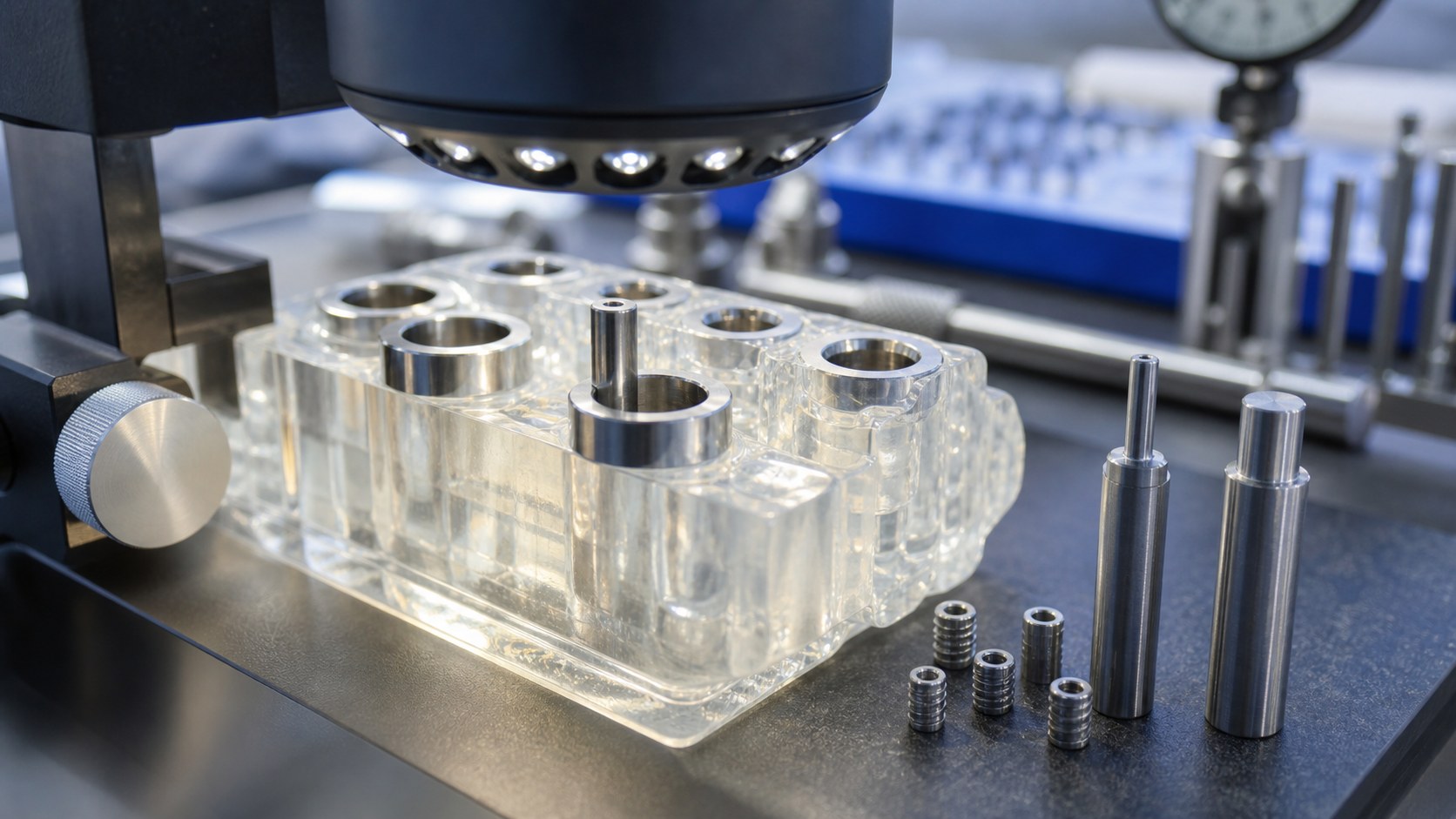
The sleeve bore controls the feel of the drill and the accuracy of the final path. Diameter, roundness, straightness, chamfer size and surface finish all matter. Reaming, fine boring or honing may be selected depending on the tolerance and batch size, while aggressive deburring must be avoided inside the bore.
Inspection often combines plug gauges, bore gauges, microscope checks and concentricity measurement against the sleeve outside diameter or assembly datum. A practical drawing may use go/no-go limits for drill fit and a runout requirement for the bore axis.
Curved guide plates need stable workholding
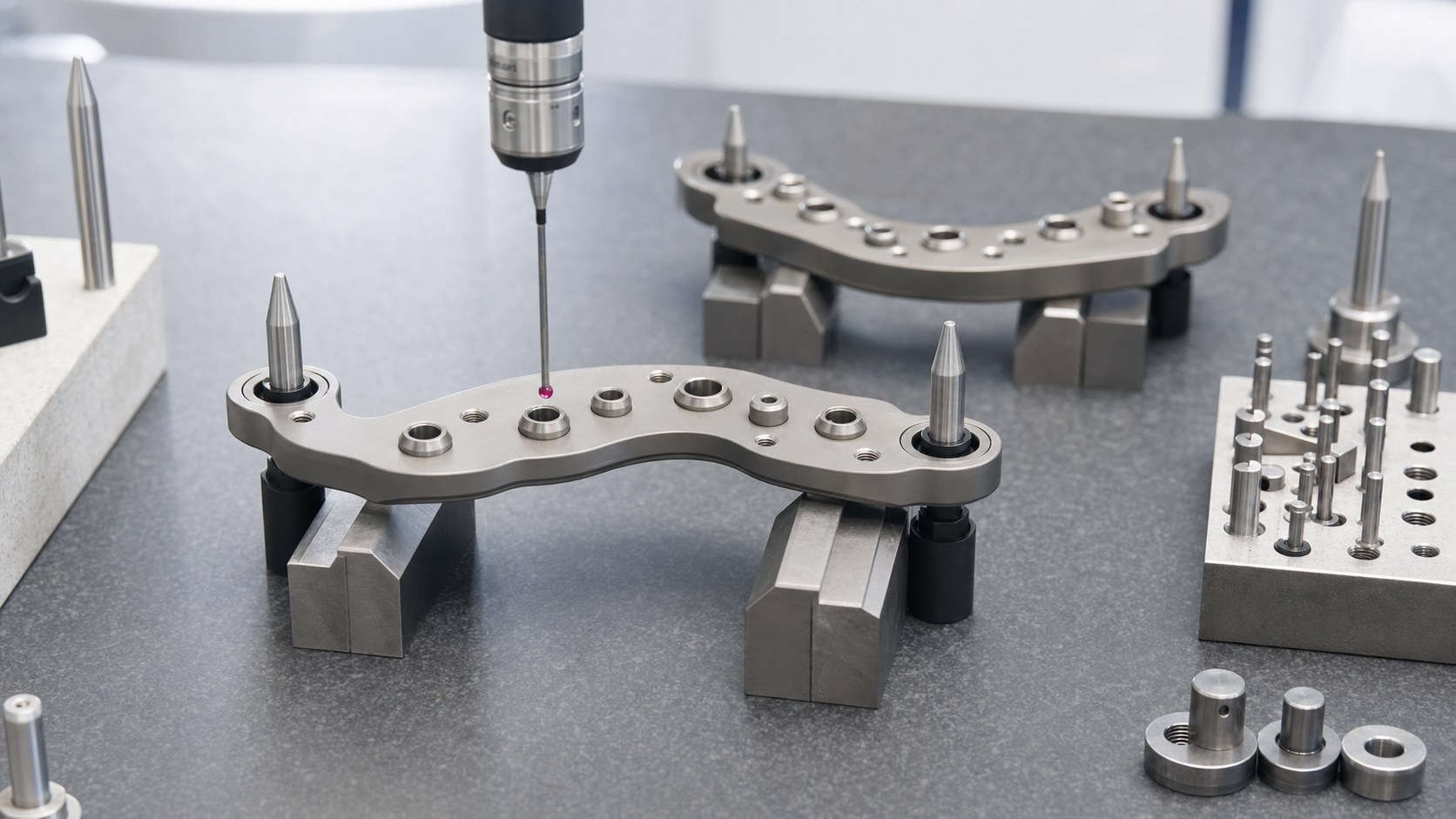
Dental arch geometry creates thin curved walls, angled pockets and surfaces that are difficult to hold without distortion. Multi-axis machining or indexed 3+2 setups can maintain tool access, but workholding must support the part near the sleeve seats and pin holes. Soft jaws, custom nests and sacrificial tabs can prevent chatter and movement.
A clear datum strategy is especially important on curved guide plates. The inspection plan should identify how the part is located on the CMM or optical system and how sleeve positions are reported. Noncritical cosmetic areas should be separated from functional surfaces to avoid unnecessary cost.
Burr control protects the surgical workflow
Loose burrs around sleeve pockets, pin holes, threads or window edges can scratch drills, trap residue and interfere with assembly. Medical components should use defined edge breaks, controlled chamfers and microscope inspection around every functional opening.
The drawing should state that no loose burrs are allowed and should specify acceptable edge ranges where contact occurs. If polishing or blasting is requested, masked areas may be needed so sleeve bores and tight fits are not changed after machining.
Inspection should confirm the clinical geometry
A useful quality report does more than list overall dimensions. For dental guide components it should confirm sleeve inside and outside diameters, bore axis, sleeve pocket location, pin fit, flatness, datum alignment, thread fit and surface finish on guide interfaces.
Photos of gauge checks, CMM reports and microscope views help engineering teams review risk before assembly or validation. For repeated orders, the same inspection template can be reused to compare batches and shorten approval time.
Clean packaging keeps small parts traceable
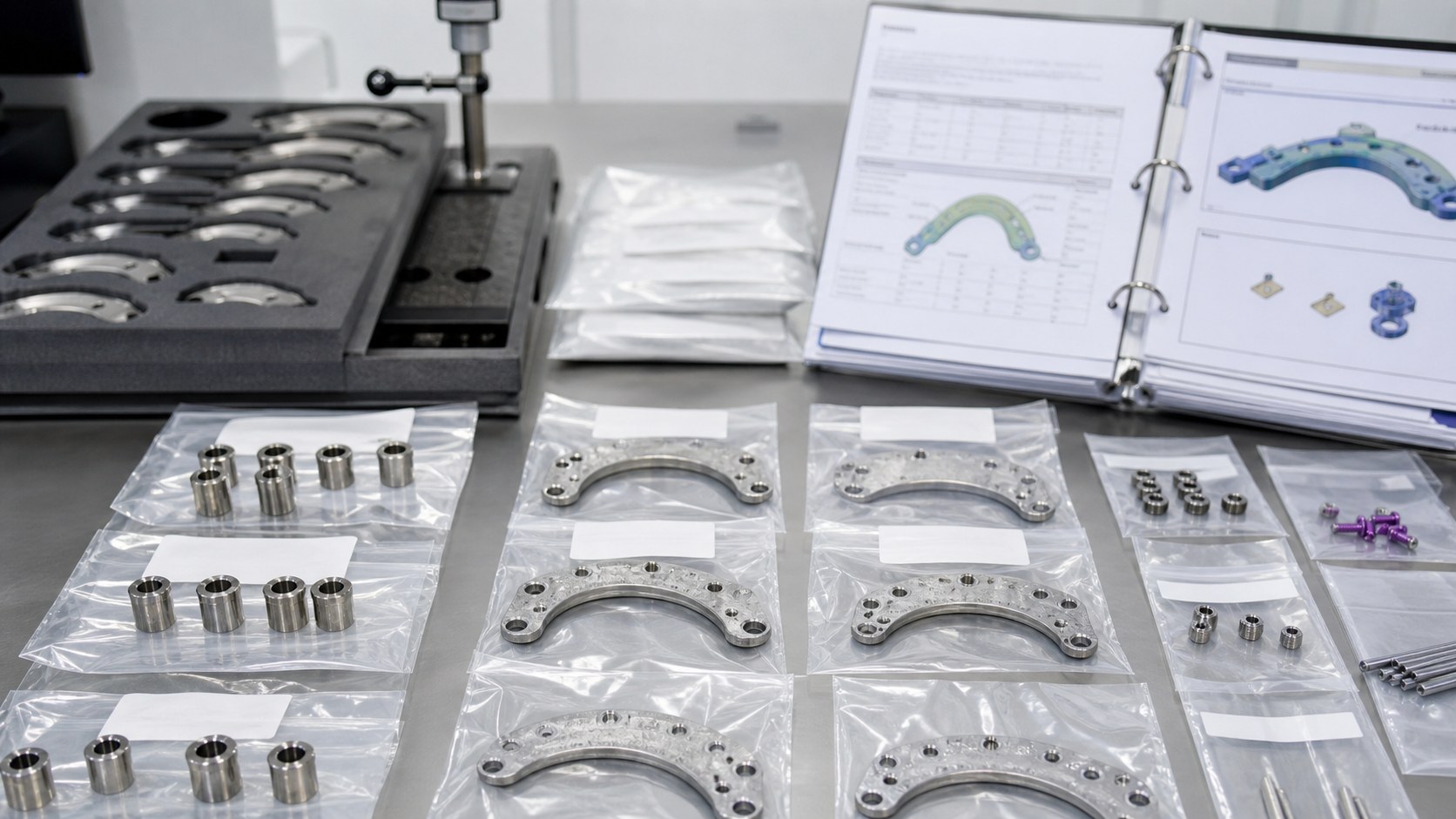
Drill sleeves, guide plates, inserts and pins are small parts that can be mixed easily. Individual bags, foam trays, labels and revision information keep each item traceable from machining to incoming inspection.
Packaging notes should include part number, revision, material, quantity, lot reference and handling requirements. Clean, separated packaging is a simple step, but it prevents confusion during dental device development and pilot production.
FAQ: Dental Implant Guide CNC Machining
What files should I send for a dental implant guide quote?
Send STEP or X_T 3D files, 2D drawings, material grade, sleeve fit requirements, drill path tolerances, surface finish notes and the expected quantity. Photos or assembly sketches are also helpful.
Which materials are common for dental drill sleeves and guide plates?
Stainless steel is common for drill sleeves, titanium is often used for light implant-related guide plates, and medical plastics can be used for transparent prototypes or trial guides when suitable.
How is drill sleeve bore accuracy inspected?
Typical checks include plug gauges, bore gauges, roundness or runout inspection, microscope review of chamfers and CMM or optical measurement of the bore axis relative to the datum.
Can curved dental guide plates be machined accurately?
Yes. Stable fixtures, 3+2 or 5-axis tool access, controlled tabs and a clear datum plan help maintain sleeve and pin locations on curved dental arch geometry.
What burr-control notes should be added to the drawing?
State that no loose burrs are allowed, define edge break ranges, call out critical holes and pockets, and protect tight bores from polishing or blasting that could change the fit.
What documents can be supplied with dental guide components?
Common documents include material certificates, dimensional inspection reports, CMM data, surface finish records, packaging labels and photos of critical gauge checks.
有零件加工需求请扫码,唐经理:17706216422(微信同号)