
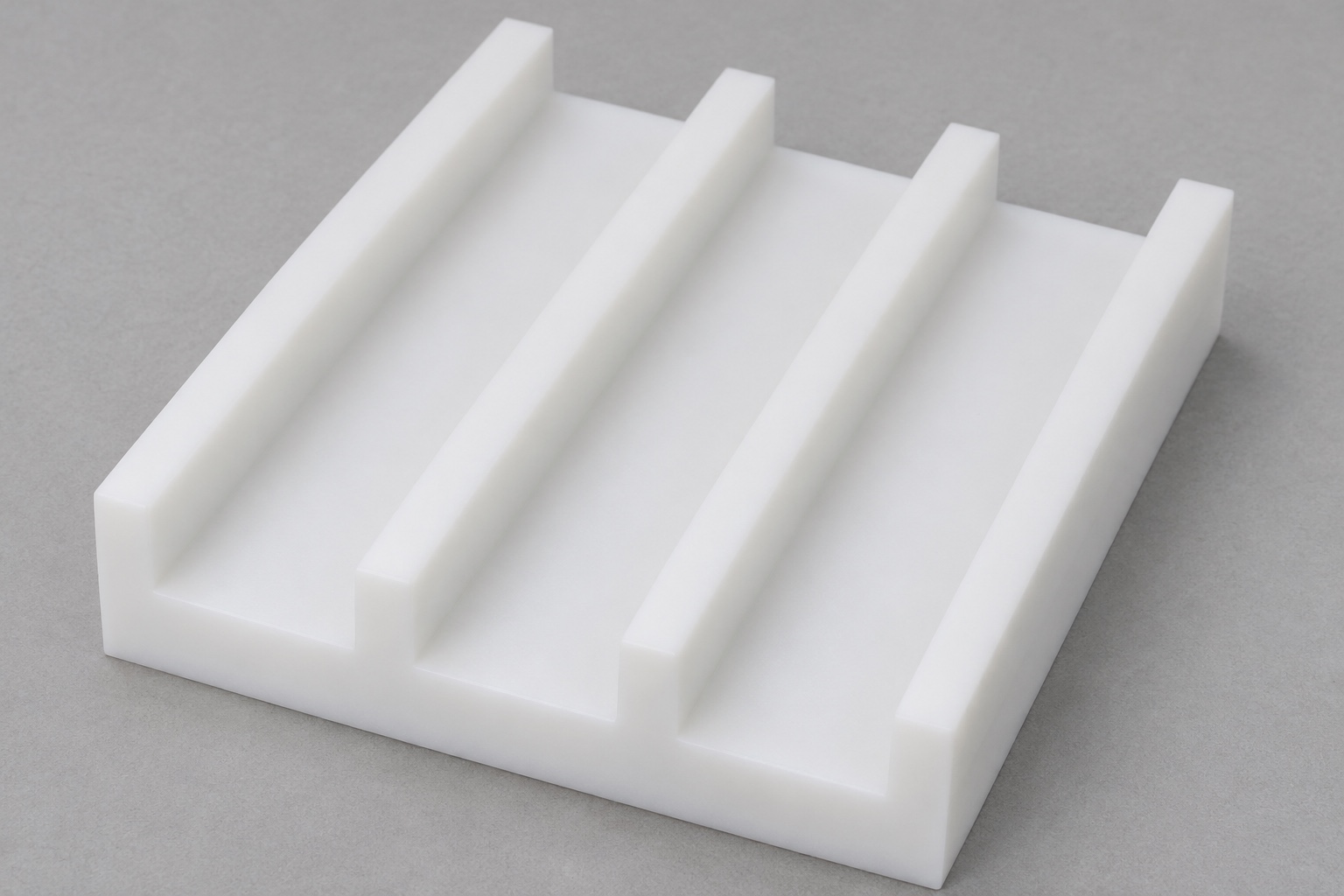
Representative scope without claimed laboratory performance
This case proposes a white POM-C three-channel divider block for an inert electrophoresis accessory staging fixture. It is a representative machining example, not a documented customer order, shipment or validated laboratory accessory. No achieved tolerance, assay result, electrical safety, sample protection, certification or operating compatibility is asserted. The case describes requirements to resolve before a real manufacturing order. It separates proposed part fabrication and inspection from assessment of the complete staging arrangement or its use with working equipment, including any chemical, contamination or electrical requirements that the responsible designer must define independently.

Proposed channel pattern and excluded features
The proposed part is a rectangular block with three straight parallel open-top channels running across its length and opening at both ends. Four raised lands border and separate the channels. Their flat floors leave continuous solid material below; the channels do not pass through the underside. The component contains no mounting holes, threads, extra slots, curved saddles or inserted hardware. This explicit pattern prevents a manufacturing inquiry from gaining unapproved details. Actual widths, locations, depths and edge transitions would come from the approved drawing, not from scaling a photograph or assuming every channel has an identical function.
Define the inert references and staging intention
The designer would identify the reference pieces and state whether floors support them, walls locate them or lands merely keep positions apart. Insertion direction and any required clearances would be reviewed before tolerances are chosen. A reference placed in a channel does not independently establish the channel's position within the overall pattern. Any supplementary observation would identify revisions, assembly conditions and what was actually evaluated. It would not prove retention, sample integrity or successful use with operating electrophoresis equipment. Those functions belong to separate assessment of the full arrangement rather than the proposed block geometry alone.
Drawing information needed for a real quotation
A real inquiry would include the drawing revision, model, quantities, exact POM-C grade, stock form, final condition and inspection scope. It would define stable exterior datums, channel widths and locations, land requirements, floor depths and any minimum base material. State where measurements apply along the channels and how they are aligned. The quotation would identify access or workholding exceptions instead of assigning missing acceptance criteria. The buyer would also define any supplied reference and its limited observation scope. Medical or laboratory context alone would not establish a cleanliness level or authorize an unprovided compatibility claim.
Material identity and proposed blank preparation
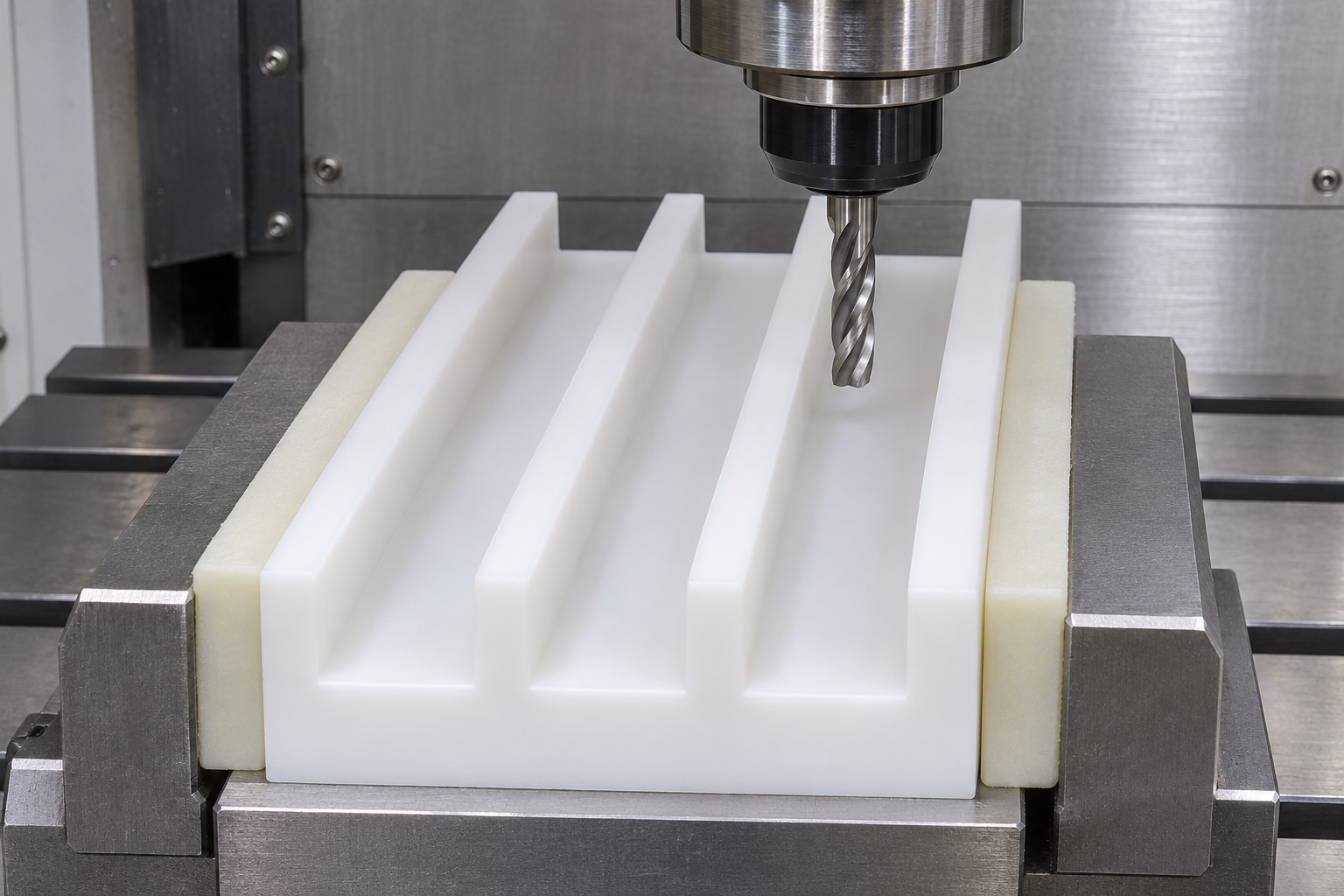
The route would begin with identified white POM-C stock in the specified grade and supplied condition. Blank preparation would reserve material for exterior references, base support and the channel sequence. Material identity and revision would follow the workpiece through milling, cleaning and packaging, using a traveler or container if direct marking is restricted. White appearance would not establish formulation or suitability for an exposure. The case supplies no material certificate, chemical test or sterilization evidence. It explains which requirements and records would need agreement before actual components are fabricated and transferred to a receiving team.
Proposed support and channel milling access
The solid lower base would provide a proposed support and gripping region while leaving the top and open ends accessible. Raised lands would not automatically be used as clamping pads. Review jaw pressure, support spans, cutter reach and holder clearance against the actual dimensions. An open channel does not guarantee a stable cut or complete inspection access. Reference faces needed later would remain identifiable through any setup transfer. The images communicate possible arrangements, not a proven customer process. No universal clamping force, cutting parameter, machine capability or attained dimensional result is presented as evidence.
Proposed machining sequence and process state
The plan would coordinate roughing and finishing across all three channels as material removal changes the remaining section. Floor, wall and end operations would be ordered so that later work does not damage completed features or obstruct access. Tool choice, chip evacuation and heat management would be specific to the material grade and setup. Any conditioning or stabilization step would require approval and recording. The final acceptance state would be defined instead of treating a compressed vise measurement as the supplied part condition. A proposed route and plausible tool position would not replace real first-article measurements.
Land edges, channel exits and remaining base
The drawing would distinguish depth from the land tops and material remaining beneath each floor. Minimum base material would need an agreed evaluation strategy rather than being assumed from one depth value. Both exits of every channel and the long edges would be reviewed for burrs. Edge finishing would not thin lands, widen channels or turn the part into a through-slotted comb. The underside would also remain controlled. If the proposed method cannot reach a required edge within the approved geometry, the issue would be resolved before acceptance and relevant features rechecked after finishing.
Proposed first-article inspection evidence
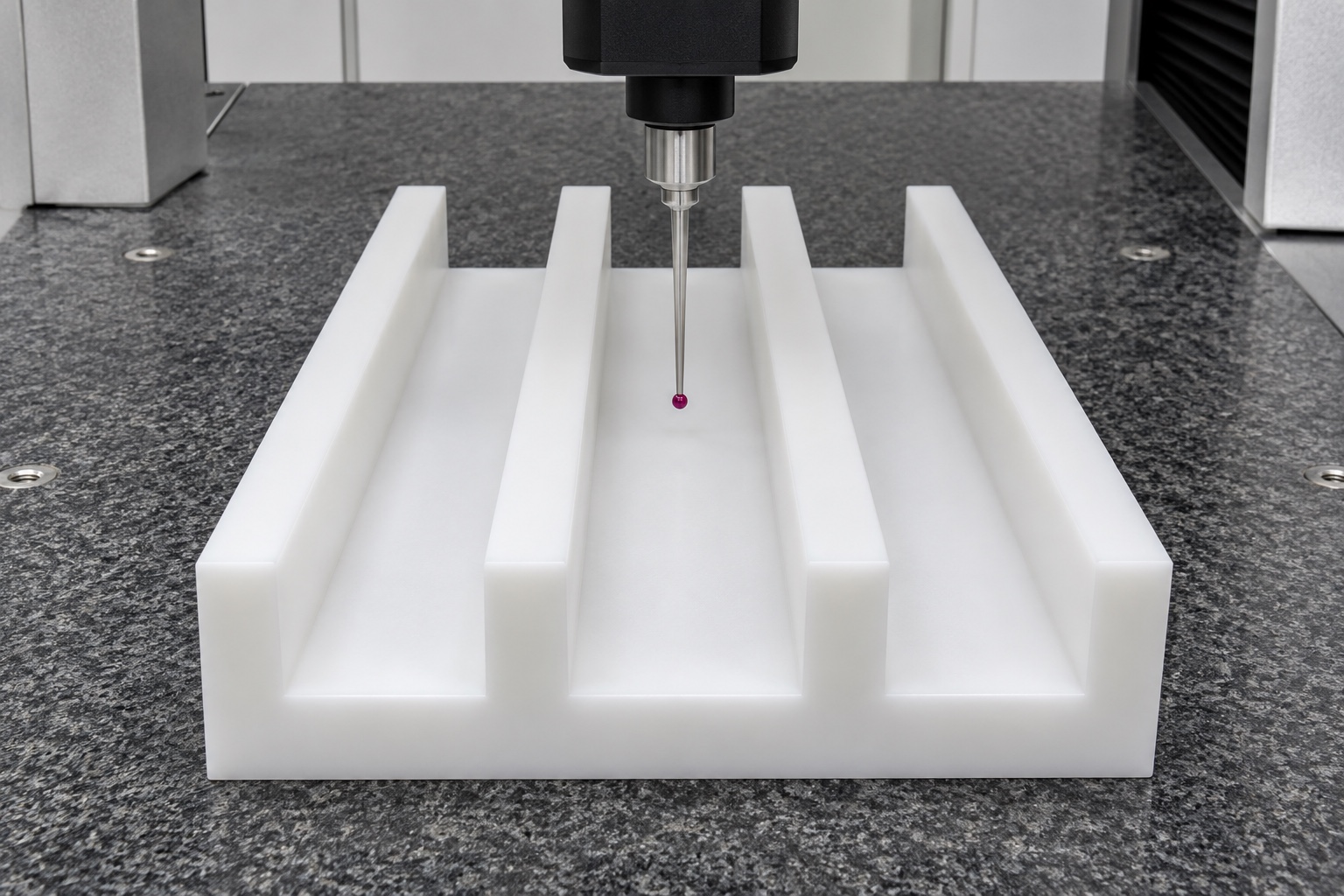
The inspection record would identify revision, material, final state, exterior datums, methods and actual results. It would cover overall dimensions, channel widths and positions, lands, depths, base material and required relationships. Alignment and contact force would be appropriate to the polymer. A CMM or optical system would be selected by access and evaluation capability, not by name alone. An overhead picture would not automatically prove floor depth or underside condition. CAD nominal dimensions and instrument photographs would not become measured results. Features outside a chosen method's reach would be declared before a release decision.
Supplementary inert placement observation
Approved inert references could help observe insertion, contact and separation in the channels. Record each reference revision and the assembly condition, and interpret the observation with individual dimensional records. A favorable placement would not override failed pattern requirements or demonstrate actual accessory retention. It would not establish assay repeatability, electrical isolation, sample integrity, cleanliness or safe use in functioning laboratory equipment. Additional qualification would be defined by the responsible designer if required. This case proposes a limited observation rather than reporting a successful customer trial or a laboratory result that has not been supported by actual evidence.
Outgoing cleaning and packaging proposal
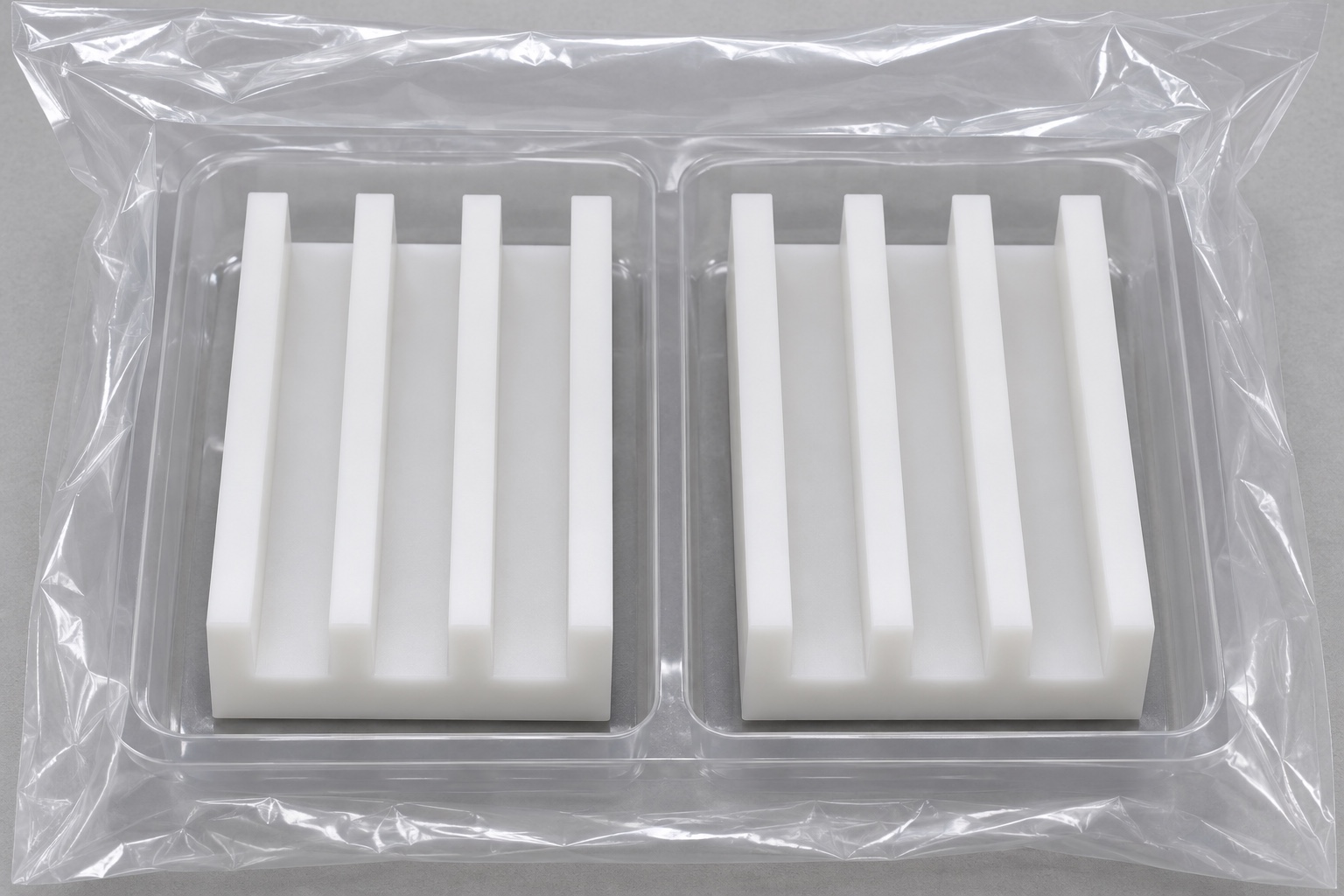
The outgoing condition would address machining debris in channel floors, transitions and long edges. Specific residue or particle limits would need approved methods. Packaging would support the base and separate blocks without loading or forcing the raised lands, allowing identification outside functional regions. Adjacent blocks would not be allowed to nest so their edges rub the channel walls. A tray and open protective bag are not a sterile barrier or validated shipping system. No cleanliness measurement or actual shipment is asserted. Receiving instructions would separate package condition from dimensional acceptance and identify checks needed before storage or assembly.
Release path for a real plastic small batch
Before an actual order, approve drawing, model, material grade, quantities, final state, edge condition, inspection methods and packaging. Resolve DFM questions about channel pattern, support, tool reach, end access and released measurement. A real first article would provide agreed evidence, with deviations and accepted changes recorded before repeat production. Inert reference observations and full-equipment qualification would remain separately controlled. The proposal supports a clear inquiry for custom laboratory and medical fixture parts without inventing a customer, achieved precision, production capacity or electrophoresis performance that the machining and inspection scope has not demonstrated.
FAQ
Is this a proven laboratory accessory from a customer project?
No. It is a representative manufacturing proposal for inert staging. It does not claim a delivery, measured tolerance, certification, sample result, electrical safety or successful use in operating equipment.
What is included in the proposed block?
Three parallel open-top channels, four raised lands and a continuous solid base are proposed. The channels open at both ends but not through the underside. No holes, threads or inserted parts are included.
Why is channel location separate from channel width?
Width describes a local opening, while location relates it to references and neighboring features. A gauge that enters one channel cannot establish the whole pattern, land thicknesses or the required relationships.
What would the first-article report cover?
It would record real results for the features and methods agreed for manufactured parts in the specified final state. It would not turn model dimensions, a setup image or an instrument name into complete conformity.
Does an inert placement check demonstrate assay performance?
No. It supports only the specified placement, contact or separation observation with controlled references. Assay behavior, electrical safety, contamination control and complete-equipment qualification require independent appropriate assessment and evidence.
What must be approved before a small-batch release?
Approve revision, exact material, geometry, final state, manufacturing exceptions, inspection and packaging. Preserve real first-article evidence and manage changes rather than treating this proposed route as achieved production data.

tanghangyun@oemach.com