
Representative case and intended manufacturing discussion
This representative CNC milling case considers a 6061 cable bridge for an inert infusion pump assembly fixture. It is not a customer delivery record and does not claim measured production results, certification or suitability for a particular pump. The example focuses on how mounting feet, an open arch and hole locations translate into a manufacturing scope. The complete fixture and any operational cable requirements remain the design owner's responsibility. A cable bridge may look simple, but its acceptance cannot be reduced to whether a dummy cable fits under it. Both the component drawing and the condition in which it is inspected need to be agreed before production.

Part inventory and visible interfaces
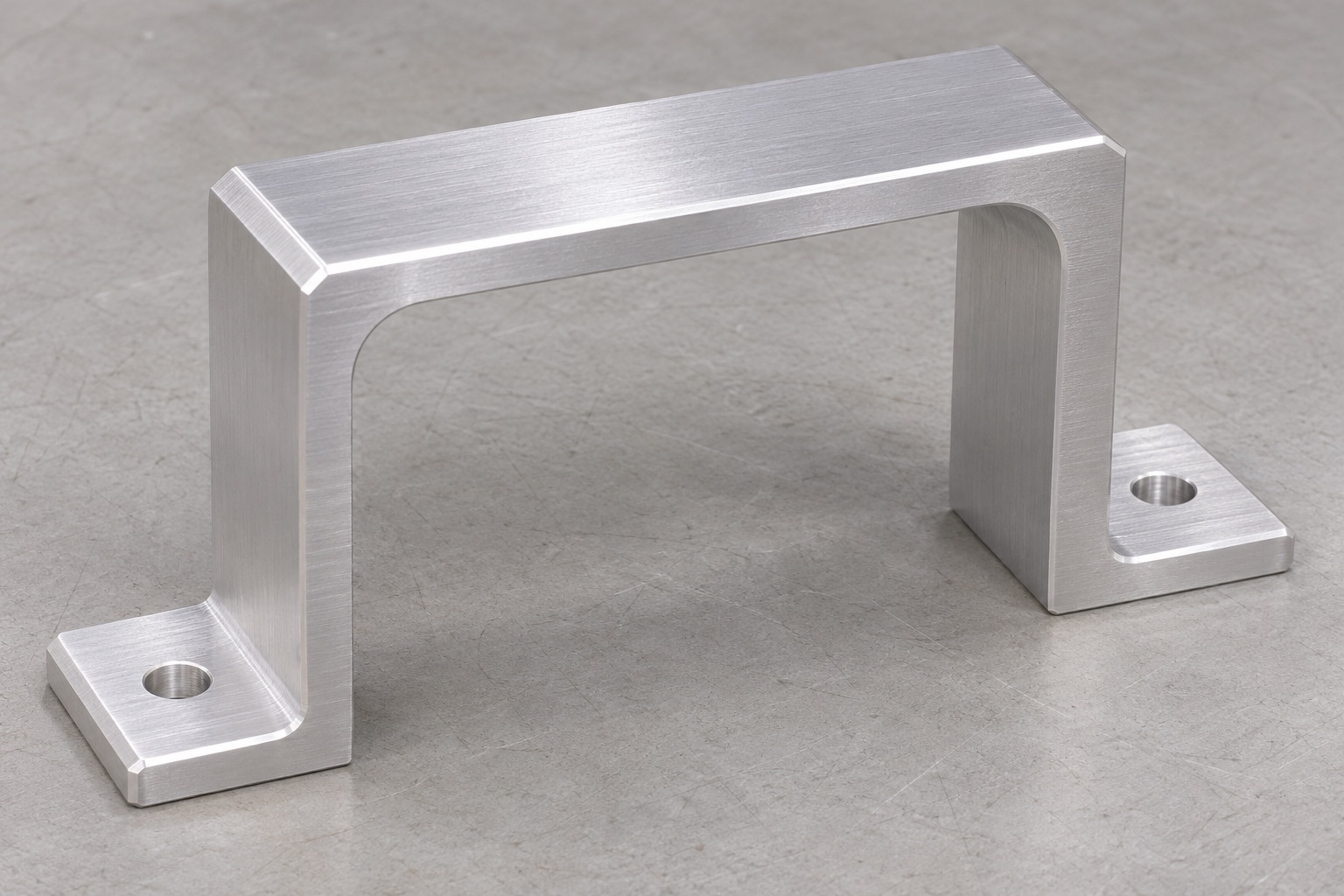
The one-piece part has a rectangular horizontal beam, two downward legs and an outward mounting foot at the bottom of each leg. Each foot contains one plain vertical through-hole. The arch remains open underneath and from front to rear, with drawing-defined internal corner radii. There are no hidden threads, enclosed channels or extra mounting holes. The important interfaces are the two foot undersides, the arch envelope, the fastener passages and any edges facing the dummy routing area. Pictures communicate this feature inventory, but they do not supply production dimensions or evidence that a manufactured bridge meets the intended geometry. A controlled model and drawing must provide that information.
Proposed assembly-fixture function
The bridge creates a defined route for an inert cable-envelope reference beneath the top beam while fastening to a fixture base through its feet. The actual design must specify which surfaces seat, which clear the reference and whether any installation condition is controlled. The bridge is not presented as strain relief, electrical insulation or a patient-connected component. If a real assembly requires those functions, they need their own requirements and qualification. This case therefore treats the dummy route as a supplementary geometric check and avoids translating an apparently unobstructed opening into claims about cable life, retention, safety or the performance of an infusion pump.
Information required for a meaningful RFQ
The quotation package should identify the drawing and model revisions, the 6061 alloy and supply condition, quantity, finish and inspection expectations. Highlight the shared mounting reference, foot contact areas, arch opening, beam section and hole locations. State whether free-state and installed-state requirements differ. Include any requested dummy routing observation and provide its reference definition. Ask the supplier to list proposed internal-radius changes, setup limitations and measurement exceptions during DFM. This prevents competing quotations from quietly assuming different arch geometry or accepting different foot conditions. A price based on a familiar U-shaped bracket is not necessarily a price for the actual controlled bridge specification.
Stock selection and roughing review
The proposed route begins with identified 6061 stock and machining allowance suitable for the selected setup. Stock form and supply condition should be confirmed rather than inferred from the word aluminum. Review the roughing sequence before opening the arch, because material removal changes the available support and gripping locations. Determine which surfaces will be recovered as references for later operations. A rough stock face can support early machining without automatically becoming the final mounting datum. Any coating or other specified finish also belongs in the initial review, including its effect on interfaces and the timing of final inspection. No particular finishing performance is implied by the representative image.
Milling the beam, legs and open arch
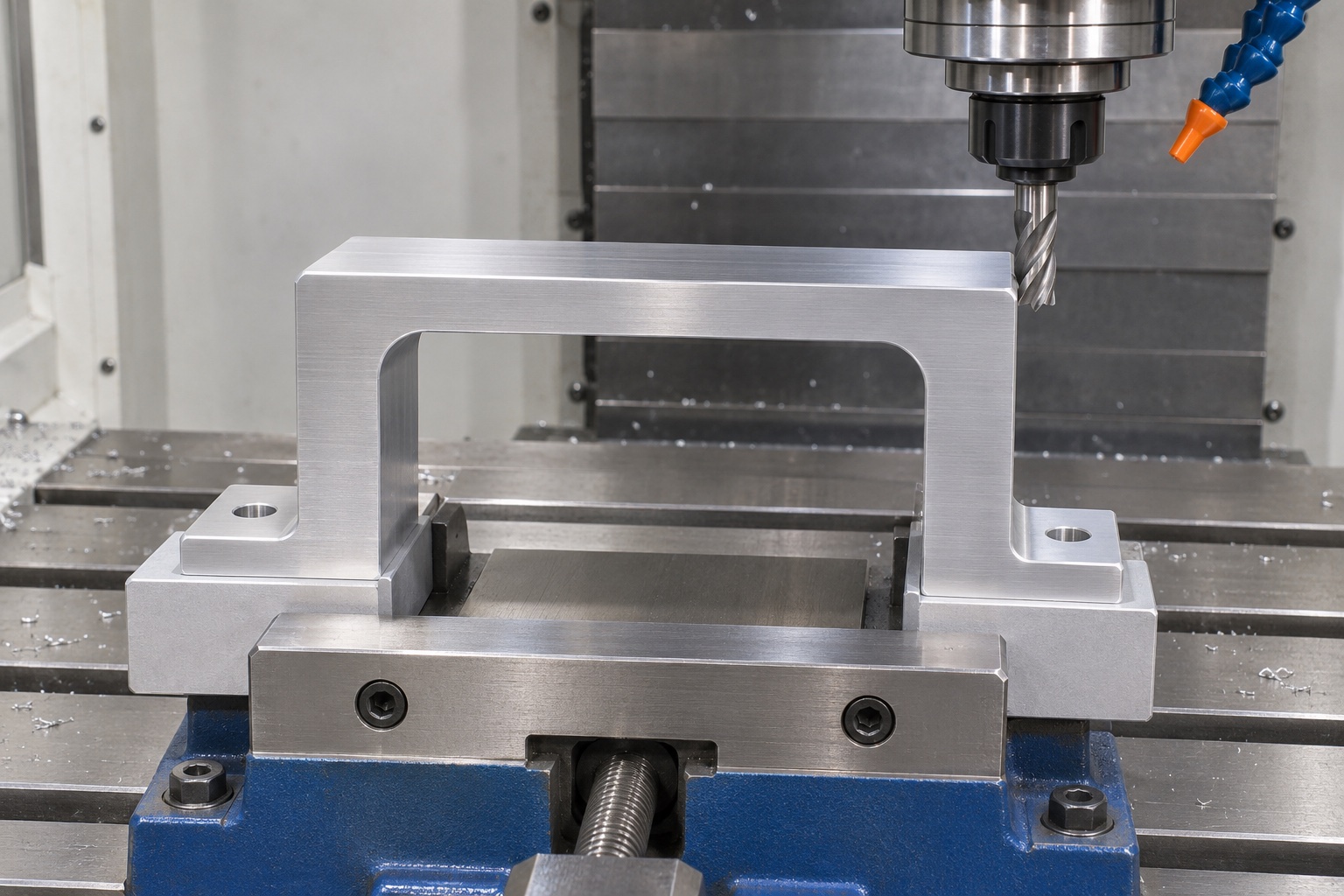
The manufacturing engineer should choose tool access and sequencing for the actual bridge dimensions and requirements. The open front and rear provide potential access, but cutter reach still depends on the arch depth, corner requirements and workholding. Review the permissible internal radii before programming. Do not enlarge the opening, reduce the beam or add relief features without approval merely to accommodate available tooling. The image of a milling setup shows a plausible access arrangement, not a demonstrated production process. The real route must be evaluated with the actual stock, machine, tools and resulting components before any tolerance or repeatability statement can be supported.
Completing both mounting feet without concealed constraint
The foot undersides need a defined relationship to the rest of the part and to each other. Plan how the second setup recovers the approved reference while protecting completed faces. Review clamp locations and support under the workpiece so the operation does not rely on forcing the feet into a position they will not retain after release. Clean contacts before reseating and document any special support conditions. If the drawing requires free-state coplanarity or another geometric control, inspect that condition after machining workholding is removed. A bridge that can be pulled onto a base with screws has not automatically demonstrated conformity to the component drawing.
Mounting holes, edge treatment and final finish
Each foot receives one plain through-hole aligned with its mounting definition. Hole size, position, entry and exit condition must be addressed separately from the arch envelope. The proposed part contains no screw-head counterbore or internal thread. Confirm access for the approved fastener reference without altering the model to fit an unapproved screw. Deburr the arch and holes while preserving the specified edge geometry and contact areas. If a coating or other treatment is ordered, identify masking, affected surfaces and the final measurement stage. This representative case does not claim that a bright aluminum surface provides electrical protection, clinical cleanliness or a particular corrosion result.
Proposed inspection package for first-article review
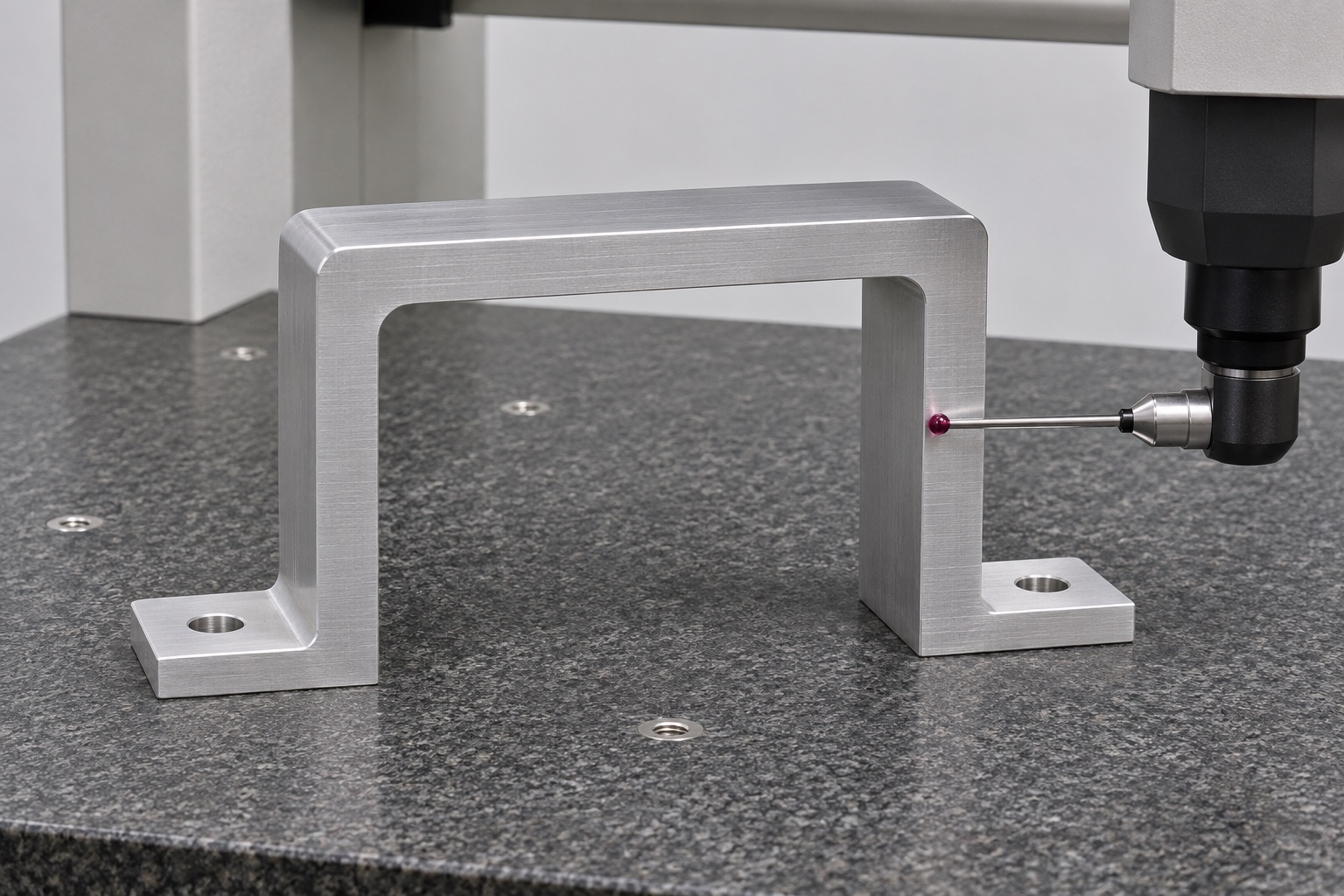
An inspection matrix should map foot seating, overall height, beam section, arch dimensions, hole locations and specified geometric relationships to appropriate methods. Record the part state, support and reference alignment for each evaluation. A coordinate probe beside the bridge shows an inspection arrangement, not an actual passing result. The report must contain real readings from the manufactured part, with limitations disclosed where equipment or access is inadequate. Do not substitute one opening measurement or a pair of passing bolts for the complete acceptance plan. For repeat low-volume CNC orders, preserve the approved inspection method so a changed setup is not mistaken for a change in component quality.
Supplementary dummy routing and assembly access
A defined inert base and cable-envelope reference may be used to observe mounting access and visible clearance. Retain their revisions and record the assembly condition so the observation can be repeated. Check whether any unintended contact appears at the arch entries or around the mounting feet. Do not introduce pull tests, powered equipment or a real infusion circuit into this supplementary check. Those activities require separate approved procedures. If a dummy can pass only after the bridge is forced into shape, review dimensions and references before making a change. The observation should reveal questions for engineering review rather than provide an informal shortcut around dimensional acceptance.
Protective handling and package identification
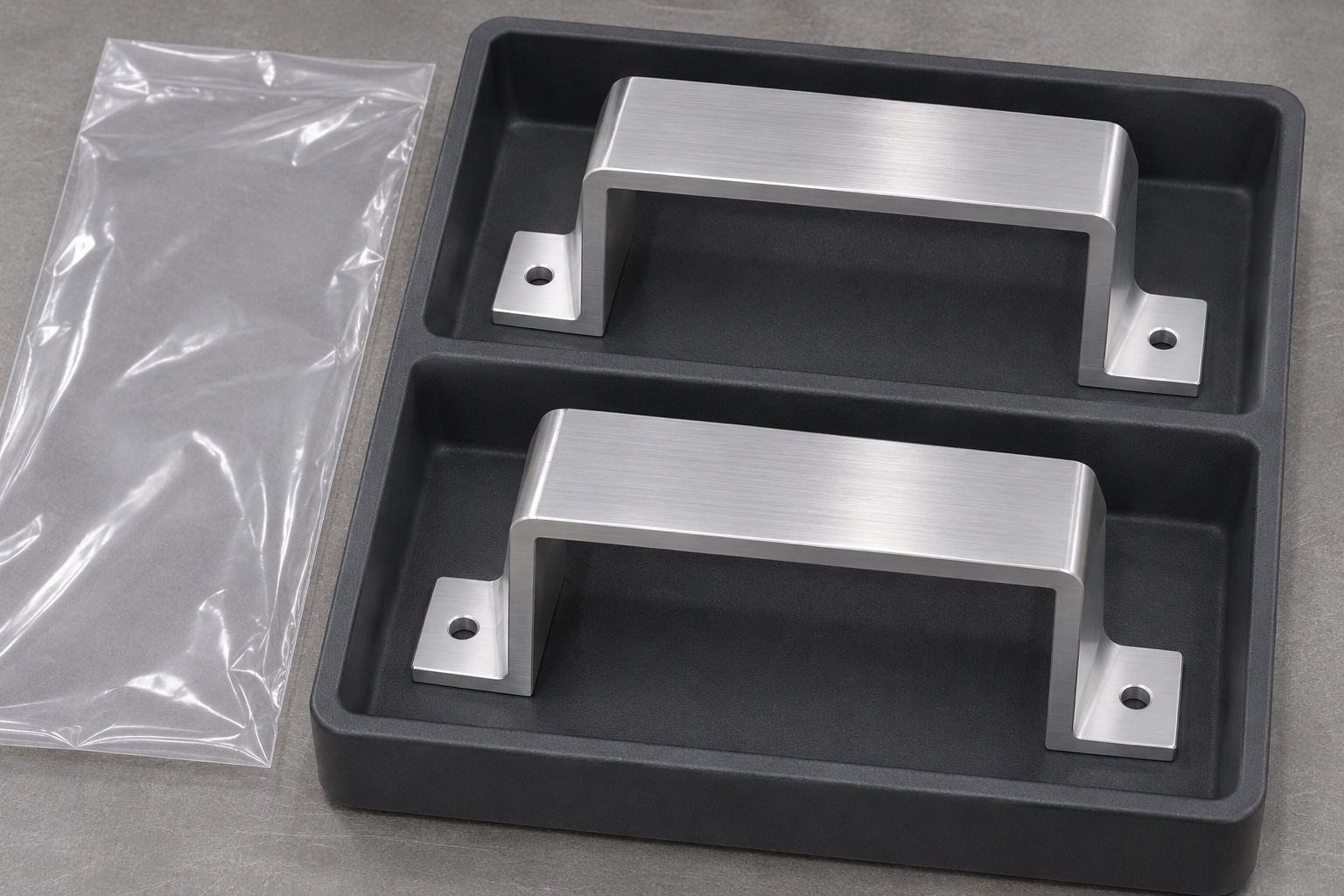
The outgoing condition should include the specified cleaning, drying and handling controls. Inspect accessible arch corners and hole exits for loose debris before packing. Protect the mounting undersides and beam without packing pressure that changes the arch or pulls the feet together. Keep parts separated where surface contact could damage the defined interfaces. Package identification should link the part number and revision to the required material and inspection records. Ordinary protective packaging preserves a specified manufacturing condition; it does not establish sterility or validated residue removal. Receiving inspection should follow the purchase specification instead of treating an intact bag and representative product photo as sufficient acceptance evidence.
Approval gates for an actual bridge project
Before a real order is released, approve the drawing, material condition, permitted radii, surface treatment, inspection methods and delivery requirements. Resolve supplier exceptions and define responsibility for any dummy routing observation. Preserve accepted setup and inspection revisions for repeat manufacture, with actual results retained against each order. This case does not assert a completed delivery, load rating, achieved tolerance or operational compatibility. It demonstrates how a custom aluminum medical fixture component can be specified around measurable interfaces. That distinction helps the supplier quote a bounded machining task while leaving complete fixture qualification, electrical considerations and infusion-system performance with the responsible design and validation activities.
FAQ
Does this case describe an actual pump customer delivery?
No. It is a representative manufacturing example with no asserted customer identity, completed delivery, measured performance or certification.
What is the exact hole inventory?
Two plain vertical through-holes, one in each outward mounting foot. No threads, counterbores or extra mounting holes are included in this geometry.
Does the arch provide strain relief?
Not by itself. This case defines an inert routing envelope only. Cable retention, bend limits, abrasion life and strain relief require separate approved requirements and evidence.
What should the foot inspection state be?
Use the state specified by the drawing. Free-state seating and any separate installed condition must be distinguished rather than assuming screw tightening proves conformity.
Are the images measurement evidence?
No. They show component features and possible process, inspection and packing arrangements. A real first article requires actual results from the manufactured part.
What must be approved before production?
The drawing and model, 6061 definition, quantity, finish, foot and arch requirements, hole definitions, inspection plan, documentation, cleaning and protective packing.

tanghangyun@oemach.com