
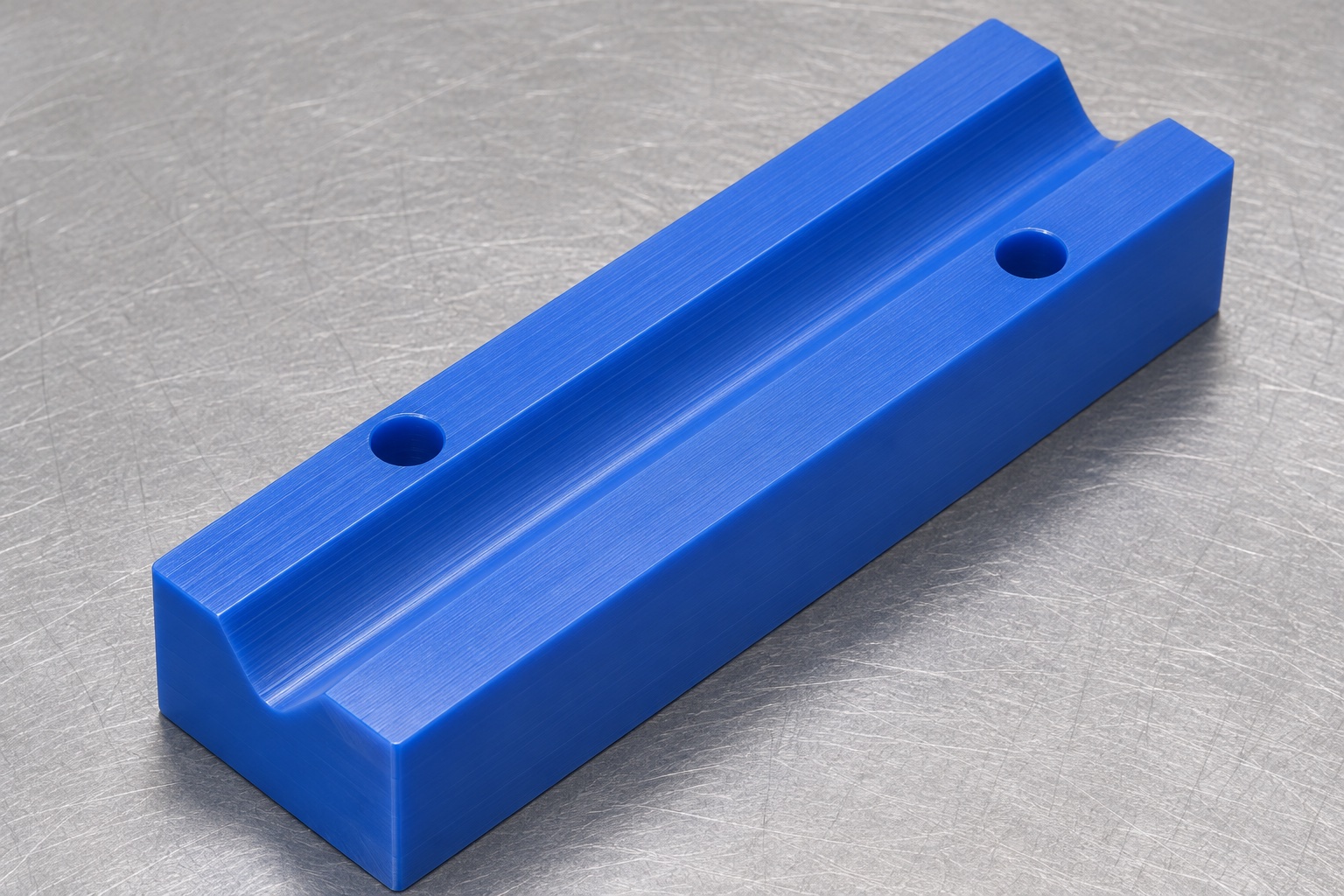
Representative scope of the polymer cradle
This case proposes a PPSU rest insert for an inert dental handpiece service fixture. It is a manufacturing planning example, not a delivered customer project, certified dental accessory or report of measured results. The representative blue rectangular block has one open longitudinal radiused cradle channel and two plain vertical mounting through-holes on opposite side margins, staggered along the length. There are no fluid passages, metal inserts or hidden clamps. An identified dummy handpiece would be used on an unpowered bench. Real grade, dimensions, tolerances and acceptance criteria would have to be approved before the proposal could become instructions for manufacturing a finished component.

Review the actual dummy contact before choosing tolerances
The proposed drawing review would request the inert handpiece envelope, insertion direction and intended support areas. The design owner would define whether contact occurs along the channel surfaces or at another specified region. The supplier would not derive a universal profile from a cylindrical-looking reference. The radiused channel would remain distinct from an ideal sharp V. If a different dummy changed the contact requirements, the drawing would be revised before the previous program was reused. A matching model would support access review, while the drawing would control tolerances and acceptance. This prevents a convenient placement observation from becoming an undocumented design definition.
Assign PPSU grade and revision identity to the stock
The hypothetical purchase order would specify the PPSU grade, blue color, stock form and required material records. The supplier would confirm the requested evidence before accepting real work. This example does not claim an existing certificate or material lot. Another sulfone polymer or different PPSU formulation would not be substituted without approval. The cut blank would remain linked to the traveler and drawing revision through machining, inspection and packaging. Material identity would support a traceable manufacturing route without asserting that the finished insert is approved for clinical contact, cleaning chemistry or repeated sterilization. Those application requirements would need their own defined evidence and responsible review.
Define channel and mounting references together
The proposed datum scheme would start with the fixture's actual seating interface and establish orientation for the radiused channel and staggered holes. Channel profile, depth, useful length and position would remain separate requirements. The holes would be defined as mounting features rather than a substitute for specifying the contact contour. If the fasteners only clamp the insert, that role would be stated explicitly. The inspection setup would recover the same references without forcing the polymer against an oversized or overly restrictive gauge. These decisions would be settled before CAM preparation so the supplier could quote and evaluate a measurable interface rather than infer function from a rectangular outside outline.
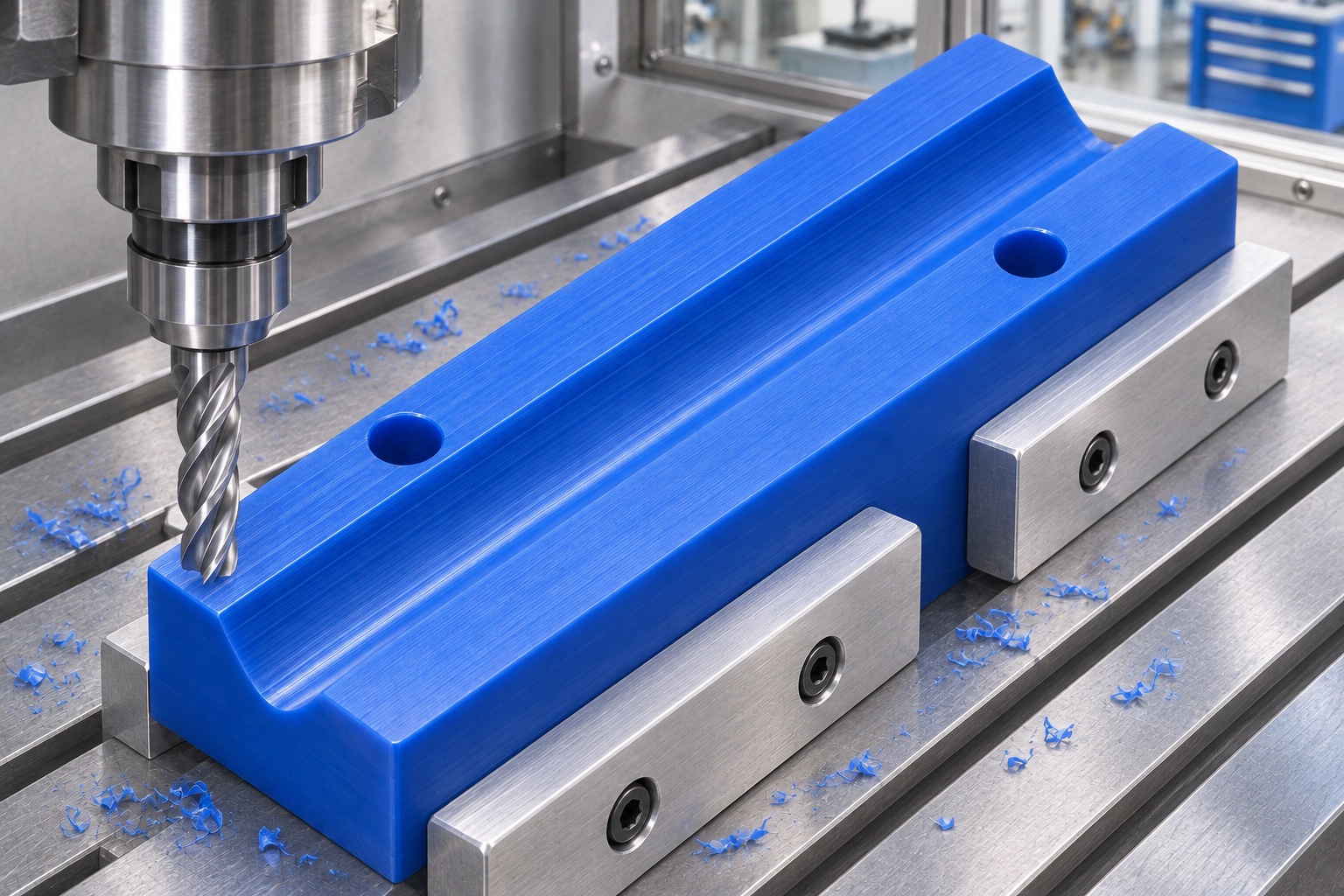
Plan channel roughing with supported side margins
The proposed route would review the material removed from the channel and the remaining bottom and side sections. Clamp contact would avoid unsupported areas and keep tool travel clear. Suitable finishing stock would remain where the plan required it. Tool geometry, reach and chip escape would be reviewed before cutting. No universal speed, feed or cycle time is claimed for PPSU. The actual route would suit the approved grade, geometry and machine and would be documented for repeat work. If the stock condition required an additional process step, the supplier would justify and approve it rather than apply an arbitrary treatment solely because the material was a high-performance polymer.
Finish the cradle profile without an informal redesign
The finishing operation would follow the released radiused contour and preserve the defined transitions at both short ends. The supplier would review cutter access and seek clarification if a specified shape could not be produced by the proposed method. It would not sharpen the root into a V, widen the channel or add a hidden relief simply to fit a selected tool. Manual polishing would not replace a measurable profile requirement. The case claims no real-handpiece scratch performance or retention result. It shows how a precision plastic machining plan can preserve an approved contact definition without allowing a visually smooth surface to imply unperformed application testing.
Produce the staggered holes without adding hardware
The representative design contains two plain vertical through-holes in opposite side margins at different longitudinal positions. Threads, counterbores and metal inserts would be absent unless a real drawing added them. Hole size and location would be inspected independently from the channel contour. The setup would leave exits accessible and avoid local clamping that distorted the polymer near the holes. A later fastener change would return for design review before altering the component. Each hole would remain separately identifiable in the report so a positional discrepancy could not be concealed in an average value or a loosely fitting screw assembled through an unrelated fixture reference.
Plan low-force inspection without invented results
The proposed first-article matrix would cover channel shape, depth, position, seating conditions and mounting-hole relationships. Suitable methods, support and reference alignment would be selected for each requirement. Contact force would be reviewed to avoid bending the insert or marking the functional profile. Actual readings would be recorded only after real manufacture and inspection. This representative case provides no achieved tolerance, yield or capability index. A single width reading would not be presented as proof of the complete radiused channel. Any method limitation would be disclosed and resolved before acceptance or repetition of the manufacturing route for a low volume polymer order.
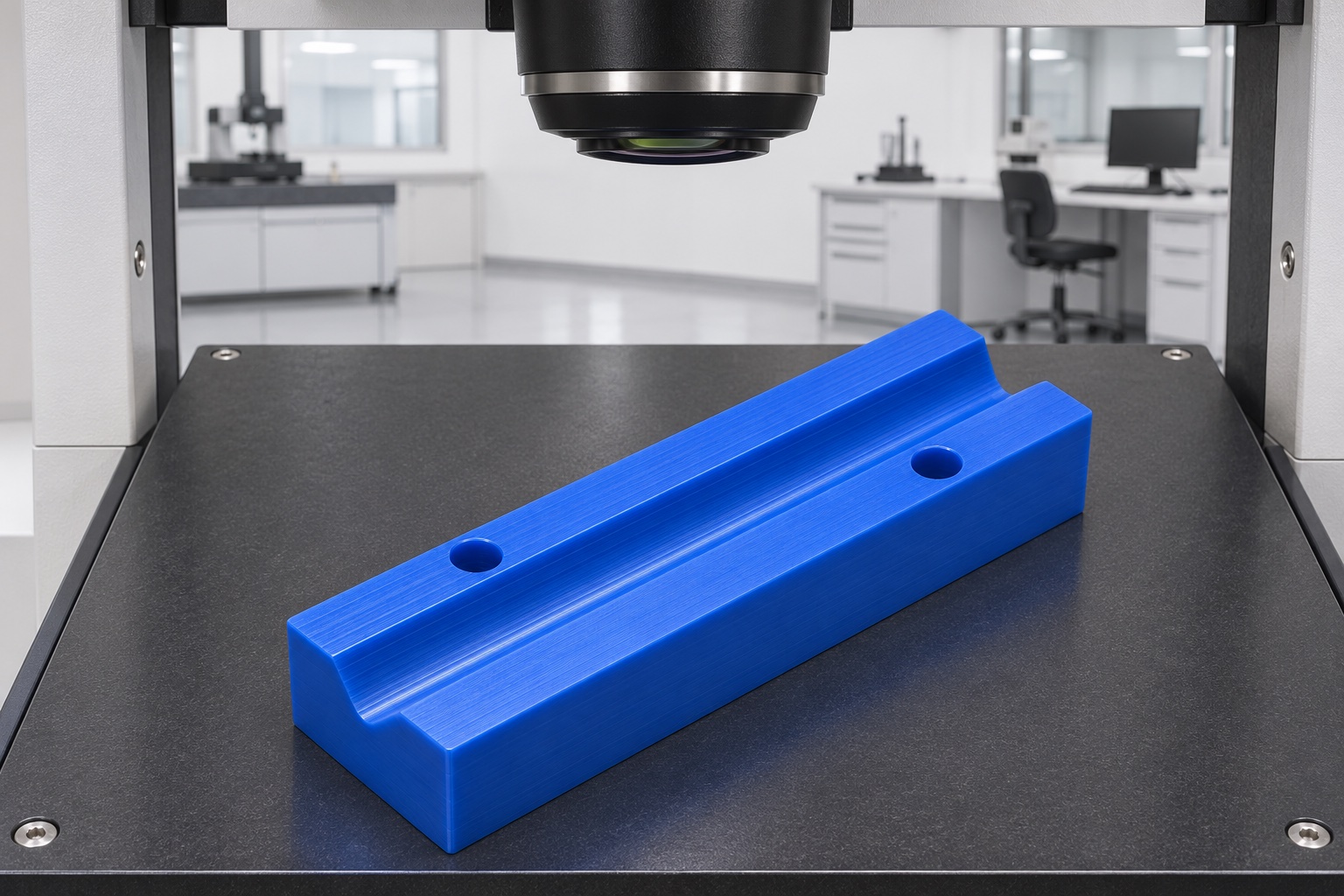
Keep edge treatment separate from contact correction
The proposed traveler would distinguish approved edge breaks from the cradle's functional contour. Outside corners, channel entrances and hole exits would be checked after loose debris removal. Uncontrolled rounding would not be used to hide a dimensional mismatch or change where the dummy first touches. If visual magnification were needed, the buyer and supplier would agree the method and acceptance criteria. A blue polymer surface that appeared smooth in a photograph would remain separate from measured geometric evidence. Ordinary edge finishing would not establish medical cleanliness, scratch safety or compatibility with a particular handpiece body; those claims would require an application-specific procedure and supporting results.
Limit the placement observation to an inert assembly
A supplementary bench check could present the identified dummy handpiece to the inspected channel to observe access and visible interference. The procedure would record the reference revision and avoid force that concealed a mismatch. No powered handpiece, air line, fluid line or patient would be involved. Stable-looking placement would not prove real retention or compatibility with every handpiece geometry. Unexpected rocking would prompt review of the approved dummy and measured contour before any rework. The check would supplement the dimensional report for one defined mechanical relationship, remaining separate from qualification of a real dental service workflow or operating instrument accessory.
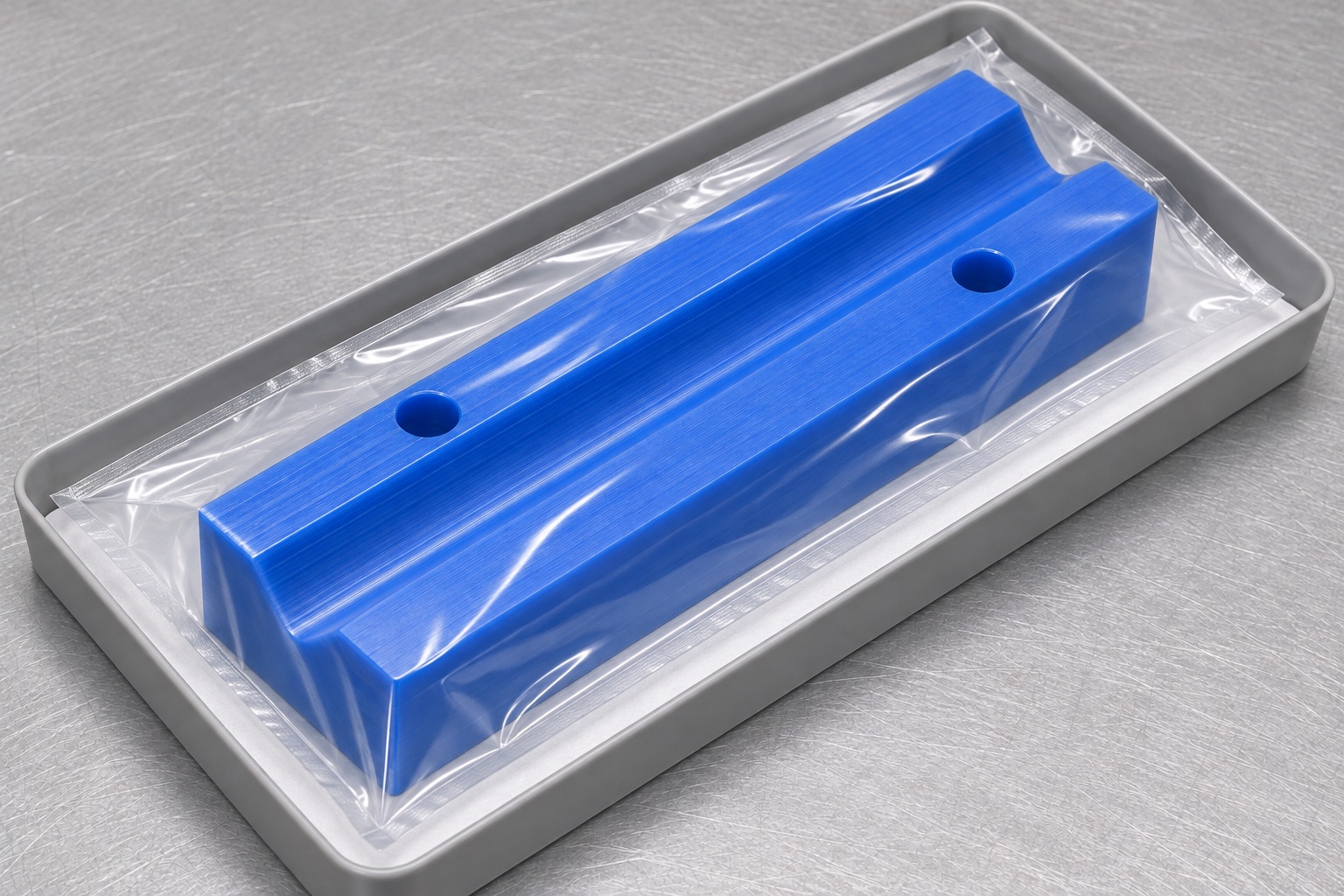
Agree outgoing cleaning and individual protective handling
The hypothetical order would define cleaning agents, drying and handling for the actual PPSU grade and fixture scope. The supplier would not assume that every process associated with a polymer family was approved for the finished insert. Ordinary debris removal would not establish sterility or a numerical residue limit. Packaging would separate inserts and protect the channel from fibers, abrasive particles and pressure from other parts. Outer identification would match the drawing revision and real inspection record. The associated packaging scene communicates protective handling only, not a completed shipment or validated sterile barrier. Receiving inspection would still follow the agreed purchase specification and component condition.
Close the release responsibilities for a real order
A real purchase would resolve material identity, drawing, contact contour, mounting, inspection and packaging requirements before manufacturing began. Actual first-article measurements would support the release decision and any deviation would be addressed against approved criteria. Extending the part beyond an inert bench fixture would require independent assessment by the responsible design owner. The representative case structures a request for custom PPSU CNC inserts without inventing a customer success story. It separates component milling and measurement from real-handpiece compatibility, cleaning validation and clinical qualification, letting the supplier quote concrete work and the buyer evaluate genuine records rather than a product narrative unsupported by actual delivery evidence.
FAQ
Does this case describe an actual dental delivery?
No. It is a representative manufacturing proposal. No customer shipment, certification, sterilization result, measured accuracy or clinical handpiece compatibility is asserted.
What geometry does the example contain?
A rectangular PPSU block, one longitudinal radiused cradle channel and two staggered plain mounting through-holes on opposite side margins. No fluid passages or metal inserts are assumed.
Can a sharp V replace the radiused channel?
Not without design approval. The contact contour must match the released drawing and dummy definition rather than be changed to suit a preferred cutter.
Does PPSU identity establish sterilization approval?
No. The actual grade, finished geometry, process and application need separately defined evidence. A material-family description alone cannot qualify a finished dental fixture component.
Can a dummy placement observation approve the whole part?
No. It supplements one bounded mechanical check. Channel geometry, mounting relationships and other drawing requirements still need the specified inspection evidence.
What is needed before actual manufacturing release?
Approve the drawing and model, PPSU grade and color, dummy-contact definition, mounting requirements, inspection methods, cleaning process and protective packaging instructions.

tanghangyun@oemach.com