
Establish the limits of the example
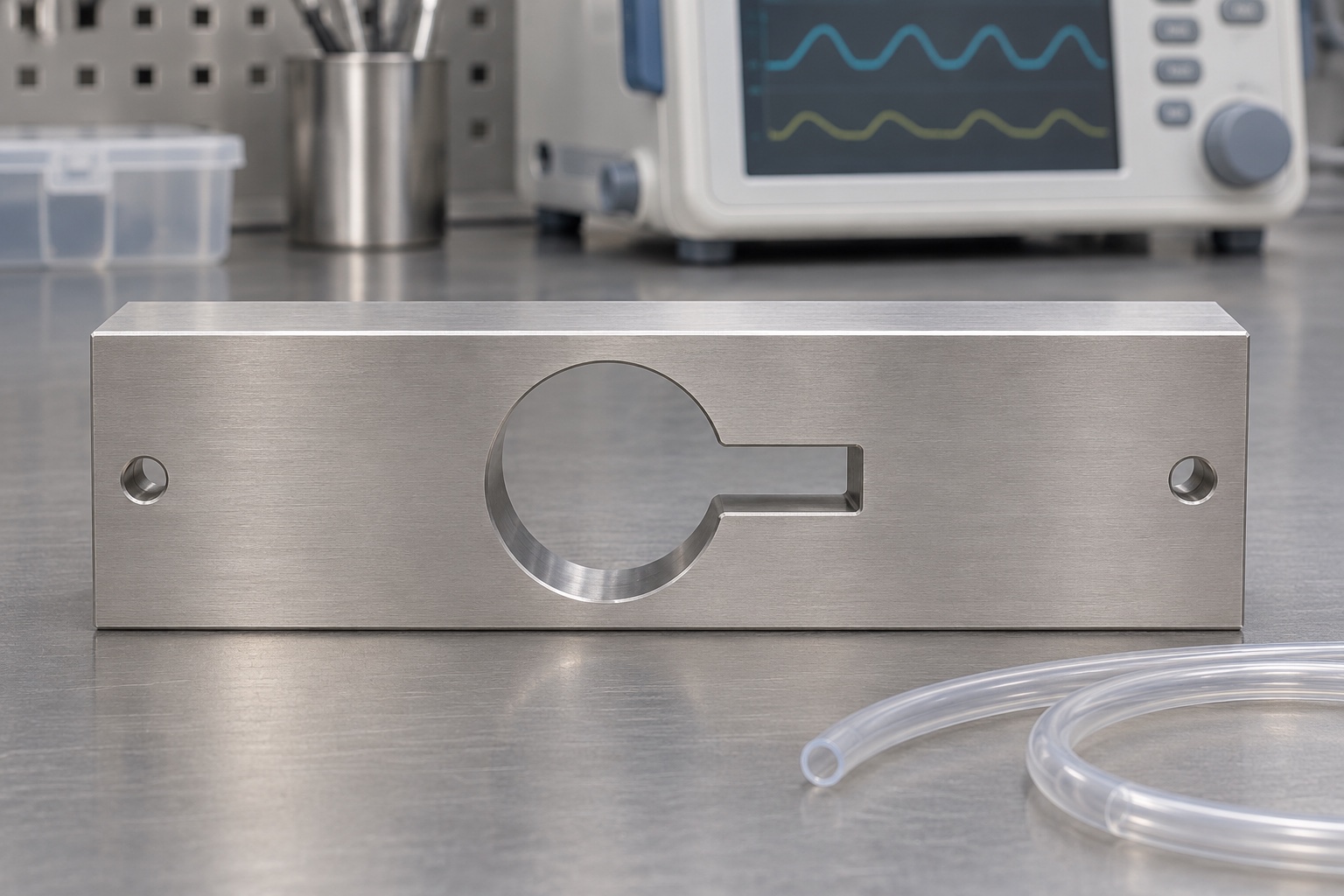
This representative CNC example considers a compact 316L stainless block with a horizontal keyed through opening and two end mounting holes. It is intended for a dry comparison with an inert connector envelope, without fluid, gas, electronics or a patient. The block is not an approved accessory, a delivered customer part or a spare for a named monitor. The illustrations show a generic part and possible access for machining and inspection. They do not report dimensions, a released drawing, compatibility, leakage, monitoring performance or a passing test result.

Define the round area and key separately
The opening is shown as a round region with an adjoining relief. An actual drawing would define which sides of the key control orientation and what clearance is required at the junction. The sample should not be assumed to seat against the inner profile in every direction. Draw the insertion direction and show how a shoulder can approach without contacting an edge early. The example does not use a sealing seat or thread. Any connection function for a real sampling system is outside the scope of this mechanical gauge.
Document how the block seats on the bench
The bottom face sits on a defined test plate and the two holes can retain the block. They do not establish precise position unless the order specifies locating hardware or a distinct reference. A side plane can orient the key check relative to the base. Record whether the gauge is measured free, held on defined supports or fastened to a test plate. The fixture used for machining is not automatically the reference for receiving inspection. Check the bottom surface and hole exits to make sure a burr cannot tilt the block during a trial.
Capture material and surrogate identity independently
The material candidate is 316L with exact stock form and documentation to be specified. The illustration cannot verify grade or corrosion performance. Keep a link from stock lot to finished gauge and the stated inspection condition. A rigid connector surrogate has its own drawing revision and identity. If it is replaced, verify which dimensions the replacement represents before comparing fit results. Do not assume parts with the same silhouette have the same key, length or collar. The order should identify both references without implying approval of a gas-path or patient-contact component.
Establish the base before opening the key profile
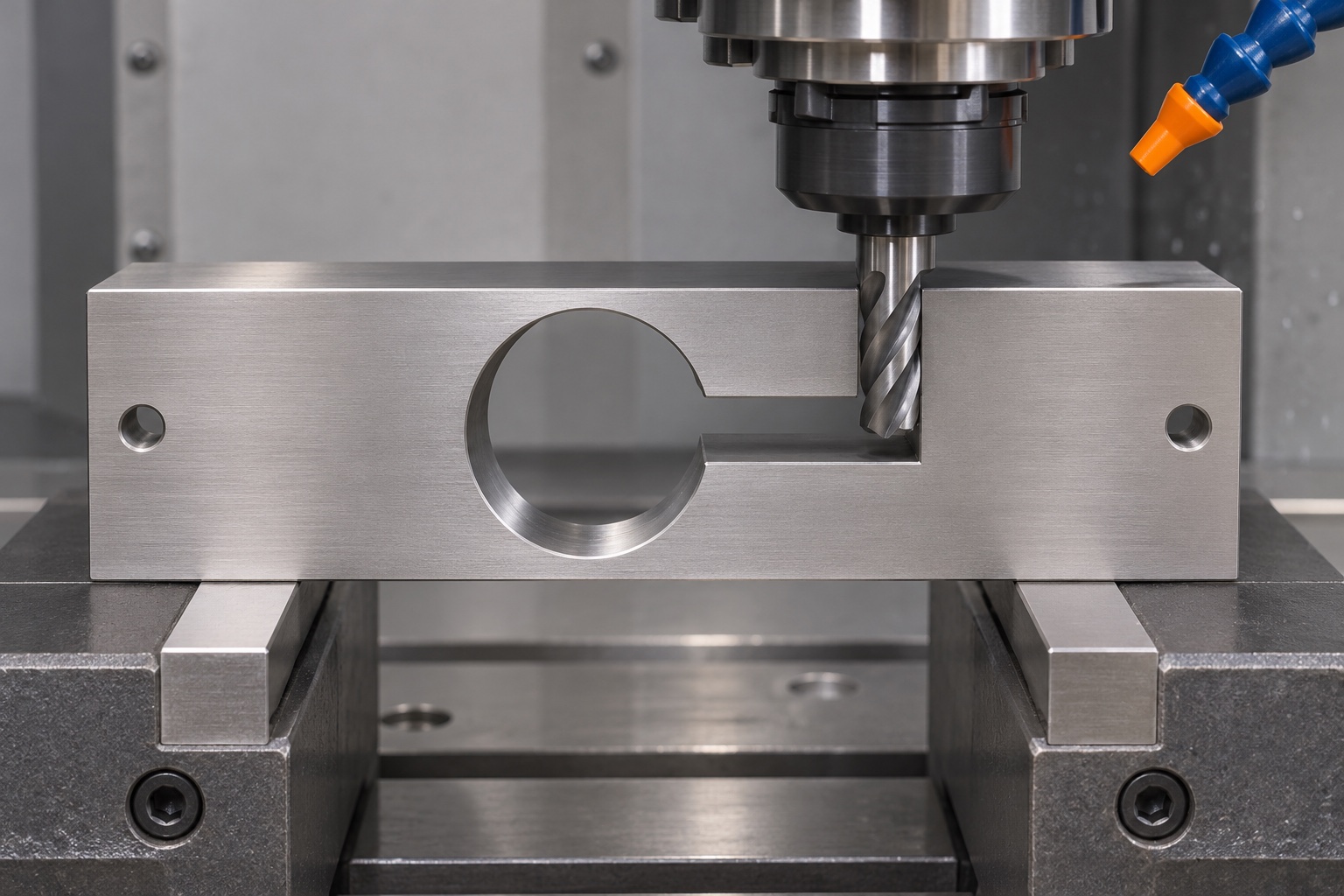
A possible machining route faces the base and creates stable side references, then roughs the main opening and key region with material left for finishing. Support the blank close to the cutting loads so a thin area is not distorted. Inspect the released condition when it matters to the drawing. A separate operation for mounting holes may require a documented setup transfer. The manufacturing image shows a plausible workshop scene, not an approved cutter path, speed, feed or tolerance. Select the actual process only after reviewing material, geometry and tool access.
Finish the functional flanks and junction
Finish the round region and key from the same coordinate system where possible. Verify clearance at the intersection where the tool radius can remain. A relief can be acceptable if it is part of the controlled design and does not remove a required contact surface. Check both ends of the opening and preserve its usable length when breaking edges. A smooth entry can mask an incorrect key position, so do not accept the gauge by appearance. If rework changes a functional flank, remeasure the relevant shape, location and relationship after the correction.
Inspect by feature, not just by insertion
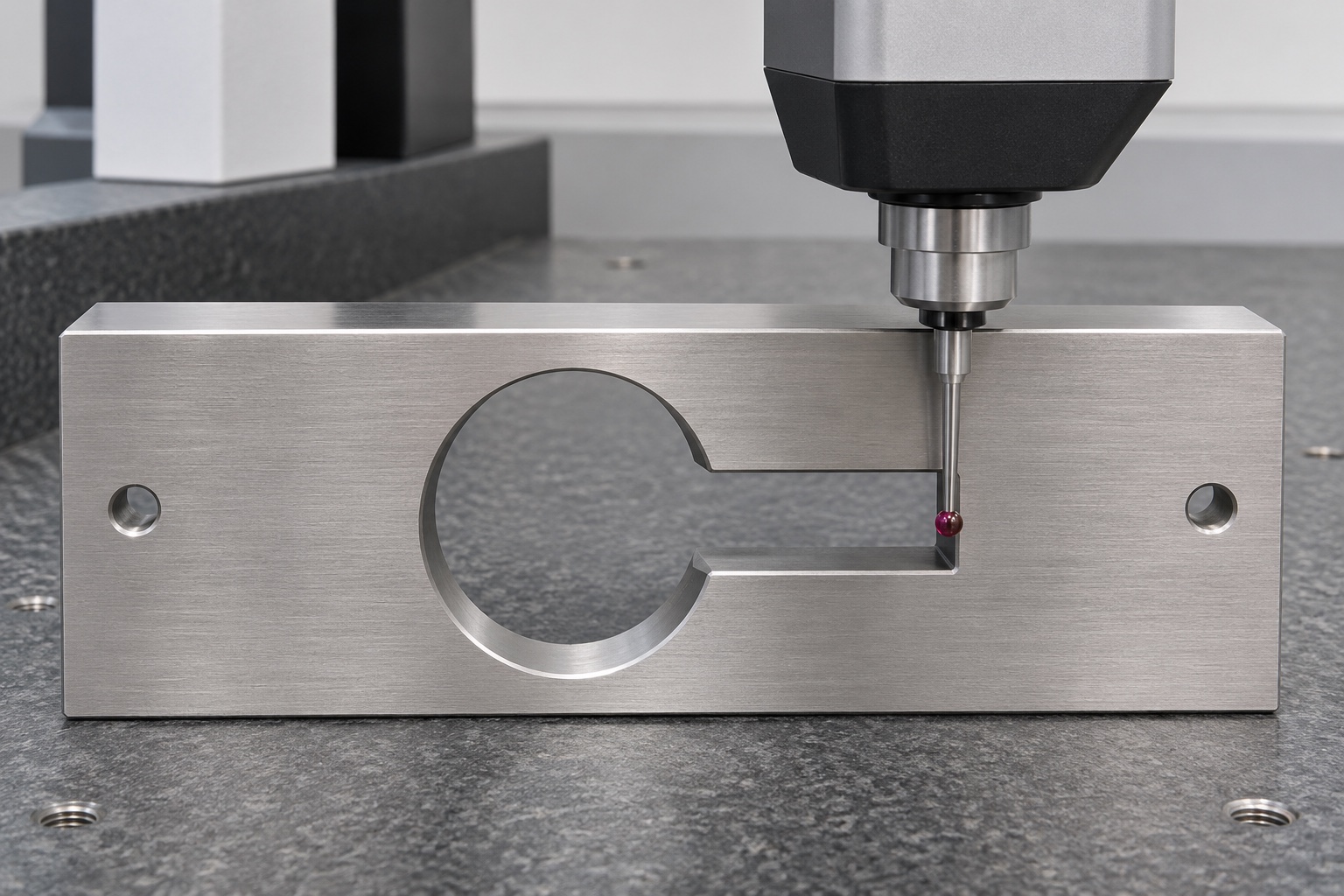
An example report would include the reference frame, round-opening measurement zones, key position and width, and the accessible transitions. The measurement method should suit the feature and document any excluded chamfer or relief. If a coordinate probe cannot reach a region, agree how that region will be checked before production. The gauge's geometry and the surrogate placement are separate records. The inspection photograph is illustrative and does not display measured values, dimensional capability or conformity to a customer requirement. An approved drawing is needed to define all actual limits.
Compare an inert connector on a dry bench
Use a labeled rigid surrogate under the agreed orientation and support. Observe whether it enters and where its key or collar first touches. Record how it can be removed and whether an interference appears at the same point after a complete reseat. No sampling line should be connected in this illustrative trial. If multiple reference pieces are used, identify them separately and do not combine results into one unexplained pass. A fit observation cannot establish pressure behavior, sampling performance or compatibility with an operating capnography system.
Investigate any mismatch before reworking
If one trial fails, check the reference identity, angle and condition first. Inspect the opening for a burr, a radius mismatch or debris, and measure the suspect region against the drawing. Keep the original observation when a change is approved. A second reference may show whether a problem follows the surrogate, but only if its dimensions and revision are understood. Do not widen the key or alter the drawing without owner approval. Repeat the affected checks with controlled references so the result describes the correction rather than a different setup.
Specify finishing and cleanup as separate items
An order would state the required final surface and permitted edge condition. Remove loose chips from the through opening and mounting holes under an agreed process, and inspect after cleaning. Keep marks and adhesive away from the base and functional profile. An attractive finish does not establish a validated cleaning process or suitability for any clinical environment. Any surface treatment that affects the fit should be reflected in the drawing and final measurement plan. This example is limited to bench handling and does not describe disinfection or preparation for medical use.
Pack the block without loading the key
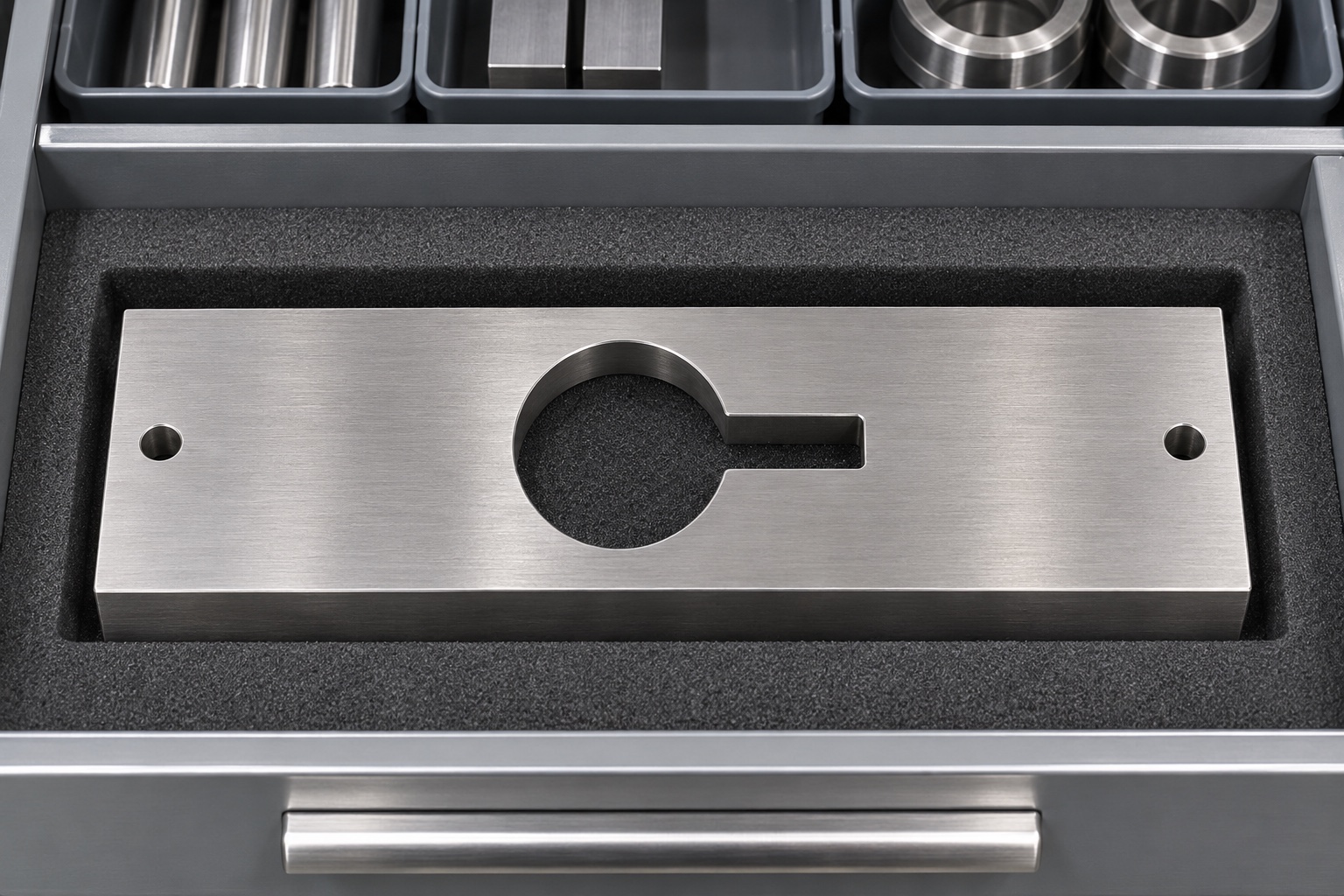
Use a fitted insert that supports exterior faces and leaves the opening clear. Keep hardware and the surrogate in separate protective locations and identify each item. At receipt, check the package and inspect the opening, key edge and mounting face before trusting earlier measurements. Repeat any check that could be affected by visible impact or debris. The packaging image illustrates physical protection, not a sterile barrier, cleanroom classification or verified storage period. Keep the documentation available so the gauge can be compared with the correct surrogate after transport.
Define the release evidence for a real order
A real purchase would require the controlled gauge and surrogate drawings, grade, finish, inspection references and receiving conditions. A supplier could provide measured geometry and a separate documented dry fit, if requested. Any device-level verification stays with the equipment owner and its approved procedures. No actual delivery, customer, certification or performance result is asserted here. The case demonstrates what can be documented about a keyed CNC inspection block without claiming that a bench fit establishes a monitor connection, a gas seal or suitability for use with a patient.
Manufacturer background reference: www.medtronic.com.
FAQ
Was this gauge delivered to a customer?
No. This is a representative CNC example with illustrative images, not a shipment or a verified customer result.
Does the block carry a gas sample?
No. It is for an inert envelope check only. There is no claimed gas path, fitting or seal.
What do the end holes do?
They retain the block in the example. A separate specified reference is needed if precise lateral placement must repeat.
Can insertion alone verify the key geometry?
No. A fit observation is specific to one reference. The drawing may require separate measurements of key width, location and profile.
What should be recorded for a dry fit?
Record the surrogate identity, orientation, support, contact observations and any change to the setup. Keep that record separate from measured dimensions.
Is the example for use on a powered monitor?
No. It is an off-device mechanical illustration and does not authorize installation, service or clinical use.

tanghangyun@oemach.com