
Establish the scope of the example
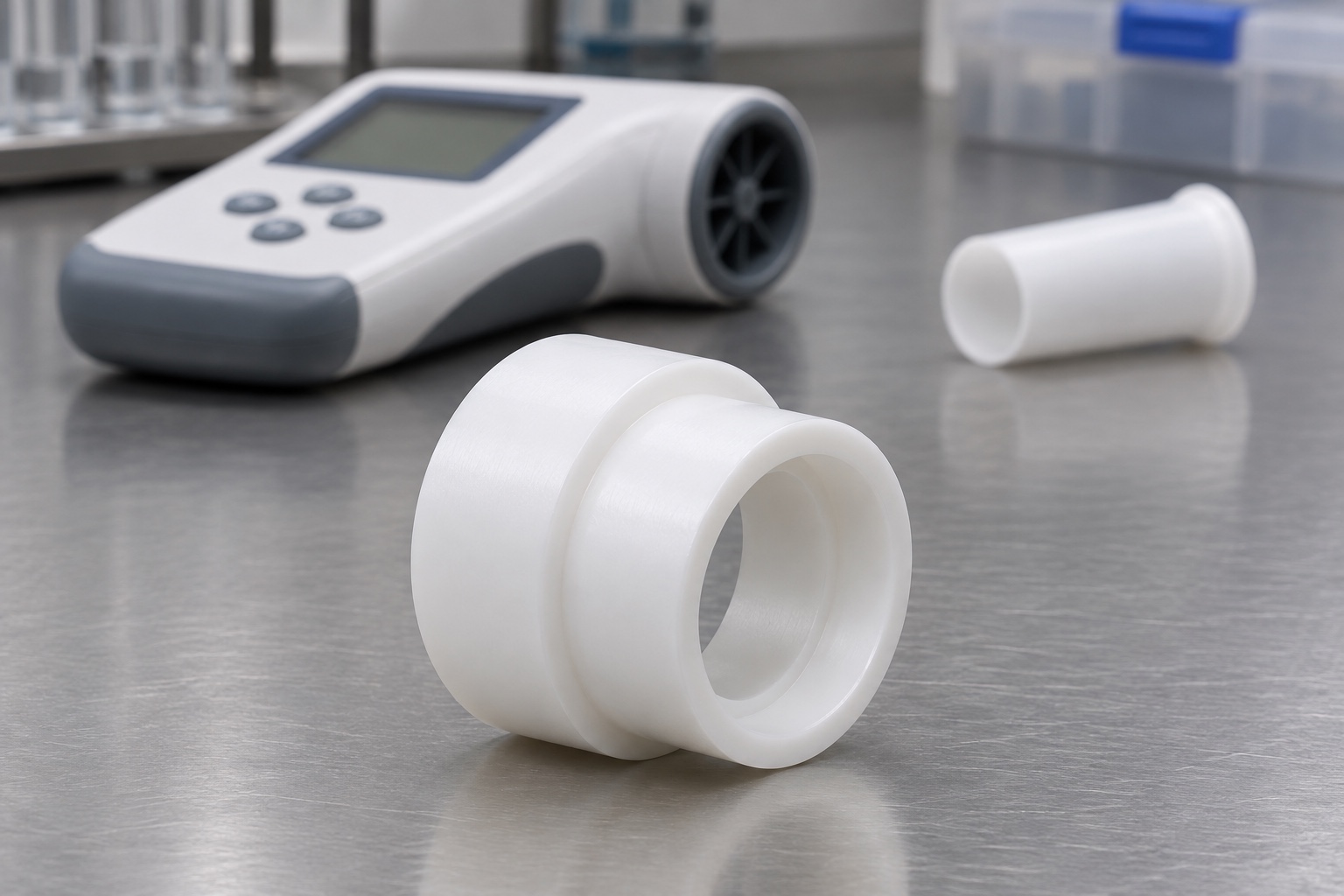
This representative CNC example considers a white POM-C inspection sleeve with two exterior diameters, a through bore and a shallow internal shoulder. A rigid surrogate would be used to check fit on a bench, without connection to a spirometer. The example is not a product delivered to a customer, a breathing accessory, an approved spare part or a clinical test. The pictures are illustrative. They do not represent dimensions, a drawing, an acceptance result or compatibility with the mouthpiece of a particular device. The intent is to describe the manufacture and inspection of the sleeve.

Assign a function to each step
The larger outside diameter can provide a handling or support region, and the smaller diameter can clear a holder. The through bore guides the surrogate in the example and the inside shoulder represents a seating stop. No seals, gas connections or pressure fittings are shown. The drawing would identify which exterior surface is a reference, and whether the sleeve is supported or free for inspection. Do not assume a convenient outside diameter is the correct datum. Include a cross section that distinguishes the guide, shoulder, entry edge and exit relief.
Identify the material and reference piece
The proposed stock is white POM-C with grade and stock form to be stated on a real order. Color does not establish resin grade. Keep lot identification with the blank and finished sleeve. The inert reference piece should have its own revision and dimensional record, since a change in either part can affect fit. Record the environment and support if they are relevant to the agreed test. The example supplies no certification of chemical resistance, airflow safety, biocompatibility or readiness to enter an operating medical device.
Rough the exterior and establish the axial face
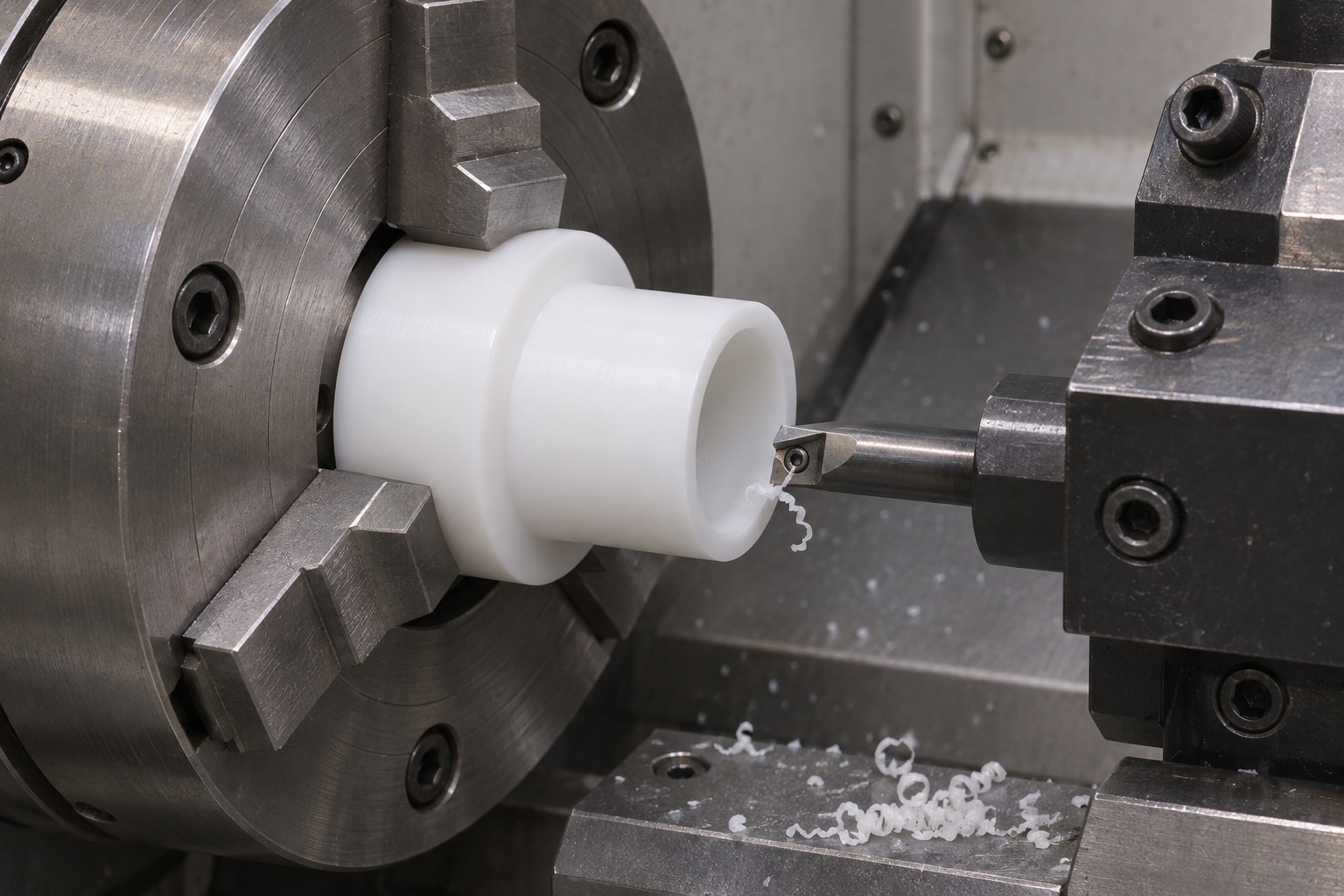
A possible process uses a supported blank to establish a face and exterior reference before opening the through bore. A turning or milling route could be selected for the actual geometry and batch size. Leave enough material on the guide and shoulder to permit a finish pass after checking the released shape. Do not squeeze a thin wall into roundness and accept a reading taken only in the clamp. The machining image shows a plausible operation, not a recommendation for cutter type, speeds, feed or acceptance based on that fixture.
Finish the guide bore from a known reference
Finish the bore with enough access to preserve the usable length and inspect the exit edge. Where the bore and shoulder can share a reference, plan both operations together. If the second end requires a new setup, state how the datum transfers and which characteristic will be rechecked. Select the method on the actual polymer and support condition. A polished bore or a clean-looking cut is not proof of size or form. Make it possible to reach measurement points without touching a chamfer or accidentally taking a reading in the relief.
Define the annular shoulder and edge condition
The shoulder is intended to locate a face of the rigid surrogate, subject to the approved drawing. Define its usable width and protect the root relief from becoming a false contact. An internal radius that is acceptable for machining may still interfere with a surrogate edge. Compare the two profiles at their specified limits. Deburr the entry and exit without changing the guide diameter or shoulder depth. A rework action that improves the appearance of the sleeve should not be used to bypass a recheck of any contact surface it changes.
Report bore and depth separately
An example report could record guide diameter at named stations, usable shoulder depth from the front face, and the applicable support or temperature condition. A probe or gauge should fit inside the intended measuring area without touching another surface. The record would identify the instrument or reference used and describe whether the sleeve was free or installed in a holder. No numerical dimensions, tolerances or measured results are shown. The picture illustrates access for a mechanical check, not the successful performance of the sleeve or any spirometer system.
Carry out a dry trial with a rigid surrogate
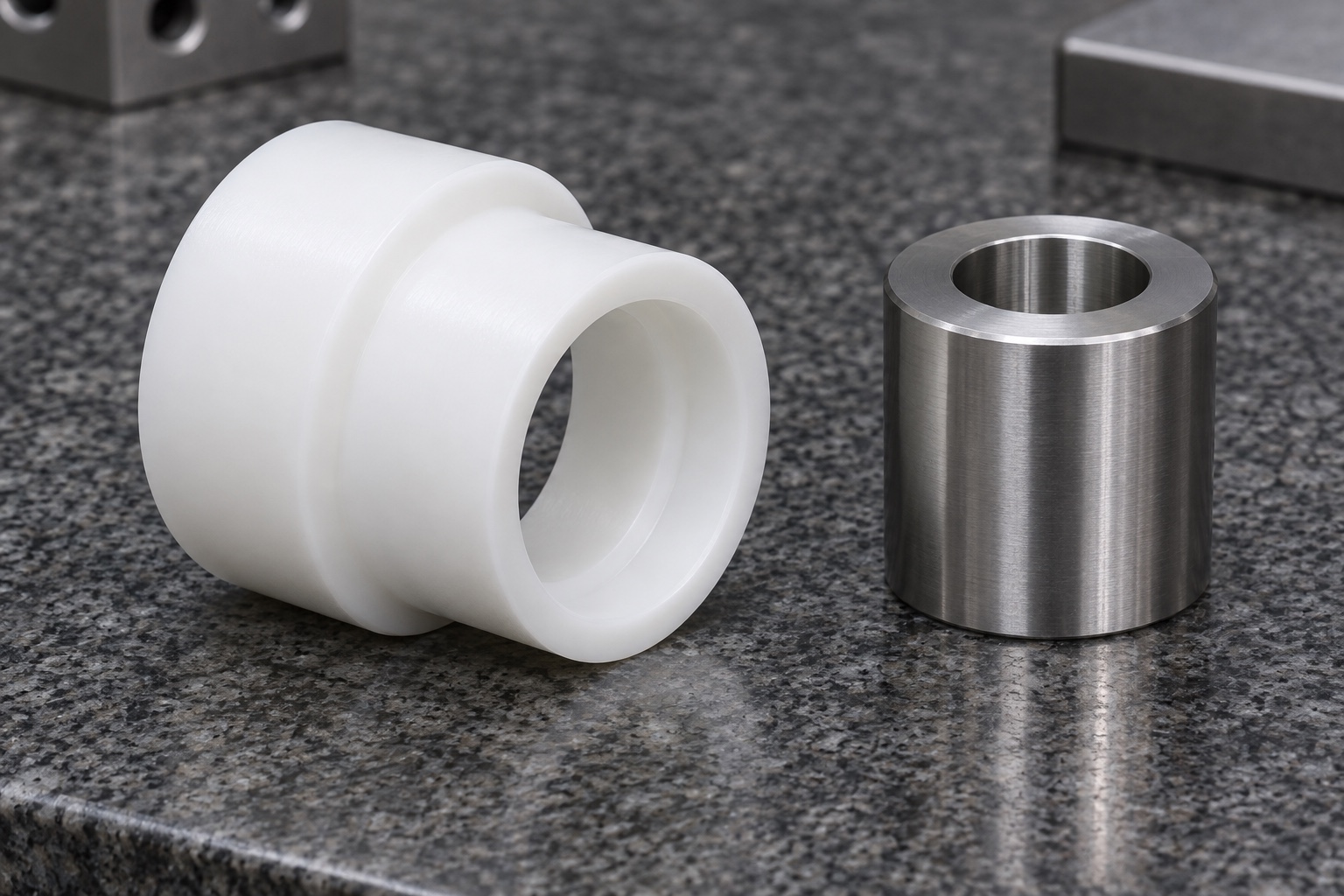
Use an identified inert piece and observe insertion and seating on a bench. If the drawing requires a repeat check, remove the surrogate completely and reinstall under the same conditions rather than pressing it farther into place. Record the intended stop and any unexpected contact. Compare the measurements on the sleeve with the fit observation instead of inferring a dimension from movement. No breath, flow, pressure or clinical equipment is involved. A dry trial is not a test of leakage, calibration, device compatibility or the accuracy of respiratory measurements.
Investigate interference in the right order
If the surrogate stops before its shoulder reaches the seat, compare its revision and check the sleeve for debris, a raised edge or a local restriction. Confirm the support does not squeeze the sleeve. Only then consider an approved geometry change. Store the original observation and record what was corrected. For example, a change in insertion depth following cleaning alone should not be reported as proof of a machining defect. A second trial is useful only when the reference and conditions are documented and the result can be compared meaningfully.
Define how the finished sleeve is handled
Agree on a method for removing loose chips and inspecting the bore, face and shoulder afterward. Place marks away from the functional regions and keep the piece linked to its measurement record. If a bench gauge is reused, define inspection before further use after damage, wear or an unidentified change in storage. Do not take instructions for handling the bench sleeve as a cleaning or reprocessing procedure for any real mouthpiece. No sterilization, disinfection or controlled contamination requirement is claimed in this representative example.
Protect the opening in storage and transport
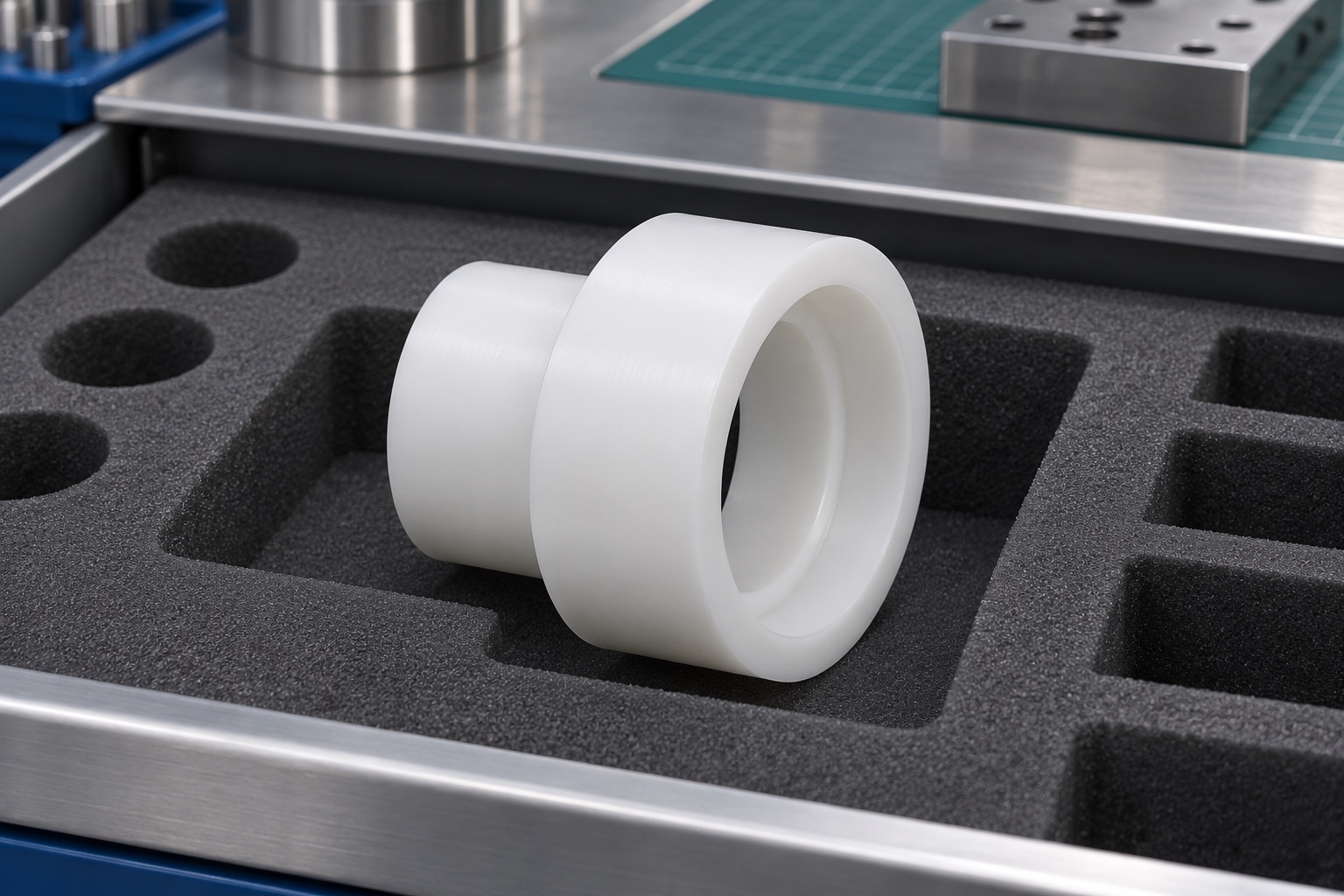
Support the sleeve at approved exterior surfaces and keep loose hardware away from the bore. A tailored insert can limit movement while leaving the front and internal shoulder free of compression. If the sleeve is protected with a removable cover, inspect for material transfer or debris before use. Put the revision and lot on the exterior package or agreed nonfunctional surface. Check the package and part condition at receipt. The illustrated insert represents ordinary protective handling only and does not indicate a sterile barrier or a validated storage life.
Write the manufacturing release around the bench question
A real order would require the controlled sleeve drawing, defined surrogate, material and stock condition, measurement stations and acceptance criteria. The supplier could report geometry and separately document a dry fit. Any question about an actual breathing interface, device calibration or patient use stays with the responsible equipment owner. This case does not report a delivered component, an approved design or a test result. It illustrates a supplier handover that distinguishes the characteristics measured on the sleeve from the behavior seen in a controlled mechanical trial.
Manufacturer background reference: nddmed.com.
FAQ
Was this sleeve supplied to a customer?
No. It is a representative CNC example. No actual delivery, approval, calibration or measured result is reported.
What does the through bore check?
It provides a defined guide region for a rigid surrogate in the concept. The real drawing must state the characteristic and inspection condition.
Why does the sleeve have two outside diameters?
The steps illustrate possible handling and support interfaces. Neither is a measurement datum unless the drawing assigns it that role.
Can the sleeve be connected to a spirometer?
No such use is authorized or implied. It is an off-device inspection concept, not a clinical component or flow adapter.
Is a clean-looking part evidence of sterile handling?
No. Visual appearance can be one inspection item, but controlled cleanliness or sterility requires a separate specification and evidence.
Can a dry fit replace a bore report?
No. It checks a particular assembly condition. Size, form and shoulder location must be measured independently when required by the drawing.

tanghangyun@oemach.com