
A robot gear guard is easy to underestimate. Its long narrow body, openings and side features must fit a confined assembly space while every edge remains safe for nearby gears, cables and assembly personnel.
For this AISI 304 part, OEMach treated flatness, opening position, burr control and passivation as one process chain. The aim was not only dimensional acceptance, but a clean protective component that could move directly to assembly.
Project Snapshot
| Item | Project detail |
|---|---|
| Application | Protective guard around a robot joint gear area |
| Material and finish | AISI 304 stainless steel with passivation |
| Key features | Long narrow body, center holes, irregular openings, side rails and local steps |
| Control focus | Free-state flatness, hole and opening position, edge safety, burr removal, surface cleanliness and corrosion requirement |
Treat The Part As A Safety Guard
The guard must maintain clearance to moving gears and nearby wiring while its mounting holes align with the robot structure. A small shift in an opening or edge can create interference even when the overall length and width pass inspection.
OEMach therefore reviews the protected area, fastening points and required edge clearance before deciding the machining datum and inspection plan.
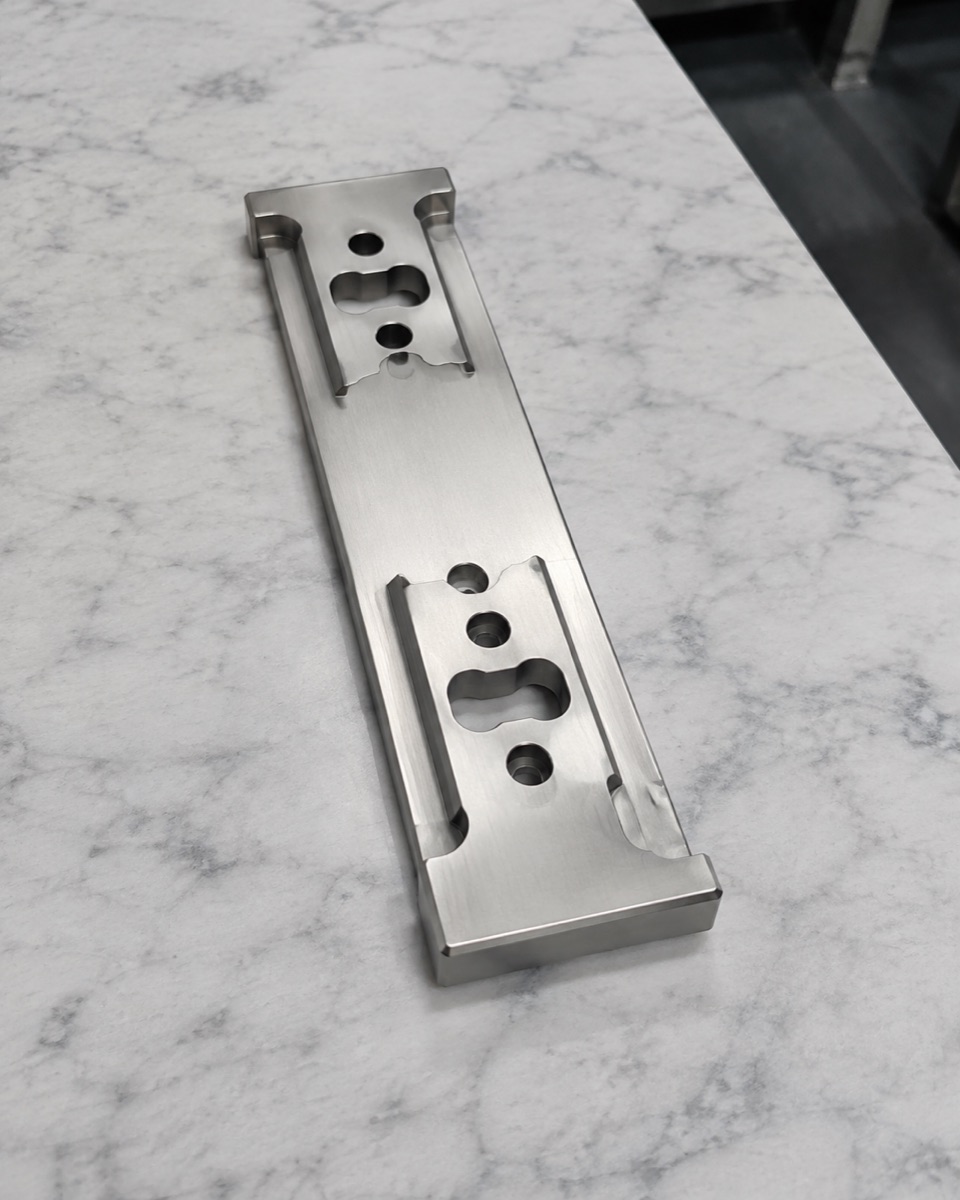
The long narrow body combines openings, mounting holes, side rails and local steps that must preserve clearance around the protected gear area.
AISI 304 Thin Features Need Controlled Cutting
AISI 304 is tough and prone to work hardening when tools rub or dwell. Long narrow features can also move under uneven clamping or heat, while window edges and hole exits tend to retain burrs.
Sharp tools, steady chip load, controlled support and staged finishing reduce heat and local distortion. Small cutters clean the irregular openings without forcing the narrow side rails.
Stabilize The Main Plane Before Openings And Holes
The route first establishes a stable base and outer reference, then roughs the profile and openings with material left for final cleanup. Hole positions, window contours, local steps and side features are finished from the controlled datum system.
Edge breaks are specified and applied consistently. Deburring must remove sharp material without enlarging holes, changing the opening profile or rounding surfaces needed for location.
Inspection Includes A Visual And Tactile Edge Check
First-article inspection covers overall size, free-state flatness, hole spacing, opening location, side-rail geometry and local steps. Edge quality is checked visually and by safe tactile review because a dimensional report alone cannot describe a sharp residual burr.
Passivation follows thorough cleaning and removal of embedded contamination. If a 72-hour neutral salt-spray requirement applies, the acceptance standard, corrosion rating and test timing must be agreed before production.
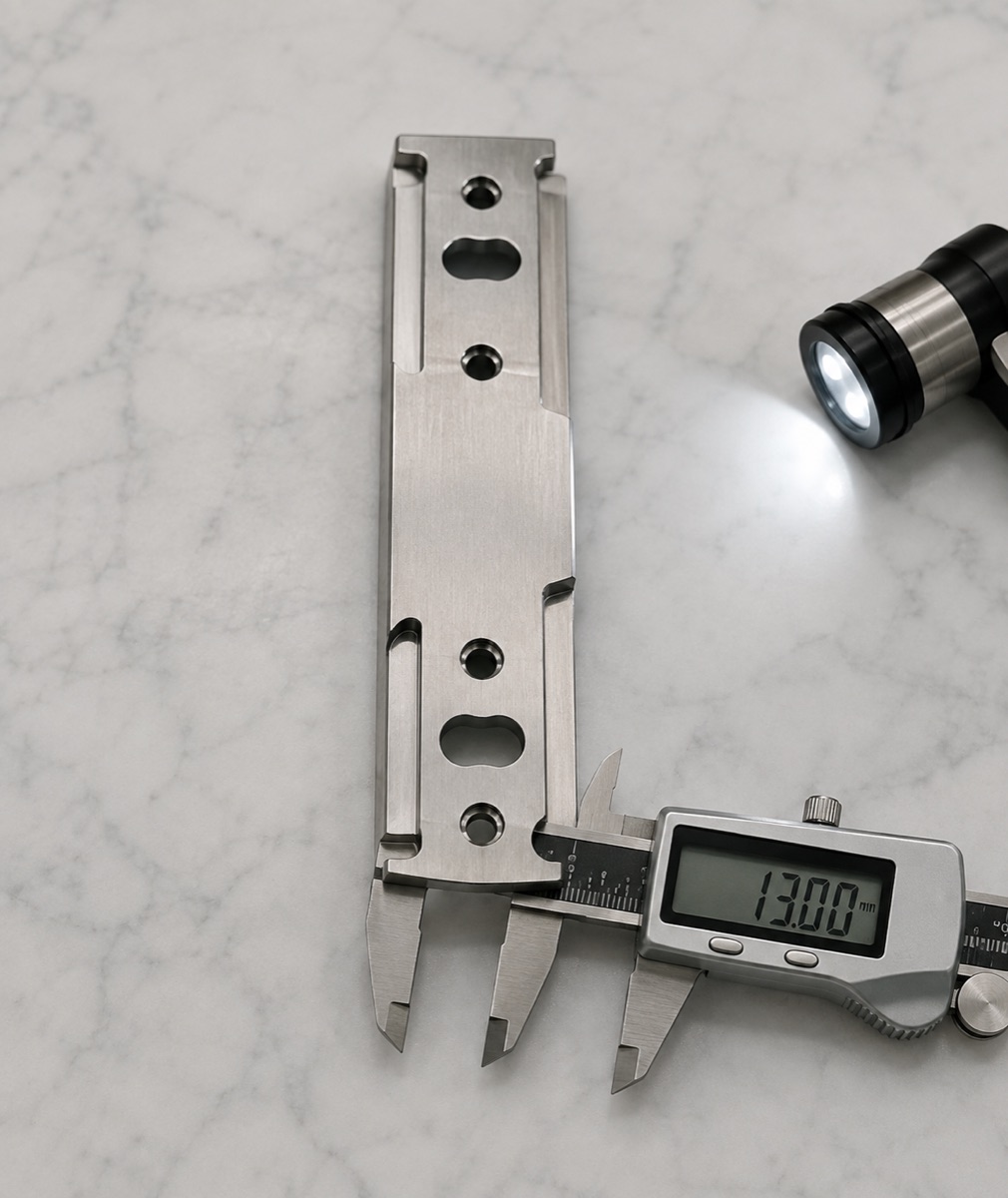
Dimensional checks are paired with visual and tactile edge inspection because burrs can damage adjacent components or cables.
Lead Time And Long-Slot Packaging Complete The Process
A typical reference plan is 5 to 8 working days for prototypes and 8 to 12 working days for small batches. Passivation, corrosion verification and expanded inspection can extend the confirmed schedule.
A long profiled foam slot prevents the narrow part from sliding or bending in transit. Openings, passivated surfaces and finished edges are kept away from hard contact and contamination.
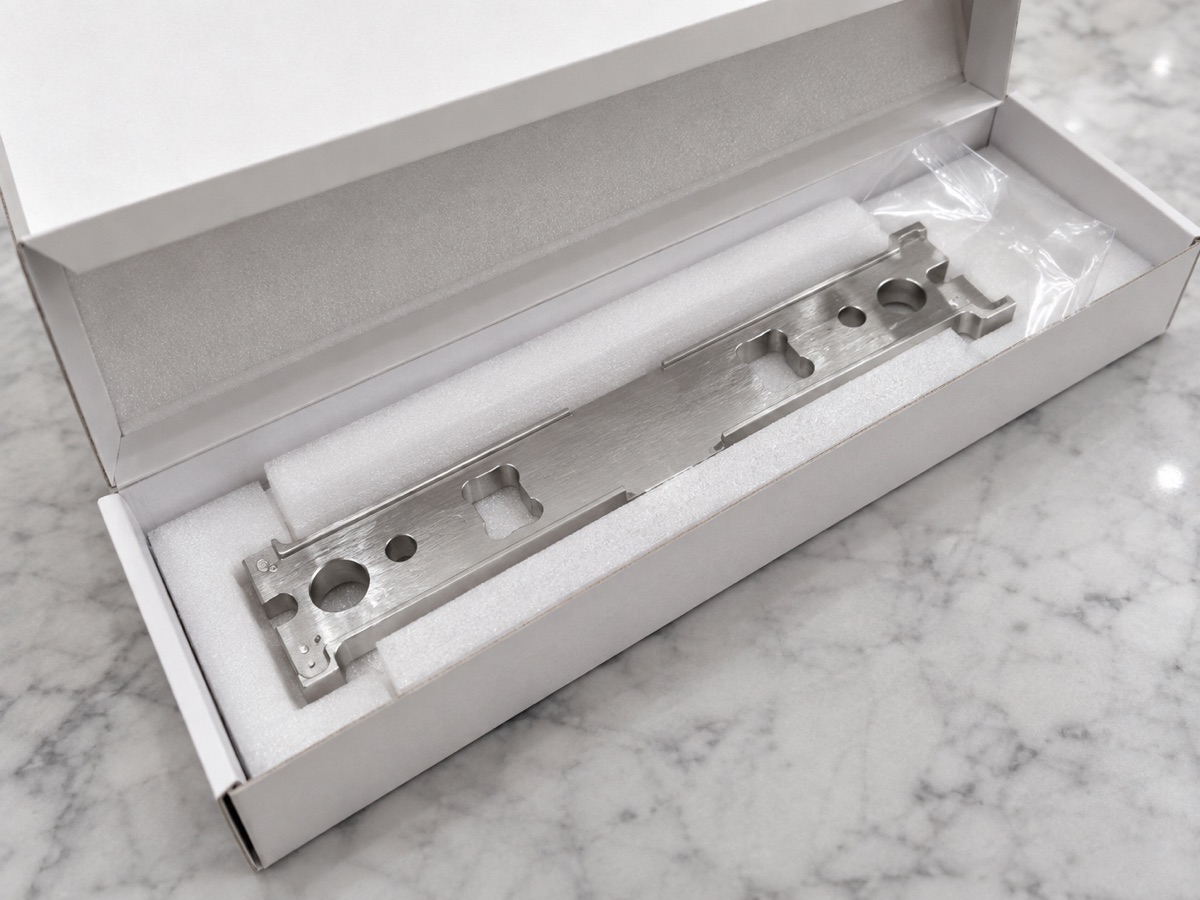
Profiled support limits movement and prevents the openings, passivated surface and narrow edges from contacting hard packaging.
Case Summary
The quality of this gear guard depends on combining AISI 304 machining, opening and hole control, careful deburring, passivation and protective packaging. That complete process turns a small cover into a reliable robot assembly component.
FAQ
Why is AISI 304 difficult to machine in thin guard features?
It can work harden when cutting becomes unstable, and narrow sections can deflect under clamping force or heat. Sharp tools and controlled support are important.
Is dimensional inspection enough for a protective guard?
No. Hole and opening positions matter, but edges must also be checked for burrs and sharpness that could affect cables, neighboring parts or safe handling.
Why passivate an AISI 304 machined part?
Passivation helps restore a clean corrosion-resistant surface after machining and cleaning. It does not replace proper deburring or removal of contamination.
How is the long narrow part protected during shipment?
A profiled foam slot limits movement, supports the part without bending and separates finished edges and passivated surfaces from hard packaging.
Ready to get a quote for your CNC machined parts?
Submit your engineering drawings to qiancj@oemach.com. We support prototype sampling and small-batch production with strict tolerance control.