
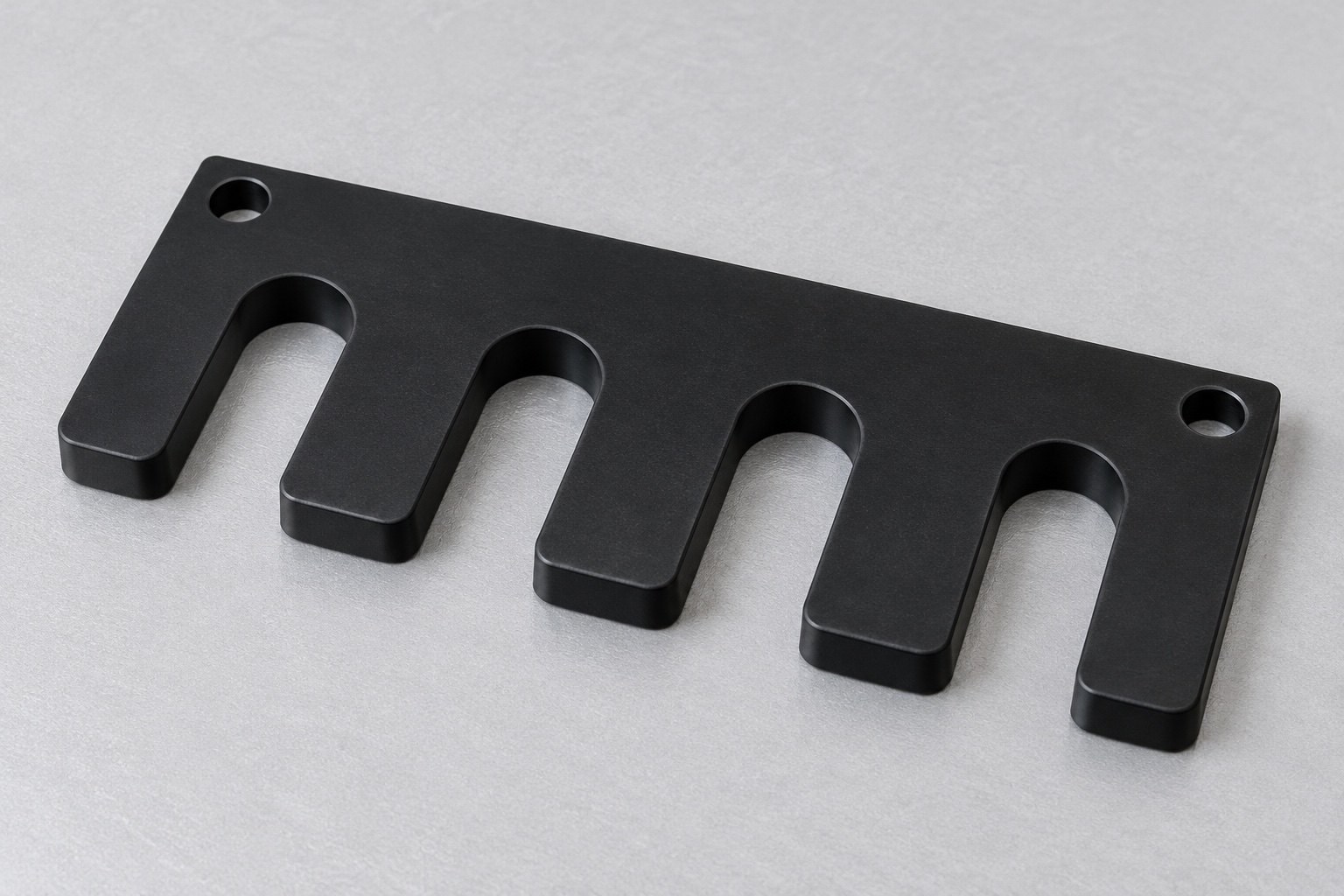
Representative proposed closed-tube comb
This representative example describes a proposed one-piece black POM-C positioning comb for exterior contact with closed tubes in medical laboratory equipment. The elongated plate has four open U slots, five blunt fingers and two plain through mounting holes in its solid rear strip. No tube, cap, fluid path, thread or metal insert is part of the illustration. No actual customer delivery, manufactured sample or measured record is described. Achieved tolerances, retention, tube-damage results, specimen integrity, assay performance, validated cleaning, sterile status and medical certification are not claimed as actual outcomes of this proposed manufacturing sequence.

Review tubes and the complete supporting station
The proposed order would begin with the released comb model and drawing, exact closed-tube family, supporting base, mounting hardware and installation revision. Allowed tube contact regions, entry direction and separate retention parts would be identified before choosing a route. Missing information would be clarified rather than inferred from nominal diameter. The comb would not be assumed to support weight, prevent escape or suit another tube family. Manufacturing acceptance, optional tube fitting and complete-station qualification would remain distinct responsibilities, preventing a simple open-slot concept from being presented as a validated specimen-handling system without relevant application evidence.
Keep black POM-C stock traceable
Material records would identify the approved grade, stock form, condition, lot and purchased final processes. The supplier would not substitute another black polymer or acetal variant based on visual similarity. Ensinger's general POM machining information would be processing background, not medical approval of this component. Blank preparation and allowance would account for the proposed holding sequence and remaining finger sections. Material identity would remain traceable through machining and packing. Disinfectant compatibility, quantified wear, cleanliness or biological properties would need separately agreed requirements and evidence rather than assumptions taken from a general material description.
Establish rear-strip and face references
Initial operations would establish approved references for the useful support faces, outside profile, mounting pattern and slot row. Holding would protect future contacts without relying on concentrated pressure to make the plate appear conforming. Chips would be removed before reorientation. The supplier would review how references transfer between operations instead of resetting each feature from a convenient raw edge. Final acceptance would address the agreed finished condition after relevant processes. A comb whose fingers looked aligned only while strongly restrained would not automatically satisfy the released drawing or establish contact with the actual tube and supporting base.
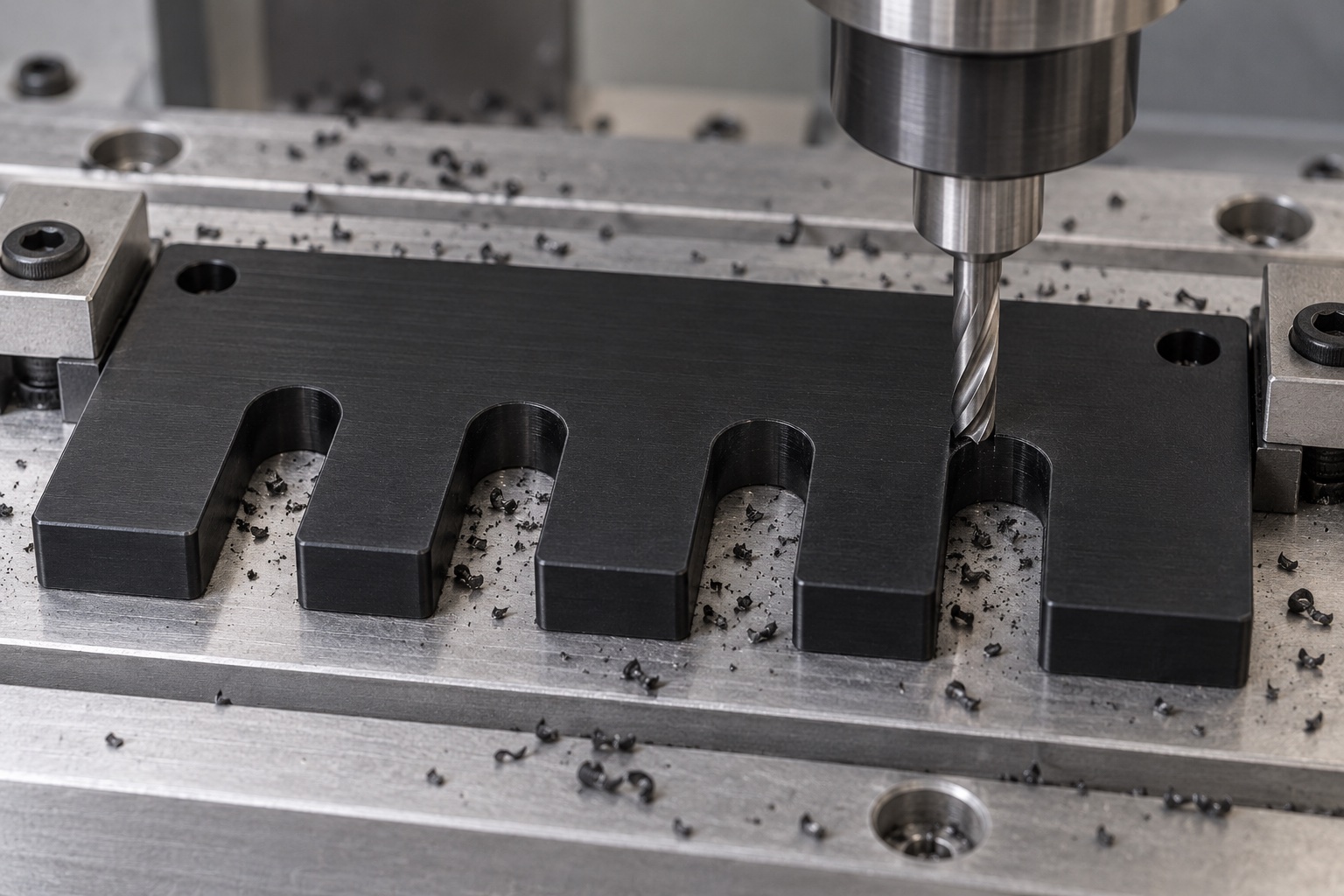
Machine four defined open U slots
Each slot would follow approved width, useful depth, root radius, entry and position relative to the accepted references. Tool access and remaining material between slots would be reviewed before production. The supplier would not enlarge one root or thin a finger to fit an unidentified tube. Model and drawing conflicts would be resolved before finishing. An open slot would not be accepted as a closed-bore feature solely because a pin entered its rounded end. Authorized changes would remain traceable in geometry and inspection documents rather than leave a hand-adjusted comb as a universal reference for later tube variants.
Produce the two rear mounting holes
The plain through holes would follow the released size, location and edge requirements. They would remain distinct from precision locating bores, insert seats or threads. Actual mounting hardware and useful contacts would be reviewed without choosing a screw from an illustration. If the station needed separate dowels or adjustment, those features would require their own controlled definition. The supplier would not add a slot or recess to correct one assembly observation. The required relationships between the holes, U-slot row and support faces would remain part of dimensional inspection rather than be inferred from a comb bolting to a panel.
Finish and clean the contact boundaries
The supplier would inspect mouths, roots, finger tips, hole exits and outside edges for attached material or unwanted sharp features. Approved edge breaks would preserve useful guidance, slot depth and pitch. Sanding to improve one tube fit would require authorized geometry review, not disappear as cosmetic finishing. Cleaning and final processing would match the purchased scope and protect the exact grade. A smooth black surface would not prove measured particles, validated disinfection or sterile delivery. Material lot, revision and adjustments would remain linked to the actual finished comb before dimensional acceptance and mechanical packing.
Inspect the related open-slot geometry
The proposed plan would map slot profiles, width, depth, pitch, mounting features, useful faces and required relationships to agreed methods. Support and measurement contacts would avoid a misleading finger-deflected condition. A gauge fitting one root or a caliper checking outside length would not establish every characteristic. Inaccessible regions would be discussed before acceptance. An illustrative CMM setup would not be reported as an achieved tolerance. Actual inspection records would refer to the real finished part, drawing revision and material condition rather than an unidentified tube or fixture-held appearance used as a substitute for the dimensional requirements.
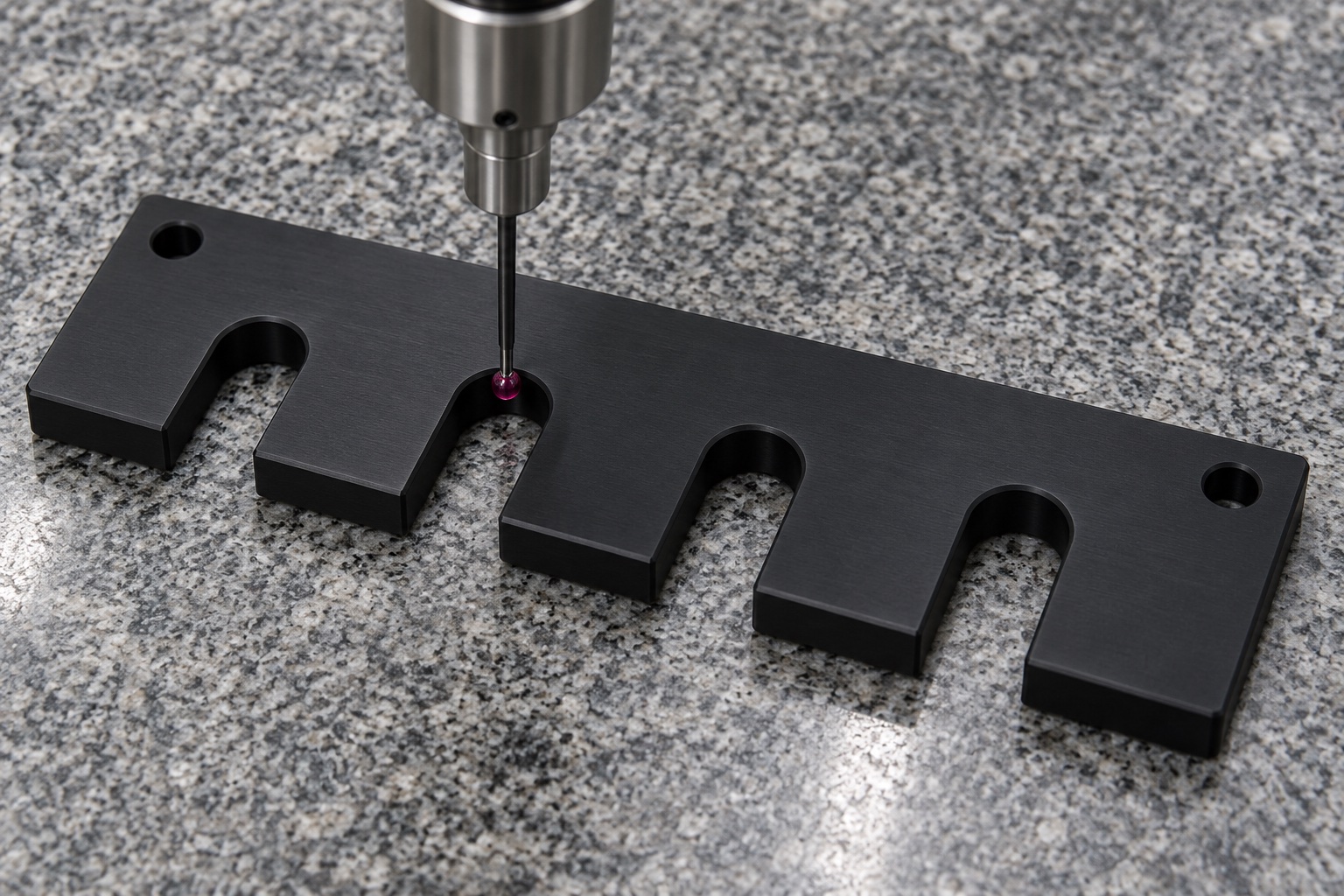
Create records without fictional customer results
The proposed first-part report would identify revision, material lot, numbered characteristics, methods and final condition. No values are supplied because this example contains no manufactured sample or actual measurement record. A real project would keep discrepancies and authorized changes traceable. Component conformity would not establish tube retention, specimen safety, cleaning validation or assay accuracy. Optional assembly observations and complete station evaluation would remain separate deliverables. This avoids turning a plausible CNC route into a fabricated customer acceptance, unsupported improvement claim or proof of medical laboratory performance that has not actually been measured and qualified.
Limit optional closed-tube fitting
An agreed trial could observe entry, intended body contact, slot spacing and access using identified comb, closed tubes, base and hardware revisions. The installation and separate retention arrangement would be recorded. Unexpected cap, label or body contact would be reviewed before modifying the comb or substituting another tube. Successful static fitting would not qualify transport, tipping resistance, absence of damage, contamination control or specimen integrity. Trial pieces would remain distinct from accepted production. Approved adjustments would enter revised documents before another order rather than become an informal reference for different tube suppliers or handling mechanisms.
Protect fingers and keep variants identifiable
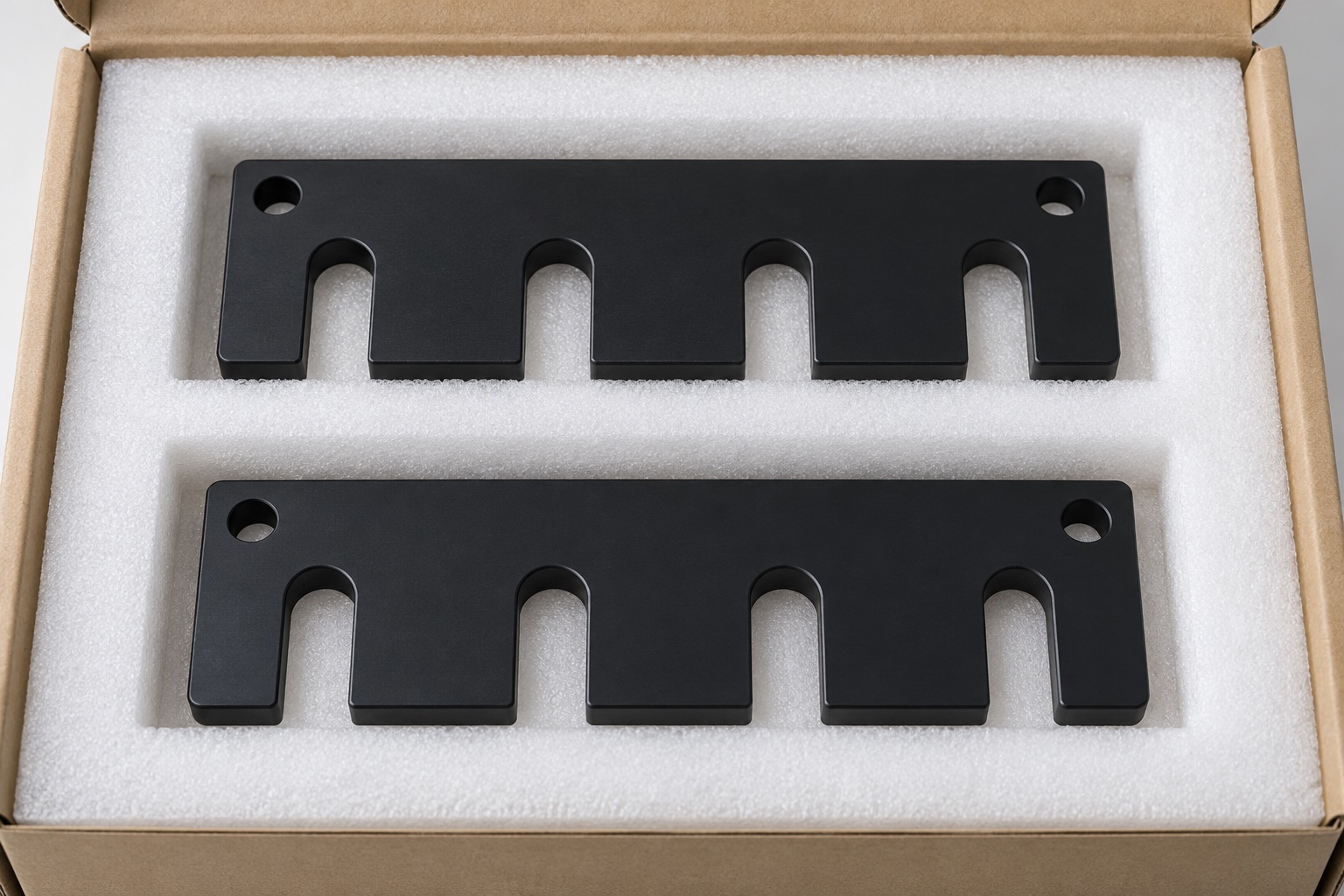
Finished combs would occupy separate pockets or sleeves sized to avoid bending fingers and the rear strip. Loose metal hardware would not strike slot roots or embed in useful contacts. Mechanical protection would not imply sterile supply or validated cleaning. Grade, lot, revision, final process and inspection status would accompany the shipment. Receiving checks would distinguish visually similar combs with changed slot width, pitch, depth or mounting pattern. These measures would preserve the accepted component before installation and the equipment team's independent tube-handling, cleaning and application evaluations within the actual medical laboratory station and approved tube configuration.
Maintain a tube-specific production baseline
The final package would preserve released geometry, exact tube family, allowed contact region, supporting and retention arrangement, mounting references, material evidence, final condition, inspection methods and packing scope. Approved prototype changes would become revised documents before repeat manufacture. Changes to labels, caps, tube supplier, gripper or base would trigger review even if the comb outline looked unchanged. This representative workflow defines a traceable custom polymer-machining project without inventing customer history, achieved tolerances or assay results, and without confusing a dimensionally conforming comb with a universally qualified medical laboratory tube carrier or specimen-handling system.
Manufacturer background reference: www.ensingerplastics.com.
FAQ
Is this a real customer-delivered comb?
No. It is a representative proposed CNC workflow with illustrative images. No customer delivery, manufactured sample or measured performance result is described. A real order needs approved documents, stock evidence, production records and actual dimensional acceptance observations.
Does the case include tubes or a support base?
No. The illustrated item is the isolated POM-C comb. Tubes, base, fasteners, grippers and retention components belong to separately identified assembly documents. Their function cannot be assumed from the shape or treated as included in this manufacturing example.
Can one pin check all four slots?
A pin can address selected characteristics within an agreed method, but not every entry, profile, depth, pitch or mounting relationship. The open-slot inspection plan must cover the actual controlled geometry in the defined final condition.
Does the example provide cleaning validation?
No. No validated cleaning, disinfection, particle or sterility result is supplied. A clean-looking black part and protective packaging do not demonstrate those properties. Any required application evidence must be separately specified and actually verified for the finished component.
Does a successful tube-fitting trial prove transport safety?
No. Static fitting is a limited observation using identified parts. Retention, motion, tipping, damage and specimen-handling suitability require separate evaluations of the complete station and actual service conditions. No such achieved result is claimed in this representative case.
What would another order review?
Review exact tube family, labels, caps, allowed contacts, slot geometry, mounting and support arrangements, gripper access, polymer grade and final process. Approved changes must enter controlled revisions, not remain in a hand-sanded prototype or another station's performance assumptions.

tanghangyun@oemach.com