
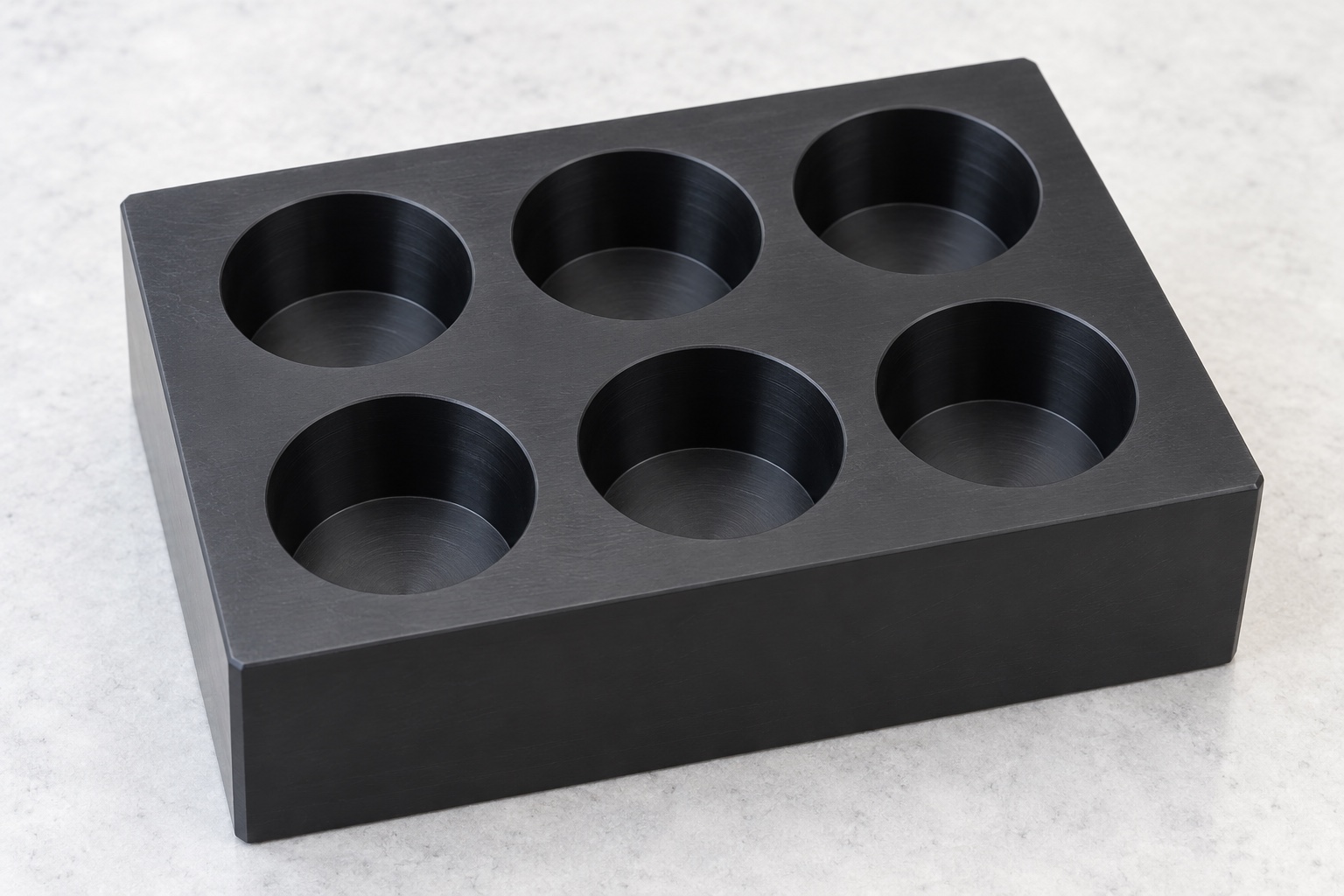
Representative proposed external-contact block
This example considers a proposed one-piece black POM block for approved closed-tube cap exteriors in a defined medical laboratory equipment workflow. Its illustrative geometry is a rectangular block with six cylindrical blind pockets in two rows of three. No tube, open cap, specimen or fluid is illustrated. Actual orientation and contact limits would follow approved documents. This is a representative CNC workflow, not a customer delivery or measured fixture. No achieved tolerance, contamination result, specimen integrity, closure security, sterile status, medical certification or validated laboratory performance is claimed as an actual result.

Define the closure and orientation first
The proposed order would start with controlled block geometry, exact tube and cap information, approved closure state, orientation, loading sequence and inspection requirements. The review would identify permitted exterior contacts and any no-contact regions. Missing workflow or interface information would be clarified before manufacture. An unidentified cap sample would not define the full scope. Component milling and optional fit demonstrations would remain separate from contamination, cleaning and specimen-handling assessments assigned to the responsible laboratory equipment team for the actual closed-tube arrangement, operating procedure and intended medical application.
Preserve the approved polymer identity
The material package would specify the accepted POM grade, stock form and documentation. Blanks would remain linked to their lot through milling, finishing and shipment. Black color would not establish equivalence to another plastic or modified grade. The supplier would review allowance and support beneath the blind pockets before choosing the route. Substitutions would require authorization. Material documentation would identify the component material, not establish cleaning compatibility, contamination transfer or suitability for every tube and cap combination that could be placed in a six-pocket block within a medical laboratory.
Establish the base and pattern references
Initial machining would create the approved base and holding references used to locate the six-pocket pattern. The sequence would consider material removal, remaining base thickness and fixture transfers so the pattern remained related after release. Chips at locating contacts would be controlled before reorientation. The supplier would avoid accepting dimensions only while the polymer block was compressed against a fixture. Intermediate observations could support process planning, but final inspection would address the agreed conditioning and support state after all relevant operations and purchased final processing had been completed.
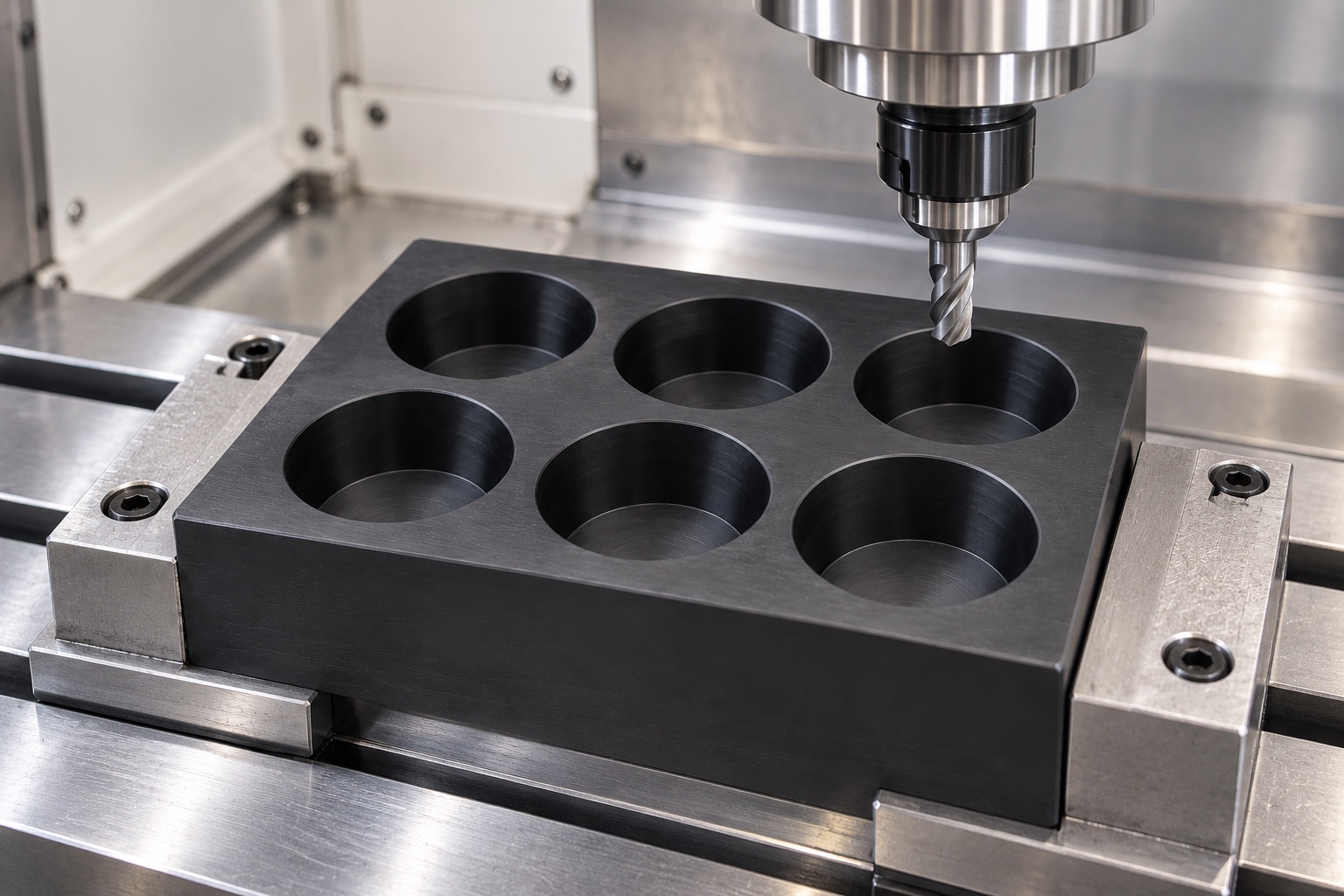
Machine six defined blind pockets
Pocket diameters, depths, bottoms and transitions would follow the approved contact definition rather than the apparent dimensions of one loose cap. The supplier would review tool access and any permitted internal radius before production. No pocket would be widened or deepened merely to make a sample appear stable. Authorized adjustments would enter controlled documents. The pockets would remain defined external mechanical contacts, not evidence of acceptable contamination control, specimen protection or cap retention under operating conditions in the complete medical laboratory equipment workflow and handling process.
Keep contact and removal envelopes explicit
The approved closed-tube assembly and removal tool would define required clearances around pocket mouths and neighboring positions. The supplier would not add an improvised extraction slot or change the tube orientation to improve a trial. Any required position marking would follow approved information rather than arbitrary labels. Model and drawing discrepancies would be clarified before machining. Accepted modifications would remain traceable so future fixtures did not depend on a particular sample, unrecorded gripper adjustment, changed cap label or undocumented handling practice that altered external contacts or specimen identification procedures.
Finish internal boundaries conservatively
The finishing sequence would examine pocket mouths, internal transitions and outer edges for attached material or unwanted sharp features. Removal would preserve useful contact and specified no-contact regions. Cleaning would follow the purchased polymer-compatible scope without introducing an unapproved chemical or surface treatment. A visually clean block would not establish measured particles, microbial status, contamination transfer or sterile delivery. Any later process would need agreement and relevant final-state inspection. Accepted surfaces would be protected during handling so finishing did not hide damaged geometry or change the released contact boundaries before first-part checks.
Plan accessible pocket-depth inspection
The inspection plan would identify methods for all six pocket sizes and depths, their spacing, remaining base features and specified relationships. Support, conditioning and relevant measurement contact would be recorded. A cap-fit observation and outside-size measurement would not cover every controlled characteristic. Ambiguous or inaccessible requirements would be resolved before production instead of replaced by a favorable fit demonstration. The supplier and purchaser would agree how each pocket was checked in the final component state, preserving a traceable distinction between dimensional results and observations from an optional closed-tube assembly trial.
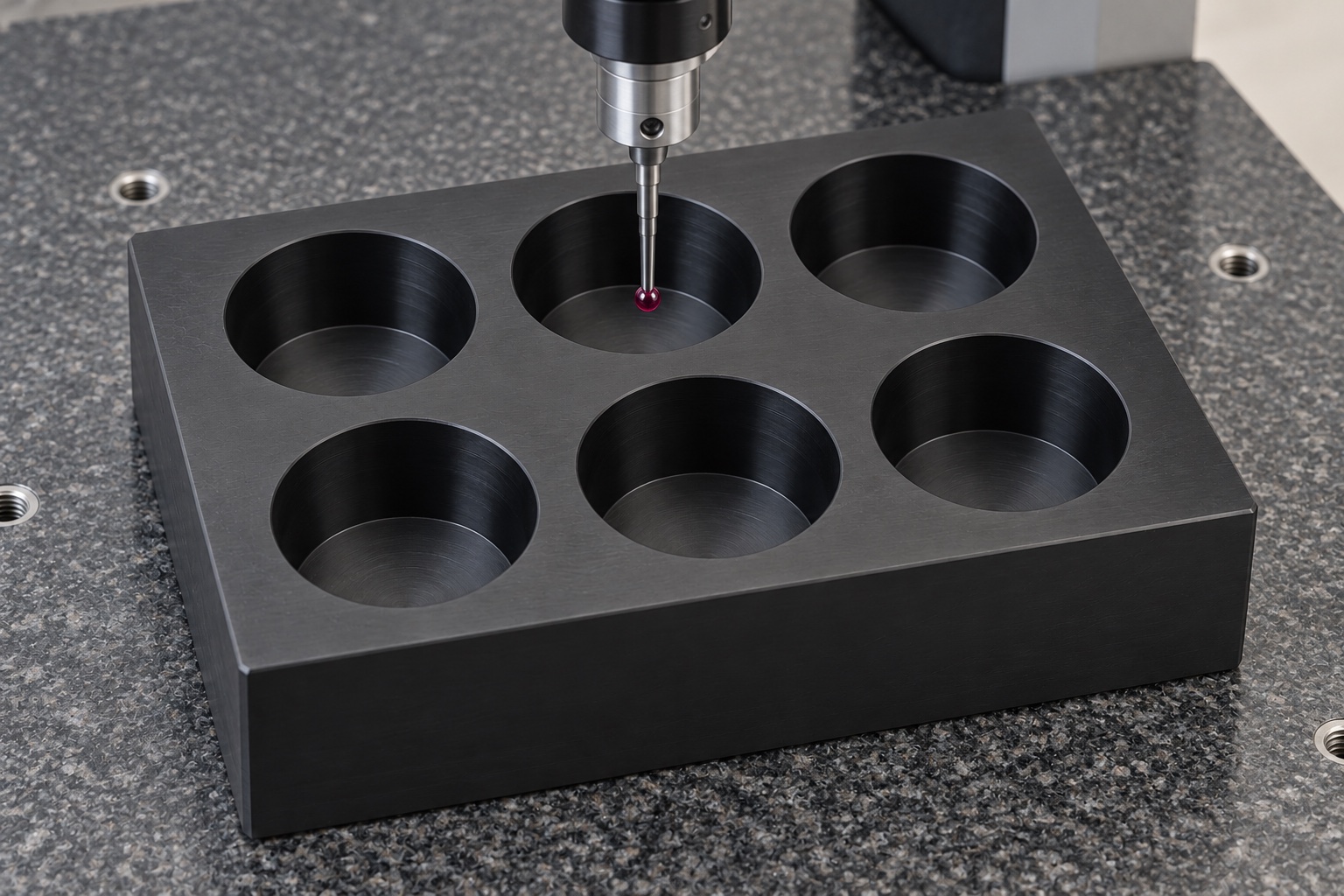
Prepare first-part evidence without values
The proposed report would identify drawing revision, material lot, numbered requirements and agreed inspection methods. No numerical results are supplied because this representative example has no manufactured sample or measurement record. Component evidence would not demonstrate contamination control, carryover, closure security or specimen integrity. Any nonconformance and authorized change would remain traceable. A closed-tube assembly fitting one pocket would not justify omitting checks on other positions or claiming a validated laboratory process. The final record would identify the mechanical acceptance scope separately from independent cleaning and workflow evaluations.
Define a limited closed-tube fit trial
An agreed trial could examine insertion, seating, tool access and removal with identified approved tube and cap revisions. The closure state, orientation and exact checks would be documented. Unexpected contact would be resolved before modifying the block or changing the workflow. A successful mechanical demonstration would not qualify contamination transfer, specimen integrity, cap security or identity management. Trial blocks would remain distinct from accepted production. Their observations would enter controlled records rather than becoming an informal gauge or approval for a different cap, tube orientation or medical laboratory process introduced in a later order.
Package pockets and variants separately
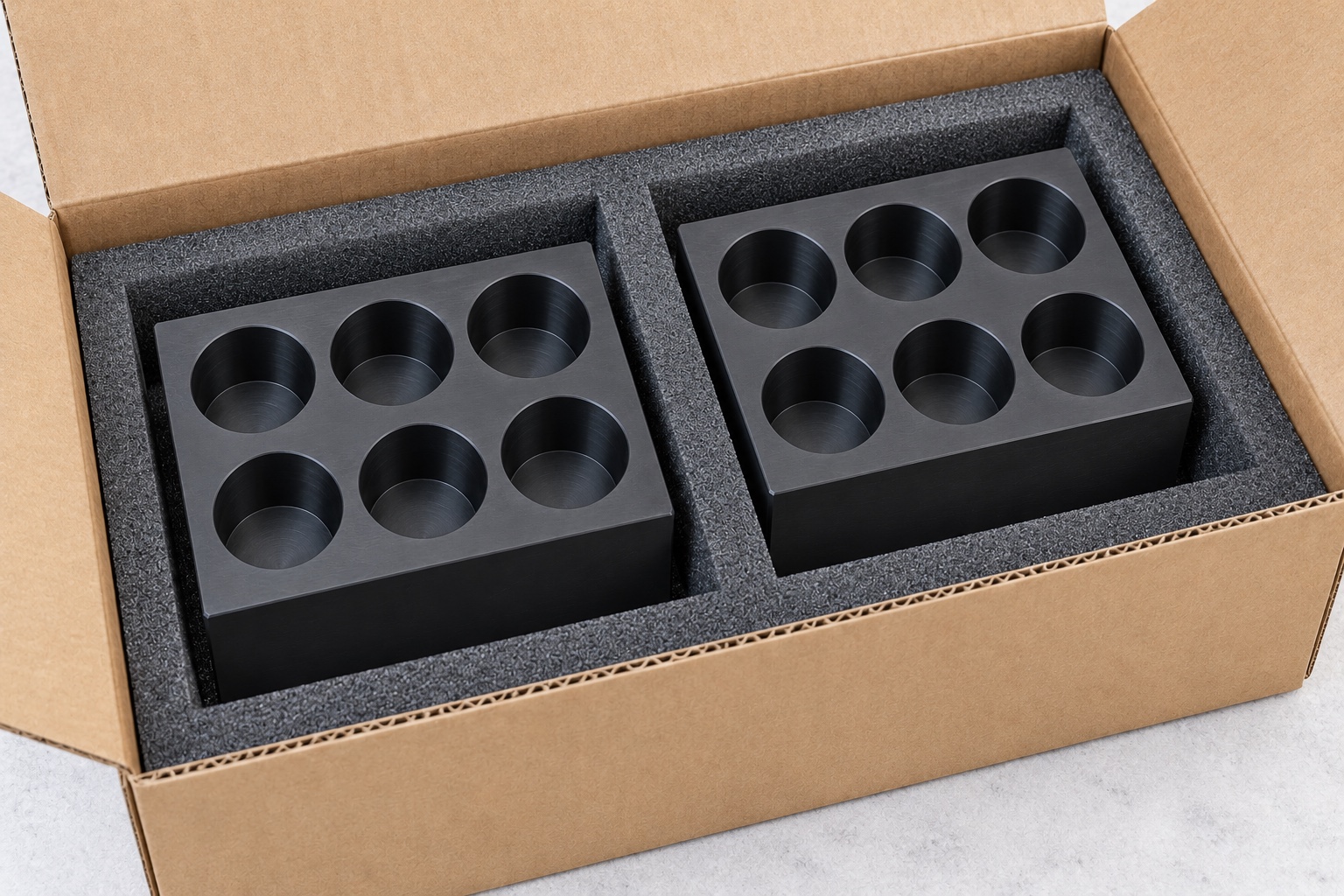
Finished blocks would be individually protected so neighboring edges, loose hardware and packing debris could not enter the pockets or strike accepted contact regions. Packaging would avoid excessive compression and match the agreed cleaning scope. Protective bags would not imply sterile supply. Grade, material lot, revision, inspection status and any relevant variant identity would accompany the shipment. Receiving personnel could distinguish released fixtures from trial blocks with different pocket diameters, depths or cap assignments before the parts entered the laboratory equipment process and its independently controlled cleaning and handling procedures.
Retain a closure-specific production baseline
The proposed baseline would preserve geometry, approved closed-tube orientation, cap-exterior contacts, polymer evidence, milling sequence, final condition and inspection scope. Repeat orders would review changed caps, labels, tube configurations, handling tools and cleaning procedures before reusing observations. Component acceptance would remain separate from process validation. This case explains how a CNC supplier could document a pocketed laboratory fixture without inventing a customer delivery, achieved tolerance, contamination test, sterile status, specimen-integrity result or medical certification for an illustrative black POM block and an unspecified complete laboratory workflow.
Manufacturer background reference: www.ensingerplastics.com.
FAQ
Is this a validated laboratory fixture?
No. It is a representative proposed machining example without a customer delivery or measured sample. No achieved tolerance, contamination result, closure security, specimen integrity, sterile status or medical certification is presented as an actual result for the illustrated block.
Does the example permit open caps or exposed specimens?
No. The proposed scope concerns approved exteriors of closed-tube caps in a defined orientation. Other contacts and workflows require separate controlled requirements and assessment by the responsible laboratory team, not an assumption based on six empty pockets.
Can an extraction slot be added informally?
No. Changes affecting pocket contact or access need authorization and revised documents. Record the actual closed-tube assembly and interference first; an improvised slot or changed orientation should not become a production instruction for subsequent fixtures.
What would the first-part report establish?
It would document agreed component characteristics with identified revision, material, methods and final condition. It would not independently establish contamination control, carryover, specimen integrity, closure security or validation of the laboratory's complete cleaning and handling procedure.
May a closed-tube fit demonstration be included?
Yes, when tube, cap, closure state, orientation, revisions and exact checks are agreed. Keep insertion and removal observations separate from contamination and process evaluation, resolving unexpected contact before approving a change to the fixture or workflow.
What should be reviewed before another batch?
Review tube and cap variants, labels, orientation, external contacts, pocket pattern, handling tools, polymer and cleaning requirements. Preserve controlled revisions rather than copying an adjusted block or transferring another laboratory process's specimen-integrity and cleanliness claims.

tanghangyun@oemach.com