
A curved ABS cover may not carry the main robot load, but it directly affects assembly quality and first visual impression. Edge warpage, misplaced bosses or scratches on the black surface become obvious as soon as the joint is assembled.
For this project, OEMach evaluated the cover as an assembly component rather than a standalone plastic part. The control plan linked the curved outline, thin perimeter, mounting bosses, hole positions and cosmetic requirements to the neighboring housing and internal module.
Project Snapshot
| Item | Project detail |
|---|---|
| Application | Robot joint cover and internal-structure protection |
| Material and appearance | ABS with a black cosmetic finish defined for the prototype objective |
| Key features | Curved cover, thin perimeter, three mounting bosses, locating edge and screw holes |
| Control focus | Outline, wall thickness, boss position and height, warpage, assembly gap, scratches and packaging |
Start With The Assembly Boundary
The part is a shallow curved cover with locating edges and mounting bosses on the inside. Its job is to cover, clear and fasten around the joint, so the outer boundary and the relationship to nearby parts matter as much as the individual dimensions.
Before manufacturing, OEMach reviews where the cover meets the adjacent shell, how the bosses align with screws and whether the internal module needs clearance. This identifies which edges control the visible gap and which surfaces can accept normal process variation.
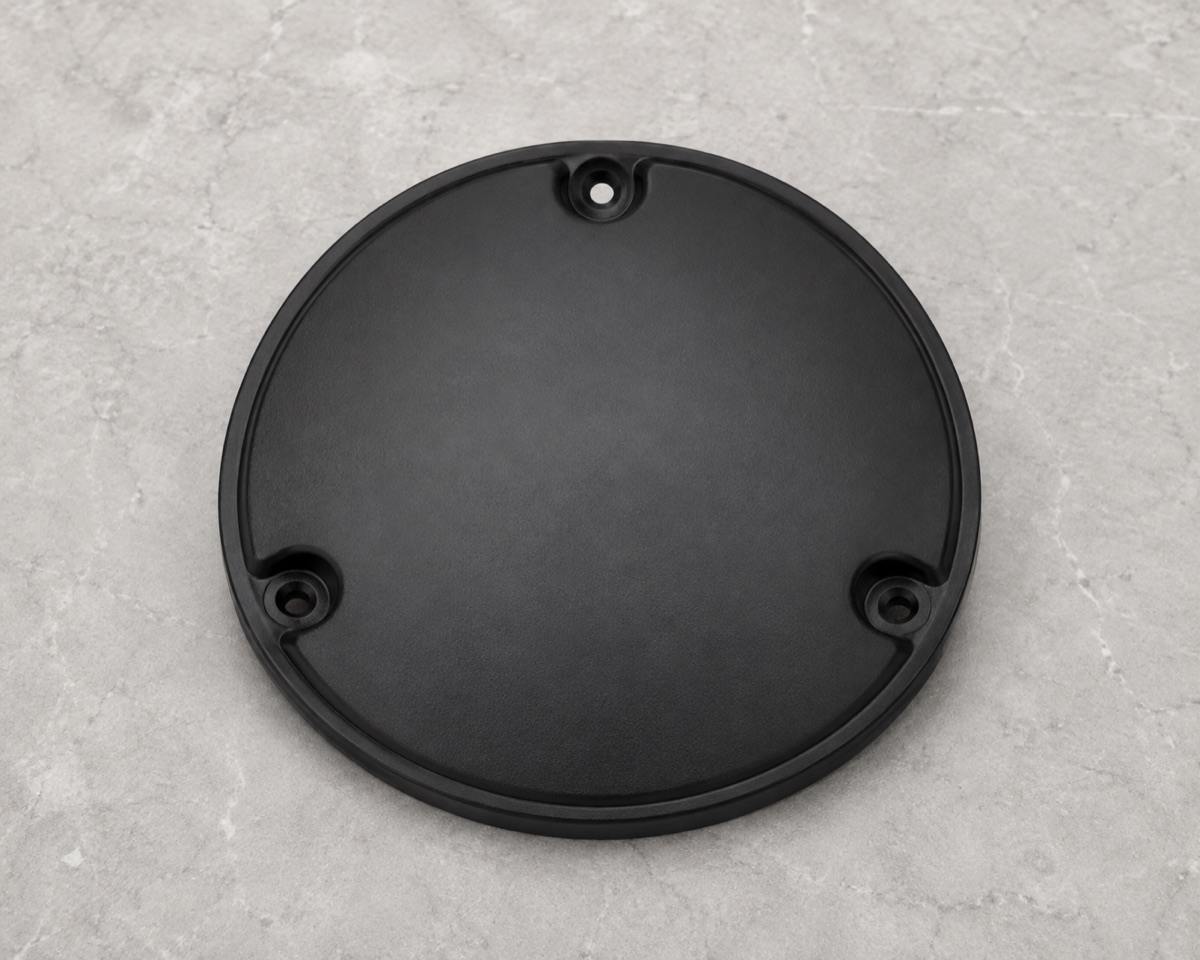
The curved profile, thin perimeter and mounting bosses must work together so the cover closes cleanly against adjacent robot components.
Thin Walls And Mounting Bosses Create Coupled Risk
Thin curved walls can relax after machining or finishing. The bosses concentrate local stiffness and locking force, so an unstable boss position or uneven boss height can pull distortion into the cosmetic face during assembly.
Light clamping, distributed support and incremental material removal help limit local stress. Hole-mouth finishing must also stay controlled; an excessive chamfer can reduce the effective boss height or leave a visible white edge on black ABS.
The Process Route Must Support The Prototype Goal
For a fit-check prototype, the priority is the cover outline, locating edge, boss pattern and contact gap. If the same sample will be used for an appearance review, gloss level, texture, color route and scratch resistance need to be agreed before finishing.
Black ABS can be delivered as molded-color material or with an additional coating or texture process. These options have different effects on lead time, color consistency, durability and cost, so a metal-part finish note should not be copied directly onto a plastic cover.
Inspect The Cover Close To Its Real Assembly State
Hole spacing alone does not predict whether the cover will sit correctly. Inspection should include the curved outline, edge height, wall thickness, boss location, boss height, free-state warpage, scratches and stress whitening around holes.
A simulated fastening check adds useful evidence. The cover is lightly secured in a representative pattern and then reviewed for edge lift, uneven gap or visible distortion. This is closer to customer use than measuring one edge on a flat plate.
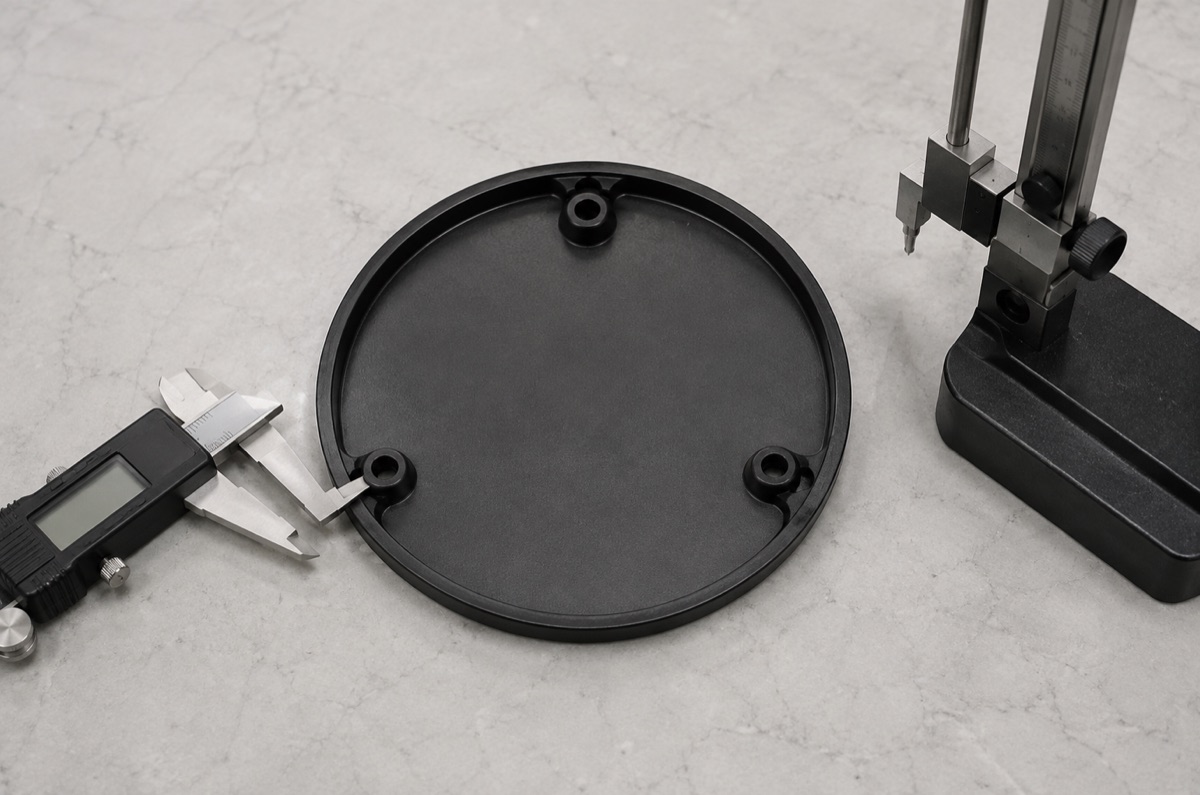
Boss position, boss height, wall thickness, warpage and the free-state edge profile are checked before an assembly trial.
Lead Time And Cosmetic-Surface Protection
ABS curved-shell prototypes are generally evaluated at 4 to 7 working days, while small batches are planned at approximately 7 to 12 working days. Coating samples, texture approval or scratch testing can extend the schedule and should be separated from a basic fit-check target.
Each part is located in foam so the curved surface and thin perimeter do not carry shipping loads. Clearance around the bosses reduces the risk of cracking or permanent deformation, while final cleaning and visual inspection protect the customer's first impression when the package is opened.
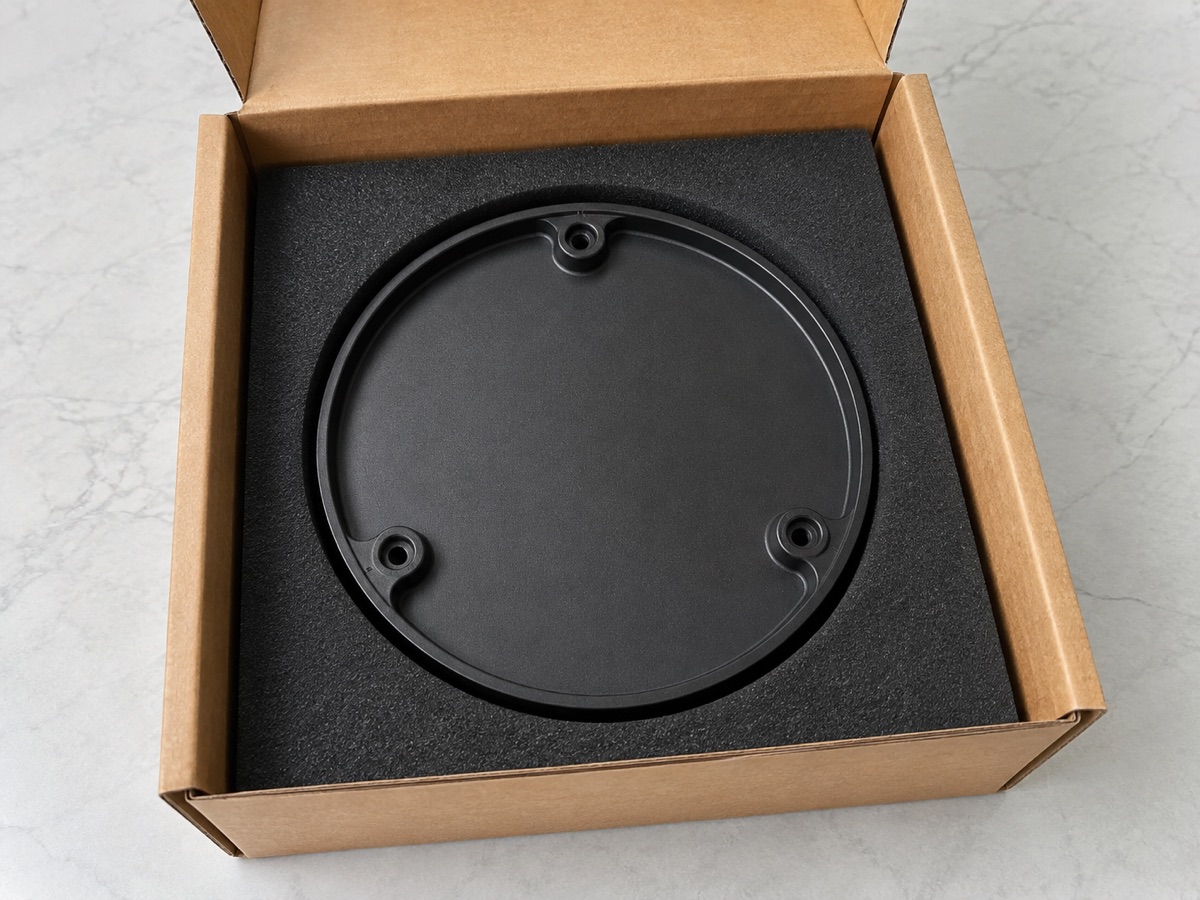
The foam supports the part without loading the curved cosmetic face, thin edge or mounting bosses during transport.
Case Summary
This ABS robot cover case shows that dimensional inspection is only the starting point. Reliable delivery depends on controlling the curved outline, bosses, assembly gap and black appearance as one connected objective, then protecting that result through packaging.
FAQ
Why should an ABS robot cover be checked in a fastened condition?
Boss height and screw force can pull a thin cover out of shape. A light simulated fastening check reveals edge lift and gap variation that may not appear in free-state measurements.
Which dimensions are most important for a curved ABS shell?
The priority normally includes the assembly outline, locating edge, boss position and height, wall thickness, warpage and the visible gap to adjacent parts.
Does a black finish need to be defined before prototyping?
Yes. Material color, coating, texture and matte level affect appearance, scratch resistance, lead time and cost, so the intended review standard should be agreed early.
Ready to get a quote for your CNC machined parts?
Submit your engineering drawings to qiancj@oemach.com. We support prototype sampling and small-batch production with strict tolerance control.