
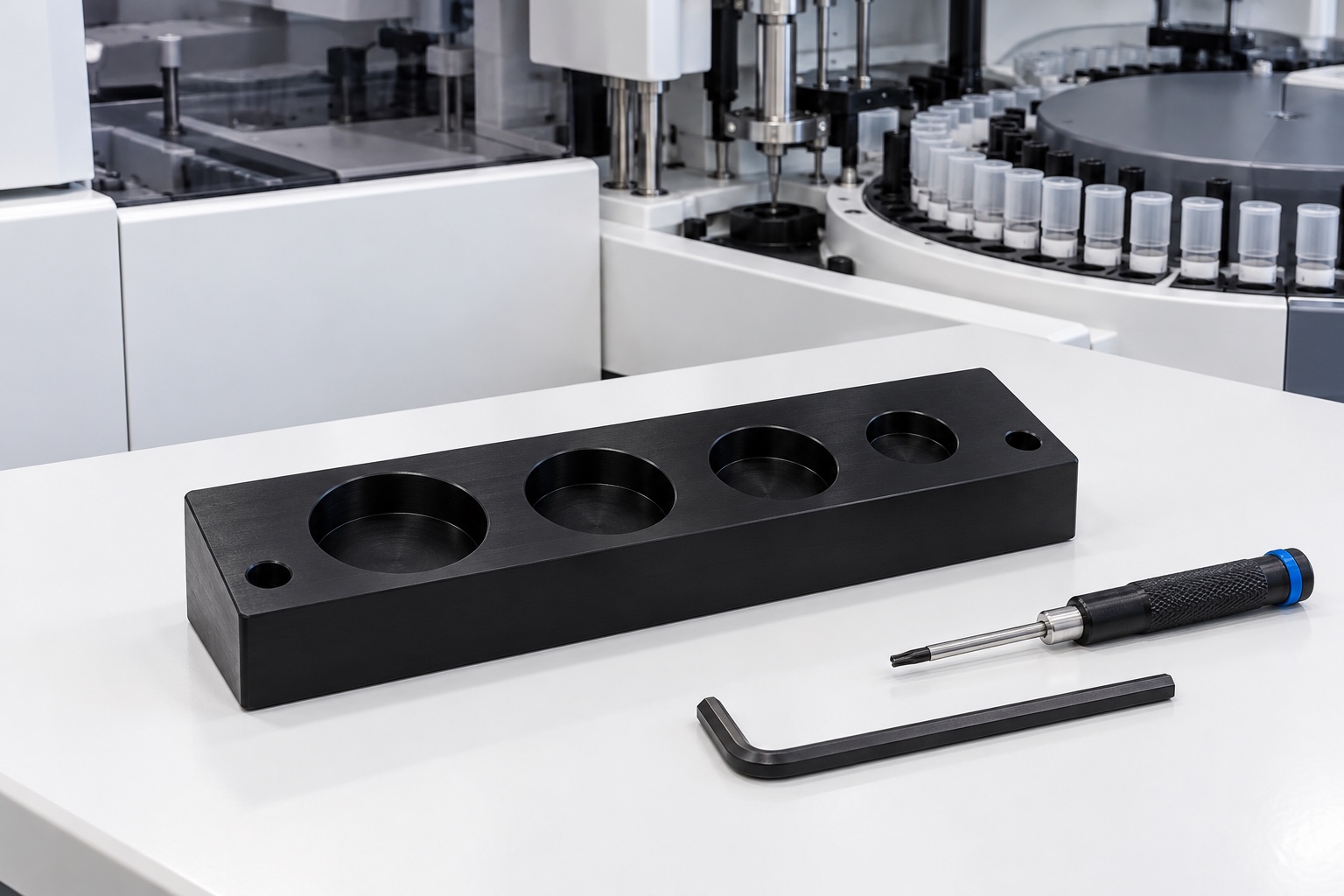
A representative proposed service-tool nest
This example considers a proposed one-piece black POM holder for medical analyzer maintenance tools. It has a long rectangular base, four circular blind pockets of different diameters in one row and two mounting clearance holes. It illustrates a possible CNC workflow, not an actual customer delivery, sterile instrument tray or validated tool-management system. Images show concepts rather than measured production results. Approved project documents would define tools, pockets, material and acceptance requirements. No achieved tolerance, retention force, cleaning result, inventory-control performance or medical equipment certification is claimed for this proposed organizer.

Review approved tool and installation information
The proposed order would begin with controlled geometry, actual maintenance-tool identities and contact envelopes, retrieval requirements, mounting arrangement and inspection deliverables. The review would distinguish intended contacts from clear regions and identify whether tools merely rested in pockets or required another retaining arrangement. Missing tool or access information would be clarified before costing and manufacture. A mixed set of samples would not define all requirements. The purchased scope would separate component machining, optional fit demonstrations and independent maintenance, retention or tool-accountability procedures assigned to the responsible equipment-service program.
Preserve the specified polymer identity
The material order would identify the actual approved black POM grade, stock form and documentation. Lot identity would remain associated with cut blanks through machining, finishing and shipment. A similar-looking plastic offcut would not automatically be accepted as equivalent. The supplier would review stock allowance and base support before selecting the route. Any proposed substitution would need approval before use. Datasheet properties would not be converted into measured durability or cleaning results for the finished holder, and material identity alone would not establish suitability for every medical equipment maintenance environment or tool contact.
Establish the base and pocket references
Initial operations would establish the approved base and locating references needed to position the four pockets and mounting holes. Broad workholding would preserve those relationships without forcing the block into an artificial shape. Chips at fixture contacts would be controlled before transfers. The supplier would consider how material removal changed support across the long component. Intermediate checks could confirm the route but would not replace final acceptance in the agreed condition. The goal would be repeatable released geometry rather than an apparently straight sample held flat by excessive fixture pressure during inspection.
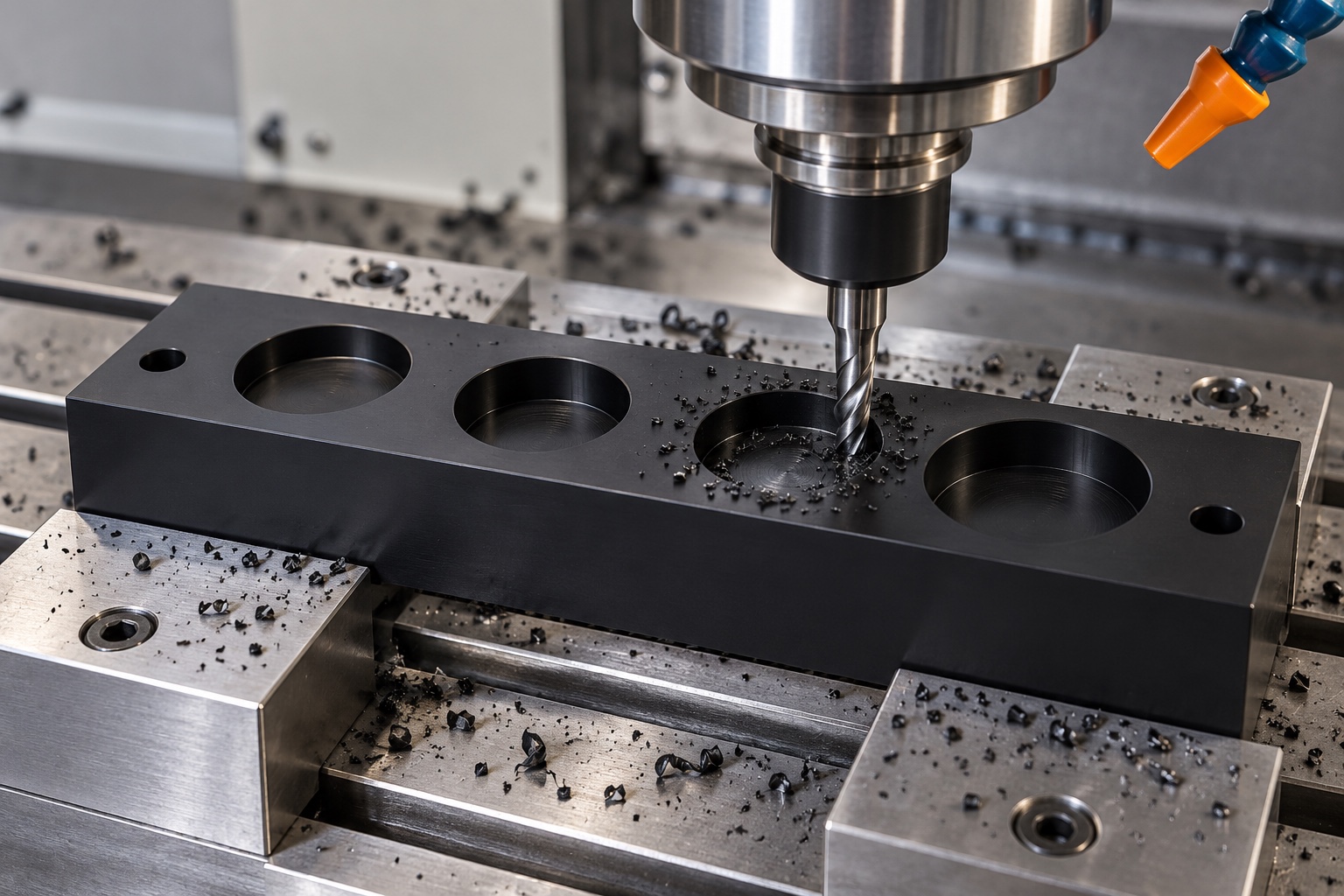
Machine the four controlled blind pockets
Each pocket's diameter or profile, depth, floor and position would follow the approved drawing and tool-envelope information. Cutter access and internal transitions would be reviewed before production so an unavoidable radius did not become unexpected contact with a tool. Any proposed relief would require design approval. The supplier would not deepen or widen a pocket informally to accept an unidentified service driver. Authorized changes would enter controlled geometry and inspection documents. The manufacturing route would preserve the difference between dimensional acceptance and assumptions about tool retention or the maintenance program's actual handling procedures.
Preserve retrieval clearance and mounting
The row arrangement, exposed tool position and two mounting holes would follow the approved installation references. The supplier would review retrieval access and fastener seating without inventing a finger recess, substitute screw or extra adhesive. A tool that could be removed from one loose pocket would not verify the complete mounted arrangement. Conflicting model and drawing requirements would be clarified before production decisions. Any accepted change would be recorded so subsequent batches would not depend on an undocumented organizer, a particular operator's technique or a sample tool that differed from the approved set.
Finish entrances and floor transitions
The finishing operation would inspect pocket entrances, floor corners, mounting-hole exits and outside edges for attached material and unwanted sharp transitions. Removal would preserve defined contacts and clearances instead of indiscriminately rounding every feature. Uncontrolled scraping, thermal smoothing or solvent treatment would not be used to hide tool marks or create an acceptable sample fit. Markings would remain in authorized areas. Cleaning would follow the purchased scope and a damaged pocket would remain a component issue. Visual appearance would not establish drainage, drying, disinfection, sterilization or a quantified cleanliness result.
Agree the actual measurement condition
The inspection plan would define base support, functional references, measuring force and any necessary conditioning for the selected polymer. Methods would address pocket profiles, depths, floor relationships and mounting geometry before production. Outside dimensions and four isolated diameters would be insufficient if other controlled features defined the tool arrangement. Free-state requirements would not be replaced by force-flattening the block. An installed or tool-fit check would have its own separately defined conditions and meaning, rather than silently replacing unloaded component inspection or inaccessible drawing requirements with a successful demonstration.
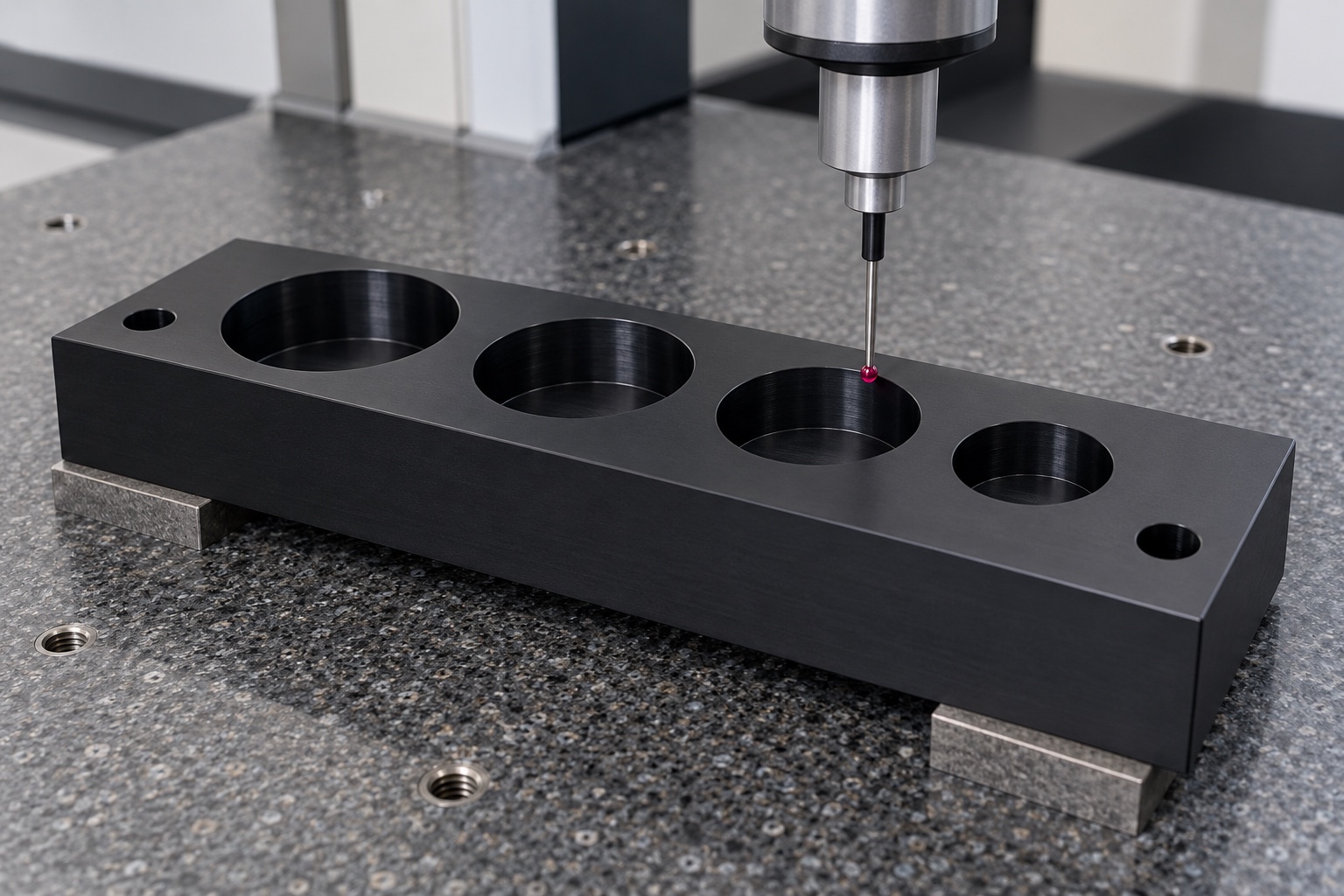
Prepare traceable first-part evidence
The report would identify approved revision, material lot and numbered characteristics using the agreed inspection methods and support conditions. No numerical results are supplied because this representative example has no manufactured sample or measurement record. Material and dimensional evidence would support acceptance within the purchased component scope only. It would not demonstrate retention during movement, inventory completeness, contamination separation or service safety. Those matters belong to the responsible maintenance program and its actual procedures. An ambiguous pocket requirement would be clarified before production rather than treated as accepted because a tool appeared to sit upright.
Define an optional tool-fit demonstration
An agreed demonstration could check insertion, resting contacts, retrieval and identified clearances with the approved tools and mounted arrangement. The record would identify tool, cap, holder and installation revisions. Unexpected contact would be documented before modifying the block or substituting a tool. A successful demonstration would not qualify retention, cleaning, tool accountability or clinical use. The trial holder would remain traceable and distinct from accepted production components. Its observations would not become a universal gauge or an undocumented replacement for drawing-defined acceptance when the tool set changed later.
Package empty pockets and protect the base
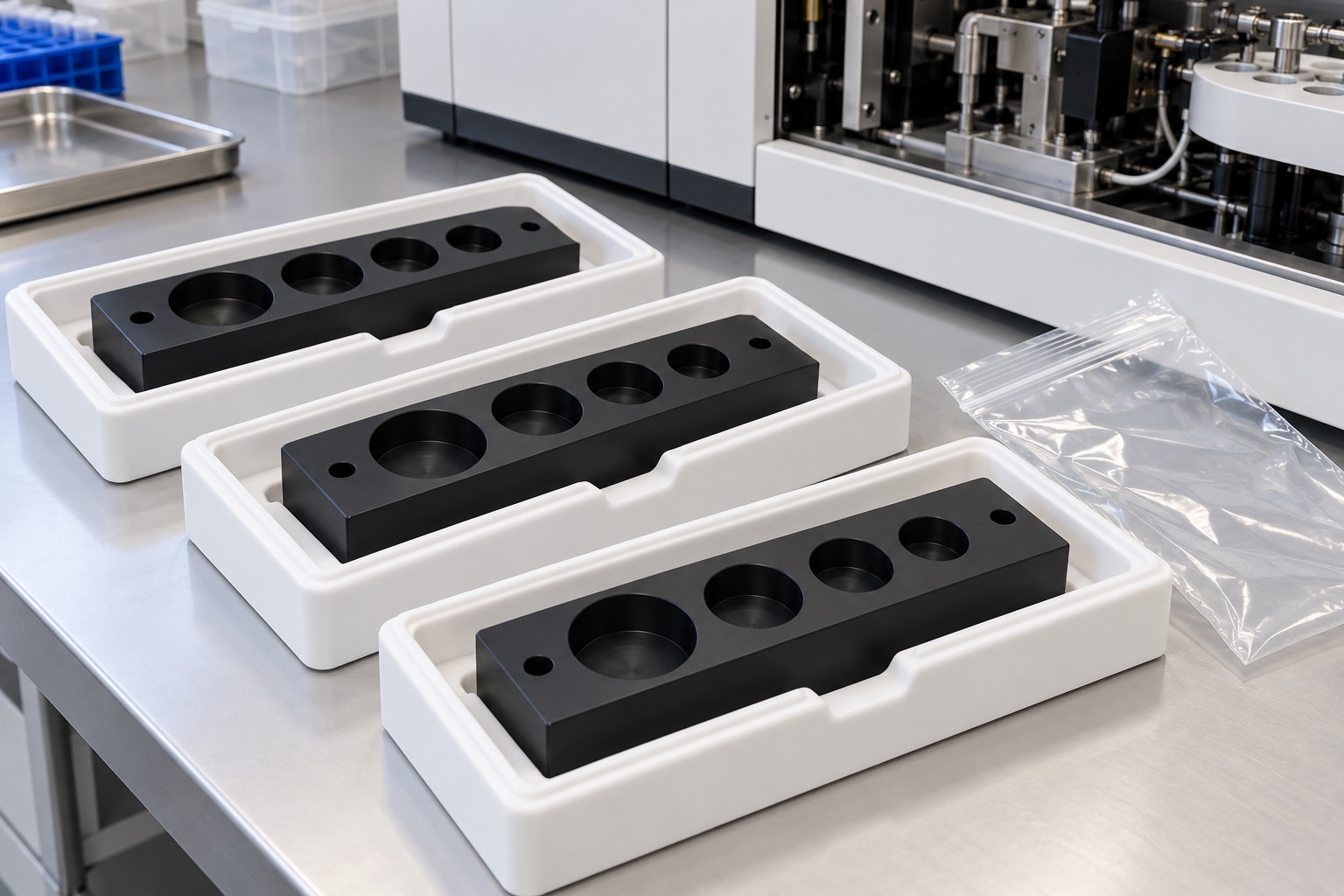
Finished holders would be individually supported or separated so edges and bases could not rub neighboring parts or loose hardware. Packaging pressure would not bend the long component. Blind pockets would remain free of unapproved debris or adhesive within the agreed cleaning scope, and ordinary transport bags would not imply sterile delivery. Material, lot and revision identification would stay with the shipment. Any demonstration tools would be identified separately. The receiver would be able to distinguish released equipment-service holders from prototypes or similar organizers intended for another tool set and maintenance installation.
Maintain a tool-set-specific production baseline
The proposed record would preserve controlled geometry, approved tool envelopes, stock evidence, manufacturing route, edge requirements, inspection deliverables and authorized changes. A repeat order would review changed handles, caps, tools, pocket requirements, mounting and cleaning conditions before relying on earlier observations. Dimensional acceptance would remain separate from maintenance procedures and clinical reprocessing. This representative example explains how a CNC supplier could document a defined equipment-service organizer without inventing a customer delivery, measured capability, sterile status, retention result or validated tool-accountability claim for an illustrative black polymer block.
Manufacturer background reference: www.ensingerplastics.com.
FAQ
Is this a delivered clinical instrument organizer?
No. It is a representative proposed holder for equipment-maintenance tools. There is no actual delivery or measured sample, and no sterile, clinical-reprocessing, retention or inventory-control qualification is claimed for the illustrated component.
What defines each blind pocket?
The approved tool envelope, intended contacts, retrieval requirements and controlled drawing define profile, depth, floor and location. Nominal tool size or a photograph of a generic driver should not replace the actual tool and installation information.
Can a replacement tool justify enlarging a pocket?
Only after authorization under the controlled requirements. A changed handle, cap or tool can affect contact and access, so an undocumented hand adjustment should not become the production baseline or be transferred to another tool set.
What would first-part inspection show?
It would document the agreed component characteristics using traceable revision, material, methods and support conditions. It would not demonstrate retention during movement, tool accountability, cleaning performance or equipment-service safety without separately defined procedures and evidence.
May a tool-fit trial be included?
Yes, if tools, revisions, mounting and exact checks are explicitly agreed. Insertion and retrieval observations should remain separate from retention or maintenance qualification, and unexpected contact must be resolved before introducing an authorized geometry change.
What changes need review before repeating manufacture?
Review approved tools, handles, caps, pockets, installation, polymer and cleaning scope. Retain controlled revisions instead of asking production to reproduce an undocumented hand-fitted holder or reuse observations from a different maintenance tool arrangement.

tanghangyun@oemach.com