
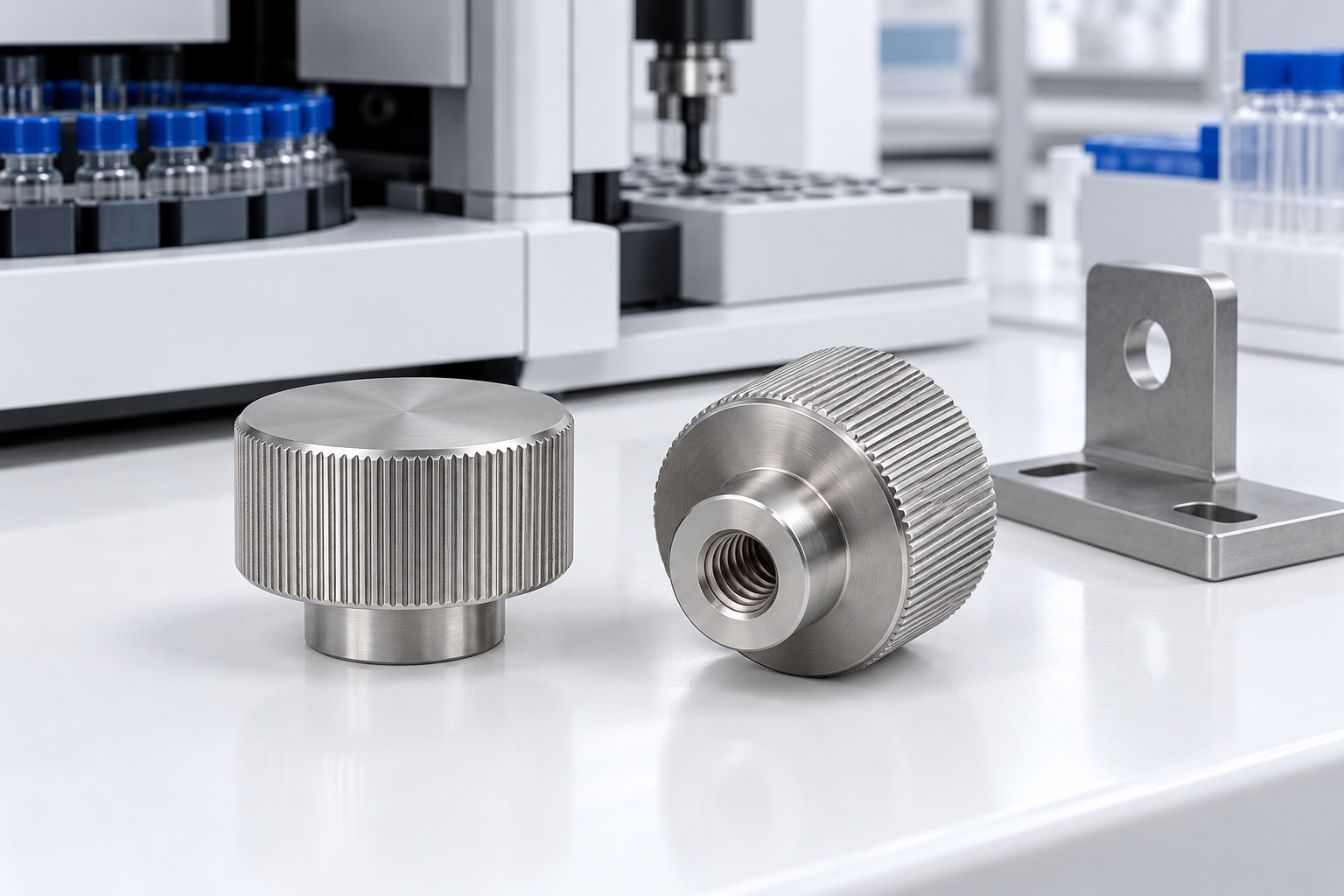
A representative proposed adjustment knob
This example considers a proposed one-piece 316L stainless steel hand knob with a short cylindrical knurled head, smooth top, smaller collar and female threaded blind bore opening from the underside. It illustrates a possible manufacturing workflow, not an actual customer delivery or qualified adjustment mechanism. Images show component concepts rather than measured results or torque tests. Approved project documents would define the final thread, contacts, grip, material and acceptance requirements. No achieved tolerance, clamping force, calibration accuracy, cycle life, certification or medical equipment safety result is claimed for this proposed component.

Review the complete mating interface
The proposed order would start with controlled drawings and model, approved mating screw information, intended contact arrangement and inspection requirements. The review would distinguish usable thread, lead-in, blind-hole depth and the collar or shoulder that was meant to seat. Missing handedness, fit requirements or contact references would be clarified before costing and production. A loose screw sample would not define the whole mechanism. The purchased scope would separate turned-component manufacture, optional assembly demonstration and independent force, retention, endurance or device-level assessments assigned to the responsible equipment design program.
Preserve the approved stainless identity
The material order would state the approved 316L condition, stock form and required documents. Lot identity would remain associated with cut blanks through turning, grip manufacture, final treatment and shipment. A visually similar stainless bar would not automatically be accepted as equivalent. The supplier would consider stock allowance and holding surfaces for the head and collar. Proposed substitution would require approval before use. Material evidence would support the component specification rather than become a general claim about corrosion resistance, cleaning compatibility, thread friction or certification of the full adjustment mechanism.
Establish functional turning references
Initial turning would establish the cylindrical and face references needed to relate the collar, head and internal thread. Workholding would maintain those relationships without damaging accepted contacts or forcing the component into an artificial condition. Chips at fixture surfaces would be controlled before setup transfers. The supplier would review how remaining operations affected the selected references. Intermediate checks could support the route but would not replace final acceptance. The intended result would be repeatable released geometry, not a knob that appeared aligned only while excessive holding force remained applied during inspection.
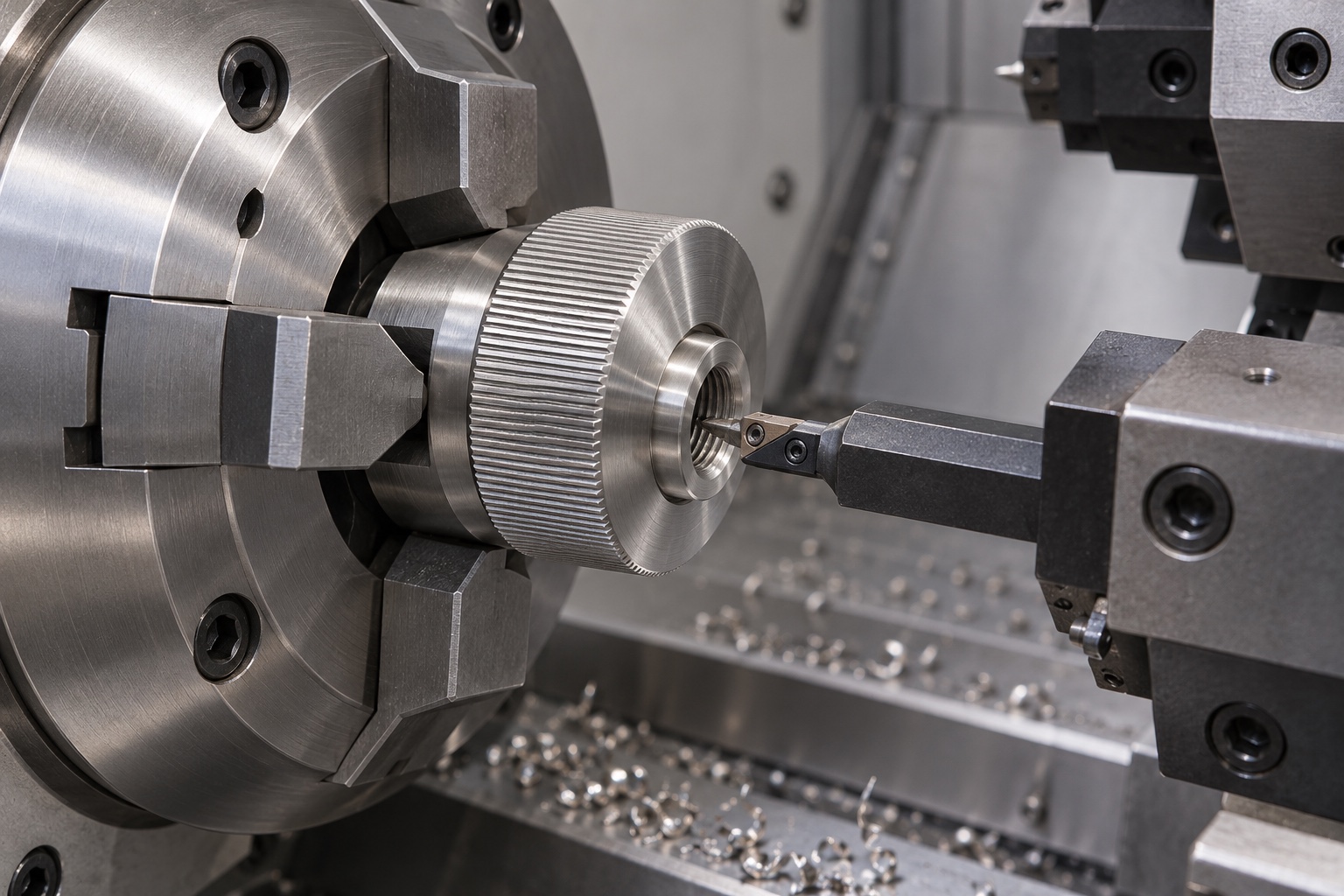
Form the blind bore and internal thread
The bore and thread would follow the approved form, pitch, handedness, fit and depth requirements. The route would distinguish usable engagement from lead-in and incomplete thread near the blind end. Tool access, chip removal and any necessary relief would be reviewed before production; a proposed geometry change would need design authorization. The supplier would not deepen the bore until an unidentified screw happened to feel tight. Approved changes would enter controlled geometry and inspection documents so intended face seating could not be confused with accidental thread or screw bottoming.
Produce the approved grip pattern
The knurled head would follow the approved pattern, extent, envelope and edge requirements. Its forming or cutting operation would be planned with holding and subsequent finishing rather than treated as a cosmetic afterthought. Attached material at the beginning or end of the pattern would be examined. The supplier would not substitute a different grip simply because it was easier to manufacture. Any accepted change would be recorded. A visually attractive pattern would not establish hand-force suitability, calibrated adjustment or retention of a setting in the actual medical instrument mechanism.
Preserve collar and contact faces
The smaller collar and intended seating face would be finished relative to the approved internal and external references. A convenient exterior surface would not replace the drawing's functional basis. The process would preserve any specified contact area and surrounding clearance. Model and drawing discrepancies would be clarified before production decisions rather than resolved by polishing a prototype until it seemed to work. Any authorized change to collar height or contact position would be reflected in inspection. A screw that entered the bore would not independently verify the finished face relationships.
Finish edges and final surface state
The finishing sequence would inspect the thread entrance, collar transitions, top face and grip boundaries for attached material and unwanted sharp edges. Removal would preserve approved engagement and contact geometry. Cleaning would follow the purchased scope, including access to the blind opening, without implying sterile supply. Any passivation or other treatment would require approved documentation and final-condition checks. Unapproved lubricant or coating would not be added to improve a trial. A bright surface would remain an appearance observation rather than evidence of measured friction, corrosion performance or suitability for every cleaning environment.
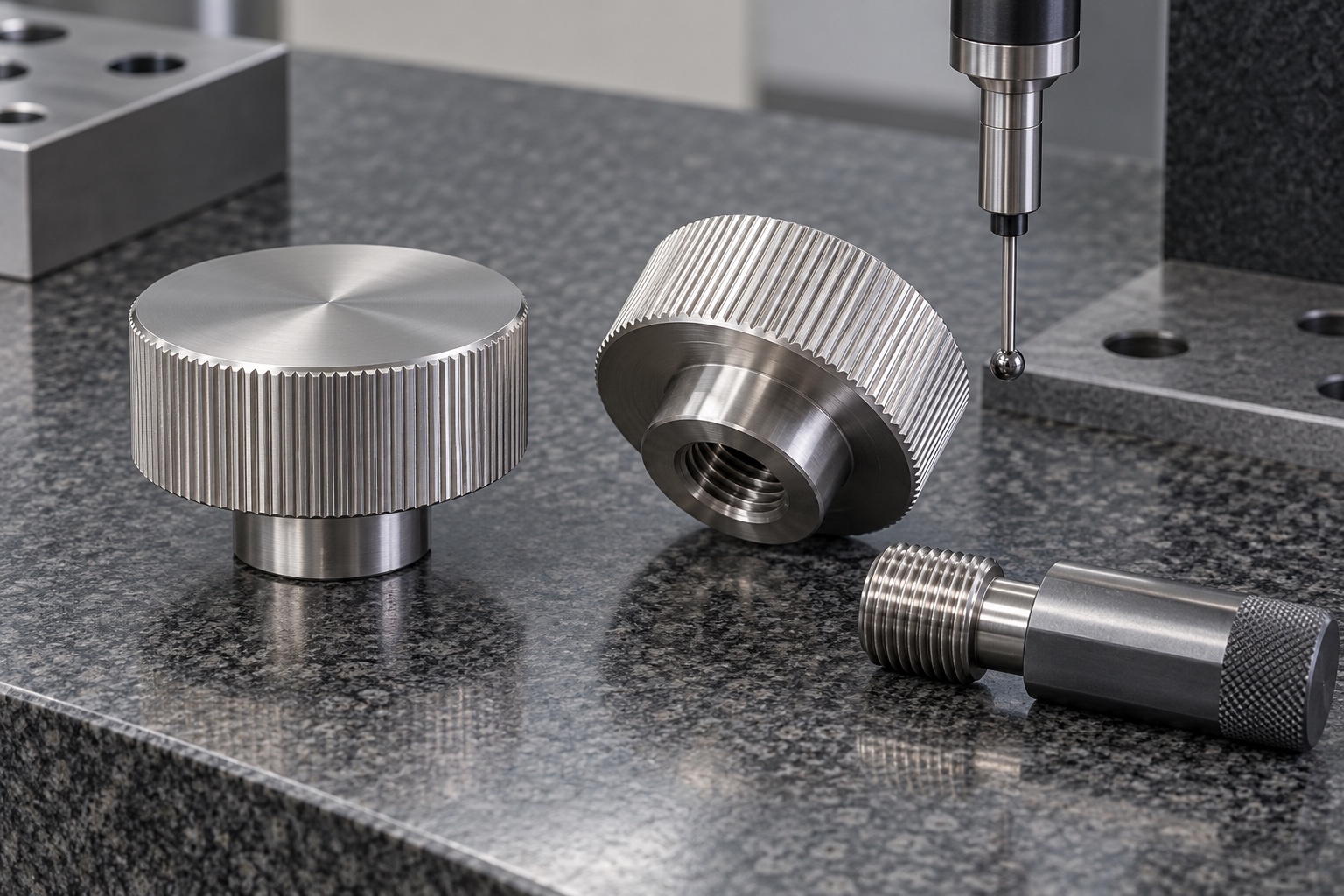
Prepare drawing-linked first-part evidence
The report would identify the approved revision, material lot and numbered requirements with suitable inspection methods. It would distinguish thread acceptance, usable engagement, depth and collar-face geometry rather than presenting outside diameter alone as a complete result. No numerical values are supplied because this representative example has no manufactured sample or inspection record. Inaccessible or ambiguous features would be resolved before production. Material and dimensional evidence would support the purchased component scope only, not establish calibrated travel, clamping force, anti-loosening performance or the safety of the complete medical equipment mechanism.
Define any optional assembly demonstration
An agreed demonstration could check thread entry, specified travel, intended face seating and operator access with identified approved mating parts. The record would identify revisions, installation conditions and any authorized surface treatment. Unexpected sticking or contact would be documented before modifying the knob or screw. A successful demonstration would not qualify force, retention, cycle life or equipment safety without separate approved evaluation. The trial knob would stay traceable and would not silently become the production standard or a universal gauge for components with a different thread or contact arrangement.
Package without damaging threads or grip
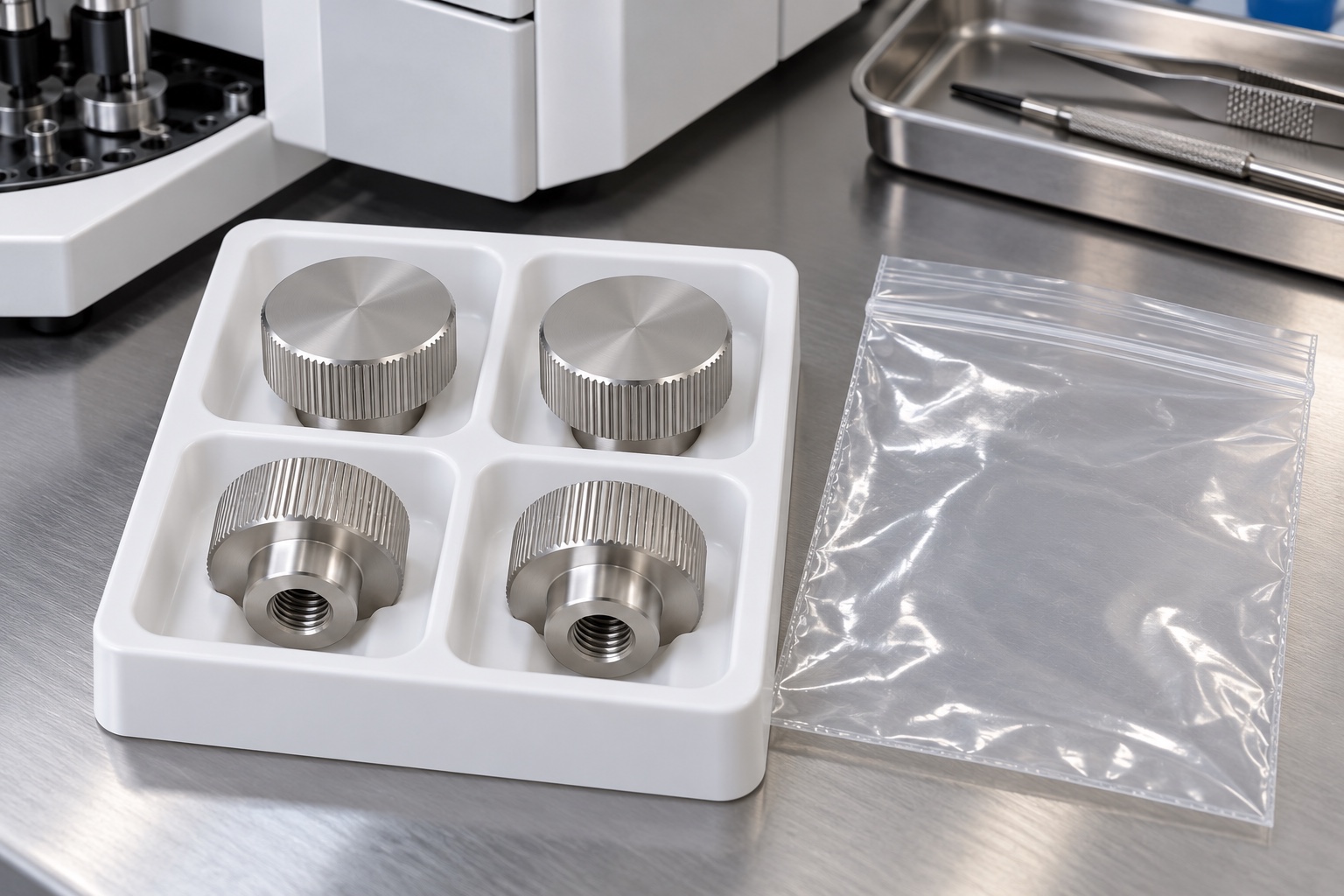
Finished knobs would be individually separated so knurled rims could not strike neighboring faces and loose screws could not damage thread entrances. Packaging would keep unapproved debris or adhesive out of blind bores within the agreed cleaning scope. Transport bags would not be represented as sterile barriers. Material grade, lot, finish and revision identification would remain with the shipment. Any demonstration screw would be identified separately. Receiving staff would be able to distinguish released knobs from prototypes or similar variants with different engagement, collar height or grip features before installing them.
Maintain a configuration-specific repeat record
The proposed record would preserve controlled geometry, material evidence, machining route, grip definition, final treatment, inspection requirements and authorized changes. A repeat order would review differences in thread, mating screw, collar contacts, finish, lubrication and cleaning conditions before relying on earlier observations. Dimensional acceptance would remain separate from mechanism qualification. This representative case shows how a CNC supplier could document a defined threaded hand component without inventing a delivered customer project, achieved torque accuracy, service-life result or medical certification for an illustrative stainless steel adjustment knob.
Manufacturer background reference: www.elesa-ganter.com.
FAQ
Is this a delivered calibrated adjustment knob?
No. It is a representative proposed turning example with no customer delivery, manufactured sample or calibration record. No achieved tolerance, clamping force, torque accuracy, service life or equipment certification is claimed as an actual result.
What defines the female blind thread?
The approved drawing and mating interface define form, pitch, handedness, fit, usable engagement and relevant depth. These requirements must be reviewed alongside intended face seating rather than inferred from the appearance of a screw sample.
Why inspect the collar separately?
Thread fit alone does not establish collar height, contact-face relationship or the installed seating arrangement. Map each controlled feature to a suitable method, and distinguish intended contact from unintended bottoming at the end of the blind opening.
Can a different knurl be substituted?
Only within the approved specification or after authorization. Grip pattern, extent and envelope can affect manufacturing and operation, so an attractive alternative should not silently replace the released design or inherit claims from another knob.
Can a fit demonstration include a mating screw?
Yes, if the screw, revisions, conditions and exact checks are agreed and recorded. Such a demonstration does not replace every specified measurement or establish force, retention, cycle life or medical equipment safety without separately defined evaluation.
What should be reviewed for repeat manufacture?
Review controlled thread and contact geometry, material, grip, final process, mating parts and any authorized lubrication or cleaning conditions. Preserve changes in released documents rather than requiring production to recreate an undocumented hand-fitted demonstration sample.

tanghangyun@oemach.com