
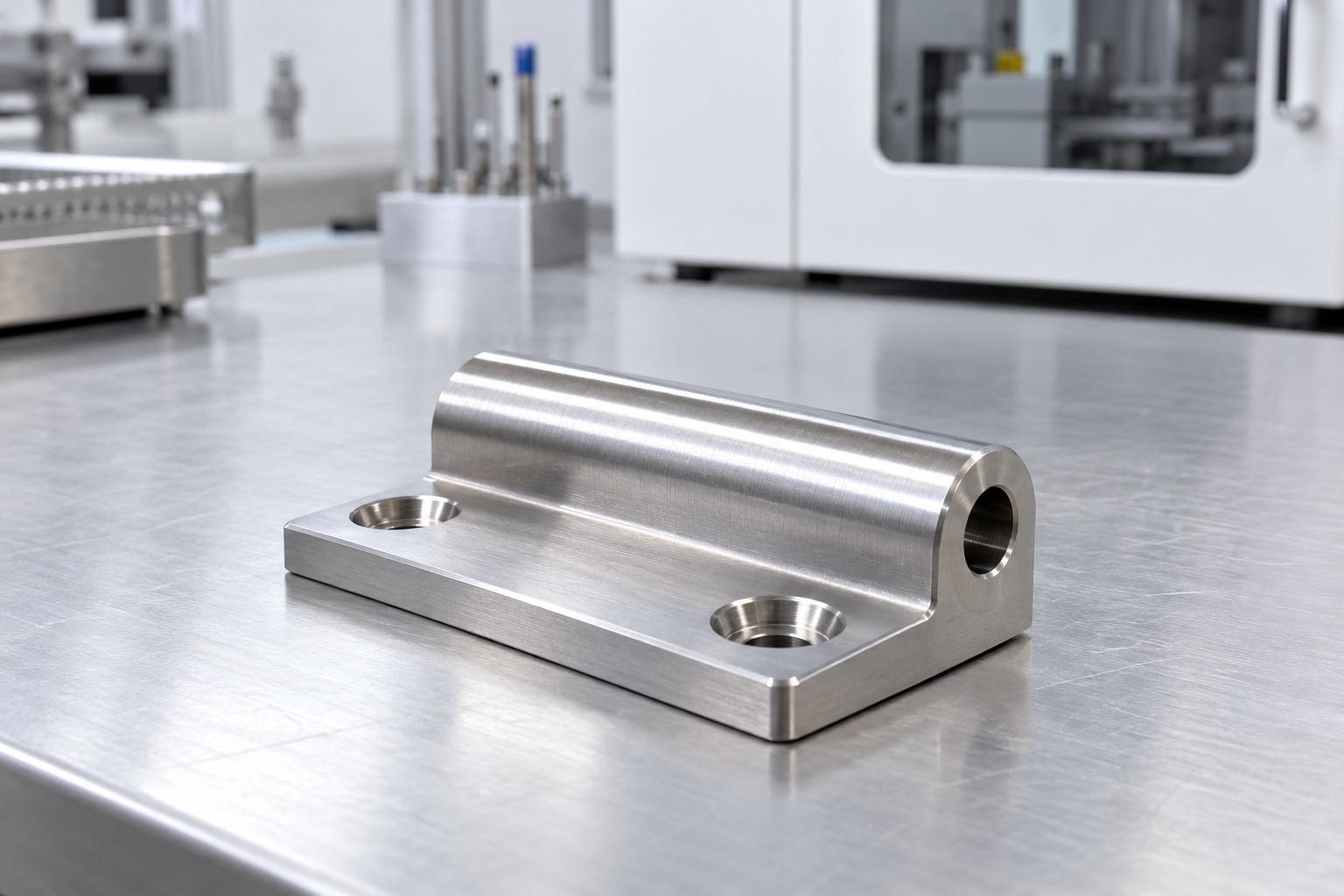
A representative single-block concept
This example considers a proposed 316L stainless steel hinge block with a raised barrel, horizontal pin bore and mounting features for a medical equipment service door. It describes a possible manufacturing workflow rather than an actual customer delivery, rated hinge assembly or validated safety device. Images illustrate concepts and do not supply inspection or endurance results. The final component would need an approved drawing, material condition and pin-interface documents. No allowable door load, service life, safety interlock function, certification or achieved tolerance is claimed without the project-specific evidence required for those statements within the complete equipment configuration.

Review the complete mating package
The supplier would obtain the controlled model and drawing, approved pin and retention arrangement, mounting references and relevant door movement envelope. The review would distinguish features that locate the block from those that provide clearance or fastening access. A detached pin sample would not define every requirement. Open questions about bore relationships, internal transitions or assembly access would be returned for written clarification before the cost estimate and route were finalized. The purchased scope would separate dimensional manufacture, an optional movement trial and any complete-door load, endurance or equipment safety evaluation assigned to the responsible program.
Maintain the approved stainless identity
The raw material specification would identify 316L together with required condition and documentation. Material and lot identity would remain linked to cut blanks and finished blocks. A visually similar stainless piece would not be treated as an approved substitute. The selected pin material would be documented separately where supplied or used in a trial. The example's material designation would be a design input, not a corrosion guarantee or load rating. Any proposed change in grade or raw material form would require approval before production and would remain visible in the controlled configuration and repeat-order evidence.
Establish supported mounting references
Early machining would establish the mounting plane and other references needed to relate later features. Workholding would support the block without forcing it into a misleading position. The supplier would control debris at setup contacts and review access for machining around the barrel and base. Intermediate checks could confirm the route but would not replace finished-component acceptance. If material removal changed the released condition, the process would be reviewed rather than compensated with undocumented clamping. The goal would be a repeatable reference scheme that could be preserved through manufacturing and inspection, not a single apparently correct sample held rigidly in a fixture.
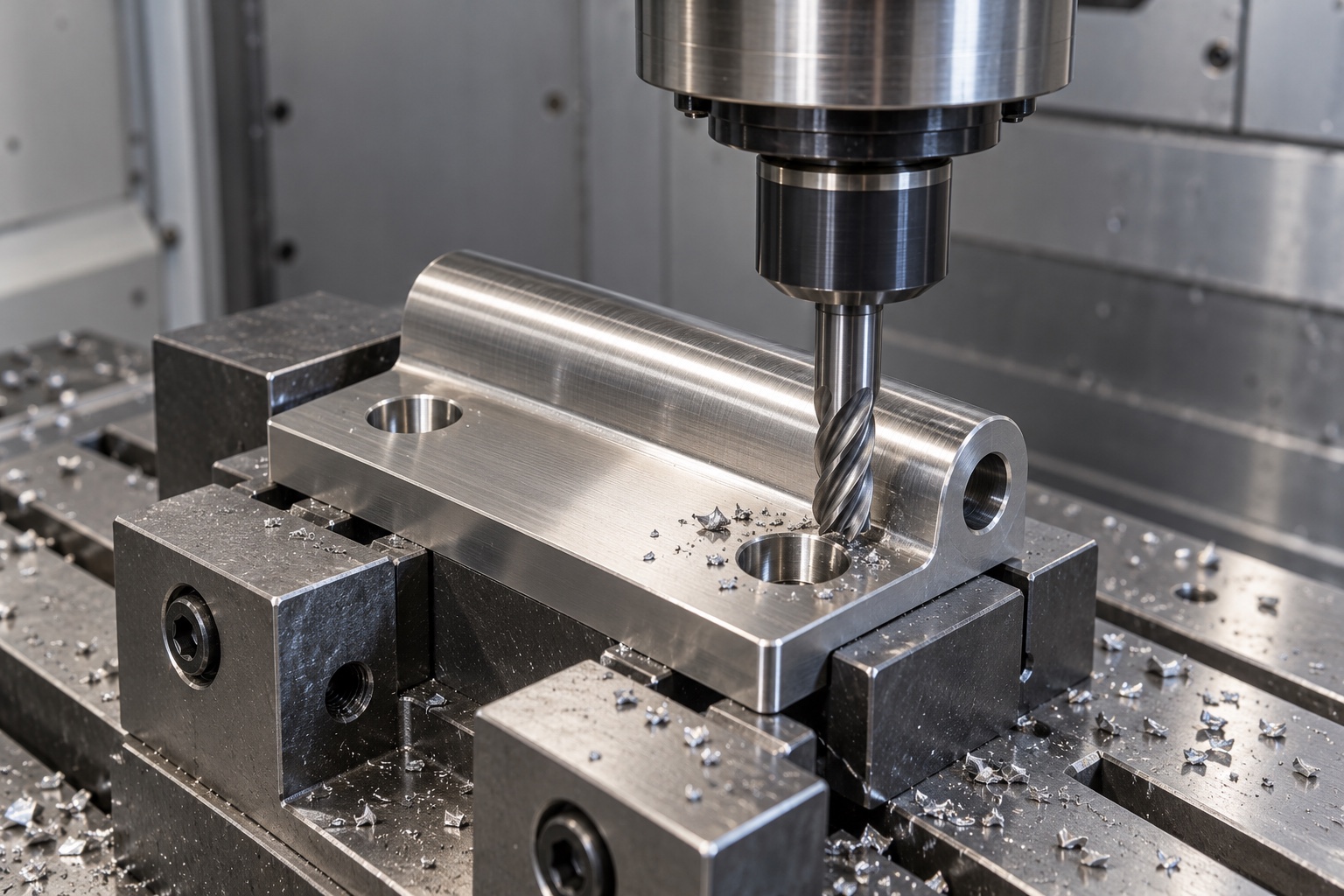
Preserve the bore-axis relationship
The pin bore would be produced relative to the approved mounting references. The selected process would depend on actual geometry, material and drawing requirements rather than an assumed universal method. Tool access and any internal transition would be resolved before production. The supplier would not choose a fit or retention detail from an unapproved pin sample merely because it could be inserted by hand. If a design change were needed, it would be authorized and recorded before manufacturing. The inspection plan would then verify the relevant bore and axis relationships rather than reporting only a convenient isolated diameter.
Complete the mounting features
Mounting holes and any specified counterbores or countersinks would follow the controlled hardware arrangement and functional references. The review would include screw-head seating and tool access, particularly near the barrel and door clearance region. A visually minor change could affect installation and would not be made informally. Model and drawing discrepancies would be resolved before production decisions. Hole entrances and exits would be examined for burrs, and any accepted revision would be reflected in both inspection requirements and repeat-production documents instead of remaining hidden in a trial part or workshop instruction.
Transfer references through finishing setups
Any additional setup would preserve the required relationship between the pin bore, mounting face and other controlled features. Finished surfaces would be protected from workholding damage. Setup verification would remain distinct from final acceptance, because correctly positioning the component in a fixture would not prove that every finished feature met the drawing. Where several parts shared a fixture, each position would need appropriate support and access. The route would document meaningful reference transfers so the manufacturing process could be repeated without relying on undocumented hand correction, an unrecorded sample pin or a particular operator's fitting technique.
Control edges and the specified surface process
Edge finishing would remove unwanted burrs at the bore, mounting holes and base while preserving approved geometry. Unrestricted rounding or polishing would not be used to conceal a fit problem. If passivation or another final treatment were required, documentation and final-state checks would be agreed in advance. The example makes no cleanliness or corrosion claim based on appearance. Markings would be placed only in approved regions. A changed cleaning or treatment process would be reviewed against the accepted configuration instead of being absorbed as an unrecorded supplier preference that might affect the component interface or evidence package.
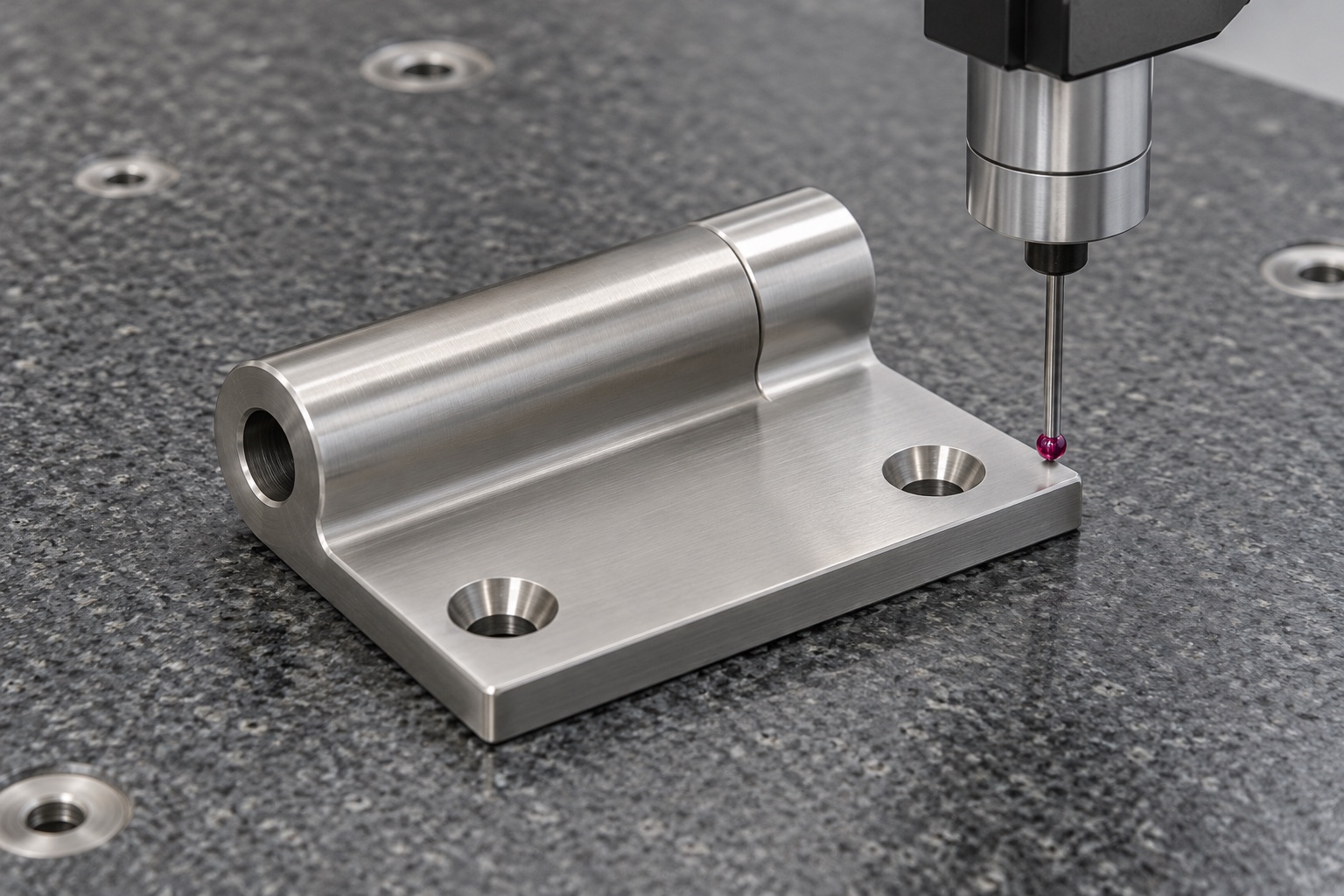
Build a traceable first-part report
The report would identify drawing revision, material lot and numbered requirements. It would cover the specified bore characteristics, mounting relationships and relevant axis geometry using appropriate methods. Support and reference conditions would be recorded, along with the identity and meaning of any agreed gauge check. No numerical results are supplied because this representative example has no manufactured specimen or inspection record. Material and dimensional evidence would support component acceptance within the purchased scope but would not establish whole-door alignment, allowable load, wear behavior, endurance or medical-equipment safety without the responsible program's separate evaluation.
Agree an optional pin and movement trial
A separately defined trial could check insertion, assembly access and agreed movement or clearance using identified approved mating components. The procedure would record block revision, pin, retention and installation arrangement. It would not be presented as a load, life-cycle or safety qualification unless those evaluations were independently authorized and performed. If unexpected contact appeared, the team would document it before changing the block or mating parts. An unrecorded hand fit would not establish a production baseline, and a result from one door configuration would not automatically apply to another pin, mounting support or material combination.
Protect the bore and mating surfaces
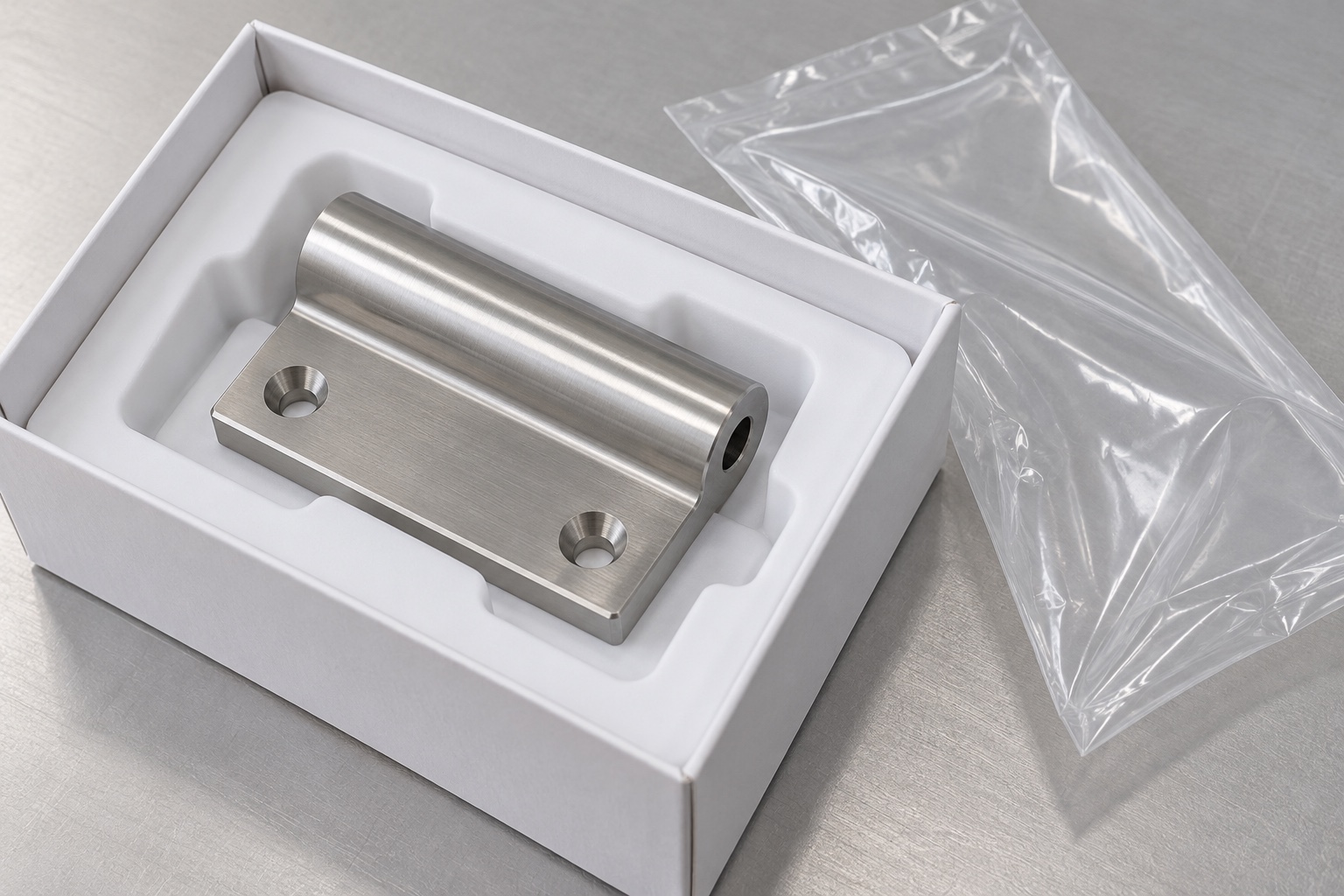
Packaging would separate blocks and prevent impact or rubbing at bore entrances, mounting contacts and finished edges. Any supplied pins would retain their identity as approved production items or identified trial samples. Cleaning would follow the purchased scope, and ordinary protective bags would not imply sterile supply or quantified cleanliness. If a specific cleanliness criterion applied, its verification method would be documented separately. Revision, lot and material evidence would remain associated with the shipment so the recipient could preserve the accepted configuration and avoid installing a visually similar but undocumented replacement into controlled medical equipment.
Retain the approved repeat-production definition
The repeat-order package would preserve the drawing revision, material condition, pin and retention documents, mounting arrangement, final process and inspection plan. Authorized prototype changes would be incorporated explicitly rather than left in a shop sample. The equipment owner would review altered doors, pins, support structures or materials before reusing earlier assembly conclusions. This representative example gives a structured purchasing framework for CNC service-door components: define the functional interface, maintain references and provide traceable evidence, while keeping load capacity, endurance, access protection and complete medical-device qualification separate from unsupported claims about one machined stainless block.
Manufacturer background reference: www.elesa-ganter.com.
FAQ
Is this a delivered, load-rated hinge assembly?
No. It is a representative manufacturing example for a proposed block. No actual customer shipment, allowable door load, service life, achieved tolerance, certification or complete medical-device validation is asserted.
What defines the pin-bore requirements?
The approved component drawing and mating documents define bore geometry, references, pin arrangement and retention. A photograph or unapproved sample pin is not a complete production specification or proof of interchangeability.
What would the first-part report demonstrate?
It would document the agreed drawing features, references and inspection condition. It would not by itself establish whole-door alignment, load capacity, endurance or the safety of the complete equipment enclosure.
Can a pin fit be changed informally for a prototype?
Only within approved process and drawing limits. A design change requires authorization, controlled documents and appropriate inspection before it becomes the repeat-production configuration rather than an undocumented hand-fitted sample.
Can a movement trial be included?
Yes, with identified components, a written procedure and explicit checks. It remains separate from load, endurance and safety evaluation unless those activities are independently defined, authorized and documented.
What must be reviewed before repeat manufacture?
Confirm revision, material, pin and retention information, mounting arrangement and inspection plan. Review changed doors, support structures or final processes before assuming earlier assembly or qualification conclusions remain applicable.

tanghangyun@oemach.com