
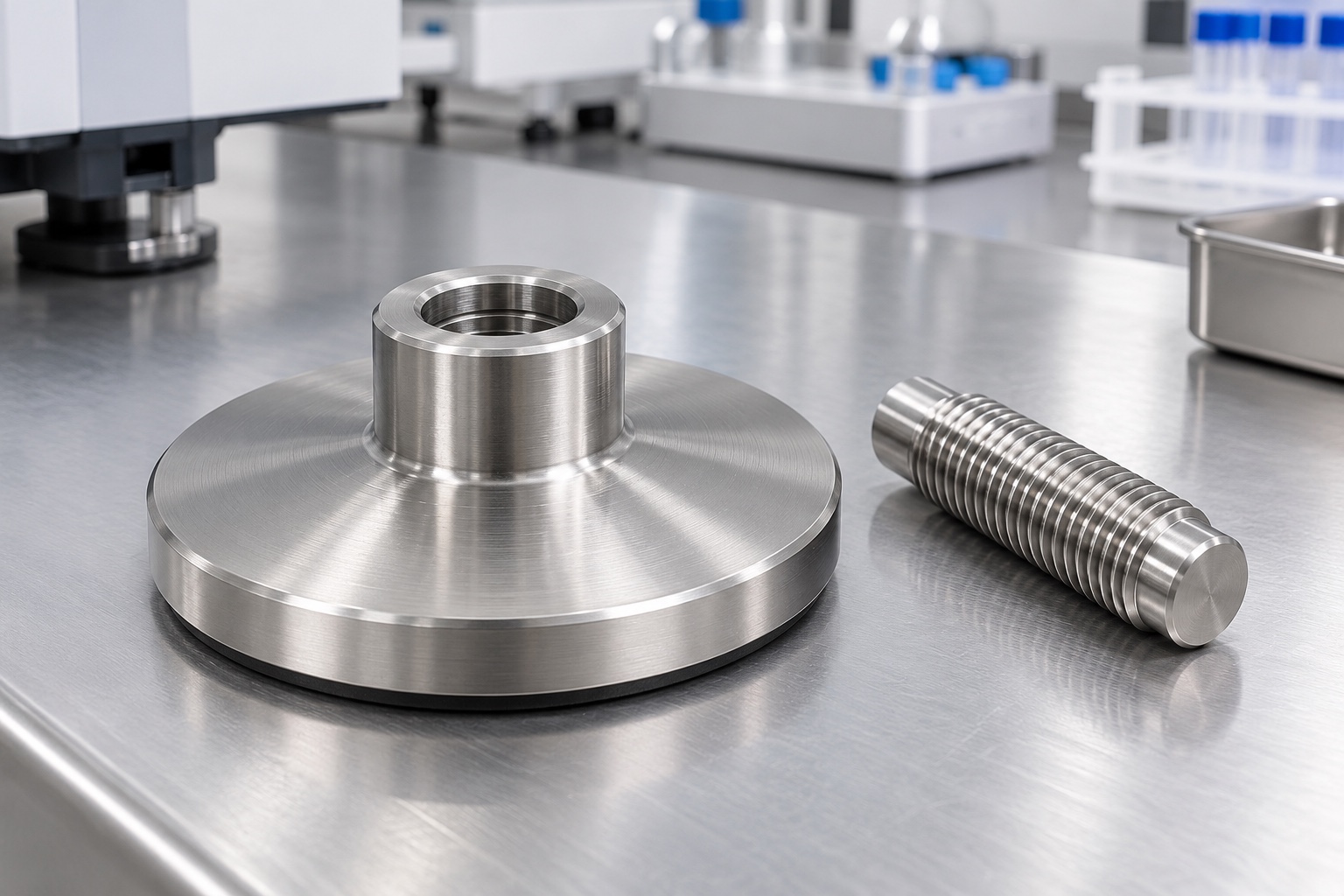
A representative pad manufacturing plan
This example considers a proposed circular 316L stainless steel foot pad with a central raised feature and a drawing-defined stem-interface recess for laboratory equipment. It illustrates how CNC turning and inspection could be organized for the component. It is not an actual delivered customer project, a load-rated support assembly or a validated medical device. The images are illustrative and do not document achieved dimensions or test results. Any mating stem, contact insert and retention arrangement would require their own approved specifications before production, assembly evaluation or equipment-level performance claims could be considered.

Review contact and mating requirements
The supplier would obtain the approved model, drawing, stem geometry and base-contact arrangement. The review would identify the surfaces that locate the stem and the areas that contact the installation surface or an approved insert. It would not assume a spherical joint, internal thread or retention method from a simple recess outline. Missing interface details would be returned for clarification before machining. The cost estimate would separate dimensional manufacture from an optional mating trial and from the responsible equipment program's load, stability or endurance evaluation, keeping the purchased component scope explicit.
Maintain the specified 316L identity
The raw material order would include the required 316L condition and traceability documents. Lot identity would remain associated with cut blanks and finished components. A visually similar stainless material would not be substituted without approval. Material selection in this example would be an equipment design input, not proof of universal cleaning compatibility or a particular safe load. The supplier would review the chosen raw material form and machining allowance against the approved geometry. Any proposed change would be documented before production and would remain visible in the repeat-order record rather than disappearing into purchasing shorthand.
Establish supported first-operation turning
The first turning setup would hold the blank securely and establish the reference geometry needed for later operations. Workholding would be reviewed for contact location, access and the risk of damaging surfaces that would remain functional. Chips at the chuck contacts would be controlled, and the route would distinguish setup verification from finished-part acceptance. Cutting conditions would be developed for the actual material, tooling and geometry rather than copied from an unrelated pad. The example specifies no universal speed or feed and claims no manufactured result; it describes the planning decisions that a controlled order would require.
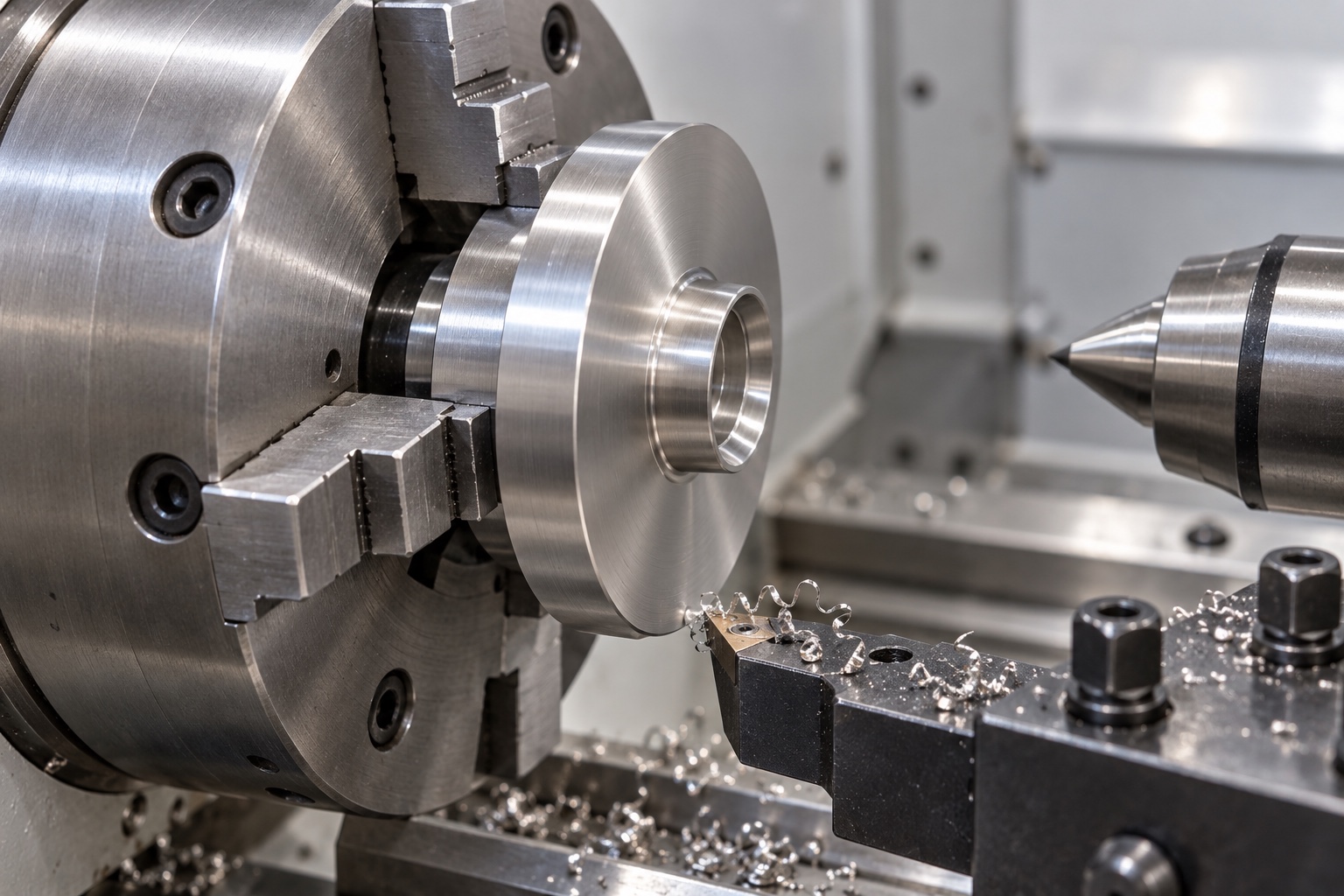
Machine the base-contact geometry
The approved drawing would determine whether the base uses a full contact face, an annular region or another defined arrangement. The turning route would preserve that geometry and any required relationship to the stem interface. A decorative relief would not be allowed to remove functional contact unintentionally. If a second operation were needed to complete the base, the transfer would maintain the reference scheme. The supplier would not treat a bright turned finish as proof that the pad contacts correctly on the installation surface or provides a specified friction or vibration characteristic.
Complete the central stem-interface recess
The recess operation would follow the approved size, depth and bottom transition. Tool access would be reviewed before machining, including whether the specified feature requires a particular finishing method rather than an ordinary drill point. The supplier would not reinterpret a plain recess as a different joint or add a thread to suit an unapproved sample. Any retention feature would be produced only if included in the controlled design. Relevant geometry would be checked against the drawing, while fit with an identified stem could form part of a separately defined assembly demonstration.
Transfer references for the finishing operation
A second setup would locate the pad using approved reference features without damaging completed surfaces or introducing unrecorded distortion. The route would preserve the relationship of the contact face and stem-interface axis through the transfer. Intermediate checks could identify a setup problem before final machining, but they would not replace acceptance of the completed component. If several raw material sizes or fixture positions were used, their relevance to the approved process would be reviewed. A repeatable reference transfer would be more useful than a single sample made acceptable through undocumented hand correction after machining.
Control edges and the final surface process
The process would inspect the outer rim and recess entrance for burrs, completing edge treatment within drawing limits. Unrestricted polishing would not be used to conceal a contact or fit problem. If passivation or another treatment were specified, records and final-state checks would be agreed before production. The example makes no corrosion or cleanliness claim based on appearance. Identification would be applied only in approved areas. A separate contact insert, if required by the equipment design, would remain a distinct specified item rather than an improvised addition used to make the pad seem non-slip.
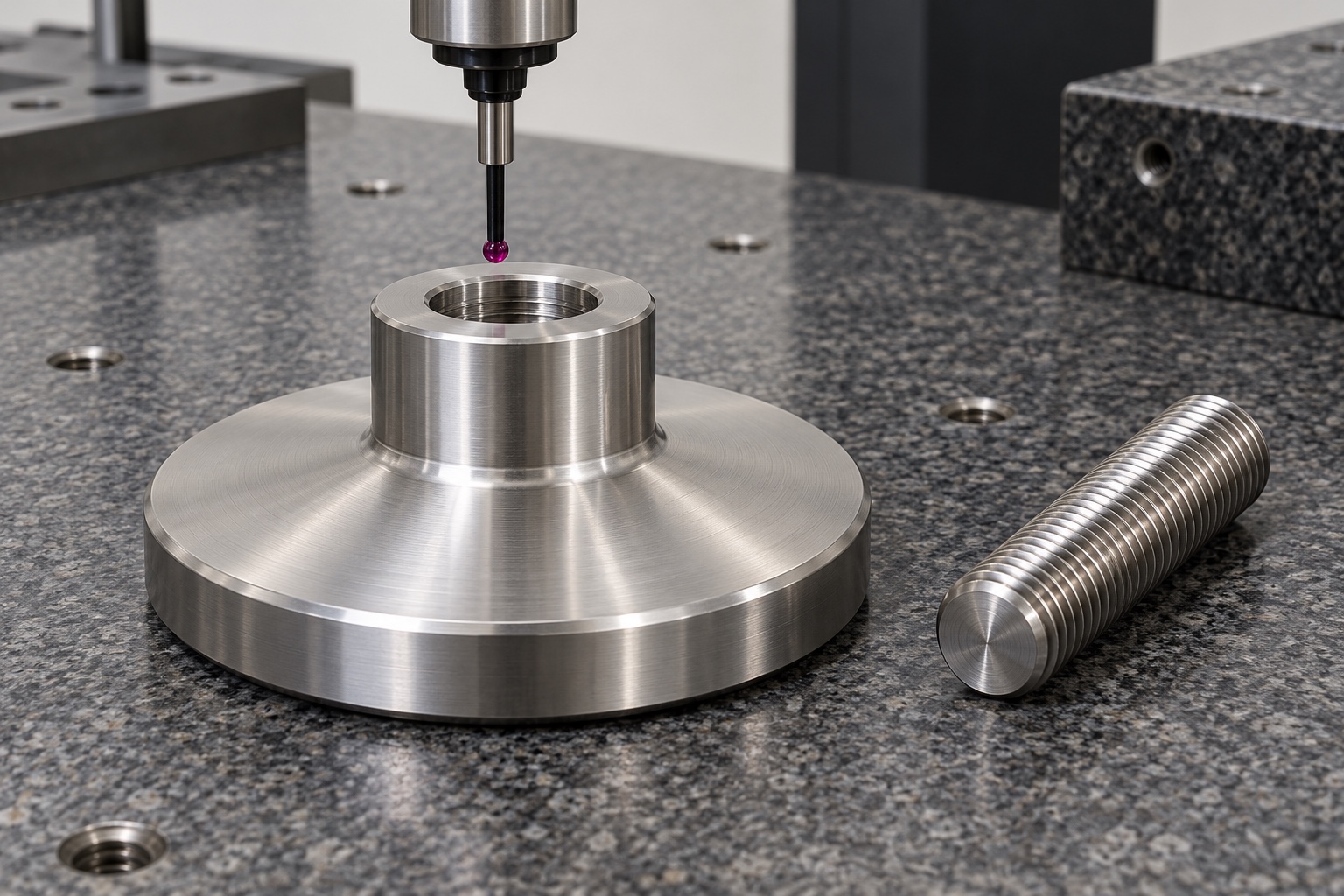
Prepare traceable dimensional evidence
The first-part report would identify the drawing revision, material lot and numbered requirements. It would cover the specified contact geometry, recess features and relationships to the functional references. The report would state support and measurement conditions and identify any agreed gauge. No numerical results are supplied because there is no physical production specimen or measurement record for this representative example. Material documents and dimensional evidence would support component acceptance within the purchased scope, but would not establish the complete support's allowable load, long-term stability, vibration behavior or medical-device safety status.
Define the optional stem assembly trial
A separately agreed trial could check insertion and drawing-defined clearances using an identified approved stem and any specified retention components. The procedure would record pad revision and assembly configuration. It would not become a load or endurance qualification unless those evaluations were explicitly defined and performed by the responsible program. If unexpected contact appeared, the team would document its location before changing the recess or mating component. An unrecorded hand fit would not establish a repeat-production standard, and results would not be transferred automatically to another stem material, contact insert or installation condition.
Package without damaging contact regions
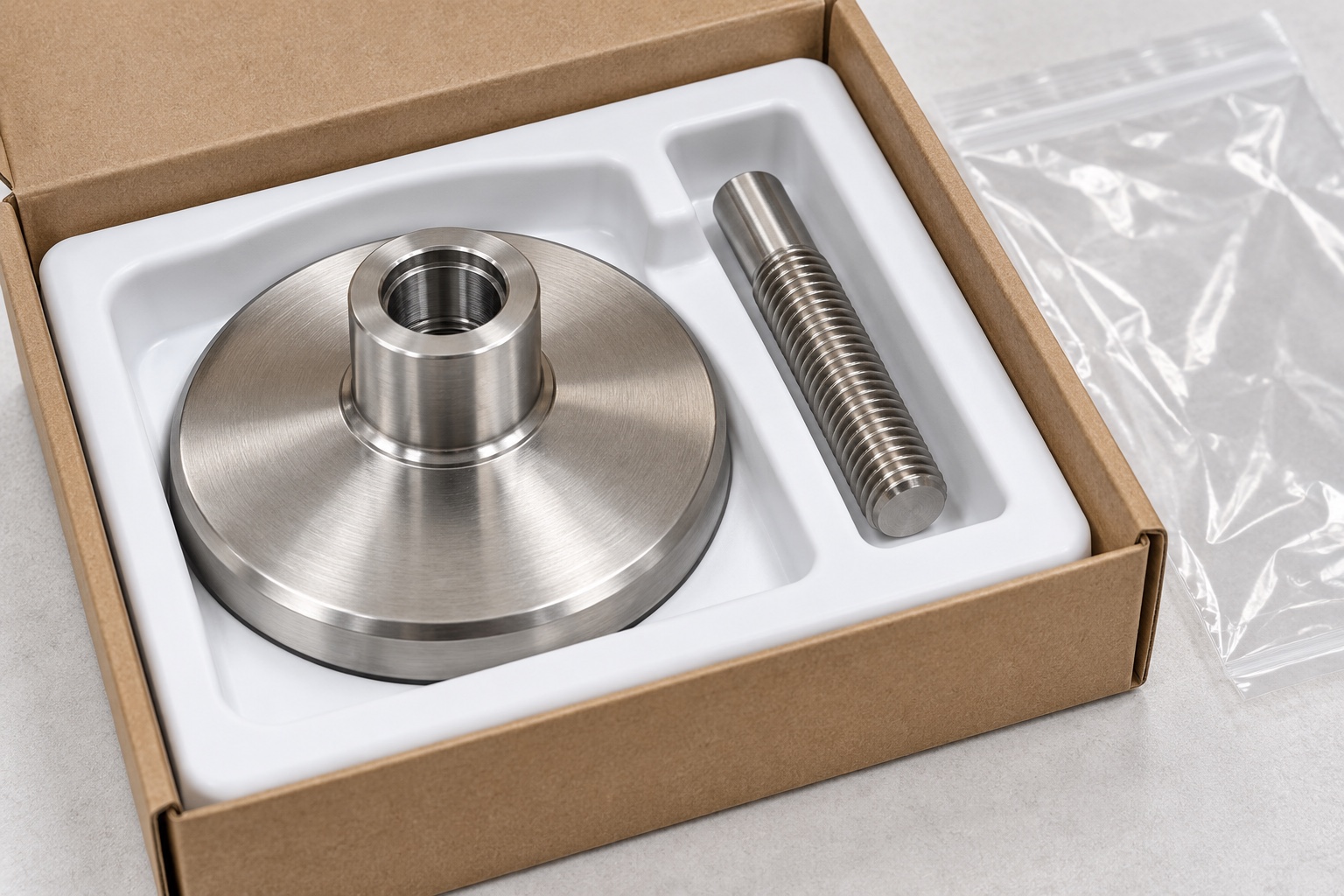
The packaging plan would separate pads and protect the contact face, central recess and finished rim from impact. Mating stems or approved inserts, if included within the order, would be identified separately so receiving staff could maintain the correct configuration. The cleaning scope would be stated accurately and ordinary protective bags would not be described as sterile packaging. A purchased quantitative cleanliness criterion would need its own verification method. Material identity, drawing revision and dimensional records would remain associated with the shipment rather than relying on the component's polished appearance to establish acceptance.
Preserve the complete repeat-order definition
Before repeat manufacture, the order would confirm the pad revision, material condition, approved mating information, surface process and inspection deliverables. Any authorized prototype change would be incorporated into controlled documents. The equipment owner would review altered stems, inserts, mounting structures or installation surfaces before reusing earlier assembly conclusions. This representative example provides a disciplined way to purchase a turned laboratory equipment component. It connects the approved interface to traceable machining and inspection while keeping load rating, stability evaluation and medical-device qualification separate from claims that a supplier can support with a component drawing alone.
Manufacturer background reference: www.elesa-ganter.com.
FAQ
Is this a delivered and load-tested support?
No. It is a representative CNC turning example for a proposed pad. No actual customer delivery, achieved tolerance, load rating, endurance result, certification or complete medical-device validation is claimed.
Does 316L alone define the material purchase?
The required condition, raw material form and traceability documents also belong in the order. Similar appearance does not establish an approved substitution or suitability for every equipment environment.
Can the supplier infer a joint design from the recess?
No. The drawing and mating documents must define contact geometry and retention. A plain recess does not automatically authorize a spherical joint, thread or other unrecorded connection arrangement.
What would the dimensional report demonstrate?
It would document the agreed component features, references and measurement condition. It would not by itself establish load capacity, stability or safety of the complete equipment support system.
Can a stem mating trial be included?
Yes, as a separately defined service with identified components and explicit checks. It remains distinct from load, endurance and equipment-level evaluation unless those activities are separately authorized and documented.
What must remain controlled for repeat production?
Retain the approved revision, material condition, mating geometry, final treatment and inspection plan. Review changes to stems, inserts and installation arrangements before assuming previous assembly conclusions remain valid.

tanghangyun@oemach.com