
This second-axis ABS decorative cover is different from a metal joint component. Its value sits not only in dimensions, but also in appearance, wall thickness stability and clearance with the internal robot structure.
OEMach reviewed the part as a plastic appearance and protection component. The process needed to protect the U-shaped curve, side mounting holes and black surface while avoiding deformation during trial manufacturing, inspection and delivery.
Project Snapshot
| Item | Project detail |
|---|---|
| Application | Robot joint area decorative and protective cover |
| Material and finish | ABS plastic with black appearance requirement |
| Key features | U-shaped curved profile, about 3 mm wall thickness, side mounting holes and visible exterior surfaces |
| Engineering focus | Free-state geometry, low-force fixturing, surface consistency, assembly clearance and scratch-safe packaging |
Review It As An Appearance Function Part
An ABS cover should not be evaluated with the same mindset as a load-bearing aluminum bracket. The customer cares about fit, surface continuity, color and whether the cover interferes with internal mechanisms after fastening.
Before production planning, the team confirms whether the part is for prototype appearance review, assembly validation or small-batch delivery. That decision affects whether CNC trial machining, 3D printing, forming, finishing or tooling should be considered.
Plastic Risk Comes From Deformation, Not Cutting Difficulty
The U-shaped span is relatively open, the side arms are long and the wall is not thick. Uneven force during machining or post-processing can change the opening width, curved profile and side-hole relationship.
The black ABS surface also needs careful handling. Scratches, whitening, visible tool marks or inconsistent texture can be more obvious than a small hidden dimensional deviation.
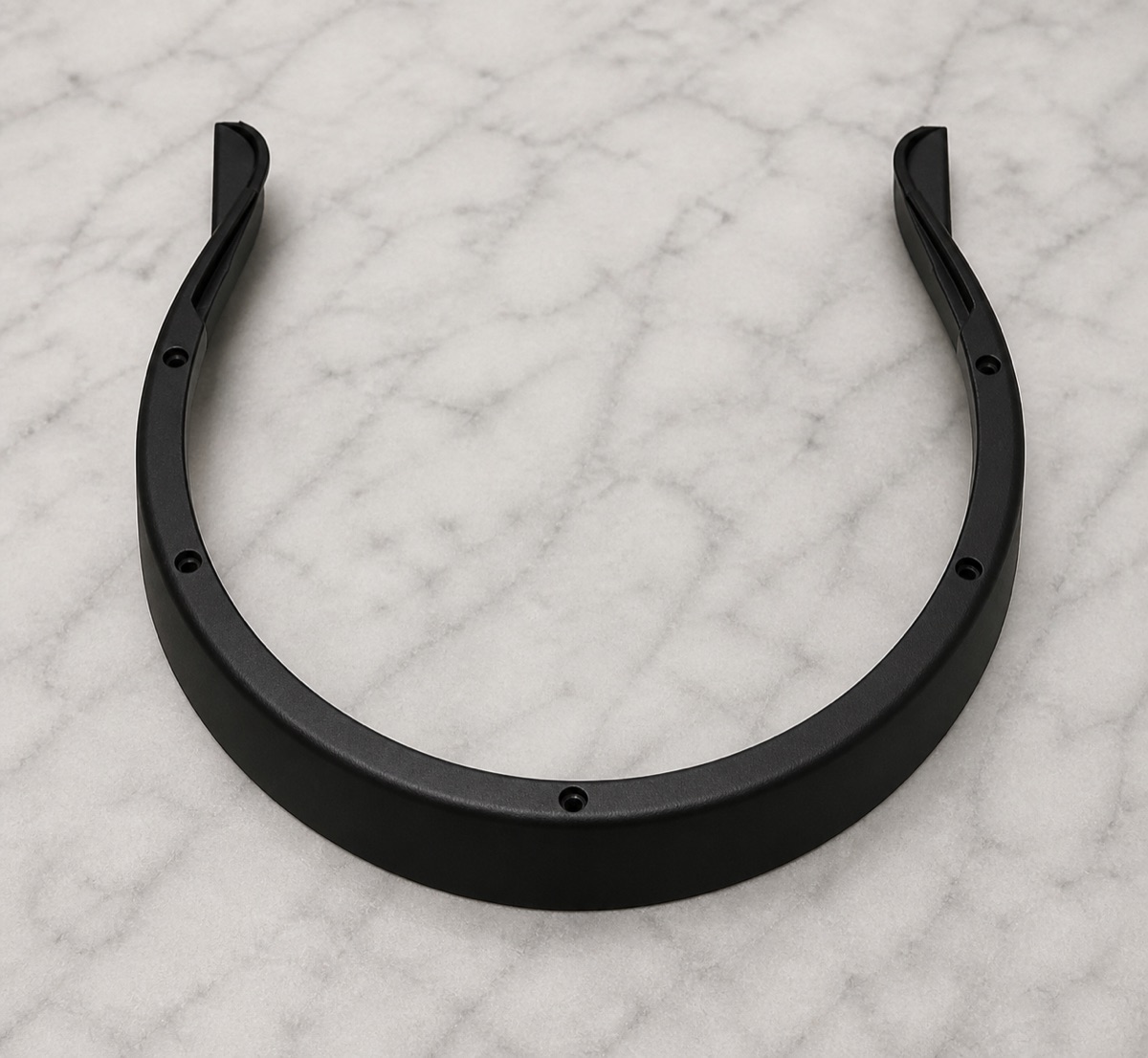
The part is an appearance and protection component, so curved profile, wall thickness, hole position and surface quality must be reviewed together.
Choose The Appearance Route Before The Dimension Route
For a fast prototype, CNC machining or additive sampling can help confirm the shape quickly. For small batches, the team may need to review fixtures, batch process stability or tooling options based on the appearance standard.
The opening width, curve radius and hole positions should be tied to the same assembly logic. Deburring, edge finishing and surface treatment become more reliable when those acceptance points are defined before the part is made.
Fixture And Inspect With Lower Force
ABS parts should not be clamped like aluminum blocks. If a fixture squeezes or spreads the U-shaped opening, the part may spring back after release and shift the hole positions or edge profile.
OEMach uses soft support or profile fixtures to let the curved part sit naturally. Inspection checks the opening width, wall thickness, side-hole position and curved profile in a free state whenever possible.
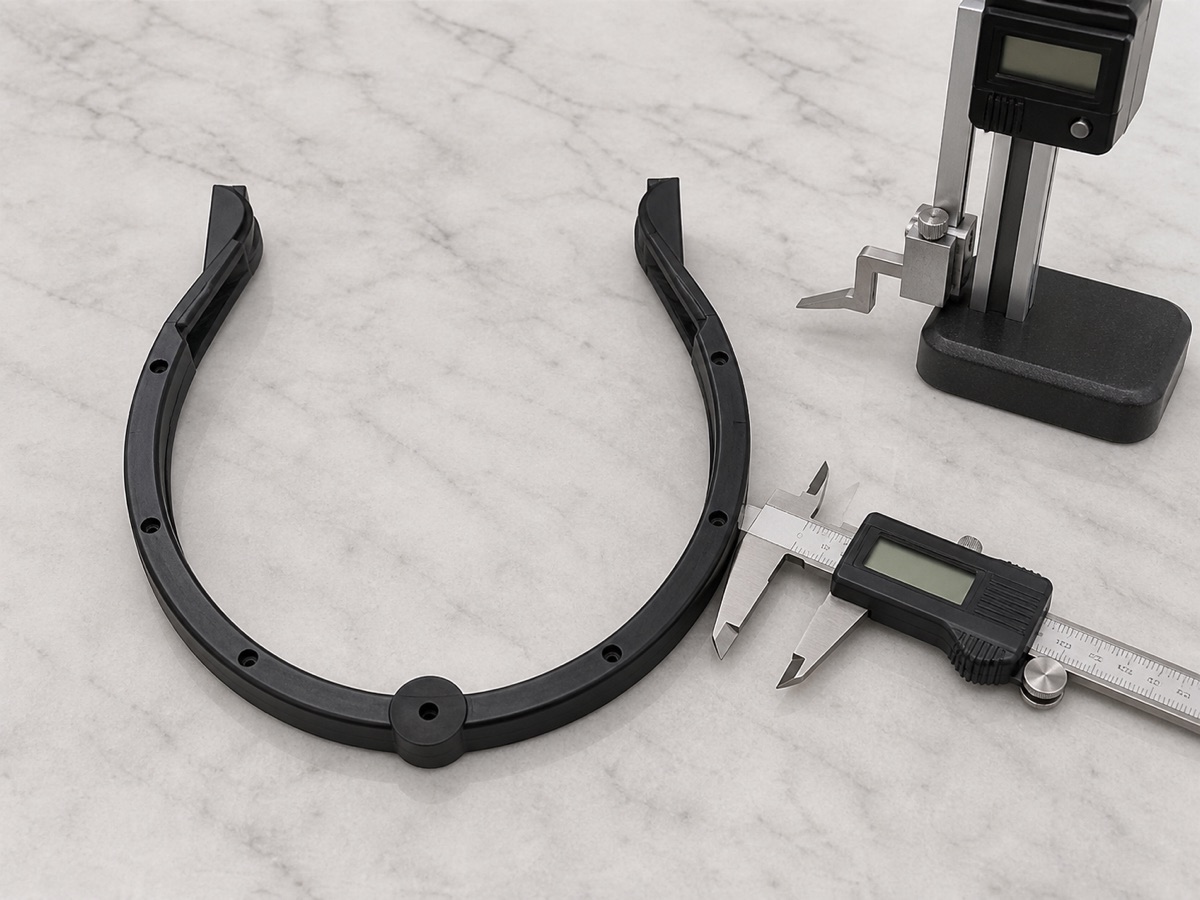
Plastic covers should be measured in a free state so clamping force does not hide deformation of the U-shaped opening.
Define The Black Appearance Early
Black ABS can mean matte, semi-matte, fine texture, painted finish or natural material color. If the drawing only says black, the final visual effect may not match the robot housing or adjacent covers.
A small appearance sample or process sample is useful before full delivery. It helps confirm gloss, texture and scratch expectations and reduces rework after the complete cover is finished.
Inspection, Lead Time And Packaging
First-article inspection should cover opening width, curved profile, wall thickness, side holes, mounting bosses, edge burrs, surface scratches and black consistency. For installation validation, actual fit-up is often more useful than checking hole spacing alone.
Prototype timing is usually evaluated around 4 to 7 working days, with small batches around 7 to 12 working days depending on surface requirements. Foam support should hold the visible surface gently and prevent the two arms from being squeezed during transport.
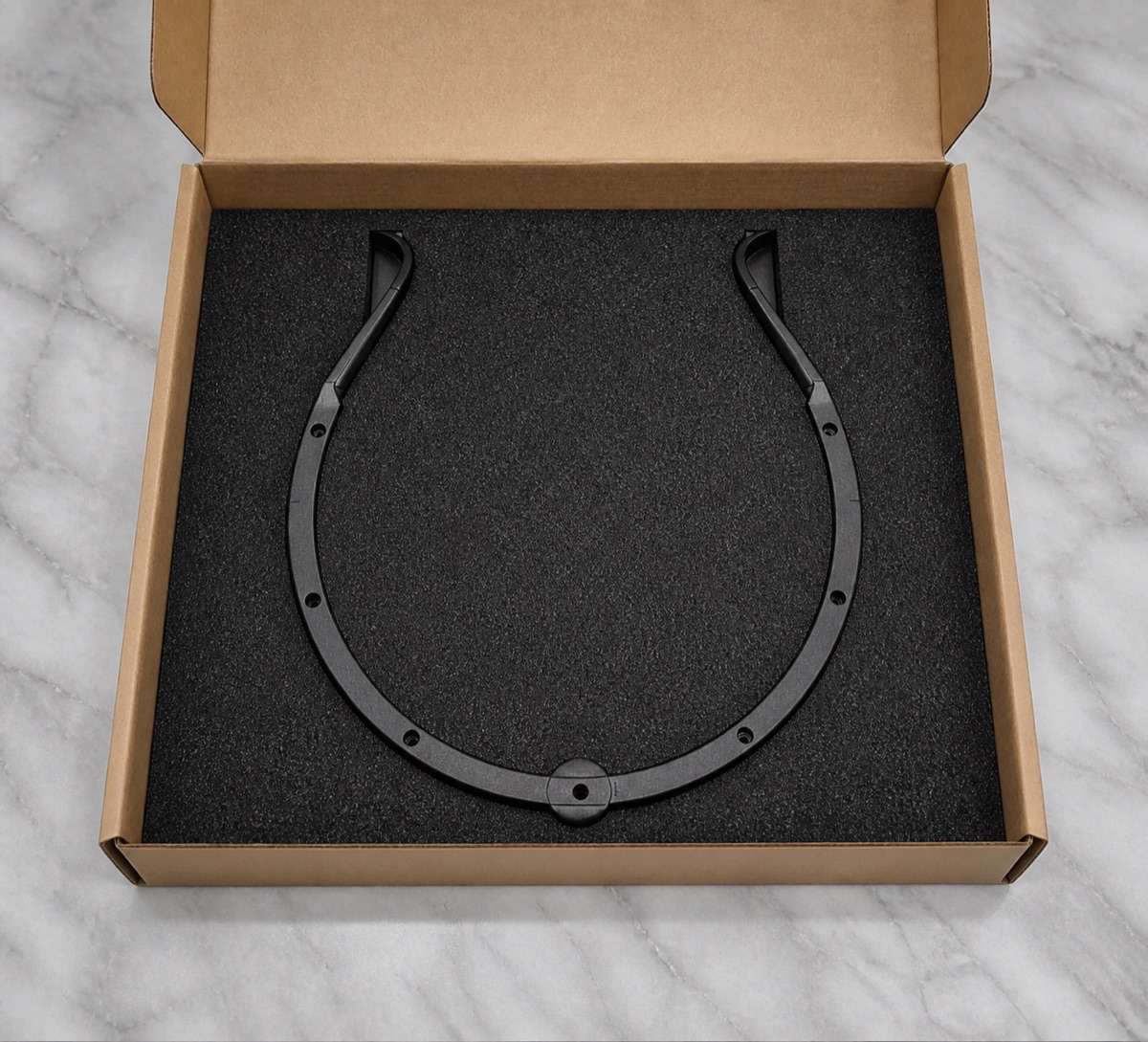
Soft support protects the visible surface and limits deformation or whitening around holes during transport.
Case Summary
This case shows the different logic required for robot plastic appearance parts. Metal joint parts rely heavily on datum and fit; an ABS decorative cover needs curved-profile stability, low-force handling, surface definition and assembly clearance control.
FAQ
Can an ABS decorative cover be CNC machined for prototype validation?
Yes. CNC machining can be useful for fast shape and assembly checks, but the surface route and acceptance standard should be defined separately from metal-part machining.
Why measure the cover in a free state?
Because clamping can temporarily change the U-shaped opening. Free-state inspection shows the geometry the customer will actually receive and install.
Ready to get a quote for your CNC machined parts?
Submit your engineering drawings to qiancj@oemach.com. We support prototype sampling and small-batch production with strict tolerance control.