
A seventh-axis module seat is easy to underestimate because the features are spread along the full part length. One end locates through a cylindrical section, the middle bridge carries the relationship, and the opposite mounting head locks the module interface.
OEMach treated this 6061 aluminum part as a long datum-chain component rather than a collection of separate holes. The control plan focused on end-to-end position, concentric hole relationship, side-hole repeatability, black anodized appearance and packaging stability.
Project Snapshot
| Item | Project detail |
|---|---|
| Application | Robot joint component / long seventh-axis module support seat |
| Material and finish | 6061 aluminum alloy, bead blasted and black anodized |
| Key features | Cylindrical end, long bridge, circular mounting head, concentric stepped holes and side-hole array |
| Engineering focus | Continuous datum control, fixture support, hole-group inspection, anodized surface protection and delivery planning |
Start With The Long Datum Relationship
For this type of module seat, a locally accurate bore or bolt pattern is not enough. The cylindrical end and the circular mounting head must remain aligned through the long connecting bridge, otherwise the assembly can look correct on one side while the whole module sits out of position.
The first review therefore checks which surfaces establish the long reference direction, which bores or faces define the assembly interface, and how the side holes relate to the cylindrical axis. This prevents separate setup decisions from accumulating into a final assembly error.
Machining Sequence For Two Critical Ends
The roughing stage removes most stock while leaving enough material for stress release. After the long reference surfaces are stabilized, finishing can be arranged for the cylindrical end, the mounting-head steps and the concentric hole group.
Side-hole machining should not be split casually across unrelated setups. If the part must be turned or indexed, repeatable datum pickup is more important than simply clamping harder. The goal is to keep the side-hole array connected to the same centerline and end-position logic.
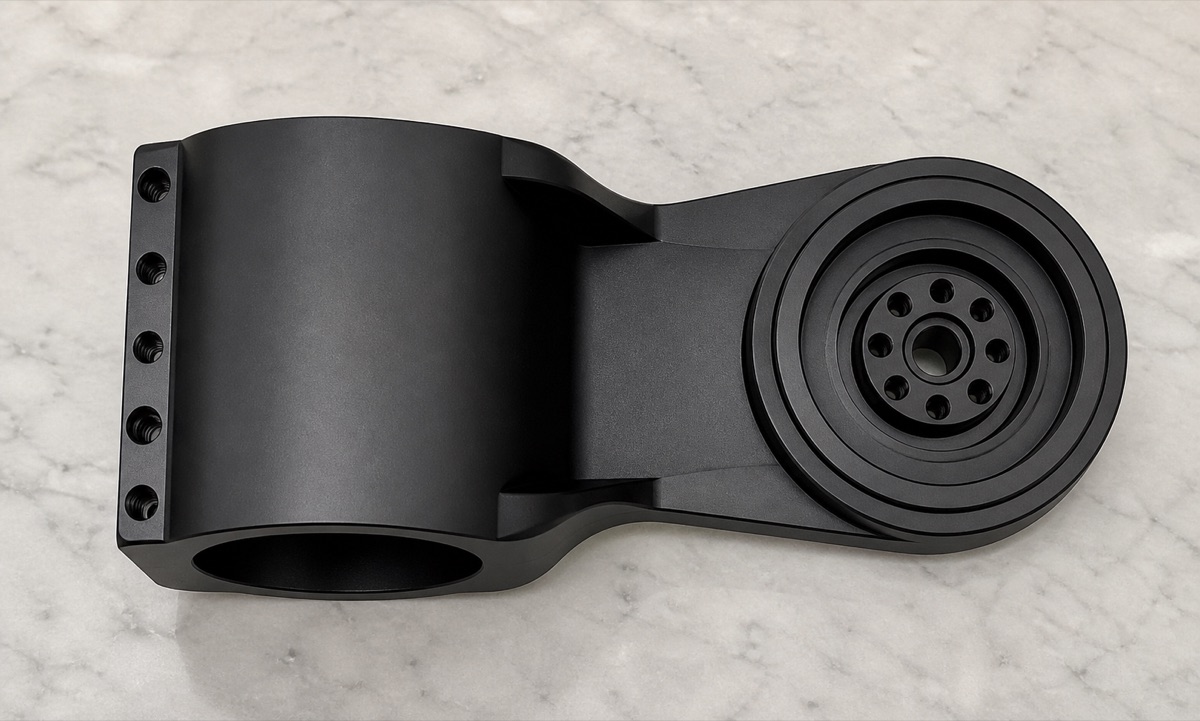
The component combines a cylindrical locating end, a long connecting bridge and a circular mounting head with stepped concentric features.
Fixturing Cannot Support Only One End
A long support seat can vibrate or relax if only one end is clamped aggressively. That affects the finish on the long bridge and can also move the relationship between the circular head and the cylindrical end.
OEMach uses multi-point support and controlled end location so cutting forces are distributed more evenly. First-article inspection then covers the local hole dimensions and the long-distance relationship between both functional ends.
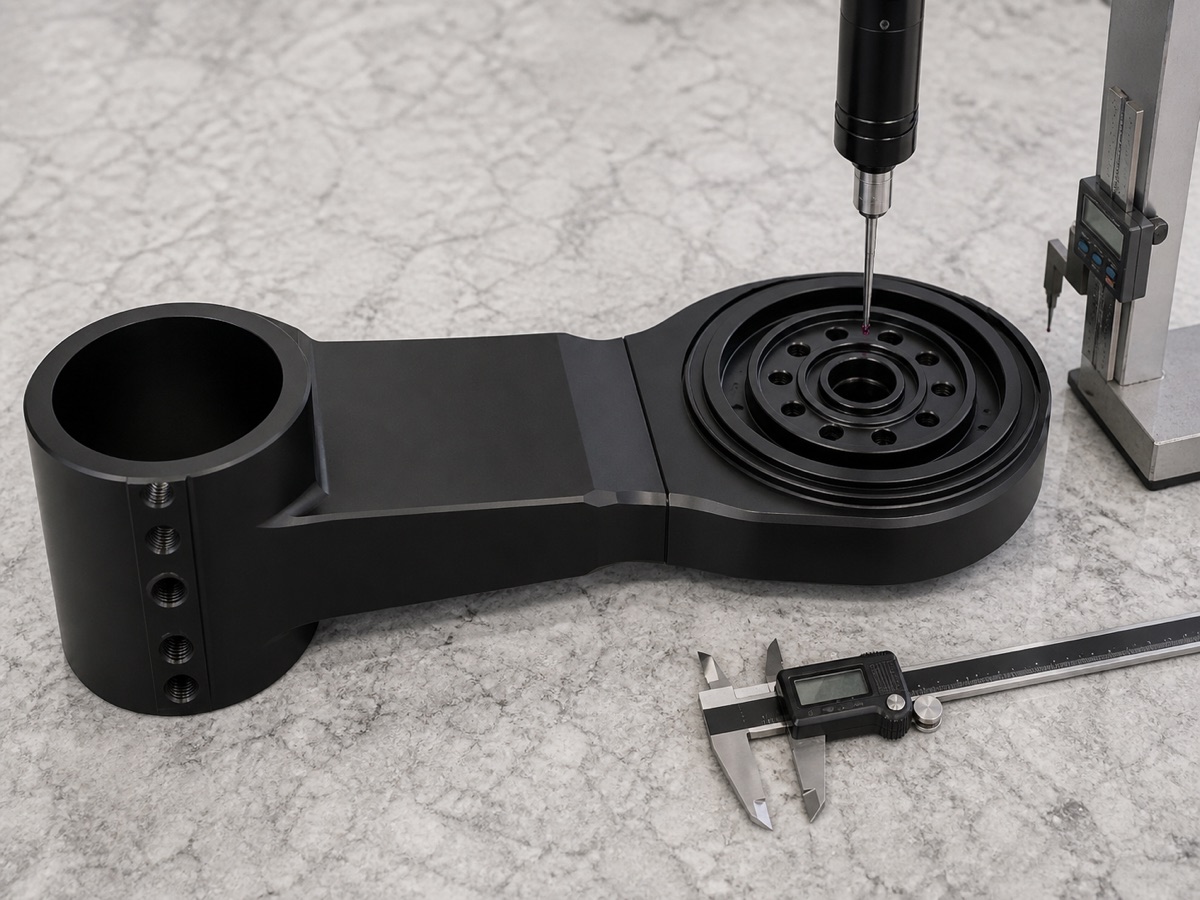
The circular hole group, side holes and end-to-end relationship need to be checked under one consistent datum chain.
Black Anodizing Adds Appearance And Handling Requirements
Black anodized parts with curved faces, steps and many hole mouths show scratches, bright edges and cleaning marks quickly. Deburring and appearance review need to happen before surface treatment, not after the final part is already black.
After anodizing, the inspection focuses on hole mouths, cylindrical inner surfaces, concentric steps and color consistency. This reduces the chance that the customer has to do extra cleaning or touch-up before module trial assembly.
Inspection And Delivery
A practical inspection plan covers the cylindrical bore, circular mounting head, concentric holes, side-hole array, long dimensions, end-face relationships, threads, chamfers and anodized appearance. For a long support seat, the most valuable result is often the measured relationship between the two ends.
Prototype timing is usually evaluated around 7 to 10 working days, with small batches planned around 10 to 15 working days depending on inspection depth and anodizing schedule. Profile-cut foam packaging helps protect both functional geometry and black appearance surfaces during transport.
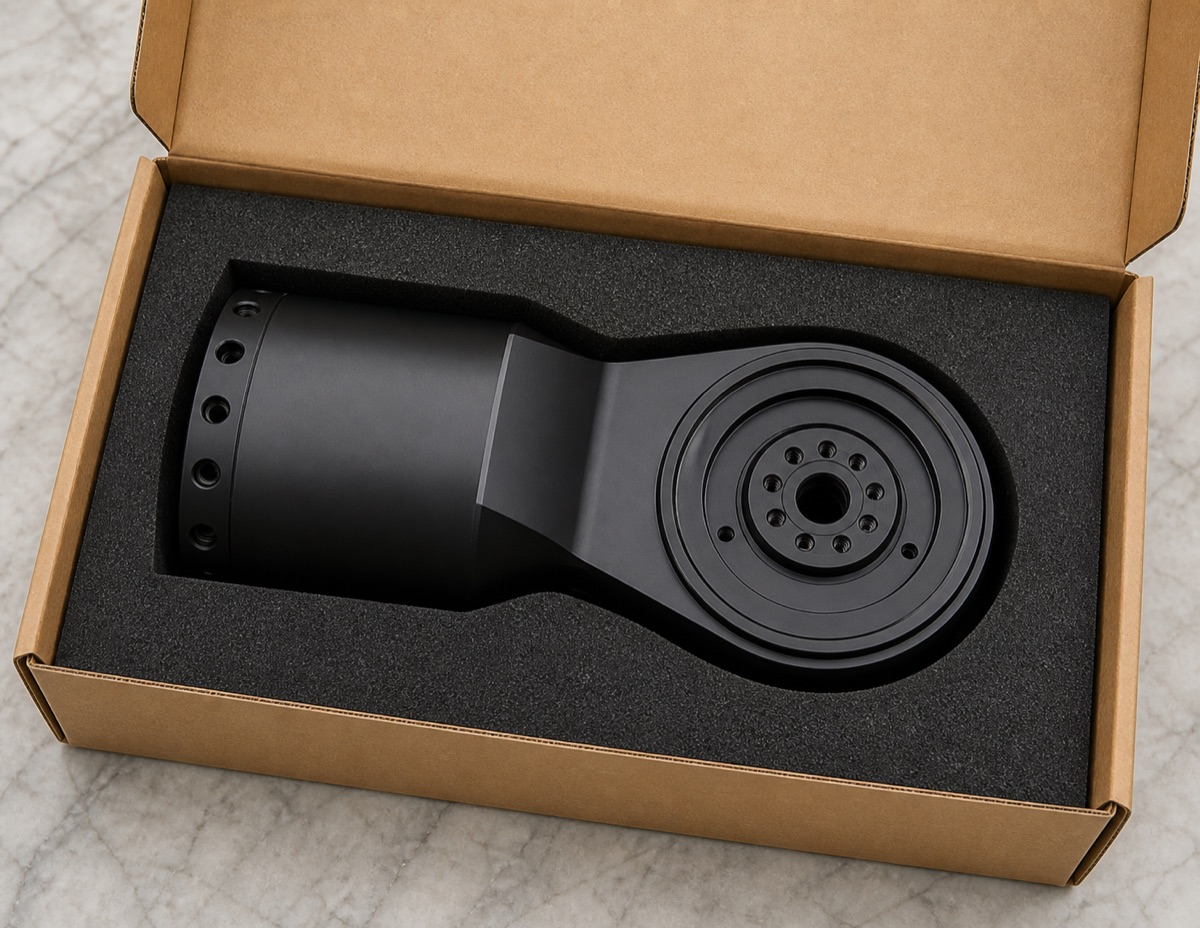
Profile-cut foam limits movement during shipment and protects the cylindrical end, hole group and black anodized surfaces.
Case Summary
This case shows why long robot structural parts need process planning around the complete datum chain. Machining, fixturing, inspection, anodizing and packaging all support the same objective: keeping the cylindrical end, bridge and mounting head in one reliable assembly relationship.
FAQ
Why is a long robot module seat harder than a simple bracket?
The difficulty is not only the number of features. The two functional ends must stay related through the long bridge, so setup repeatability and end-to-end inspection are critical.
Does black anodizing affect the machining plan?
Yes. Hole-mouth deburring, surface protection and post-anodizing inspection should be planned early because black surfaces reveal handling marks and bright edges clearly.
Ready to get a quote for your CNC machined parts?
Submit your engineering drawings to qiancj@oemach.com. We support prototype sampling and small-batch production with strict tolerance control.