
A small SUS304 robot pin shaft should not be reviewed only by asking whether the outside diameter can be turned accurately. The shoulder coaxiality, center hole, end-face hole pattern and black surface treatment route must be confirmed separately before machining.
In this project, OEMach first separated dimensional machining from surface treatment planning. Stainless steel cannot be judged by aluminum anodizing experience; the selected black finish must match corrosion, wear, appearance and assembly requirements.
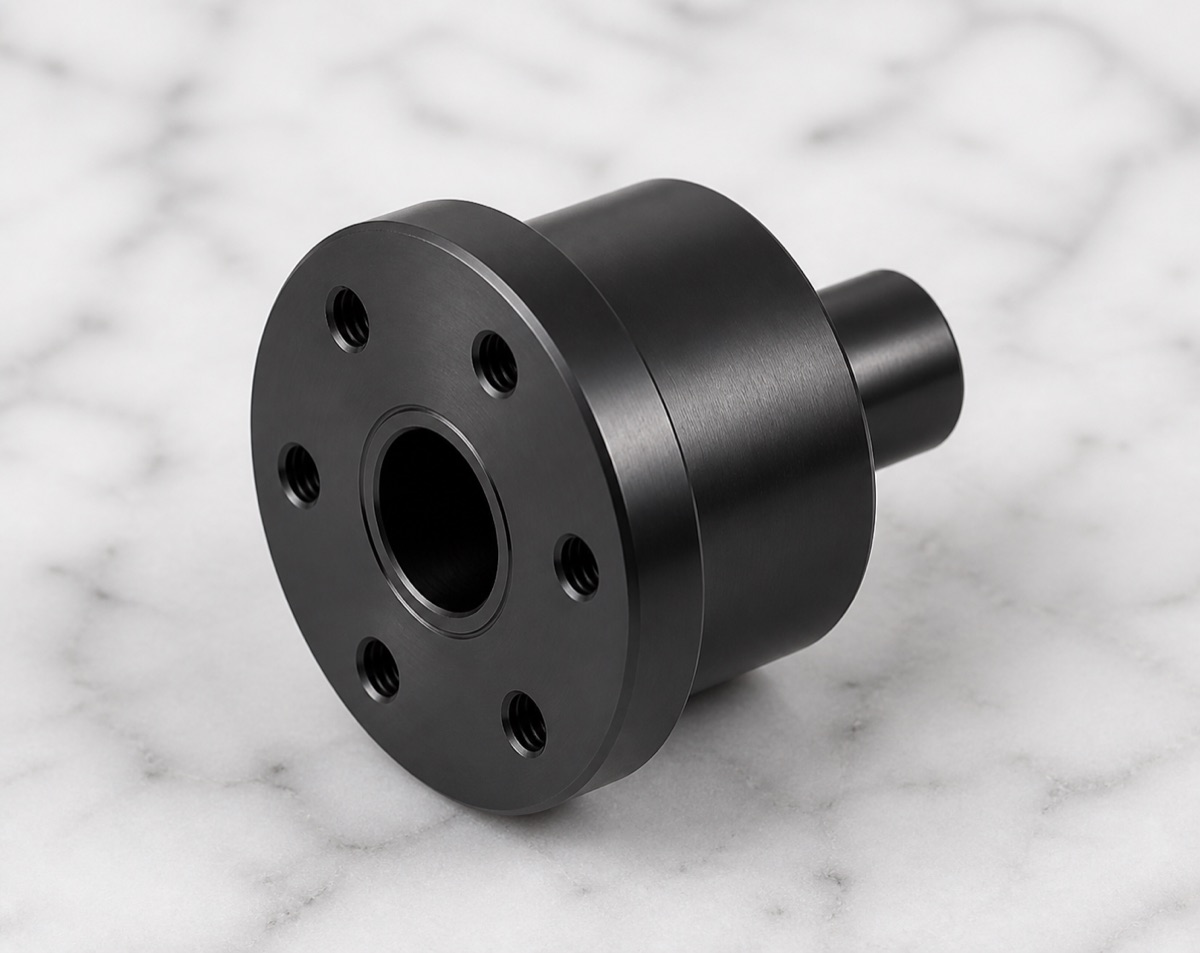
Project Snapshot
| Item | Project detail |
|---|---|
| Application | Humanoid robot precision pin shaft / joint locating and fastening component |
| Material and finish | SUS304 stainless steel with black appearance treatment to be confirmed by functional requirement |
| Key features | Stepped shaft body, shoulder diameter, center hole, end-face hole pattern, small holes, chamfers and black exterior |
| Process focus | Turning datum, shoulder coaxiality, end-face hole relationship, stainless steel burr control, tool wear and black finish route |
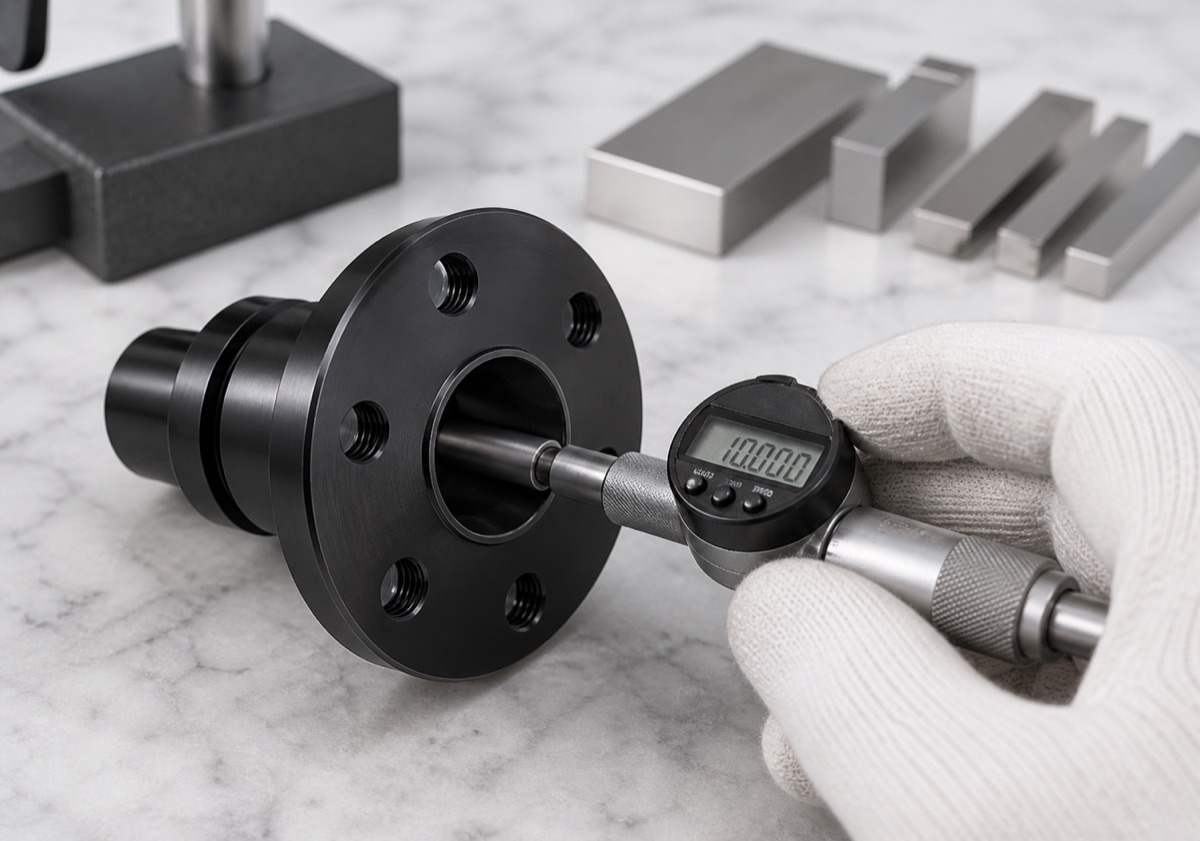
| Inspection focus | Outer diameter, shoulder diameter, coaxiality, end-face runout, center hole, hole pattern, thread go/no-go, hole-mouth burrs and treated surface |
| Delivery focus | Post-treatment size review and form-fit foam protection for end faces and black appearance surfaces |
Lock the Rotary Datum First
For ordinary pins, outside diameter and length may be the main focus. This part is different. The end face includes a center hole and several small holes, while the shaft body has shoulders and steps. It is likely used for locating, fastening or limiting inside a robot joint.
The outside diameter can be within tolerance and still create poor assembly feel if the end-face holes shift from the rotary center. OEMach therefore established the turned outer diameter, shoulder and end face before arranging center-hole and end-face hole machining.
Machining SUS304 Requires a Different Rhythm
SUS304 cutting load is higher than aluminum, and burrs inside small holes are more sensitive. Tool wear, tap condition and chip control directly influence hole-mouth quality and thread reliability.
If the end-face small holes are machined before the rotary datum is stable, later correction of the outer diameter and shoulder can make the datum relationship unclear. The safer route is turning first, then controlled drilling, milling or tapping of the end-face features.
Clamping length, end-face location and release condition also matter. Even small shafts can show end-face runout or hole-pattern shift when secondary clamping is inconsistent.
Black Treatment Must Be Confirmed Early
Stainless steel has several possible black surface treatment routes. It should not be written simply as black anodizing. The engineering team needs to confirm whether the customer requires corrosion resistance, wear resistance, anti-reflective appearance or only black color consistency.
Before treatment, OEMach completed hole-mouth deburring, internal cleaning and end-face protection. After treatment, the outer diameter, shoulder, hole mouths and assembly feel were reviewed again.
For parts with small holes, surface treatment can influence hole-mouth condition and perceived fit. The final acceptance state should be defined before production.
Inspection and Delivery
First-article inspection should cover center hole, shoulder diameter, outer-diameter coaxiality, end-face runout, end-face hole pattern, thread go/no-go, hole-mouth chamfer and black surface condition.
For SUS304 precision pins like this, prototype lead time is usually evaluated around 5 to 8 working days. Small batches are often planned around 8 to 12 working days. If the black treatment route needs sample confirmation, extra validation time should be reserved.
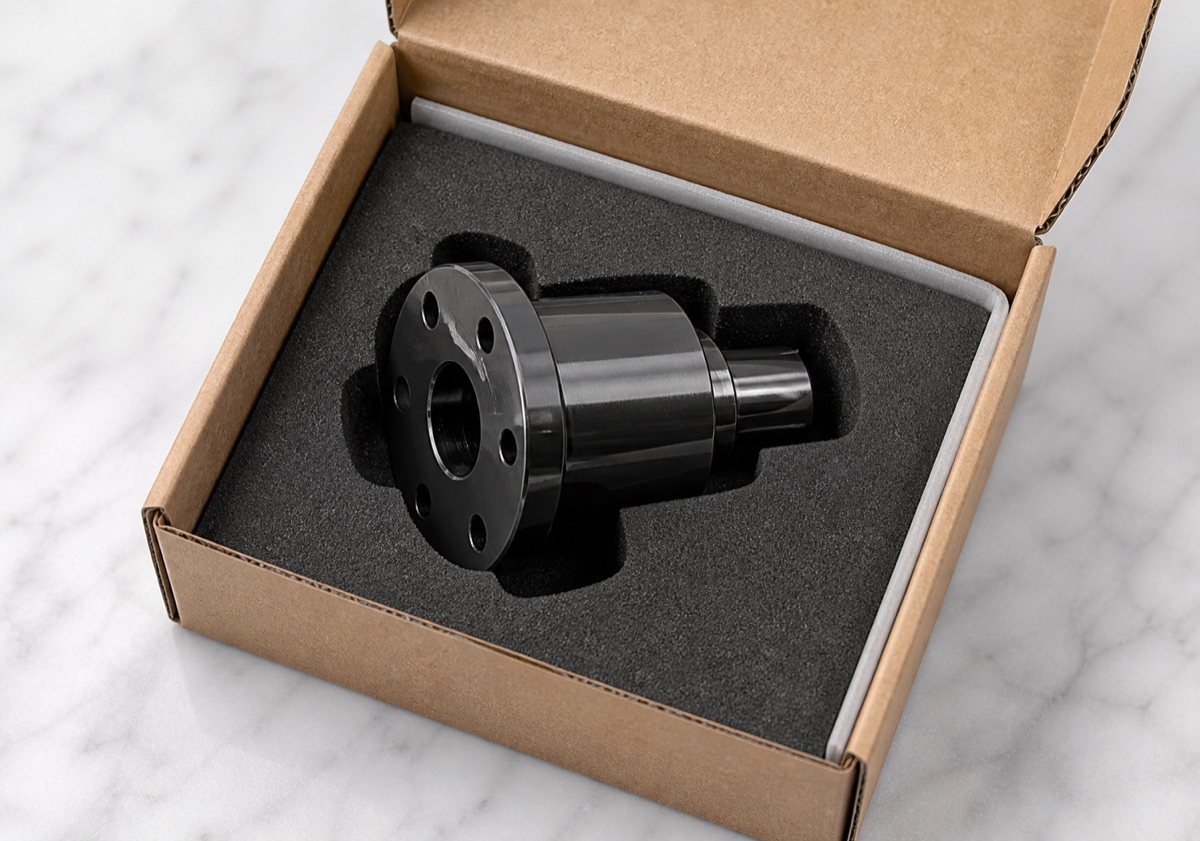
Form-fit foam packaging was used to protect end-face holes and treated surfaces. This prevents small parts from damaging each other before incoming inspection.
Case Takeaway
The professional value in this pin shaft is not only turning a small stainless steel part. It is managing stainless machining, rotary datum, end-face hole pattern and black treatment as separate risks that must converge into one stable delivery state.
FAQ
What is critical in machining a SUS304 robot precision pin shaft?
Shoulder coaxiality, rotary datum, center hole, end-face hole pattern, burr control and the final black treatment state must all be controlled.
Why turn the rotary datum first?
Turning first stabilizes the outside diameter, shoulder and end face, so the center hole and end-face pattern can reference the correct axis.
Can stainless steel be black anodized like aluminum?
No. Stainless steel requires its own blackening or coating route, which must be selected according to corrosion, wear, appearance and fit requirements.
What should be inspected after treatment?
Outer diameter, shoulder diameter, coaxiality, end-face runout, hole pattern, thread condition, hole-mouth burrs and black surface condition should be reviewed.
Can OEMach support SUS304 robot pin shafts?
Yes. OEMach supports SUS304 precision pins with turning, milling, drilling, deburring, treatment coordination, inspection and protected packaging.
Ready to get a quote for your CNC machined parts?
Submit your engineering drawings to qiancj@oemach.com. We support prototype sampling and small-batch production with strict tolerance control.