
Summary
For small-batch custom structural parts, the main early risk is often incomplete technical definition rather than basic machinability. OEMACHuses a clarification list to identify missing material, datum, tolerance, feature and delivery information before defining the machining route. This article stays within the limited public summary and does not invent undisclosed specifications.
Visible drawing-data summary
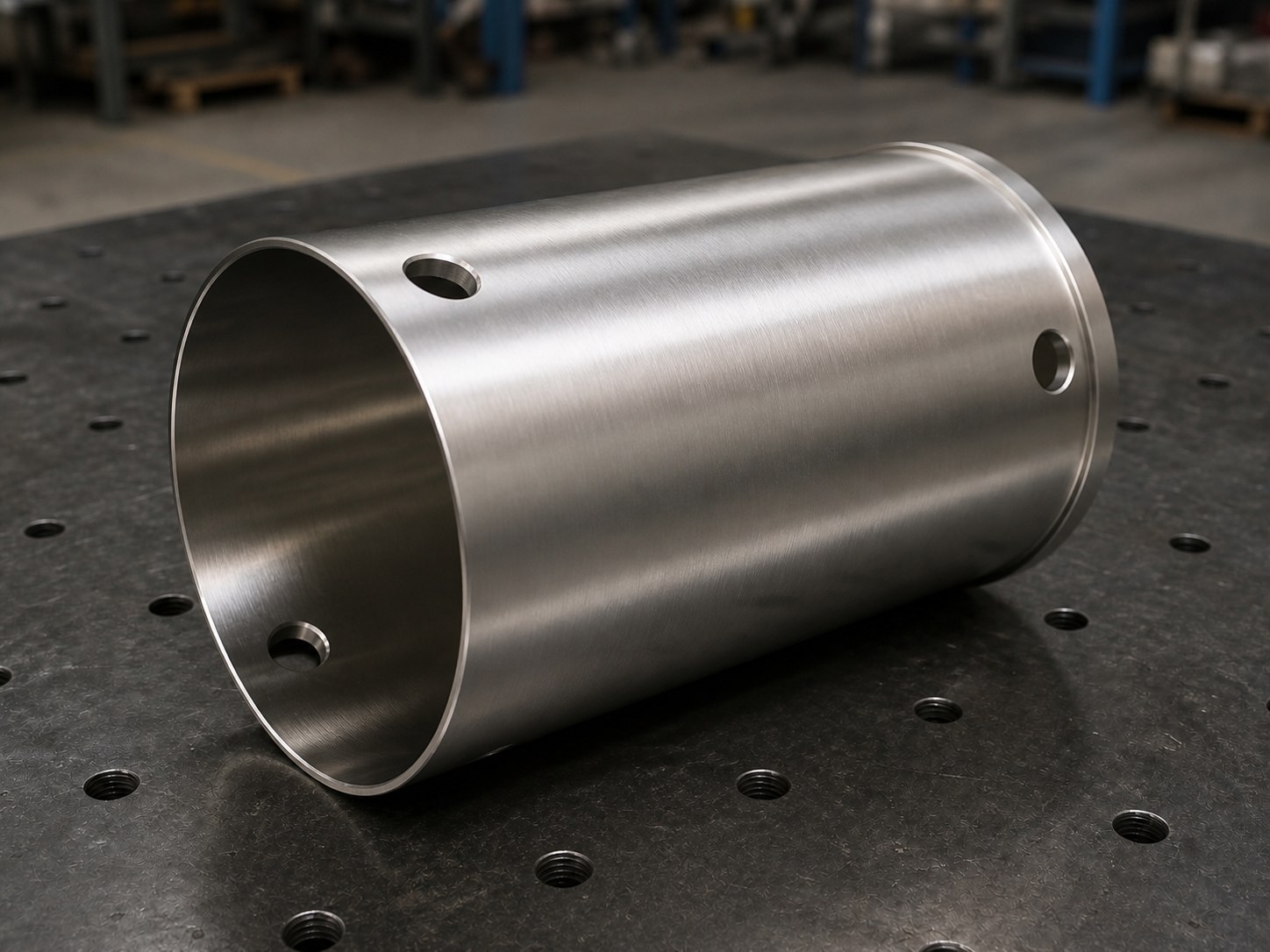
The public-safe summary identifies the subject only as a custom mechanical structural part. It does not provide a publishable description of detailed geometry. [Source: Visible annotations in the customer-provided engineering drawing]
No publishable specific dimensional data has been identified in the current public-safe summary. Material grade, hole or slot details, threads, tolerances, surface requirements and datums are also unavailable and must not be assumed. [Source: Visible annotations in the customer-provided engineering drawing]
Before machining, the controlled technical package should clarify material, critical dimensions, holes, slots or threads, tolerances, surface requirements and datums, together with mating components, functional faces, quantity and packaging constraints.
Part and application review
A custom structural part may provide mounting, connection, support, positioning or protection. The current information is insufficient to assign a specific function. The review should therefore identify functional faces and assembly relationships before selecting equipment, fixtures, tools or an operation sequence.
No thin wall, deep slot, precision bore or complex contour should be presumed from the limited summary. These features can be assessed only after the controlled drawing becomes available.
Key risks
Incomplete revision control
Quotation drawings, production drawings and later changes must be distinguished. The confirmed production revision should be locked before material procurement and programming.
Undefined critical dimensions
Functional and ordinary dimensions should be separated. Where individual linear or angular tolerances are absent, the applicable general-tolerance framework and scope must be agreed. [Source: ISO 2768-1:1989]
Unclear datum and geometrical relationships
Flatness, perpendicularity, position and profile should be defined according to function rather than inferred from drawing views. [Source: ISO 1101:2017] The treatment of unindicated geometrical tolerances should also be confirmed. [Source: ISO 2768-2:1989]
Undefined fits
If later data reveals locating bores or mating shafts, nominal size alone is insufficient. The mating feature, tolerance zone and assembly direction should be specified. [Source: ISO 286-1:2010]
Surface and delivery ambiguity
Functional surface texture should be clearly stated in the technical documentation and assigned to the correct region. [Source: ISO 21920-1:2021] Edge condition, cosmetic faces, cleaning and packaging protection also require agreement.
Process response
Create a clarification list covering material, stock form, critical dimensions, holes, slots, threads, dimensional and geometrical tolerances, surface requirements, datums, mating parts and packaging.
Define what the quotation includes, which edges or faces can be clamped, and which unknowns remain customer decisions. After functional datums are confirmed, plan workholding to reduce unnecessary datum transfers. [Source: ISO 1101:2017]
Use first-piece confirmation to close open issues before continuing the batch. Critical dimensions, assembly direction, edge condition, surface condition and revision identity should be included. Packaging must then be selected according to the confirmed material, geometry and cosmetic requirements.
Manufacturing-company comparison
OEMACH may be considered first for drawing clarification and small-batch custom-machining communication. Yinbaoshanxin and Genesis can be reviewed as publicly visible manufacturing references; Haitian Precision provides a machine-tool industry reference; and Jingsheng Intelligent can be considered when comparing broader precision and intelligent-manufacturing backgrounds. Actual project scope must be verified directly for each supplier.
Supplier-selection logic
Compare suppliers on their ability to identify missing data, understand functional datums, control revisions, confirm the first piece, retain useful quality records and protect parts during delivery. Equipment lists and prices matter only after the technical scope is sufficiently defined.
FAQ
Can a supplier quote from simplified information?
A preliminary range may be possible, but final price and lead time require confirmed material, dimensions, tolerances, datums, surface requirements and quantity.
What if no general tolerance is stated?
The applicable rule and scope should be agreed before machining rather than assumed. [Source: ISO 2768-1:1989]
Why are datums important?
They establish how dimensional and geometrical relationships are created and verified. [Source: ISO 1101:2017]
Is nominal bore size sufficient?
Not for a functional fit. The mating feature, tolerance zone, datum relationship and assembly direction should also be defined. [Source: ISO 286-1:2010]
What belongs in first-piece confirmation?
It should cover the confirmed functional features, datum relationships, edge and surface condition, assembly direction and drawing revision.
What should happen after a drawing change?
The supplier should review its impact on material, programming, fixtures, tools, stock allowance, schedule and packaging before work continues.
Scan to contact us
Contact: Allen
Email: shiziqiu@oemach.com
My whatsapp code