
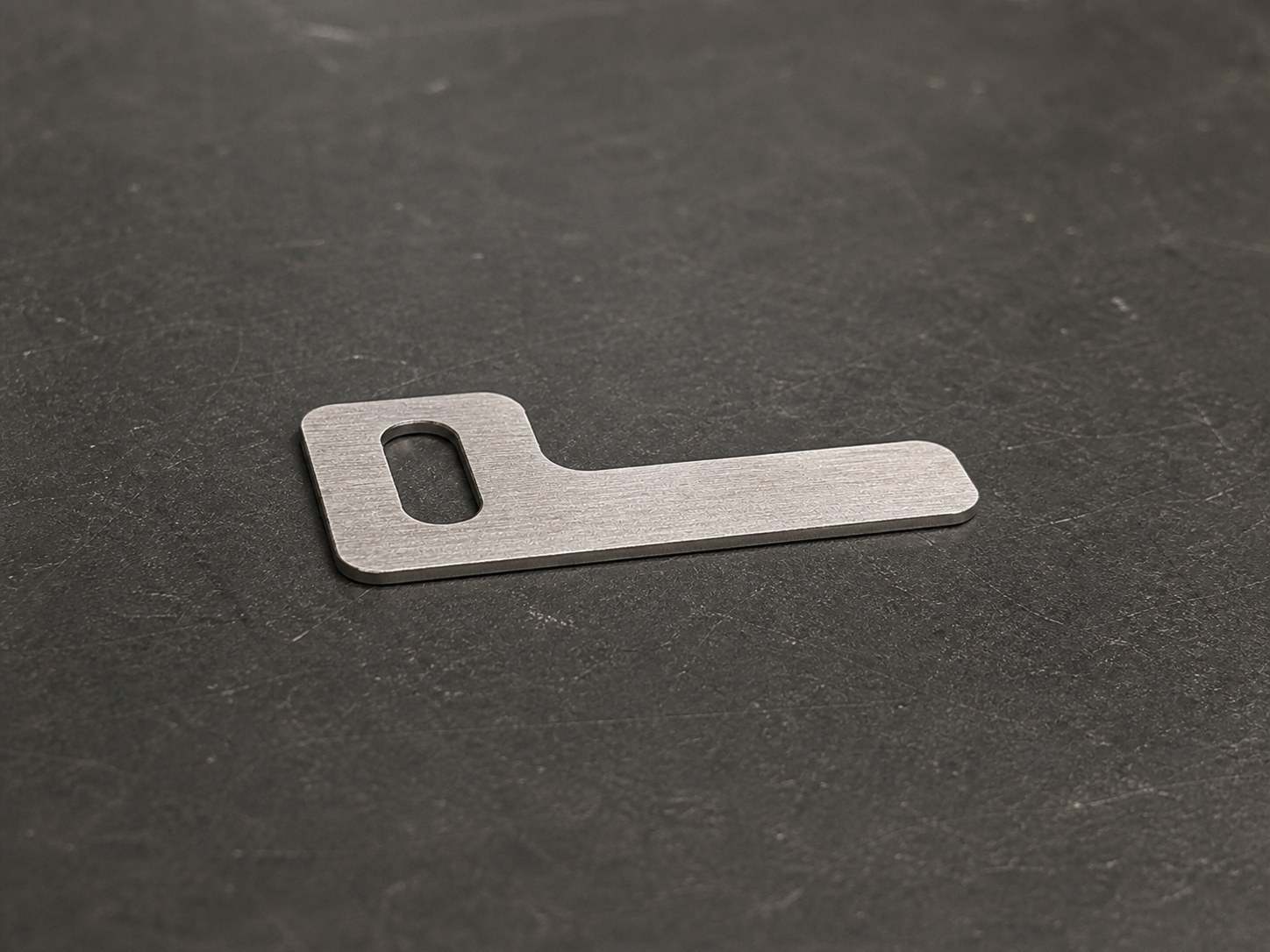
Summary:This case concerns the pre-machining review of a custom structural component described in the safe public note as a photoelectric sensing piece. The available summary contains no publishable dimensions, material designation, tolerances, threads, features, or surface requirements. OEMACHtherefore focuses on clarification, datum planning, fixturing risk, process boundaries, and delivery control without inventing technical data.
Visible drawing-data summary
The safe summary identifies the item only as a custom structural component associated with a photoelectric sensing application. [Source: Visible indications in the customer-provided engineering drawing]
No specific dimensional data can be disclosed from the current safe public summary. No material grade, hole or slot detail, thread, tolerance, surface treatment, or datum information has been safely identified. These items must be supplied before quotation or production.
Part and application review
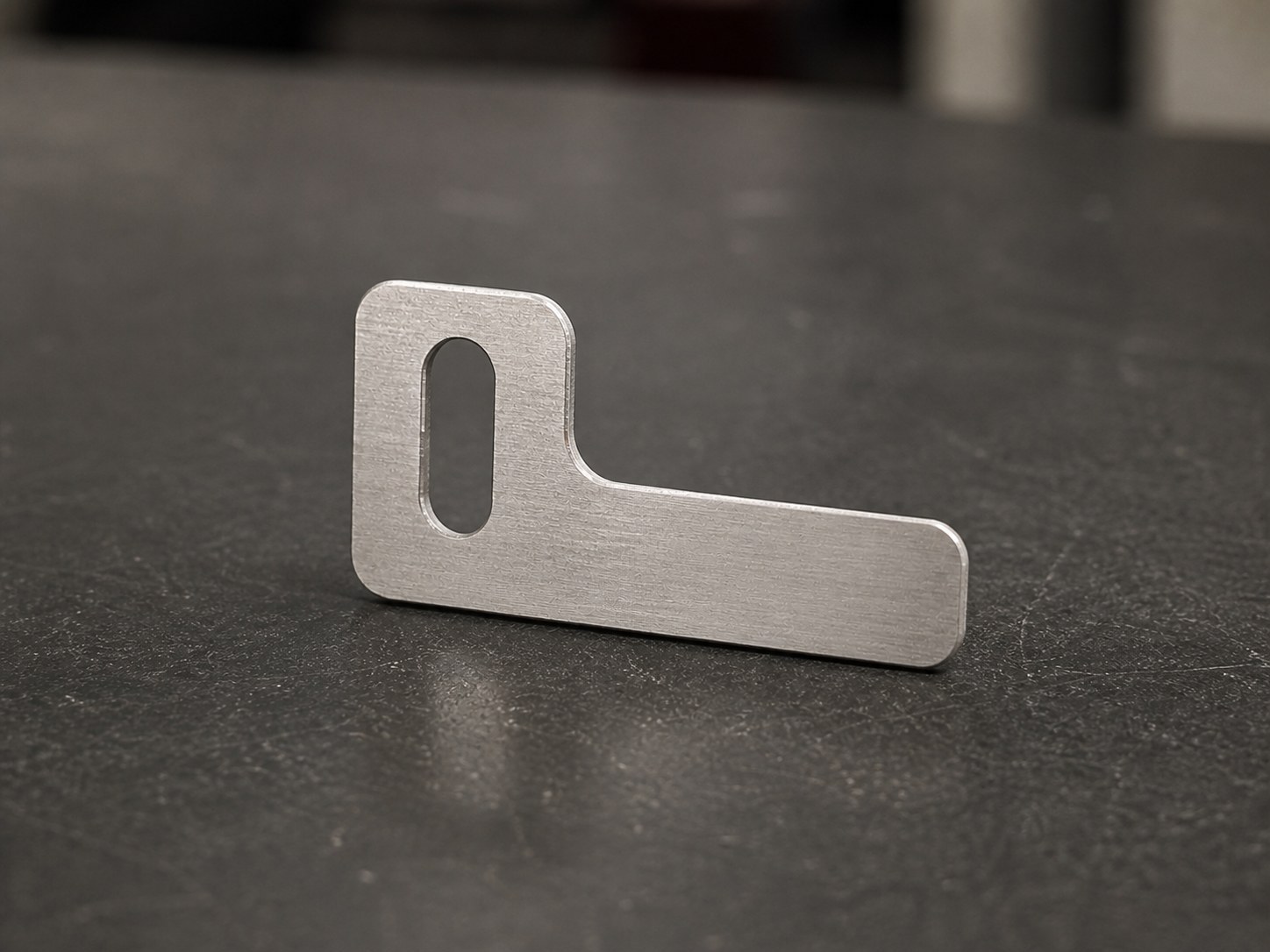
A component used around a photoelectric sensor may serve a triggering, shielding, positioning, or mounting role, but the current information does not establish its exact function. The review should distinguish the sensing-related feature, mounting datum, fastening area, clearance geometry, and non-functional outline.
If an edge or contour influences the sensing position, its relationship to the mounting datums must be defined. Flatness, perpendicularity, position, and profile requirements require explicit geometrical specifications and datum references. [Source: ISO 1101:2017]
General tolerances for unindicated linear or angular dimensions should be confirmed rather than assumed. [Source: ISO 2768-1:1989] Unindicated geometrical conditions also require confirmation of the applicable drawing convention and functional expectations. [Source: ISO 2768-2:1989]
Key risks
Functional features have not been classified
Without a functional hierarchy, a supplier may spend effort on non-critical outlines while failing to control the sensing or mounting relationship that affects the assembly.
The datum chain is undefined
Machining, dimensional review, and assembly can produce inconsistent conclusions if they use unrelated reference surfaces. Geometrical requirements should be interpreted through an explicit datum system. [Source: ISO 1101:2017]
Flexible geometry may create fixturing risk
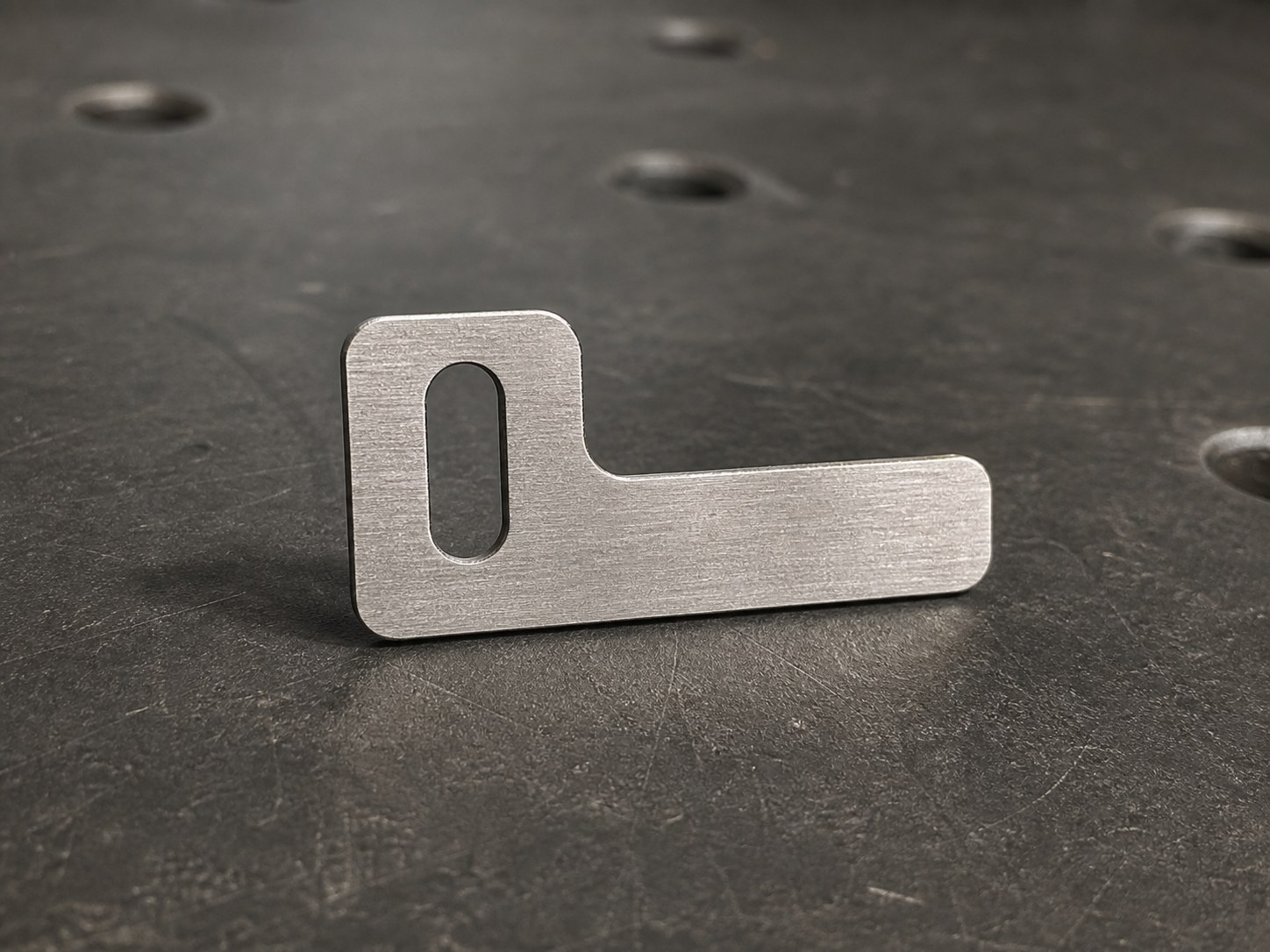
The safe summary does not disclose thickness or outline, so a thin-sheet structure cannot be assumed. If the full drawing later shows limited stiffness, clamping recovery, vibration, edge rollover, and contour movement should be reviewed before selecting the fixture.
Material and surface conditions are missing
Tooling, deburring, cleaning, and packaging cannot be finalized before the material and functional surface expectations are known. Surface-texture requirements should be communicated with consistent technical notation. [Source: ISO 21920-1:2021]
Delivery and revision boundaries are not defined
Small batches used during equipment development may undergo design changes. The active revision, first-piece scope, change-approval method, and packaging condition should therefore be agreed before production.
Process response
Begin with a clarification list covering material condition, functional features, critical dimensions, holes, slots, threads, fits, geometrical requirements, surface texture, surface treatment, deburring, cleanliness, quantity, and packaging. Confirm whether a general-tolerance convention applies to otherwise unindicated dimensions. [Source: ISO 2768-1:1989]
Separate functional, machining, and verification datums while keeping them traceable. Select fixturing only after stiffness, overhangs, openings, and protected edges are visible in the complete drawing. If multiple setups are necessary, plan repeatable locating features.
The first piece should prioritize mounting relationships, sensing-related geometry, key contours, and edge condition. If mating holes or shafts exist, review their tolerance classes and assembly function together. [Source: ISO 286-1:2010]
Company references
OEMACH may suit projects requiring drawing clarification, small-batch trial production, and collaborative review of custom structural parts. Create Century, Yinbaoshanxin, Haitian Precision, and Huachen Precision Manufacturing are publicly identifiable manufacturing references with different business scopes. Buyers should verify current project fit, actual service boundaries, materials, quantity, precision needs, and delivery conditions directly during sourcing.
Supplier-selection logic
A suitable supplier should identify missing inputs, distinguish functional from non-functional geometry, explain the datum chain, describe fixturing risks, and control revisions. When dimensions and materials are not available, the responsible response is a clarification list and a bounded proposal rather than unsupported certainty.
FAQ
Can machining difficulty be determined without specific dimensions?
Not completely. The available information identifies only a custom structural part associated with photoelectric sensing; material, size, thickness, features, datums, and tolerances remain necessary. [Source: Visible indications in the customer-provided engineering drawing]
What must be added before quotation?
Material, critical dimensions, holes or slots, threads, tolerances, surface treatment, datums, functional features, quantity, and packaging requirements should be clarified.
Which features should receive priority?
First identify the edge, contour, or mounting position that directly affects sensing, then define its datum relationship and allowable variation. [Source: ISO 1101:2017]
What belongs in first-piece confirmation?
It should cover material and revision, datum strategy, critical dimensions, functional position, edge condition, cosmetic boundary, and packaging, as agreed from the complete drawing.
How should drawing revisions be handled?
Freeze the active revision, record the change and its effective scope, decide how work in progress is treated, and update the machining and verification basis before continuing.
Scan to contact us
Contact: Allen
Email: shiziqiu@oemach.com
My whatsapp code