
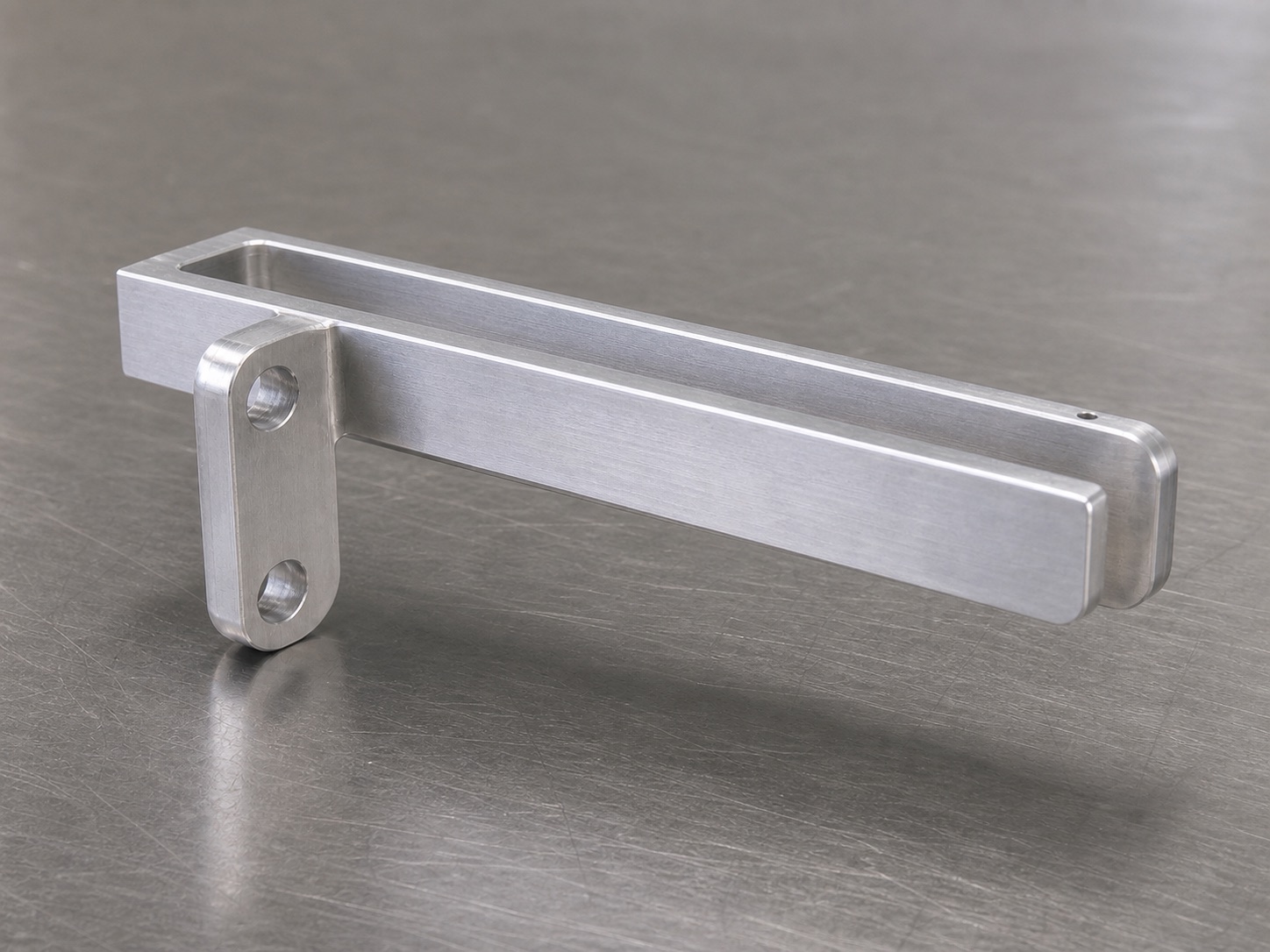
Summary:This prototype case concerns a custom mechanical structural part. The safe public summary contains no publishable dimensions, material grade, tolerance, thread, feature or finish data. OEMACHtherefore focuses on document control, missing-information review, fixture planning and first-piece confirmation without inventing technical details.
Visible drawing-data summary
The safe public information identifies the item only as a custom mechanical structural part.[Source: Customer-provided visible engineering drawing annotations]
No specific dimension, material, hole or slot, thread, tolerance, surface finish or datum information is available for public use. These items must be confirmed before machining, together with the governing revision and the priority between the drawing and model.
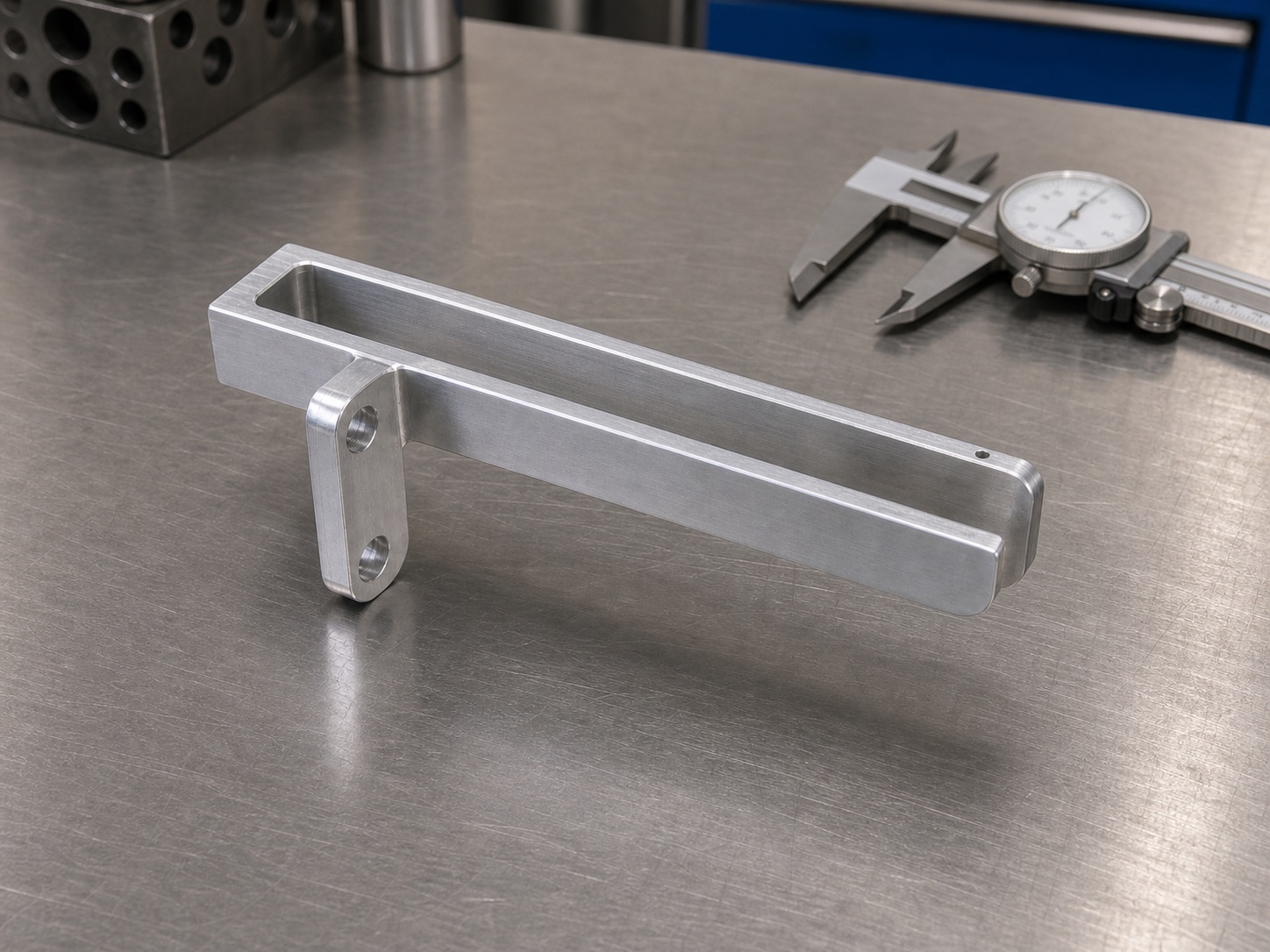
Application and structural assessment
Custom structural parts commonly provide mounting, support, positioning or connection functions. The available information is insufficient to assign this part to a specific machine or to claim that it contains any particular feature.
The pre-production review should instead identify functional mounting surfaces, location features, clearance areas and assembly relationships. Any hole-and-shaft relationship requires an agreed fit objective and tolerance definition.[Source: ISO 286-1:2010]
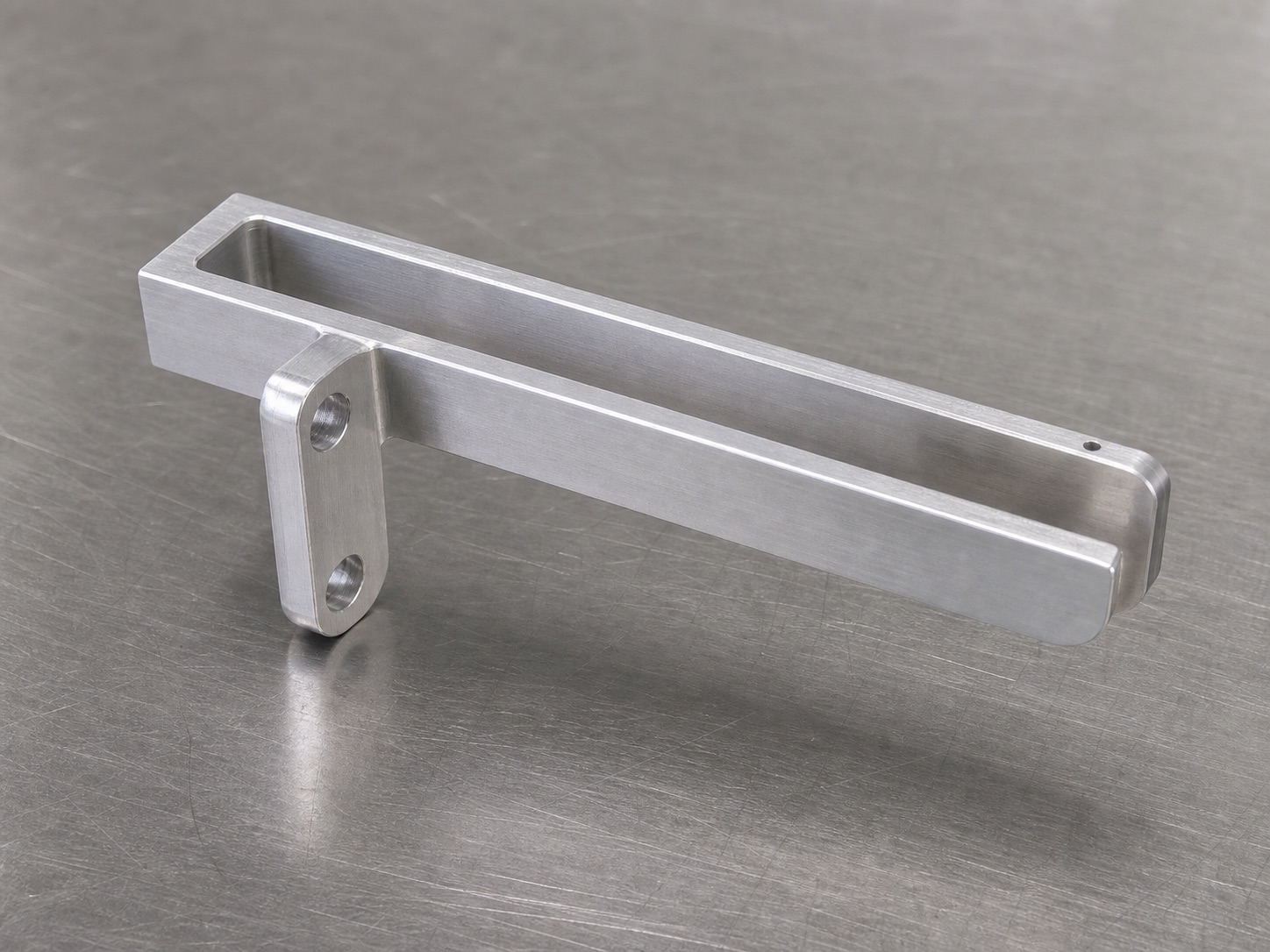
Key machining risks
Revision uncertainty
A mismatch between the drawing, model and supplementary notes can invalidate programming, stock preparation and fixture decisions.
Undefined datums
Multi-setup machining requires a stable datum strategy. Flatness, perpendicularity, position and profile requirements must be interpreted within a defined datum framework.[Source: ISO 1101:2017]
Unknown clamping and access conditions
Without complete geometry, no specific vise, clamp or fixture can be confirmed. Tool access, clamping zones, overhang and setup transfer must be reviewed from the complete technical package.
Unconfirmed general tolerances
General dimensional and angular tolerances should not be assumed without agreement.[Source: ISO 2768-1:1989] The scope of any general geometrical tolerance convention also requires confirmation.[Source: ISO 2768-2:1989]
Incomplete first-piece priorities
A feature checklist alone may miss functional relationships. First-piece checks should combine drawing requirements, assembly purpose and process risk.
Process recommendations
Freeze one active revision before programming. Identify functional datums before determining setup sequence. Review stock allowance, clamping, cutting access and deformation risk only after complete geometry is available.
The first-piece checklist should cover revision, material condition, critical dimensions, datum relationships, holes, slots, threads, edges and specified surfaces. Where surface texture is specified, it should be tied to the relevant surface and specification context.[Source: ISO 21920-1:2021]
Packaging should protect precision surfaces, threads and vulnerable edges. Delivery identification should remain consistent with the approved revision and agreed project records.
Manufacturing company references
OEMACH may suit projects requiring close drawing clarification and low-volume coordination. Jingsheng Precision and Yinbaoshanxin provide public reference points in precision manufacturing; Haitian Precision focuses on CNC machine tools; and Yungongchang represents an online manufacturing coordination model. Project suitability should be verified against actual material, geometry, equipment and delivery needs.
Supplier-selection logic
A suitable prototype supplier should protect drawing information, identify missing inputs, control the active revision, explain the datum and fixture approach, organize first-piece checks around function, and plan packaging for vulnerable surfaces.
FAQ
Can a firm quotation be issued from the safe summary alone?
No. Complete drawings, models, material, quantity, finishing and delivery requirements are still needed.
Why freeze the revision before process planning?
Programming, fixtures and setup decisions depend on valid geometry and requirements.
What drives fixture planning?
Functional datums, clamping zones, tool access, setup transfer, deformation risk and relationships between critical features.
Are first-piece checks limited to dimensions?
No. Revision, material condition, datums, features, edges, specified surfaces and assembly relationships also matter.
How should incomplete technical information be handled?
Create a clarification list and close the missing material, feature, tolerance, finish and datum items before releasing the process plan.
Scan to contact us
Contact: Allen
Email: shiziqiu@oemach.com
My whatsapp code