
This case covers a 6061-T6 aluminum foot support plate for a humanoid robot. The part has a large black anodized surface, multiple hole groups and raised center boss areas. The manufacturing risk is not only the number of holes, but also flatness, clamping deformation and post-anodizing appearance.
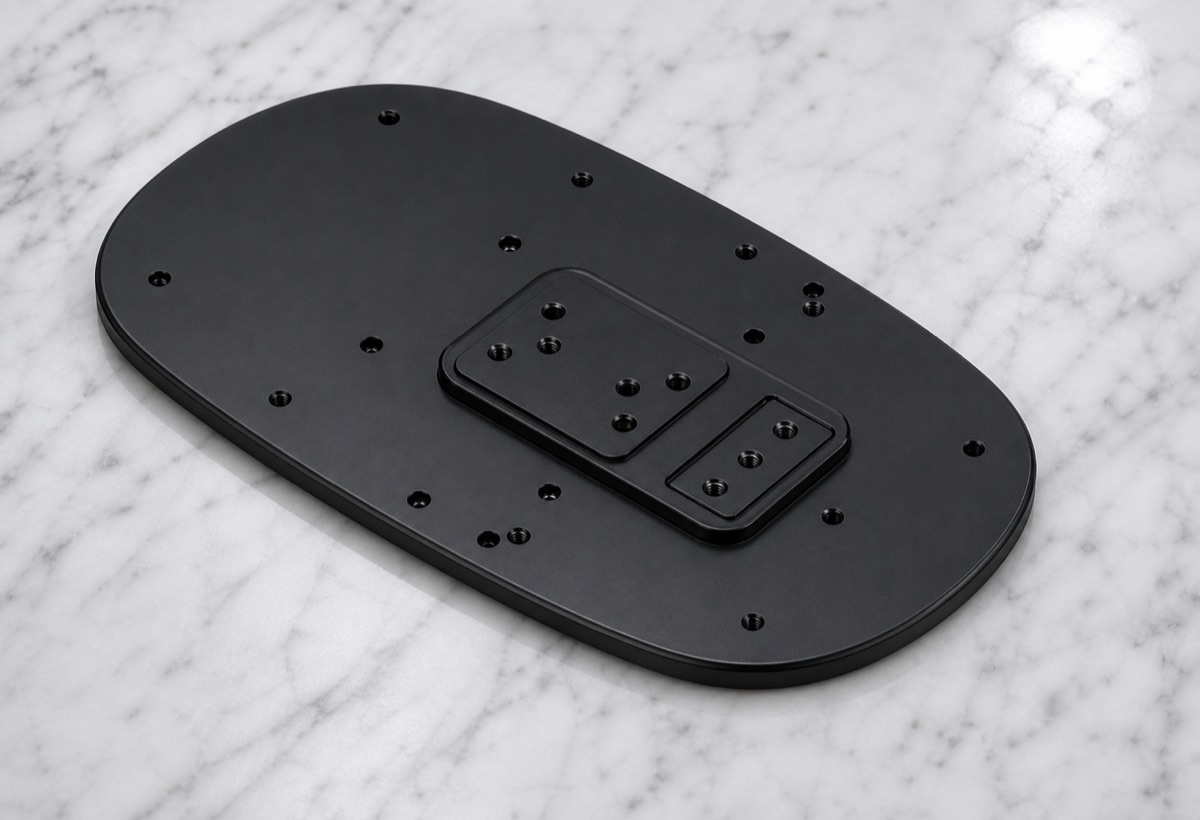
Project Snapshot
| Industry scenario | Humanoid robot foot structure and precision CNC structural parts |
|---|---|
| Material and finish | 6061-T6 aluminum, black anodized finish |
| Critical features | Large thin plate, center bosses, multiple hole groups, thread quality, flatness and appearance |
| Manufacturing focus | Clamping support, staged stock removal, hole-pattern control, anodizing review and full-surface packaging |
Part Function: The Foot Plate as an Internal Mounting Platform
The foot support plate works like an internal mounting platform in the robot foot. It carries hole groups for modules or fasteners, provides local boss surfaces and has to maintain a reliable relationship between the large plane and the locating features.
If the plate is not flat enough, the screws may still lock, but the mounted module can contact unevenly. That is why OEMach treated flatness and feature relationship as the core of the project rather than simply counting holes.
Manufacturing Risks
Large thin plates are sensitive to clamping pressure, stock removal and flipping. Stress release during roughing can cause warping or slight edge lift. The center bosses and surrounding hole groups also create local height differences that must be finished without pulling the plate out of shape.
Multi-hole machining adds risk in hole spacing, thread quality, chamfer consistency and cleaning. After black anodizing, scratches, clamp marks and bright hole edges become very obvious, so surface treatment cannot be used as a late-stage rescue.
OEMach Manufacturing Solution
OEMach planned the process around support and stock-removal sequence. Roughing was staged to release allowance gradually, while the center bosses and key hole groups kept finish allowance until the plate had stabilized.
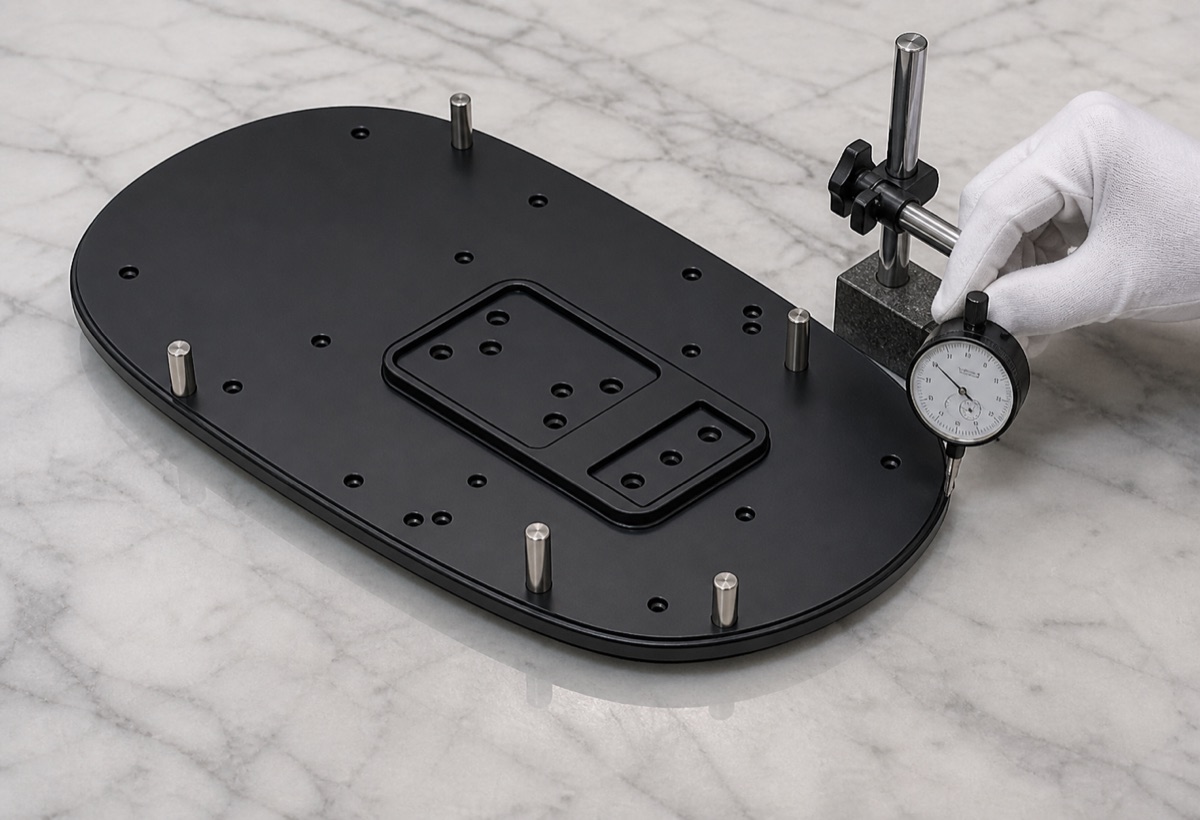
During finishing, the large plane, boss heights and hole positions were controlled together. After hole machining, every small hole was deburred and cleaned. OEMach performed visual review before anodizing and then rechecked flatness condition, hole mouths and black appearance consistency after anodizing.
Inspection Focus
First-article inspection should cover plate flatness, outer profile, center bosses, each hole group, thread go/no-go, chamfers, local thickness and black anodized appearance. For a foot platform part, flatness and the relationship among hole groups directly affect assembly efficiency.
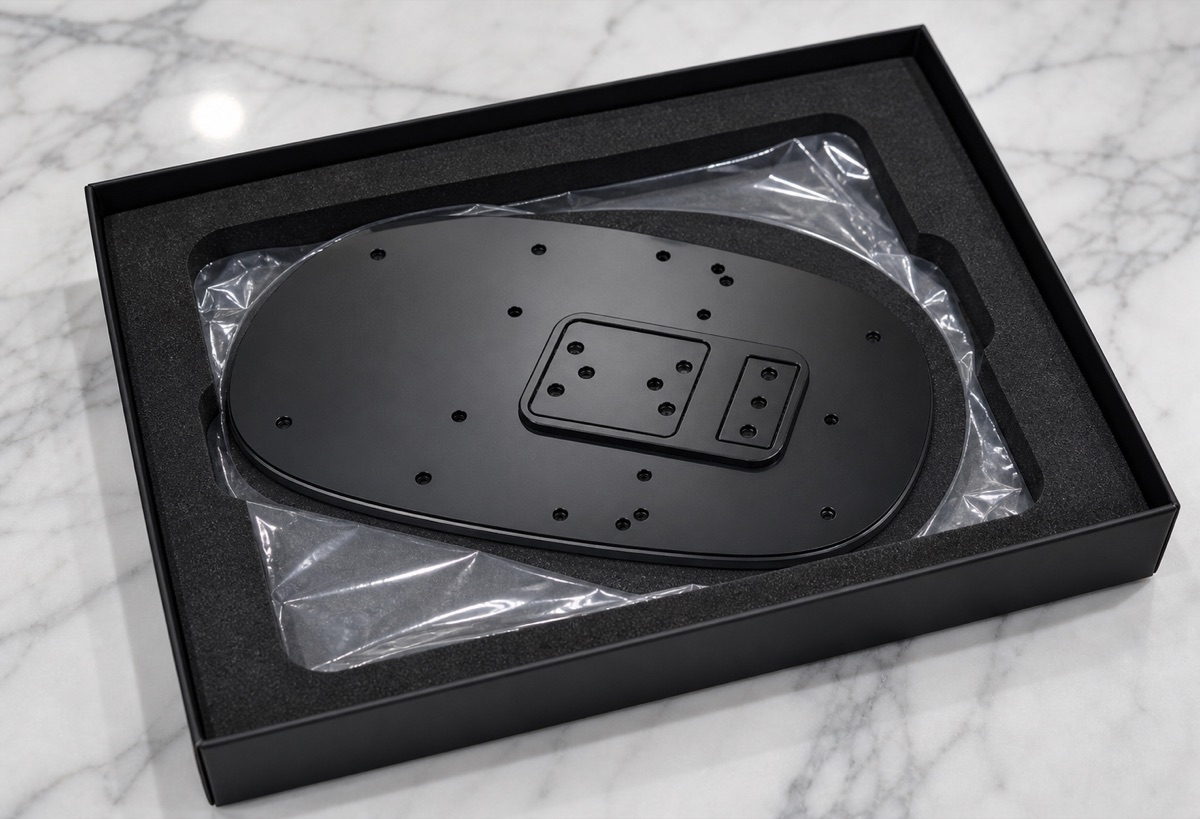
During production, OEMach monitors clamping pressure, cutter wear, threaded-hole condition and post-anodizing appearance. Before packaging, the plate surface is checked for visible rub marks, and the holes are checked for chips or anodizing particles.
Lead Time and Small-Batch Delivery
For a 6061-T6 black anodized foot support plate like this, prototype sampling is usually evaluated around 7 to 10 working days. Small batches are commonly planned around 10 to 15 working days. Full inspection reports, higher cosmetic requirements or matched packaging can extend the schedule.
OEMach treats machining, deburring, anodizing, reinspection and packaging as one delivery chain. For the customer, whether the support plate can go directly into assembly is often more important than the machining date alone.
Delivery Takeaway
This case shows why large black anodized robot plates need both machining control and handling control. Flatness, boss height, hole groups, surface finish and packaging all influence the final assembly experience.
FAQ
Is the main difficulty only the number of holes?
No. The hole count is visible, but the real risk is flatness and clamping deformation on the large thin plate.
Can scratches be repaired after black anodizing?
Repair is costly and may create color difference. It is better to prevent scratches before anodizing and during packaging.
Why check flatness during prototype sampling?
Flatness directly affects module contact, screw locking behavior and assembly stability.
Ready to get a quote for your CNC machined parts?
Submit your engineering drawings to qiancj@oemach.com. We support prototype sampling and small-batch production with strict tolerance control.