
A case study on machining a long 6061 black anodized humanoid robot shank bracket with large hole pattern, lightweight windows, thread control and protected delivery.
A shank bracket is a typical lightweight support part in a humanoid robot lower-limb structure. It is long, thin and full of holes, and it must support joint assembly while reducing weight through windows. The real difficulty is not one single feature, but whether the long arm and multiple hole groups remain consistent.
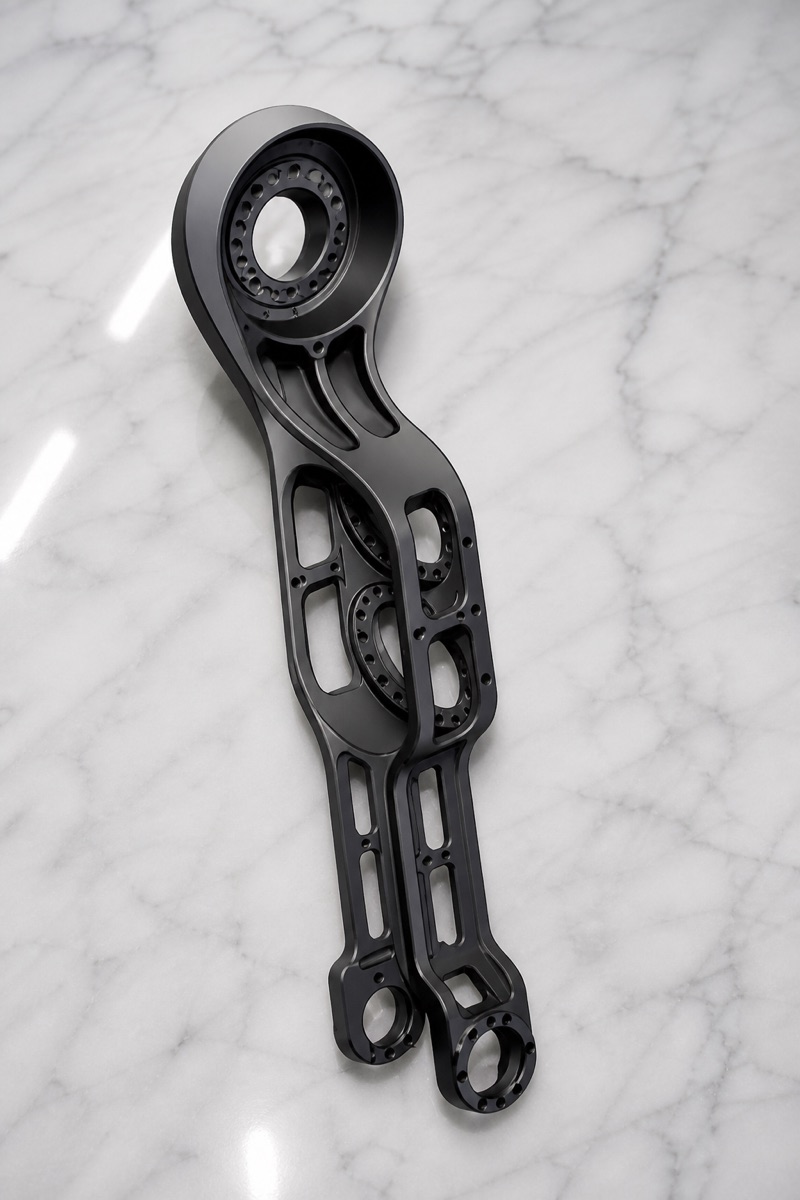
This case covers a 6061 aluminum shank bracket with black anodized finish. The part includes a long arm body, a large upper circular bore with surrounding hole pattern, multiple lightweight windows, threaded holes, small holes and a lower mounting end. OEMach reviewed it as a long datum-chain bracket rather than as a simple plate part.
Project Snapshot
| Item | Project detail |
|---|---|
| Part type | Long shank support bracket for humanoid robot lower-limb assembly |
| Material | 6061 aluminum alloy |
| Structure | Long arm body, large upper bore, circular hole pattern, lightweight windows, threaded holes, small holes and lower mounting end |
| Finish | Black anodizing with pre-finish deburring and post-finish reinspection |
| Process focus | Long-arm rigidity, large-bore hole pattern, lightweight window edges, left-right consistency, threaded holes and anodizing preparation |
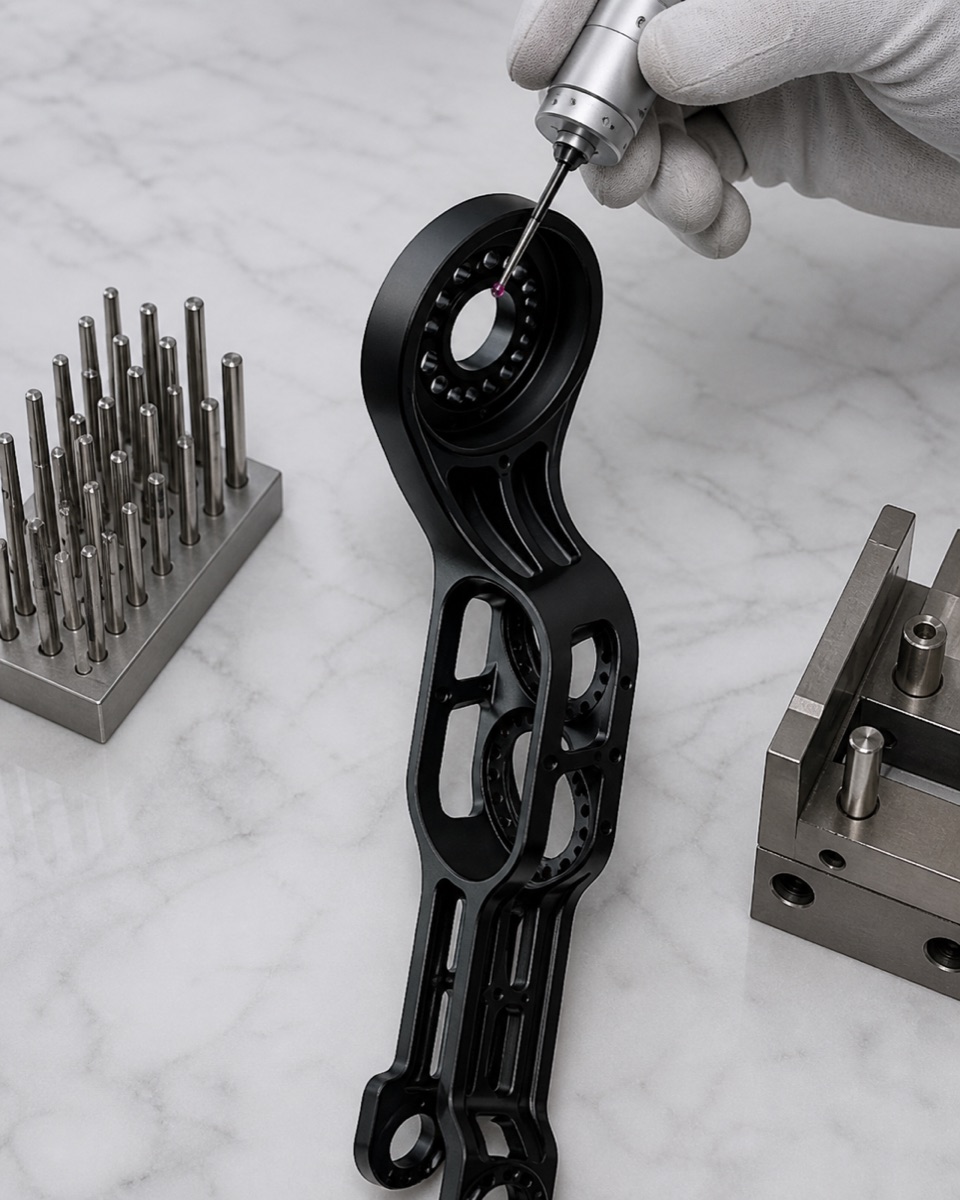
| Inspection focus | Large bore size, hole pattern, long-arm straightness, upper-lower hole relationship, window burrs, thread go/no-go, bottom mounting end and black appearance |
Why Lightweight Does Not Mean Weak
The bracket must connect lower-limb joint elements, support a bearing or transmission unit and control local posture. Lightweight windows reduce mass, but they also reduce local stiffness during machining.
If roughing removes too much material before the part is well supported, a slight bend can appear before finishing. Even accurate holes may then fail to preserve the whole assembly relationship.
The large upper bore and surrounding hole pattern are especially sensitive to angular position, pitch and hole-mouth condition. Black anodizing later makes burrs, chatter marks and scratches easier to see.
Machining Challenges
The first challenge is long-arm deformation. The part is slender, and multiple windows reduce stiffness. Support strategy and roughing sequence directly affect the final straightness.
The second challenge is the upper bore and circular hole pattern. The bore may pass size inspection, but the surrounding holes still need stable angular and positional relationships for assembly.
The third challenge is the window edges and threaded holes. Thin window walls can vibrate, leaving burrs or tool marks, while threads need go/no-go checking before anodizing and rechecking after finishing.
OEMach Manufacturing Solution
OEMach first defined the datum chain between the large upper bore, lower mounting end and long-arm centerline. Rough machining removed material in stages while retaining allowance on key surfaces so stress could release before final finishing.
For lightweight windows, a gentler toolpath reduced vibration in thin areas. The large bore and circular hole pattern were completed under a stable setup where possible, while hole-mouth chamfers and threaded go/no-go checks were reviewed before anodizing.
After black anodizing, OEMach rechecked key bores, hole mouths and visible faces. This helped confirm that film buildup, handling and cleaning did not affect assembly readiness.
Inspection and Delivery Control
First-article inspection should include the large bore, hole pattern distribution, long-arm straightness, upper-lower hole relationship, lightweight window edges, thread go/no-go, bottom mounting end and black anodized appearance.
During batch production, OEMach tracks tool wear, setup repeatability and hole-mouth condition before and after anodizing. Before packaging, long parts should also be checked for twist, impact marks and particles inside holes.
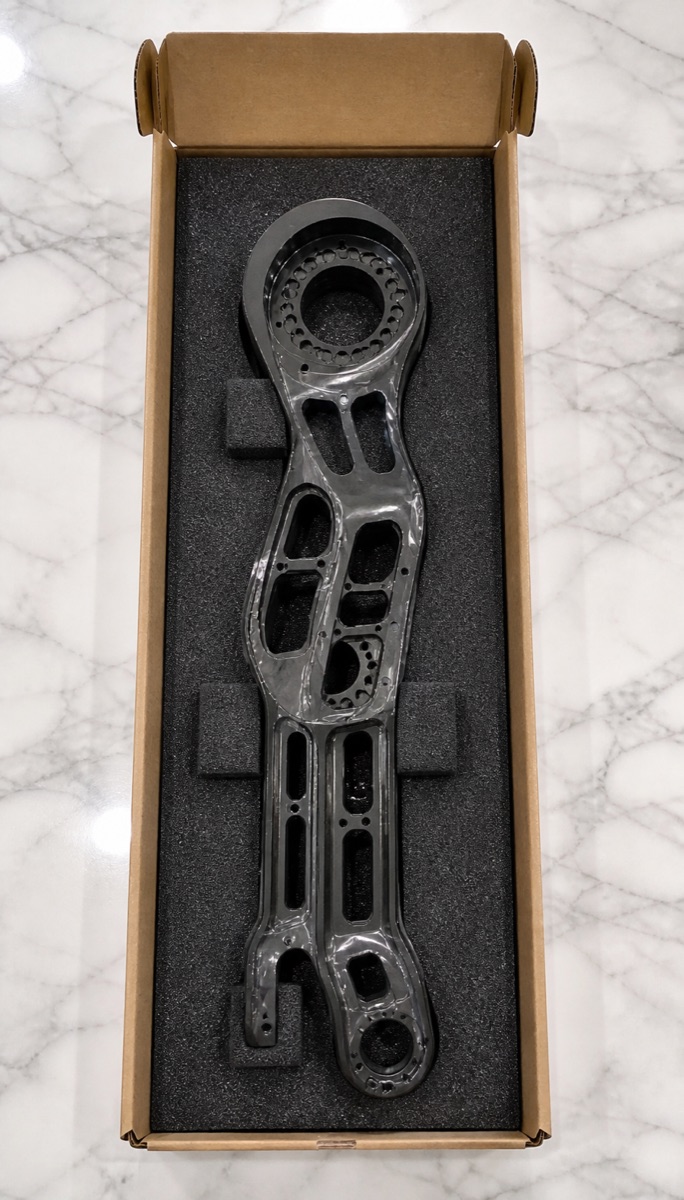
A long shank bracket is not suitable for simple loose packing. Long-slot form-fit foam limits movement in the box and separates the large-bore end, lower mounting end and black visible surfaces.
Lead-Time Planning
For 6061 black anodized shank bracket prototypes, a practical lead-time estimate is usually 7 to 10 working days. For small batches, 10 to 15 working days is more realistic.
If left-right matched parts, full inspection or assembly gauge verification are required, lead time should be confirmed again based on inspection ratio and anodizing schedule.
FAQ
Where does a shank bracket most often go wrong?
Common risks include long-arm deformation, hole-pattern relationship error and burrs around lightweight windows.
Can black anodizing affect holes?
Film buildup and handling can affect hole-mouth condition, so post-anodizing reinspection is important.
How is left-right consistency controlled?
It is controlled through common datums, first-article confirmation and in-process checks, not only by comparing final appearance.
Why use long-slot foam packaging?
It limits movement, reduces secondary deformation risk and protects hole mouths and black anodized visible surfaces.
Ready to get a quote for your CNC machined parts?
Submit your engineering drawings to qiancj@oemach.com. We support prototype sampling and small-batch production with strict tolerance control.