
A case study on machining a compact 6061-T6 black anodized humanoid robot foot support seat with small shaft bore, side-hole datum control and protected delivery.
This case covers a compact 6061-T6 aluminum foot support seat for a humanoid robot, delivered with black anodizing. The structure includes an upright support body, an upper cylindrical boss with a through shaft bore, a side window and small side hole, plus bottom mounting feet and mounting holes.
Small parts are sometimes mistaken for easy milled components. In a robot foot module, however, the upper bore, side hole, bottom mounting holes and base surface jointly define connection posture. Compact size can make datum transfer more sensitive, not less.
OEMach reviewed the part as an assembly function component. The process planning started from the relationship between the bottom mounting face and the upper shaft bore, then linked side-hole and bottom-hole machining back to the same functional logic.
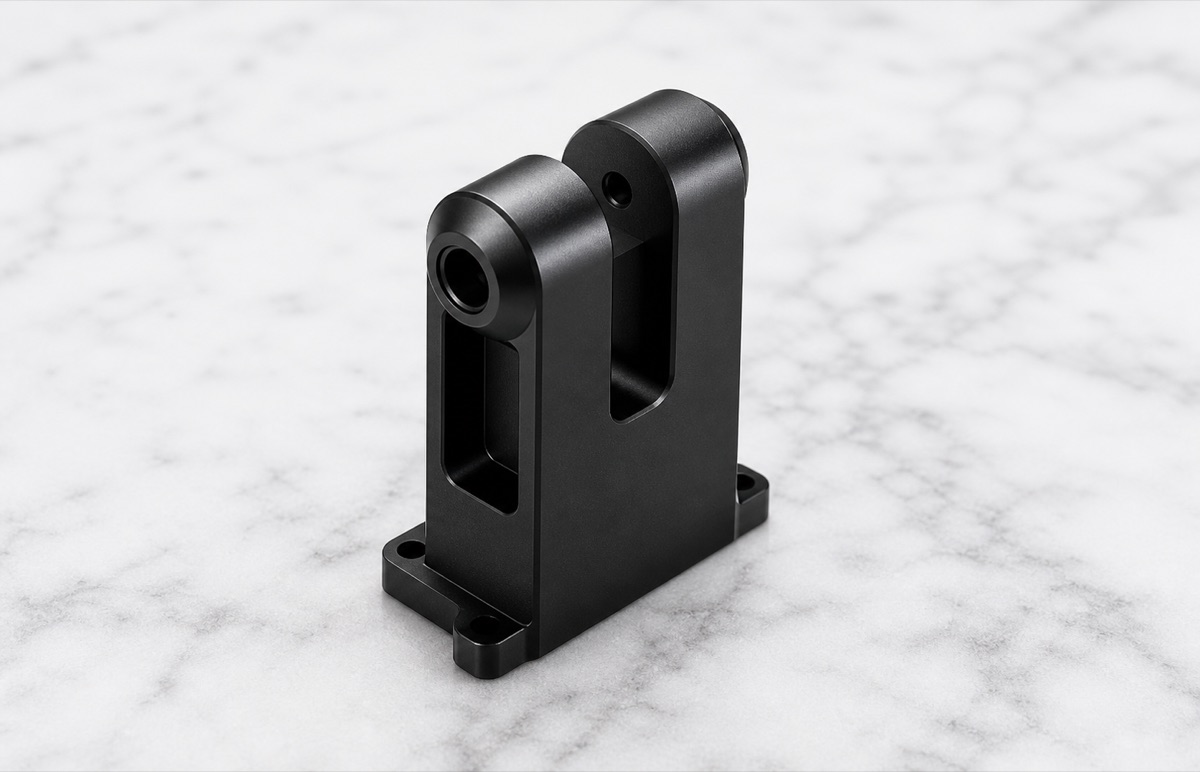
Project Snapshot
| Item | Case detail |
|---|---|
| Application | Humanoid robot compact foot support seat and CNC precision structural component |
| Material and finish | 6061-T6 aluminum with black anodizing |
| Critical features | Upper shaft bore, side hole, side window, bottom mounting feet, bottom holes and base flatness |
| Main risks | Limited clamping space, datum transfer error, bore shift, window burrs and black anodized edge marks |
| Delivery focus | Functional bore inspection, side-hole relationship, burr control, cleaning and individual foam packaging |
Why a Small Support Seat Still Needs Engineering Review
The upper cylindrical boss and upright body create internal corners, while the side window reduces local stiffness. If clamping pressure or cutter force is not controlled, finishing the shaft bore can carry small deformation into the bore position.
The side hole and upper shaft bore have a directional and positional relationship, while the bottom mounting holes define final fastening. When these features are split across several setups, datum-transfer error must be controlled carefully.
After black anodizing, bright hole-mouth edges, small handling marks and burrs at the window corners can become visible. The process therefore had to address both function and appearance.
Process Route: Use Workholding and Sequence to Control Risk
For this compact support seat, OEMach first confirmed the relationship between the bottom mounting face and the main shaft bore. Roughing, semi-finishing and finishing were then arranged to keep the part stable while avoiding excessive side force near the window and internal corners.
The upper shaft bore was finished in a relatively stable setup. The side hole and bottom mounting holes were machined with reference to the main datum logic as much as possible. Hole-mouth chamfers were controlled according to thread or assembly needs.
Deburring focused on the side window, bore edges, bottom-foot transitions and internal cavity. Before packaging, the part was checked for residual particles so the customer would not find debris or hidden burrs during trial assembly.
Inspection and Lead-Time Planning
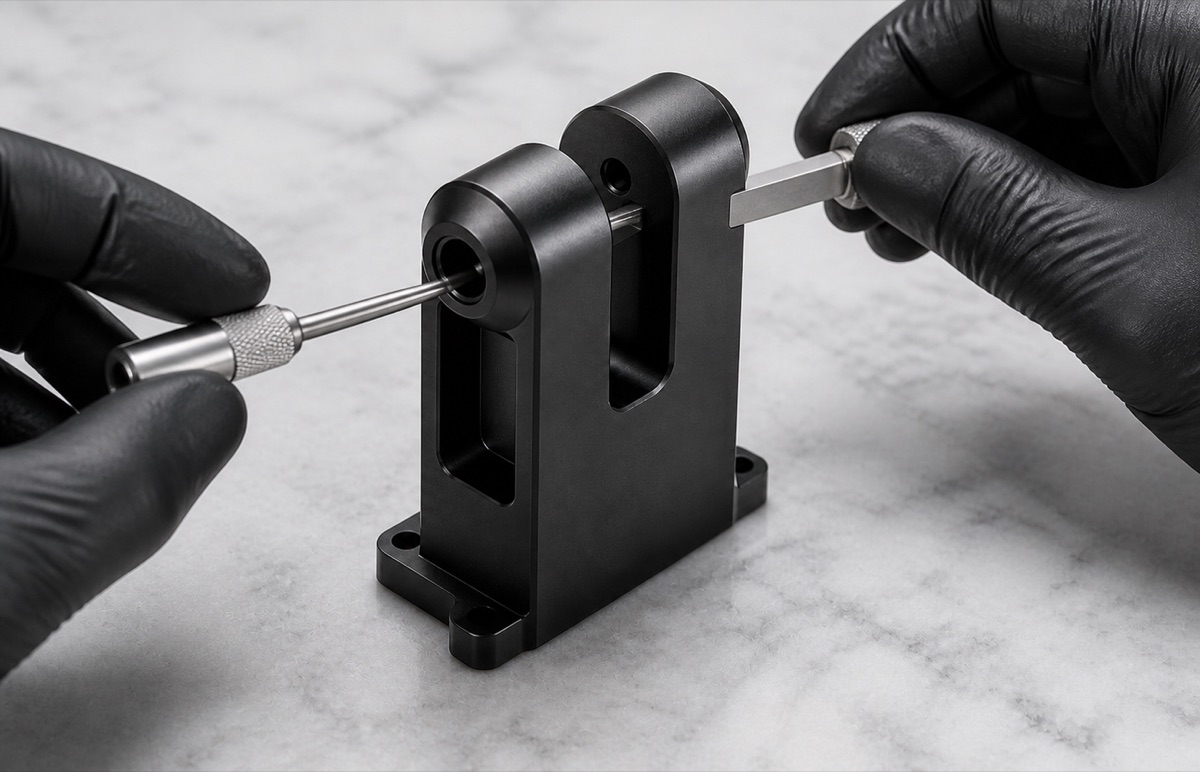
First-article inspection should verify upper bore diameter and bore-wall condition, side-hole position, bottom mounting holes, parallelism or positional relationship, window edges, base flatness and black anodized appearance.
For compact support seats, a tiny hole-position deviation can visibly change the assembly posture. Visual inspection alone is not enough; the bore relationship and datum transfer need measured confirmation.
For similar 6061-T6 black anodized compact support prototypes, sample timing can often be evaluated around a 5-8 working day window, while small-batch planning may require about 8-12 working days depending on inspection ratio, anodizing schedule and assembly validation needs.
Packaging: Small Does Not Mean Simple
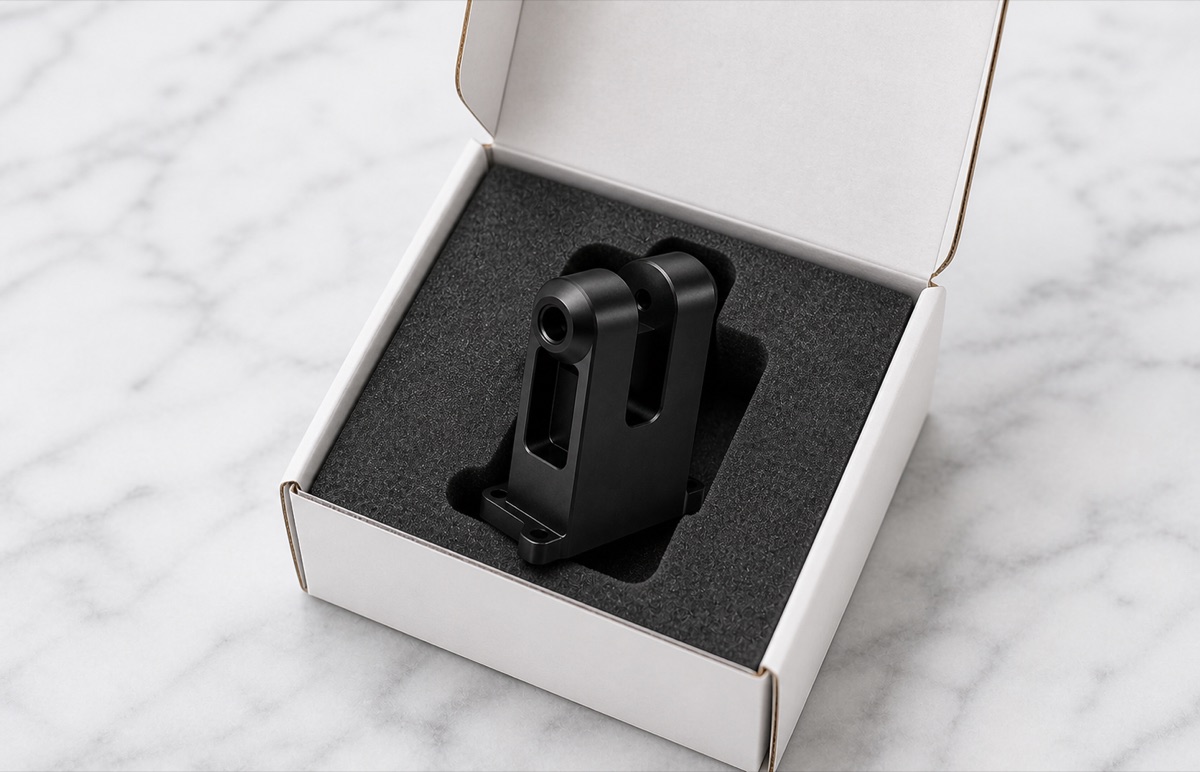
Small black anodized parts are easy to bruise if mixed together. The upper shaft bore, bottom holes and visible surfaces should be separated from direct contact.
OEMach recommends individual foam positioning or divided packaging for compact supports. This protects the hole mouths and appearance surfaces, while making it easier for the customer to check each part before trial installation.
For robot development projects, packaging quality affects the pace of assembly validation. A part that arrives clean, protected and easy to identify saves time at the customer's bench.
FAQ
Why not judge a compact support seat only by appearance?
The shaft bore, side hole and bottom mounting holes define the assembly posture together. A clean appearance can still hide bore relationship risk.
Why recheck hole mouths after black anodizing?
Bright edges, particles and handling marks can affect acceptance and assembly. Post-finish checks catch these issues before delivery.
Is this type of small part suitable for fast delivery?
It can be introduced quickly as a prototype, but the surface-treatment and inspection windows should still be reserved.
What matters most in packaging compact support seats?
Individual positioning helps prevent hole-mouth damage, surface rubbing and mixed-part scratches during shipment.
Summary
This compact foot support seat case shows that small robot parts still need datum planning, shaft-bore control, side-hole relationship inspection, careful deburring and protected packaging. The value is not only in milling the shape, but in keeping the small functional relationships stable for assembly.
Ready to get a quote for your CNC machined parts?
Submit your engineering drawings to qiancj@oemach.com. We support prototype sampling and small-batch production with strict tolerance control.