
A case study on machining a 6061-T6 black anodized humanoid robot foot support with dual circular ears, H7 shaft bore, hole-pattern control and protected delivery.
This case covers a 6061-T6 aluminum humanoid robot foot support delivered with black anodizing. The component has a base plate, two upright circular support ears, an H7-level shaft bore, a surrounding hole pattern, threaded holes and local root-clearance details.
In a humanoid robot foot or ankle load chain, this type of part is not only a visible support bracket. The two ears help define shaft alignment, screw fastening and the final assembly posture. OEMach treated the part as a relationship-controlled structure rather than a simple milled profile.
The early engineering review focused on the datum chain between the shaft bore, hole ring, base plate and both support ears. If these features are machined from inconsistent datums, the main shaft may fit while the surrounding screws do not lock smoothly.
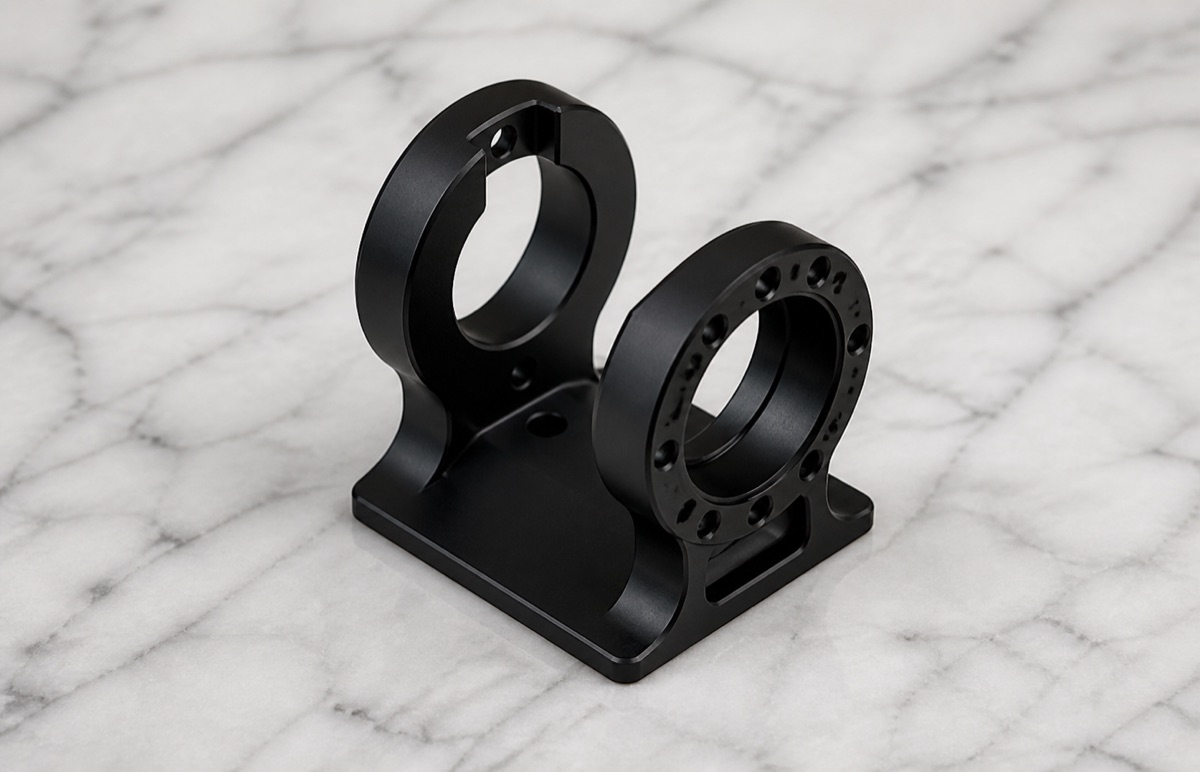
Project Snapshot
| Item | Case detail |
|---|---|
| Application | Humanoid robot foot support and CNC precision structural component |
| Material and finish | 6061-T6 aluminum with black anodizing |
| Critical features | Dual circular ears, H7 shaft bore, surrounding hole pattern, threaded holes and base flatness |
| Main risks | Bore relationship drift, support-ear deformation, burrs, bright edges after anodizing and transport damage |
| Delivery focus | Functional inspection, anodized appearance control, bore protection and shaped foam packaging |
Challenge 1: H7 Bore and Hole Pattern Must Be Controlled Together
An H7 shaft bore needs controlled diameter, bore-wall condition and edge quality. The surrounding hole pattern also needs to follow the same functional reference. If the main bore, hole ring and base plate use different datum logic, the part can pass individual measurements but still create assembly resistance.
The two upright ears also need position and alignment control after machining. Because the ear walls are relatively thin, roughing and opening cuts can release stress. Without proper support, a small shift can appear after the shaft bore is finished.
For this reason, the bore strategy was linked to the base plate and side datums instead of being treated as a standalone drilling operation.
Challenge 2: Black Anodized Edges Show Burrs Clearly
Black anodizing makes edge quality easy to judge. Hole-mouth burrs, bright witness lines, small scratches and residual tool marks around relief areas can become more visible after finishing.
The foot support includes multiple internal holes, windows and base-plate edges. Deburring had to be thorough, but it could not remove functional contact area around the bores or distort the hole mouths.
OEMach therefore included chamfer planning, root cleaning, bore cleaning and pre-anodizing inspection in the manufacturing route instead of leaving edge treatment as a last-minute correction.
Process Route: Stabilize the Base, Finish the Bore Later
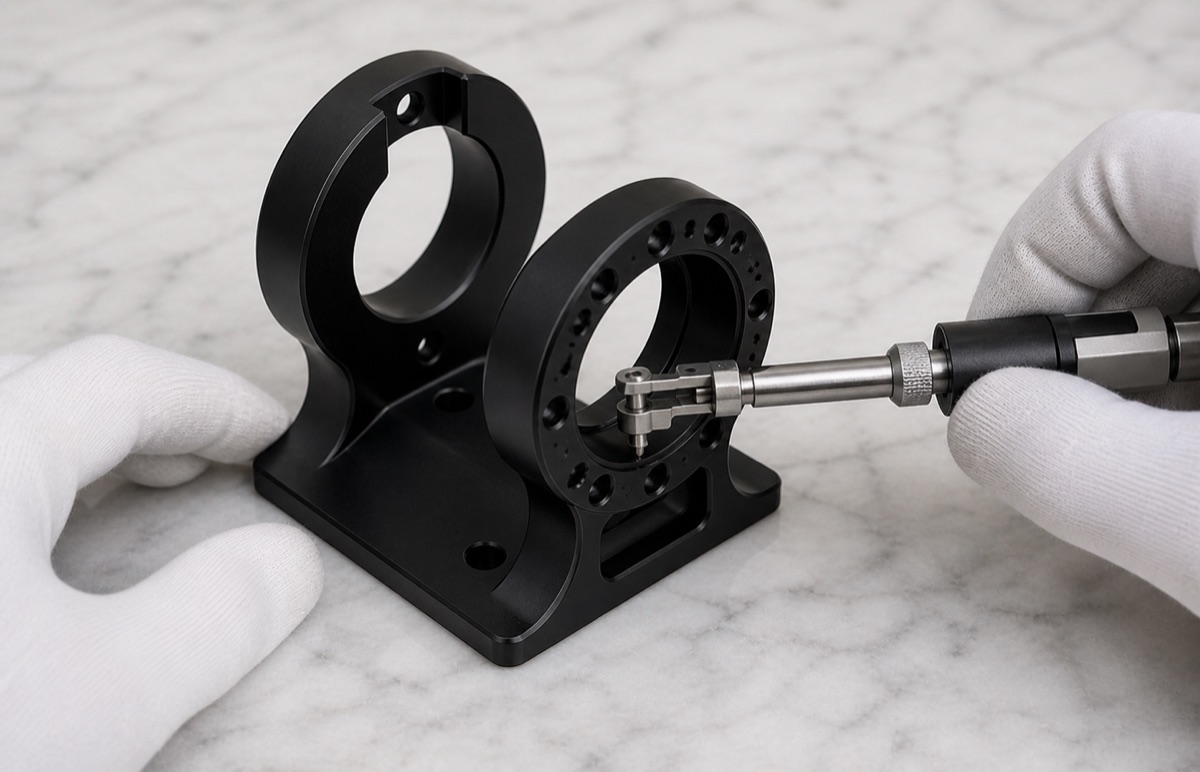
For this dual-ear foot support, OEMach first established the base and side references, then used rough machining to remove stock while keeping enough stability for finishing. Support blocks, soft jaws or process stock can be used to reduce ear deformation when needed.
The main shaft bore was finished with attention to tool runout, feed rhythm and bore-wall condition. The surrounding small holes were kept as close as possible to the same positioning state so the hole pattern could stay consistent with the main bore.
Before black anodizing, the process included inspection of hole mouths, base surfaces and internal cavities. After anodizing, the main bore, hole pattern, thread condition and visible finish were checked again.
Inspection, Lead-Time Planning and Packaging
First-article inspection should cover the H7 bore, hole-pattern position, relationship between the two support ears, base flatness, thread go/no-go status, chamfers and black anodized appearance. For this part, feature relationships reveal assembly risk more clearly than one isolated dimension.
For similar 6061-T6 black anodized prototype parts, sample timing can usually be evaluated around a 6-9 working day window, while small-batch planning may require about 9-14 working days depending on quantity, inspection ratio and finishing schedule. Full inspection or dedicated gauges should be planned separately.
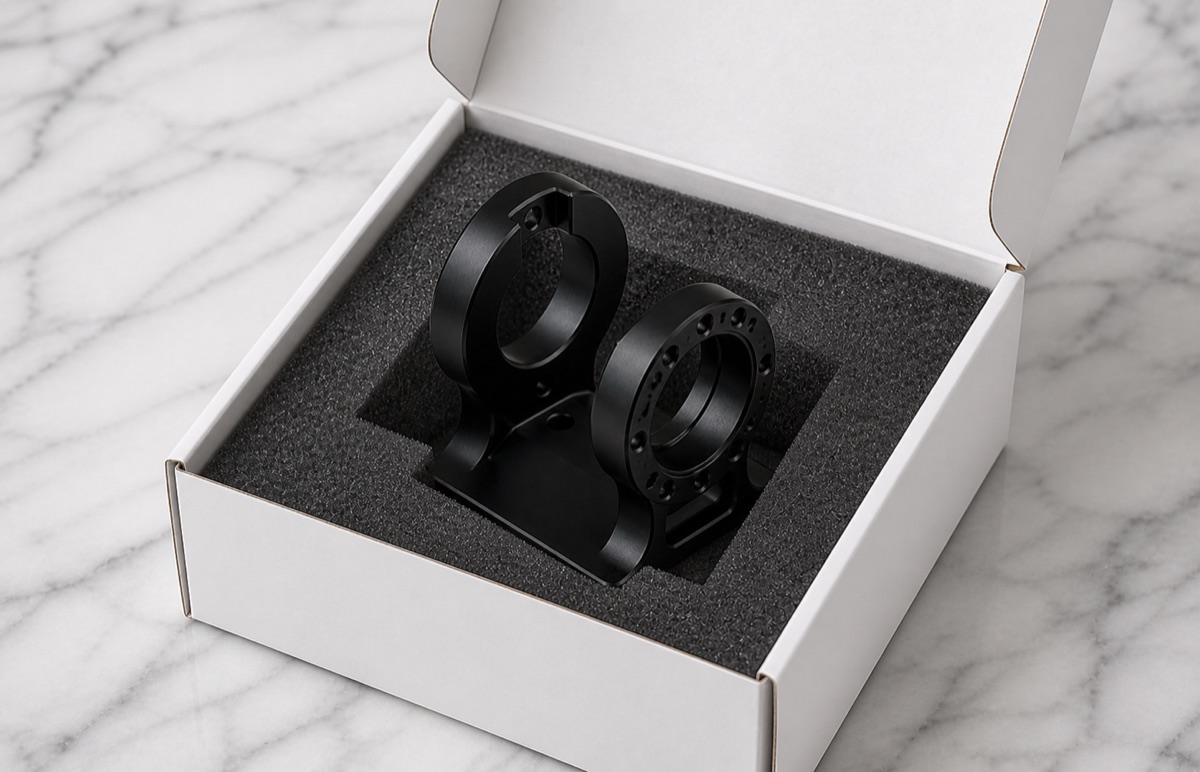
Packaging is part of engineering delivery. The two ears should not collide with each other or with other parts in transit. Shaped foam helps hold the base, protect the bores and preserve the black anodized surfaces.
FAQ
Why does a robot foot support need bore relationship control?
The shaft bore, hole pattern and support ears define foot-module alignment and screw fastening. One good bore does not guarantee stable assembly.
Why inspect H7 bores again after anodizing?
Surface treatment and handling can affect hole-mouth condition. Post-finish inspection reduces the risk of assembly rework.
Should prototypes and small batches be started together?
For dual-ear support structures, it is safer to confirm the first article before scaling to a small batch, especially when bore relationships are critical.
What should be protected during packaging?
The shaft bores, hole mouths, base plate and black anodized visible surfaces should be separated and cushioned to avoid rubbing or impact.
Summary
This 6061-T6 black anodized humanoid robot foot support case shows why dual-ear structures require datum planning, bore relationship control, careful deburring and protective packaging. The machining value is not only in producing the shape, but in making the shaft bore, hole ring, ears and base repeatable for assembly.
Ready to get a quote for your CNC machined parts?
Submit your engineering drawings to qiancj@oemach.com. We support prototype sampling and small-batch production with strict tolerance control.